Anandamide deficiency and heightened neuropathic pain in aged mice.

“Damaging of peripheral nerves may result in chronic neuropathic pain for which the likelihood is increased in the elderly. We assessed in mice if age-dependent alterations of endocannabinoids contributed to the heightened vulnerability to neuropathic pain at old age.

We assessed nociception, endocannabinoids and the therapeutic efficacy of R-flurbiprofen in young and aged mice in the spared nerve injury model of neuropathic pain.

 R-flurbiprofen was used because it is able to reduce neuropathic pain in young mice in part by increasing anandamide.

Aged mice developed stronger nociceptive hypersensitivity after sciatic nerve injury than young mice.

This was associated with low anandamide levels in the dorsal root ganglia, spinal cord, thalamus and cortex, which further decreased after nerve injury…”

 More: http://www.ncbi.nlm.nih.gov/pubmed/23597506

Analysis of THCA synthase gene expression in cannabis: A preliminary study by real-time quantitative PCR.

“In this paper we describe analyses performed by Real-Time Reverse-Transcriptase Polymerase Chain Reaction (real-time RT-PCR) on RNA of 12 samples, carried out for forensic purposes to investigate a correlation between tetrahydrocannabinol (THC) concentration in Cannabis and the tetrahydrocannabinol acid synthase (THCAS) gene expression. Samples were obtained from an experimental cultivation of declared potency Cannabis variety seeds and from seizures. The Rubisco gene and the 26S ribosomal RNA gene were used as internal control genes for their constant expression and stability. As results we found minor gene expression in samples from leaves of young plants. Further, grouping results for cannabis samples with similar characteristics, we have found an increased relative expression in samples with the highest percentage of THC coming from seized sample and adult plants.”

http://www.ncbi.nlm.nih.gov/pubmed/23890639

[So called ((soft)) drugs: cannabis and the amotivational syndrome].

“… there is a minority of problematic cannabis users.

 There is a scientific consensus to claim that cannabis induces a state of dependence in a small proportion of users.

Severe abuse of cannabis can also lead to cognitive impairments, especially on memory, although these effects usually improve after the cessation of cannabis use.

The statistical link between cannabis use and the development of psychotic disorders is more worrying, although the causal nature of this relationship remains controversial.

 Finally, a chronic abuse of cannabis is reputed to induce an amotivational syndrome, mainly characterized by a state of apathy.

Although the symptoms of the amotivational syndrome are in keeping with some clinical observations, it remains difficult to ascertain whether this clinical picture is causally produced by cannabis abuse.”

http://www.ncbi.nlm.nih.gov/pubmed/23888577

Police custody following driving under the influence of cannabis: A prospective study.

“We hypothesized that drug intoxication while driving could correspond to specific medical conditions of the detainees. Our objective was to evaluate medical features and addictive behaviours of suspected drug drivers and to collect data regarding assaults or injuries in these individuals.

We conducted a prospective study of suspected drug driving arrestees, who were compared to drink drivers or persons aged over 18 detained for other reasons. Data collected concerned persons’ characteristics, reported assaults, and observed injuries…

  Cannabis-only users accounted for 201 of 205 drug drivers (98%).

Suspected drug driving arrestees had good overall health rating.

Drug drivers were younger than controls and requested more rarely medical examination.

 They were rarely involved in addiction treatment and reported assaults or presented traumatic injuries less often than drink drivers and controls.

 Drug drivers were less often alcohol abusers than controls.

 Their opinion on custody was better than that of controls and they were considered unconditionally fit for detention more frequently.

 We conclude that arrested drug drivers were young, healthy, and infrequently reported assaults or presented traumatic injuries, which does not put them in a high risk medical condition…”

http://www.ncbi.nlm.nih.gov/pubmed/23890621

Controlling 2-arachidonoylglycerol metabolism as an anti-inflammatory strategy.

“The endocannabinoid system is implicated in, and regulates, several physiological processes, ranging from food intake and energy balance to pain and inflammation.

 2-Arachidonoylglycerol (2-AG) is a full agonist at the cannabinoid receptors which classically mediate its effects. The activity of this bioactive lipid is dependent on its endogenous levels, which are tightly controlled by several hydrolases, monoacylglycerol lipase and α/β-hydrolase domain 6 and 12.

 Moreover, 2-AG is also a substrate of cyclooxygenase-2, and this reaction leads to the formation of prostaglandin glycerol esters, the effects of which remain to be fully elucidated.

 In this review we discuss the multiple mechanisms by which 2-AG controls inflammation and the therapeutic potential of 2-AG metabolism inhibitors.”

http://www.ncbi.nlm.nih.gov/pubmed/23891880

From here to eternity – the secret of Pharaohs: Therapeutic potential of black cumin seeds and beyond

“From here to eternity – the secret of Pharaohs: Therapeutic potential of black cumin seeds and beyond” http://www.ncbi.nlm.nih.gov/pmc/articles/PMC2583426/

An external file that holds a picture, illustration, etc.<br /><br /><br /><br /><br /><br /><br /><br /><br /><br /><br /><br /><br /><br /><br /><br /><br /><br /><br /><br /><br /><br /><br /><br /><br /><br /><br /><br /><br /><br /><br /><br /><br /><br /><br /><br /><br /><br /><br />
Object name is nihms-73138-f0001.jpg

“Anticarcinogenic effects of some Indian plant products.” http://www.ncbi.nlm.nih.gov/pubmed/1473788

“Plant products as protective agents against cancer.” http://www.ncbi.nlm.nih.gov/pubmed/2283166

“Potential of spice-derived phytochemicals for cancer prevention.” http://www.ncbi.nlm.nih.gov/pubmed/18612945

“Antimicrobial and chemopreventive properties of herbs and spices.” http://www.ncbi.nlm.nih.gov/pubmed/15180577

“Antioxidant activity and protecting health effects of common medicinal plants.” http://www.ncbi.nlm.nih.gov/pubmed/23034115

“Chemopreventive effects of Cuminum cyminum in chemically induced forestomach and uterine cervix tumors in murine model systems.” http://www.ncbi.nlm.nih.gov/pubmed/15087270

“Cancer cell signaling pathways targeted by spice-derived nutraceuticals.” http://www.ncbi.nlm.nih.gov/pmc/articles/PMC3645308/

“Modulation of apoptosis in human hepatocellular carcinoma (HepG2 cells) by a standardized herbal decoction of Nigella sativa seeds, Hemidesmus indicus roots and Smilax glabra rhizomes with anti- hepatocarcinogenic effects.” http://www.ncbi.nlm.nih.gov/pmc/articles/PMC3364896/

“A long-term investigation of the anti-hepatocarcinogenic potential of an indigenous medicine comprised of Nigella sativa, Hemidesmus indicus and Smilax glabra” http://www.ncbi.nlm.nih.gov/pmc/articles/PMC1475831/

“[Anti-metastasis effect of thymoquinone on human pancreatic cancer]… thymoquinone (TQ), a component derived from the medicinal spice Nigella sativa (also called black cumin)” http://www.ncbi.nlm.nih.gov/pubmed/22007514

“Thymoquinone suppresses metastasis of melanoma cells by inhibition of NLRP3 inflammasome… our results indicate that thymoquinone can be a potential immunotherapeutic agent not only as an adjuvant therapy for melanoma, but also, in the control and prevention of metastatic melanoma.” http://www.ncbi.nlm.nih.gov/pubmed/23583630

“Anti-inflammatory effects of the Nigella sativa seed extract, thymoquinone, in pancreatic cancer cells” http://www.ncbi.nlm.nih.gov/pmc/articles/PMC2742606/

“Thymoquinone extracted from black seed triggers apoptotic cell death in human colorectal cancer cells via a p53-dependent mechanism.” http://www.ncbi.nlm.nih.gov/pubmed/15375533

“Structure-Activity Studies on Therapeutic Potential of Thymoquinone Analogs in Pancreatic Cancer” http://www.ncbi.nlm.nih.gov/pmc/articles/PMC3093961/

“Thymoquinone inhibits tumor angiogenesis and tumor growth through suppressing AKT and ERK signaling pathways” http://www.ncbi.nlm.nih.gov/pmc/articles/PMC2587125/

“Thymoquinone and cisplatin as a therapeutic combination in lung cancer: In vitro and in vivo” http://www.ncbi.nlm.nih.gov/pmc/articles/PMC2909169/

“Comparison of potential chemotherapeutic agents, 5-fluoruracil, green tea, and thymoquinone on colon cancer cells.”  http://www.ncbi.nlm.nih.gov/pubmed/16817633

“Thymoquinone from Nigella sativa was more potent than cisplatin in eliminating of SiHa cells via apoptosis with down-regulation of Bcl-2 protein.” http://www.ncbi.nlm.nih.gov/pubmed/21609759

“Thymoquinone: potential cure for inflammatory disorders and cancer.” http://www.ncbi.nlm.nih.gov/pubmed/22005518

“Thymoquinone suppresses growth and induces apoptosis via generation of reactive oxygen species in primary effusion lymphoma.” http://www.ncbi.nlm.nih.gov/pubmed/21215312

“Anti-cancer effects of thymoquinone in mouse neuroblastoma (Neuro-2a) cells through caspase-3 activation with down-regulation of XIAP.” http://www.ncbi.nlm.nih.gov/pubmed/22732633

“Anticancer activity of thymoquinone in breast cancer cells: possible involvement of PPAR-γ pathway.” http://www.ncbi.nlm.nih.gov/pubmed/21679698

“Antineoplastic and apoptotic potential of traditional medicines thymoquinone and diosgenin in squamous cell carcinoma.” http://www.ncbi.nlm.nih.gov/pmc/articles/PMC3471895/

“Antineoplastic effects of bee honey and Nigella sativa on hepatocellular carcinoma cells.” http://www.ncbi.nlm.nih.gov/pubmed/21147814

“Antitumor and anti-angiogenesis effects of thymoquinone on osteosarcoma through the NF-κB pathway.” http://www.ncbi.nlm.nih.gov/pubmed/23232982

“Antiproliferative properties of methanolic extract of Nigella sativa against the MDA-MB-231 cancer cell line.” http://www.ncbi.nlm.nih.gov/pubmed/23317266

“Methanolic extract of Nigella sativa seed inhibits SiHa human cervical cancer cell proliferation through apoptosis… could potentially be an alternative source of medicine for cervical cancer therapy.”  http://www.ncbi.nlm.nih.gov/pubmed/23513732

“Plant crude extracts could be the solution: extracts showing in vivo antitumorigenic activity.” http://www.ncbi.nlm.nih.gov/pubmed/18390447

“Chemopreventive potential of volatile oil from black cumin (Nigella sativa L.) seeds against rat colon carcinogenesis.” http://www.ncbi.nlm.nih.gov/pubmed/12881014

“Cancer chemopreventive potential of volatile oil from black cumin seeds, Nigella sativa L., in a rat multi-organ carcinogenesis bioassay.” http://www.ncbi.nlm.nih.gov/pmc/articles/PMC3436209/

“Effect of Nigella sativa (N. sativa L.) and oxidative stress on the survival pattern of MCF-7 breast cancer cells.” http://www.ncbi.nlm.nih.gov/pubmed/12724920

“The in vitro anti-tumor activity of some crude and purified components of blackseed, Nigella sativa L.” http://www.ncbi.nlm.nih.gov/pubmed/9673365

“Antitumour principles from Nigella sativa seeds.” http://www.ncbi.nlm.nih.gov/pubmed/1555206

“Anti-tumor properties of blackseed (Nigella sativa L.) extracts.” http://www.ncbi.nlm.nih.gov/pubmed/17581684

“Anticancer activity of Nigella sativa (black seed) – a review.” http://www.ncbi.nlm.nih.gov/pubmed/22083982

“Anticancer activities of Nigella sativa (black cumin).” http://www.ncbi.nlm.nih.gov/pmc/articles/PMC3252704/

“ANTI-CANCER ACTIVITY OF NIGELLA SATIVA” http://www.ncbi.nlm.nih.gov/pmc/articles/PMC3336718/

Curing With Curcumin – News

“Chemical in Tumeric, Popular in Curries, May Cut Colon Cancer”  http://www.foxnews.com/story/2006/08/02/chemical-in-tumeric-popular-in-curries-may-cut-colon-cancer/

“Curry may help in fight against bowel cancer, study finds” http://www.foxnews.com/health/2012/05/08/curry-may-help-in-fight-against-bowel-cancer-study-finds/

 “Researchers Uncover Why Turmeric Helps Heal” http://abcnews.go.com/Health/Healthday/story?id=7769316&page=1

“Healing powers of turmeric uncovered” http://abclocal.go.com/kabc/story?id=6854704

 “Curry spice used to fight bowel cancer” http://www.abc.net.au/news/2012-05-08/curry-may-fight-bowel-cancer/3997590

“Turmeric inhibits cancer’s spread in mice” http://www.abc.net.au/news/2005-06-10/turmeric-inhibits-cancers-spread-in-mice/1589900

“The Healing Power Of Curry?” http://www.cbsnews.com/video/watch/?id=2681428n

“Curry May Cut Down Colon Cancer” http://www.cbsnews.com/2100-500368_162-1860248.html

“Seasonings That Help Your Health” http://www.cbsnews.com/2100-500165_162-799082.html

“Curry chemical’s ability to fight cancer put to the test” http://www.bbc.co.uk/news/health-17959521

“Curry spice ‘kills cancer cells'” http://news.bbc.co.uk/2/hi/health/8328377.stm

“Turmeric ‘Kills Cancer Cells'” http://www.huffingtonpost.com/2009/10/28/turmeric-kills-cancer-cel_n_336850.html

“Turmeric component kills cancer cells.” http://www.thefreelibrary.com/Turmeric+component+kills+cancer+cells.-a0123580388

“Scientists say curry compound kills cancer cells” http://www.abs-cbnnews.com/technology/10/28/09/scientists-say-curry-compound-kills-cancer-cells 
“Primary component in turmeric kicks off cancer-killing mechanisms in human saliva” http://medicalxpress.com/news/2011-09-primary-component-turmeric-cancer-killing-mechanisms.html

“Curcumin halts spread of breast cancer in mice – Early study shows spice stunts deadly spread to lungs” http://www.medicalnewstoday.com/releases/32147.php 

“How Curcumin Helps Fight Cancer” http://www.medicalnewstoday.com/releases/72129.php

“Curcumin Inhibits Prostate Cancer Metastases” http://www.medicalnewstoday.com/articles/251461.php

“Cancer Doctor Explains How Cooking with Turmeric Leads to Amazing Health Benefits” http://naturalsociety.com/cancer-doctor-explains-how-cooking-turmeric-health-benefits/

“Curry Spice Kills Cancer Cells” http://www.newser.com/story/72704/curry-spice-kills-cancer-cells.html

“Scientists say curry compound kills cancer cells” http://www.reuters.com/article/2009/10/28/us-cancer-curry-idUSTRE59R1E020091028

“Curcumin and melanoma. Can a spice help fight cancer?” http://health.usnews.com/usnews/health/briefs/cancer/hb050711a.htm

“Curry Spice May Fight Skin Cancer. Ingredient in Curry May Kill Melanoma Cells” http://www.webmd.com/cancer/news/20050711/curry-spice-fight-skin-cancer

“Curry compound could fight cancer; Curcumin may kill bowel cancer cells” http://www.nydailynews.com/life-style/health/curry-india-holy-powder-subject-cancer-fighting-proven-spice-curcumin-kill-bowel-cancer-cells-article-1.1074477

“Curcumin vs. cancer: The scientific evidence continues to flow in” http://www.naturalnews.com/039304_curcumin_cancer_scientific_evidence.html

“Curcumin and black pepper combine to stop breast cancer tumor cells” http://www.naturalnews.com/028763_cancer_tumors_curcumin.html

“Groundbreaking study: Aronia, curcumin extracts effectively kill brain cancer cell line” http://www.naturalnews.com/037476_aronia_curcumin_brain_cancer.html

“Curcumin slays cancer cells in their tracks” http://www.naturalnews.com/037879_curcumin_cancer_cells_turmeric.html

“Primary Component in Curry Spice Kicks Off Cancer-Killing Mechanisms in Human Saliva” http://www.sciencedaily.com/releases/2011/09/110913092430.htm

“Study: Chewing curcumin activates cancer-killing mechanisms” http://www.digitaljournal.com/article/311514

“Curry compound kills cancer cells” http://www.health24.com/Medical/Cancer/News/Curry-compound-kills-cancer-cells-20120721


Anti-cancer effects of curcumin (CUR) and tetrahydrocurcumin (THC) – Science

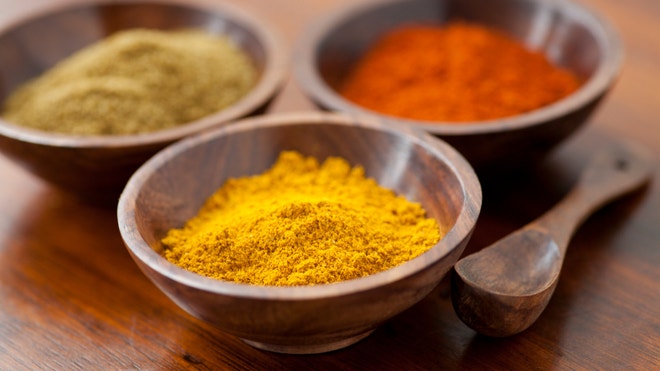
Curry Powder.jpg
 

“Anticancer potential of curcumin: preclinical and clinical studies.” http://www.ncbi.nlm.nih.gov/pubmed/12680238

“Tetrahydrocurcumin is more effective than curcumin in preventing… colon carcinogenesis. Tetrahydrocurcumin (THC), a major metabolite of curcumin (CUR), has been demonstrated to be anti-cancerogenic and anti-angiogenic…these results demonstrated for the first time the in vivo chemopreventive efficacy and molecular mechanisms of dietary THC…”  http://www.ncbi.nlm.nih.gov/pubmed/21887819

“Tetrahydrocurcumin inhibits HT1080 cell migration and invasion via downregulation of MMPs and uPA.” http://www.ncbi.nlm.nih.gov/pubmed/18565284

“Plant-derived anticancer agents – curcumin in cancer prevention and treatment.”  http://www.ncbi.nlm.nih.gov/pubmed/23700916

“Anti-cancer and anti-angiogenic effects of curcumin and tetrahydrocurcumin on implanted hepatocellular carcinoma in nude mice” http://www.ncbi.nlm.nih.gov/pmc/articles/PMC2701520/

“Mechanisms of cancer chemoprevention by curcumin.” http://www.ncbi.nlm.nih.gov/pubmed/11370761 

“Tetrahydrocurcumin, a major metabolite of curcumin, induced autophagic cell death through coordinative modulation of PI3K/Akt-mTOR and MAPK signaling pathways in human leukemia HL-60 cells.” http://www.ncbi.nlm.nih.gov/pubmed/21928294

 “Synergistic anticancer activity of curcumin and catechin: an in vitro study using human cancer cell lines.” http://www.ncbi.nlm.nih.gov/pubmed/21780253 

“Synergistic anticancer effects of curcumin and resveratrol in Hepa1-6 hepatocellular carcinoma cells.” http://www.ncbi.nlm.nih.gov/pubmed/23446753

“Curcumin enhances the anticancer effects of trichostatin a in breast cancer cells.” http://www.ncbi.nlm.nih.gov/pubmed/22290509

 “Curcumin polymers as anticancer conjugates.” http://www.ncbi.nlm.nih.gov/pubmed/20591475

“Curcumin Potentiates The Ability of Sunitinib to Eliminate the VHL-lacking Renal Cancer Cells 786-O: Rapid Inhibition of Rb Phosphorylation as a Preamble to Cyclin D1 Inhibition.” http://www.ncbi.nlm.nih.gov/pubmed/23848205

 “RL66 a second-generation curcumin analog has potent in vivo and in vitro anticancer activity in ER‑negative breast cancer models.” http://www.ncbi.nlm.nih.gov/pubmed/22971638

“ApoE3 mediated polymeric nanoparticles containing curcumin: apoptosis induced in vitro anticancer activity against neuroblastoma cells.” http://www.ncbi.nlm.nih.gov/pubmed/22890189

 “Inclusion complex of novel curcumin analogue CDF and β-cyclodextrin (1:2) and its enhanced in vivo anticancer activity against pancreatic cancer.” http://www.ncbi.nlm.nih.gov/pubmed/22322899

“Water-soluble antioxidants improve the antioxidant and anticancer activity of low concentrations of curcumin in human leukemia cells.” http://www.ncbi.nlm.nih.gov/pubmed/15700780

“Superior anticancer efficacy of curcumin-loaded nanoparticles against lung cancer.” http://www.ncbi.nlm.nih.gov/pubmed/23786839

“Dose-escalation and pharmacokinetic study of nanoparticle curcumin, a potential anticancer agent with improved bioavailability, in healthy human volunteers.” http://www.ncbi.nlm.nih.gov/pubmed/21603867

“Apigenin shows synergistic anticancer activity with curcumin by binding at different sites of tubulin.” http://www.ncbi.nlm.nih.gov/pubmed/23485682

 “Anticancer and carcinogenic properties of curcumin: considerations for its clinical development as a cancer chemopreventive and chemotherapeutic agent.” http://www.ncbi.nlm.nih.gov/pubmed/18496811

“Curcumin-free turmeric exhibits anti-inflammatory and anticancer activities: Identification of novel components of turmeric.” http://www.ncbi.nlm.nih.gov/pubmed/23847105

“Perspectives on new synthetic curcumin analogs and their potential anticancer properties.” http://www.ncbi.nlm.nih.gov/pubmed/23116312

“Synthesis and evaluation of curcumin-related compounds for anticancer activity.” http://www.ncbi.nlm.nih.gov/pubmed/22551677

 “Curcumin and its analogues: potential anticancer agents.” http://www.ncbi.nlm.nih.gov/pubmed/20027668

“Safe and targeted anticancer therapy for ovarian cancer using a novel class of curcumin analogs.” http://www.ncbi.nlm.nih.gov/pmc/articles/PMC3665575/

“Highly active anticancer curcumin analogues.” http://www.ncbi.nlm.nih.gov/pubmed/17569206 

Kurkumina

‘It’s the one medicine we have seen work’: Oregon parents use medical marijuana to help severely autistic son

“Alex Echols has Tuberous Sclerosis, a rare genetic disorder that led to autism and seizures from a young age. Medical marijuana is the only treatment that eased his violent behavior, his parents said.”

An Oregon family has turned to medical marijuana to manage their son's severe autistic rage. Eleven-year-old Alex Echols is severely autistic. 

“Most parents wouldn’t dream of giving their child marijuana. But an Oregon couple says it’s the only thing that’s been able to help their 11-year-old autistic son.”


Health Benefits of Cannabis Tea

Health Benefits of Cannabis Tea 


“Reduces Chronic Pain

Reduces Anxiety

Reduces Nausea

May Treat Autoimmune Diseases”

“Marijuana-Infused Tea… Mom always said a cup of tea at night makes it easier to sleep.. Kevin Reed, of The Green Cross medical marijuana dispensary in San Francisco, advises patients to add a little milk after brewing to get the full effect of the cannabis.”  http://www.cbsnews.com/2300-204_162-10004358-12.html


“Cannabis Tea… Other names: Pot Tea, Weed Tea…Translations: Kaņepes Tēja, Kanapių arbata, Ceai de canabis, Kanabis Tea, Cần sa trà, Cannabis urządzenia, कैनबिस चाय, Chá de Cannabis, Каннабис чай, Η κάνναβη Τσάι, القنب الشاي, 대마초 차, Cannabis Čaj, Cannabis Teh, 大麻茶, Cannabis para preparar té, Cannabis Čaj, קנאביס תה, Канабис чај, 大麻コーヒー, Cannabis Te, Cannabis per a preparar te, Каннабіс чай, Kannabis Tea, Канабис чай”     http://www.foodista.com/food/3HJ8KNK6/cannabis-tea#

“Cannabis tea revisited: a systematic evaluation of the cannabinoid composition of cannabis tea.”   http://www.ncbi.nlm.nih.gov/pubmed/17604926

25 Benefits to Drinking Green Tea