“Psoriasis is a chronic skin condition that can significantly impact the quality of life of those affected. As an autoimmune disease, it can lead to itchy, painful, and scaly patches on the skin. Although various treatments, including topical creams, phototherapy, and systemic medications, are currently available, they may not always offer effective relief and can have side effects. Researchers have thus been exploring the potential benefits of non-psychoactive compounds such as CBD, found in Cannabis sativa plants, for treating psoriasis. CBD treatment may reduce inflammation, oxidative stress, itching, abnormal proliferation of keratinocytes, and may increase hydration. This review aims to provide an overview of the existing literature on the potential uses of CBD for psoriasis treatment.”
“Objectives: Polycystic ovary syndrome (PCOS) is a complex metabolic and endocrine disorder associated with chronic inflammation. However, the effect of ∆ tetrahydrocannabinol-9 (THC) on PCOS has not been evaluated. Therefore, this study aimed to investigate the immunomodulatory effects of THC in an animal model of PCOS.
Materials and methods: Twenty female Sprague-Dawley rats, aged 4 weeks, were divided into four groups. The control group received a normal diet, the sham group received a vehicle (carboxymethyl cellulose), the PCOS group received a high-fat diet (HFD) for 16 weeks followed by letrozole for 4 weeks, and the THC group received an HFD for 16 weeks followed by letrozole+THC (0.02 mg/kg) for 4 weeks.
Results: The PCOS animals exhibited significantly higher levels of testosterone, insulin, triglycerides, and total cholesterol, along with elevated inflammatory and oxidative stress markers compared to the control group. Flow cytometry and real-time PCR analysis revealed an increase in M1 macrophage markers and a decrease in M2 macrophage markers compared to the control group. However, the administration of a low dose of THC mitigated these disturbances.
Conclusion: Low-dose THC improved inflammatory responses and shifted the balance of M1/M2 macrophage markers towards M2 macrophages in the animal model of PCOS.”
“Nowadays, the growing knowledge about the high nutritional value and potential functionality of hempseeds, the edible fruits of the Cannabis sativa L. plant, has sparked a surge in interest in exploring the worthwhile attributes of hempseed proteins and peptides. This trend aligns with the increasing popularity of hemp-based food, assuming a vital role in the global food chain. This chapter targets the nutritional and chemical composition of hempseed in terms of short- and medium-chain bioactive peptides. The analytical approaches for their characterization and multifunctional properties are summarized in detail. Moreover, the processing, functionality, and application of various hempseed protein products are discussed. In the final part of the chapter-for evaluating their propensity to be transported by intestinal cells-the transepithelial transport of peptides within hempseed protein hydrolysate is highlighted.”
“Cannabis sativa L. is an annual, dioecious plant within the Cannabinaceae family. It has a well-documented history of serving as a source of both food and medicine over the ages.”
“Cannabidiol (CBD), which is derived from hemp, is gaining recognition because of its anti-inflammatory and lipid-modulating properties that could be utilized to treat acne.
We conducted experiments to quantitatively assess the effects of CBD on acne-related cellular pathways. SEB-1 sebocytes and HaCaT keratinocytes were exposed to various CBD concentrations.
CBD exhibited a concentration-dependent impact on cell viability and notably reduced SEB-1 viability; furthermore, it induced apoptosis and a significant increase in the apoptotic area at higher concentrations. Additionally, CBD remarkably reduced pro-inflammatory cytokines, including CXCL8, IL-1α, and IL-1β. Additionally, it inhibited lipid synthesis by modulating the AMPK-SREBP-1 pathway and effectively reduced hyperkeratinization-related protein keratin 16. Simultaneously, CBD stimulated the synthesis of elastin, collagen 1, and collagen 3.
These findings emphasize the potential of CBD for the management of acne because of its anti-inflammatory, apoptotic, and lipid-inhibitory effects. Notably, the modulation of the Akt/AMPK-SREBP-1 pathway revealed a novel and promising mechanism that could address the pathogenesis of acne.”
“In conclusion, this study highlights CBD’s potential to address multiple facets of acne pathophysiology through its anti-inflammatory, apoptotic, lipid-inhibitory effects, and modulation of the Akt/AMPK-SREBP-1 pathway. Additionally, it suggests the potential for CBD to contribute to the improvement of acne scarring through the synthesis of collagen and elastin. These findings offer a fresh perspective on acne management, suggesting that CBD-based treatments could provide a more comprehensive approach for individuals prone to inflammation and scarring. While further research is warranted, CBD’s unique mechanism of action presents a promising avenue for advancing acne therapeutics and improving patients’ quality of life.”
“Background: Cannabidiol (CBD) is a non-psychoactive phyto-cannabinoid derived from the Cannabis sativa plant. CBD exhibits various interactions at receptor sites, prompting the research of its potential anti-inflammatory, immunomodulatory, psychological, and pain-relieving effects. This study aimed to investigate the physiological, biochemical, and psychometric effects of a brand-specific, hemp-derived CBD product in healthy adults over a 12-week observation period.
Methods: 54 healthy males and females (age = 25 ± 7y; BMI = 24.82 ± 3.25 kg/m2) recruited from a large Southeastern University completed the study. Participants arrived at the laboratory after > 8 h of fasting, and > 48 h without alcohol consumption and vigorous exercise. Following baseline measurements (height, weight, blood pressure, electrocardiogram (ECG), and blood work), participants were stratified by sex and randomized to either CBD or placebo groups. Products were administered double-blinded, with both given in liquid form containing medium-chain triglyceride oil, while the CBD product specifically contained 50 mg/mL of CBD. Participants were instructed to consume 1 mL of their product twice daily and were given enough product to last until their next laboratory visit. Data were collected at baseline and on days 30 ± 3, 60 ± 3, and 90 ± 3. Blood was drawn for analysis of immune and inflammatory biomarkers. Chronic pain among participants was calculated using urine samples according to the foundational pain index (FPI). Self-reported psychometric questionnaires were utilized (Cohen’s Perceived Stress Scale, Pittsburgh Sleep Quality Index, Profile of Mood States,10-item Likert scale for perceived pain) to assess stress, sleep quality, mood state, and body discomfort. To determine overall wellbeing, participants completed a daily survey indicating if they missed work or school due to illness. Change from baseline was calculated for each measure, and mixed effects models were used to determine differences between groups over time while adjusting for baseline values (α = 0.05). Data are presented as mean ± standard deviation.
Results: There were no Group-by-Time interactions or Group or Time main effects for immune or inflammatory biomarkers (p > 0.05). Analyses revealed no Group-by-Time interactions or main effects observed for perceived stress, sleep quality, overall mood disturbance, and all the profile of mood state subscales (p > 0.05), except “vigor-activity.” A Time main effect was found for the sub-score for “vigor-activity” (p = 0.007; Pre CBD = 19.5 ± 5.2, Post CBD = 17.3 ± 5.3; Pre PL = 19.0 ± 5.7, Post PL = 17.9 ± 7.1), which decreased from Visit 3 to Visit 4 (p = 0.025) and from Visit 3 to Visit 5 (p = 0.014). There was a Group main effect for FPI (p = 0.028; Pre CBD = 11.9 ± 14.4, Post CBD = 8.8 ± 10.9; Pre PL = 9.0 ± 14.2, Post PL = 12.9 ± 11.5), indicating that the placebo group had greater increases in pain over the intervention compared to the CBD group. No significant differences were found between groups in the incidence and prevalence of “colds or flus” (p > 0.05).
Discussion: CBD was safe and well tolerated in healthy adults. These findings show pain was lower in the CBD group, suggesting a potentially positive effect for consumption of CBD. “Vigor-activity” decreased across the intervention, which may be a confounding effect of the academic semester. While the dosage chosen was safe, more research may be warranted using higher doses as these may be needed to observe further therapeutic effects in healthy populations.”
“Cannabis sativa L. is a multipurpose crop with high value for food, textiles, and other industries. Its secondary metabolites, including cannabidiol (CBD), have potential for broad application in medicine. With the CBD market expanding, traditional production may not be sufficient. Here we review the potential for the production of CBD using biotechnology. We describe the chemical and biological synthesis of cannabinoids, the associated enzymes, and the application of metabolic engineering, synthetic biology, and heterologous expression to increasing production of CBD.”
“Alzheimer’s disease (AD), the most prevalent form of dementia worldwide, is a significant health concern, according to the World Health Organization (WHO). The neuropathological diagnostic criteria for AD are based on the deposition of amyloid-β peptide (Aβ) and the formation of intracellular tau protein tangles. These proteins are associated with several overlapping neurodegenerative mechanisms, including oxidative stress, mitochondrial dysfunction, lipid peroxidation, reduced neuronal viability, and cell death.
In this context, our study focuses on the potential therapeutic use of cannabidiol (CBD), a non-psychotropic cannabinoid with antioxidant and anti-inflammatory effects. We aim to evaluate CBD’s neuroprotective role, particularly in protecting hippocampal neurons from Aβ25-35-induced toxicity.
Our findings indicate that CBD significantly improves cell viability and decreases levels of lipid peroxidation and oxidative stress. The results demonstrate that CBD possesses a robust potential to rescue cells from induced neurotoxicity through its antioxidant properties. Additionally, the neuroprotective effect of CBD may be associated with the modulation of the endocannabinoid system.
These findings suggest that CBD could be a promising compound for adjuvant treatments in neurodegenerative processes triggered by amyloid-β peptide.”
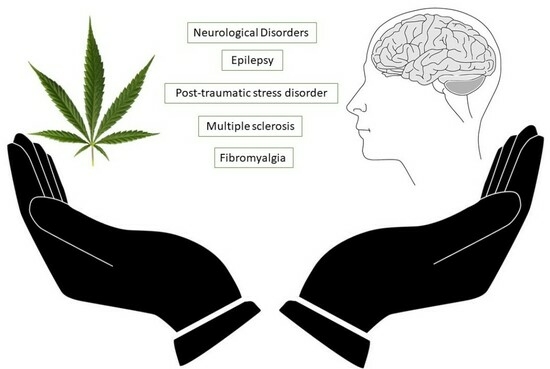
“Neurological disorders present a wide range of symptoms and challenges in diagnosis and treatment. Cannabis sativa, with its diverse chemical composition, offers potential therapeutic benefits due to its anticonvulsive, analgesic, anti-inflammatory, and neuroprotective properties.
Beyond cannabinoids, cannabis contains terpenes and polyphenols, which synergistically enhance its pharmacological effects. Various administration routes, including vaporization, oral ingestion, sublingual, and rectal, provide flexibility in treatment delivery.
This review shows the therapeutic efficacy of cannabis in managing neurological disorders such as epilepsy, neurodegenerative diseases, neurodevelopmental disorders, psychiatric disorders, and painful pathologies.
Drawing from surveys, patient studies, and clinical trials, it highlights the potential of cannabis in alleviating symptoms, slowing disease progression, and improving overall quality of life for patients. Understanding the diverse therapeutic mechanisms of cannabis can open up possibilities for using this plant for individual patient needs.”
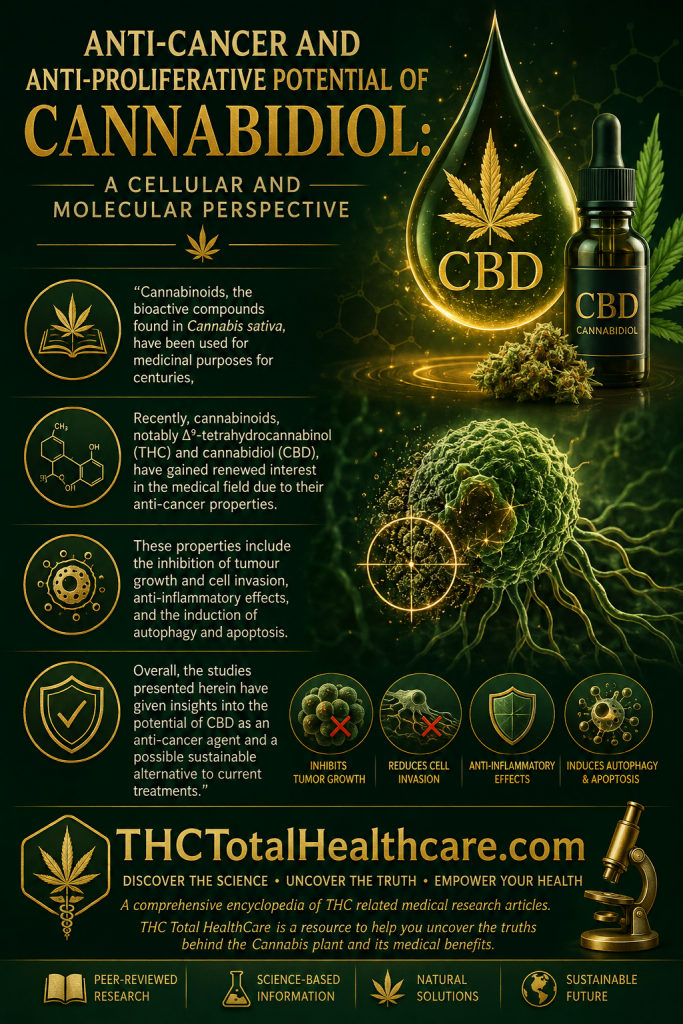
“Cannabinoids, the bioactive compounds found in Cannabis sativa, have been used for medicinal purposes for centuries, with early discoveries dating back to the BC era (BCE). However, the increased recreational use of cannabis has led to a negative perception of its medicinal and food applications, resulting in legal restrictions in many regions worldwide.
Recently, cannabinoids, notably Δ9-tetrahydrocannabinol (THC) and cannabidiol (CBD), have gained renewed interest in the medical field due to their anti-cancer properties. These properties include the inhibition of tumour growth and cell invasion, anti-inflammatory effects, and the induction of autophagy and apoptosis.
As a result, the use of cannabinoids to treat chemotherapy-associated side effects, like nausea, vomiting, and pain, has increased, and there have been suggestions to implement the large-scale use of cannabinoids in cancer therapy. However, these compounds’ cellular and molecular mechanisms of action still need to be fully understood.
This review explores the recent evidence of CBD’s efficacy as an anti-cancer agent, which is of interest due to its non-psychoactive properties. The current review will also provide an understanding of CBD’s common cellular and molecular mechanisms in different cancers. Studies have shown that CBD’s anti-cancer activity can be receptor-dependent (CB1, CB2, TRPV, and PPARs) or receptor-independent and can be induced through molecular mechanisms, such as ceramide biosynthesis, the induction of ER stress, and subsequent autophagy and apoptosis.
It is projected that these molecular mechanisms will form the basis for the therapeutic applications of CBD. Therefore, it is essential to understand these mechanisms for developing and optimizing pre-clinical CBD-based therapies.”
“Overall, the studies presented herein have given insights into the potential of CBD as an anti-cancer agent and a possible sustainable alternative to current treatments.”
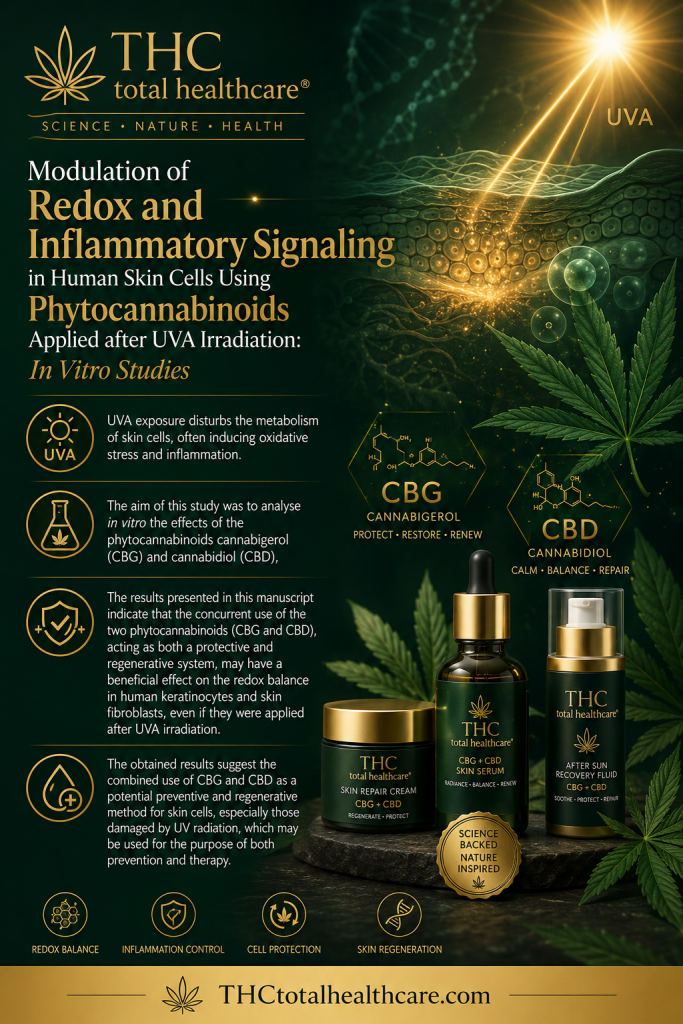
“UVA exposure disturbs the metabolism of skin cells, often inducing oxidative stress and inflammation. Therefore, there is a need for bioactive compounds that limit such consequences without causing undesirable side effects.
The aim of this study was to analyse in vitro the effects of the phytocannabinoids cannabigerol (CBG) and cannabidiol (CBD), which differ in terms of biological effects. Furthermore, the combined use of both compounds (CBG+CBD) has been analysed in order to increase their effectiveness in human skin fibroblasts and keratinocytes protection against UVA-induced alternation.
The results obtained indicate that the effects of CBG and CBD on the redox balance might indeed be enhanced when both phytocannabinoids are applied concurrently. Those effects include a reduction in NOX activity, ROS levels, and a modification of thioredoxin-dependent antioxidant systems. The reduction in the UVA-induced lipid peroxidation and protein modification has been confirmed through lower levels of 4-HNE-protein adducts and protein carbonyl groups as well as through the recovery of collagen expression. Modification of antioxidant signalling (Nrf2/HO-1) through the administration of CBG+CBD has been proven to be associated with reduced proinflammatory signalling (NFκB/TNFα).
Differential metabolic responses of keratinocytes and fibroblasts to the effects of the UVA and phytocannabinoids have indicated possible beneficial protective and regenerative effects of the phytocannabinoids, suggesting their possible application for the purpose of limiting the harmful impact of the UVA on skin cells.”
“The results presented in this manuscript indicate that the concurrent use of the two phytocannabinoids (CBG and CBD), acting as both a protective and regenerative system, may have a beneficial effect on the redox balance in human keratinocytes and skin fibroblasts, even if they were applied after UVA irradiation. The tested phytocannabinoids also counteract proinflammatory reactions, which, consequently, contribute to the development of various pathological conditions. The obtained results suggest the combined use of CBG and CBD as a potential preventive and regenerative method for skin cells, especially those damaged by UV radiation, which may be used for the purpose of both prevention and therapy.”