Active Ingredient in Marijuana Kills Brain Cancer Cells

“New research out of Spain suggests that THC — the active ingredient in marijuana — appears to prompt the death of brain cancer cells.”

 
“The finding is based on work with mice designed to carry human cancer tumors, as well as from an analysis of THC’s impact on tumor cells extracted from two patients coping with a highly aggressive form of brain cancer.”
 

THC is anticarcinogenic: marijuana may be cancer cure!

“Toxicology and Carcinogenesis Studies of 1-Trans-[Delta.sup.9]-Tetrahydrocannabinol

Summation of above:

“Thus, in our studies, rats and mice that received THC for 2 years exhibited body weight reductions, enhanced survival rates, and decreased tumor incidences in several sites, mainly organs under hormonal control. These earlier experimental carcinogenesis results on THC clearly lend further validity to the notion that cannabinoids may indeed be anticarcinogenic.””

 link
http://www.thefreelibrary.com/Antitumor+Effects+of+THC-a06814…

http://www.sodahead.com/united-states/thc-is-anticarcinogenic-marijuana-may-be-cancer-cure/question-1031413/?link=ibaf&q=THC+anti-carcinogenic+news

The secret “spice”: an undetectable toxic cause of seizure.

“”Spice” is an umbrella term for a variety of synthetic cannabinoid products whose inhalation has been associated with an increasing number of toxic side effects resulting in emergency department visits. These side effects (including psychosis, tachyarrhythmia, and seizures) are not typically seen with marijuana (Cannabis sativa) use.”

http://www.ncbi.nlm.nih.gov/pubmed/23983854

Cannabinoids may be a target for new strategies in cancer treatment

“Cannabis-like substances that are produced by the body have both therapeutic and harmful properties, besides their well-known intoxicating effects, and the body’s cannabinoid system may be a target for new strategies in cancer treatment…

Cannabinoids have moreover been shown to affect the fate of cells. Cannabinoids protect some brain cells, whereas cells in certain types of brain tumors, such as glioma, are stimulated to commit controlled cell suicide (apoptosis)…

In summary, the findings of Sofia Gustafsson’s studies show that cannabinoids can be toxic for cancer cells… These findings are important for our knowledge both of the potential of the cannabinoid system as a target system for new strategies in cancer treatment…”

More: http://www.news-medical.net/news/20120229/Cannabinoids-may-be-a-target-for-new-strategies-in-cancer-treatment.aspx

HAL BROWN: Medical marijuana could have eased wife’s pain

“My only direct personal experience with the effectiveness of medical marijuana was when my wife was dying of cancer and was on chemo. Without going deeply into details, her life became a living hell as death became imminent.
 

She was very resistant when a friend tried to persuade her to try some marijuana, which he said he could get from his son (a responsible recreational user with a good job, wife, and family). When her Dana Farber oncologist didn’t tell her NOT to try it (being reluctant to tell her TO try it, let’s call it a wink and an affirmative nod), she agreed.

She did so once, and the results were amazing. She had six full hours where her debilitating symptoms were significantly relieved. The severe persistent nausea which plagued her, despite being on three anti-nausea drugs, disappeared. Even so, she refused to try it again. She toughed it out until the end, which was a brutal four days at Brigham and Women’s, as even the strongest pain medication had no effect.

I have little doubt that eventually the chemicals which can relieve diseases and symptoms will be synthesized, and be approved as prescription medications.

Until then, it seems to me that the good of making medical marijuana available for those who get a doctor’s prescription outweighs the bad.

I think almost everyone who has had a loved one suffer with an illness which makes life unbearable, and for which marijuana would help, would agree with me. We need to deal with drug abuse aggressively in Middleboro; but making sick people pay the price for drug abusers by withholding treatment for people truly in need seems cruel and insensitive.

I urge anyone who disagrees with me to read this article from the American Cancer Society website.”

http://www.enterprisenews.com/newsnow/x1343094540/COMMENTARY-Medical-marijuana-could-have-eased-wife-s-pain

Doctor: Marijuana is a needed option

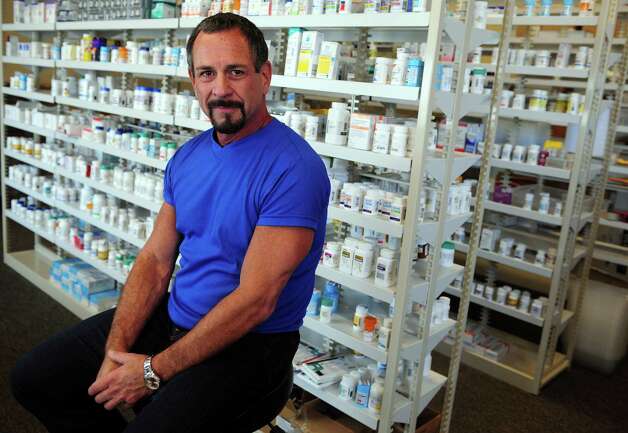
Dr. Blick sits in the pharmacy at the Circle Care Center in Norwalk, Conn.  Along with synthetic medications, Dr. Blick looks forward to utilizing the benefits of medical marijuana for patients with a variety of medical conditions including cancer, glaucoma and HIV/AIDS. Photo: Autumn Driscoll / Connecticut Post

“There was a personal reason why Dr. Gary Blick became one of the nearly 100 physicians in the state who are licensed to prescribe medical marijuana.”I did this because my 91-year-old mother, who has glaucoma,” he said. “Her glaucoma eye drops had failed to produce the desired results and she was facing surgery.”

Glaucoma is a disease in which the eye typically has excessive internal pressure, damaging the nerve fibers of the retina, the delicate tissue at the back of the eye that’s sensitive to light and color.

“She was needing surgery to repair her eyes,” he said. “But after we started her on medical marijuana, her pressures dropped, and when she stopped smoking marijuana, the pressures went back up again.”

He said her testimony in Hartford last year had the legislative committee considering the bill “in stitches,” even though her testimony countered testimony of the president of the Connecticut Society of Eye Physicians, who said marijuana would not be helpful to glaucoma patients.

“So one of the senators said, `Are you aware of Gloria Blick‘s testimony?’ To which he replied, `Well, I guess it would help some people.’ To which the senator replied, `Isn’t that what we’re here for?’ ”

Blick sees medical marijuana as just one of the arsenal of options that physicians should have to ease pain and provide relief for various diseases.”

More: http://www.ctpost.com/local/article/Doctor-Marijuana-is-a-needed-option-4740995.php#src=fb

Rx Marijuana: Most Readers Support Use

“In one way or another, more than 80% of MedPage Today readers have a favorable opinion about medical marijuana.

A total of 60.7% of the more than 5,600 readers who voted in our survey last week indicated they have always favored medical marijuana, while another 20.4% who had previously opposed the legalization of pot as a medication indicated a change of heart (read “My Cannabis Conversion” by Dr. Sanjay Gupta).

Many readers suggested medical marijuana is a better option than the current crop of legal opiates.”

More: http://www.medpagetoday.com/PublicHealthPolicy/PublicHealth/41176

Why Pot Makes You Feel Good

“Explaining the chemistry behind medical marijuana that got Sanjay Gupta and others to finally believe.”“Last week, CNN’s Dr. Sanjay Gupta  grabbed headlines for coming out in support of the validity of the medical use of marijuana, something he had opposed in the past. What changed his mind? …”Science”.
Here’s what he — and those studying the chemistry of marijuana — now understand.”


More: http://www.alternet.org/drugs/why-pot-makes-you-feel-good

D.C. Councilmember: ‘Marijuana Does Not Do Harm, It’s Not A Gateway Drug’ – CBSNews

file photo of marijuana plant.  (credit: David McNew/Getty Images)

““It’s time for us to recognize that marijuana does not do harm,” said Grosso. “It’s not a gateway drug like people think it is. It’s not causing massive accidents or causing people to go crazy on the streets. And it’s just leading a lot of kids right to jail…””

More: http://washington.cbslocal.com/2013/07/11/d-c-councilmember-marijuana-does-not-do-harm-its-not-a-gateway-drug/

MYTH: Marijuana Is a “Gateway” Drug – CBSNews

MYTH: Marijuana Is a “Despite anti-drug education campaigns which state marijuana is a gateway for harder drug use, new research from the University of New Hampshire says for most people that’s not true.” “But pot does serves as a “gateway,” says Dr. Karen Van Gund, associate professor of sociology., mainly for young people who are poor, unemployed, and subjected to severe psychological stress. In other words, the path to other drugs is not necessarily the pot, but rather the potholes young people encounter on the road.”