

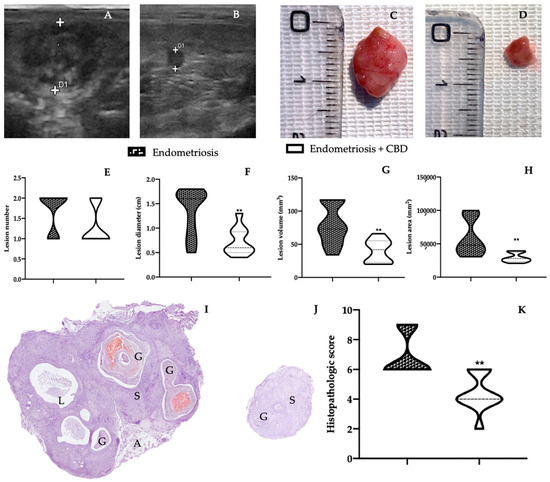
“Endometriosis is usually associated with inflammation and chronic pelvic pain. This paper focuses the attention on the anti-inflammatory, anti-oxidant and analgesic effects of cannabidiol (CBD) and on its potential role in endometriosis. We employed an in vivo model of endometriosis and administered CBD daily by gavage.
CBD administration strongly reduced lesions diameter, volume and area. In particular, it was able to modify lesion morphology, reducing epithelial glands and stroma.
CBD showed anti-oxidant effects reducing lipid peroxidation, the expression of Nox-1 and Nox-4 enzymes.
CBD restored the oxidative equilibrium of the endogenous cellular defense as showed by the SOD activity and the GSH levels in the lesions.
CBD also showed important antifibrotic effects as showed by the Masson trichrome staining and by downregulated expression of MMP-9, iNOS and TGF-β.
CBD was able to reduce inflammation both in the harvested lesions, as showed by the increased Ikb-α and reduced COX2 cytosolic expressions and reduced NFkB nuclear localization, and in the peritoneal fluids as showed by the decreased TNF-α, PGE2 and IL-1α levels.
CBD has important analgesic effects as showed by the reduced mast cells recruitment in the spinal cord and the reduced release of neuro-sensitizing and pro-inflammatory mediators.
In conclusion, the collected data showed that CBD has an effective and coordinated effects in endometriosis suppression.”
https://pubmed.ncbi.nlm.nih.gov/35628240/
https://www.mdpi.com/1422-0067/23/10/5427
 “Background:

 “Endometriosis affects a large proportion of women during their reproductive years and is associated with pain and infertility, also affecting psychological wellbeing and quality of life. The pathogenesis of the disease remains unclear, although it is believed to be multifactorial.
 “This study sought to determine the prevalence, tolerability, and self-reported effectiveness of


 “Patients with endometriosis often suffer from diffuse and poorly localized severe pain. The current pain management strategies include medical and hormonal therapy, as well as surgery. Medical management of pain is often insufficient and is associated with high rate of recurrence. Better pain management is therefore of urgent need.
Methods: Among the various candidates, the endocannabinoid system (ECS) has recently emerged as a relevant pharmacological target for the management of endometriosis-related pain. A computerized literature search was performed to identify relevant studies combining the keywords “endometriosis,” “endocannabinoid,” “
“Patients with endometriosis often suffer from diffuse and poorly localized severe pain. The current pain management strategies include medical and hormonal therapy, as well as surgery. Medical management of pain is often insufficient and is associated with high rate of recurrence. Better pain management is therefore of urgent need.
Methods: Among the various candidates, the endocannabinoid system (ECS) has recently emerged as a relevant pharmacological target for the management of endometriosis-related pain. A computerized literature search was performed to identify relevant studies combining the keywords “endometriosis,” “endocannabinoid,” “