
“The endocannabinoid system (ECS) exerts a modulatory effect of important functions such as neurotransmission, glial activation, oxidative stress, or protein homeostasis.
Dysregulation of these cellular processes is a common neuropathological hallmark in aging and in neurodegenerative diseases of the central nervous system (CNS). The broad spectrum of actions of
cannabinoids allows targeting different aspects of these multifactorial diseases.
In this review, we examine the therapeutic potential of the ECS for the treatment of chronic neurodegenerative diseases of the CNS focusing on Alzheimer’s disease, Parkinson’s disease, Huntington’s disease, and amyotrophic lateral sclerosis.
First, we describe the localization of the molecular components of the ECS and how they are altered under neurodegenerative conditions, either contributing to or protecting cells from degeneration.
Second, we address recent advances in the modulation of the ECS using experimental models through different strategies including the direct targeting of
cannabinoid receptors with agonists or antagonists, increasing the endocannabinoid tone by the inhibition of endocannabinoid hydrolysis, and activation of
cannabinoid receptor-independent effects.
Preclinical evidence indicates that
cannabinoid pharmacology is complex but supports the therapeutic potential of targeting the ECS.
Third, we review the clinical evidence and discuss the future perspectives on how to bridge human and animal studies to develop
cannabinoid-based therapies for each neurodegenerative disorder.
Finally, we summarize the most relevant opportunities of
cannabinoid pharmacology related to each disease and the multiple unexplored pathways in
cannabinoid pharmacology that could be useful for the treatment of neurodegenerative diseases.”
https://www.ncbi.nlm.nih.gov/pubmed/30121249
https://www.sciencedirect.com/science/article/abs/pii/S000629521830337X
]]>

 “Previous studies have demonstrated the presence of cannabinoid 2 receptor (CB2R) in the rat cochlea which was induced by cisplatin. In an organ of Corti-derived cell culture model, it was also shown that an agonist of the CB2R protected these cells against cisplatin-induced apoptosis.
In the current study, we determined the distribution of CB2R in the mouse and rat cochleae and examined whether these receptors provide protection against cisplatin-induced hearing loss.
These data unmask a protective role of the cochlear endocannabinoid/CB2R system which appears tonically active under normal conditions to preserve normal hearing. However, an exogenous agonist is needed to boost the activity of endocannabinoid/CB2R system for protection against a more traumatic cochlear insult, as observed with cisplatin administration.”
https://www.ncbi.nlm.nih.gov/pubmed/30186120
https://www.frontiersin.org/articles/10.3389/fncel.2018.00271/full
“Previous studies have demonstrated the presence of cannabinoid 2 receptor (CB2R) in the rat cochlea which was induced by cisplatin. In an organ of Corti-derived cell culture model, it was also shown that an agonist of the CB2R protected these cells against cisplatin-induced apoptosis.
In the current study, we determined the distribution of CB2R in the mouse and rat cochleae and examined whether these receptors provide protection against cisplatin-induced hearing loss.
These data unmask a protective role of the cochlear endocannabinoid/CB2R system which appears tonically active under normal conditions to preserve normal hearing. However, an exogenous agonist is needed to boost the activity of endocannabinoid/CB2R system for protection against a more traumatic cochlear insult, as observed with cisplatin administration.”
https://www.ncbi.nlm.nih.gov/pubmed/30186120
https://www.frontiersin.org/articles/10.3389/fncel.2018.00271/full
 “The cannabinoid (CB) receptor 2, primarily expressed in immune cells, was shown to play important immune-regulatory functions. In particular, the CB2-R63 functional variant has been shown to alter the ability of the CB2 receptor to exert its inhibitory function on T lymphocytes.
The aim of this study was to investigate the association between a common dinucleotide polymorphism, Q63R, in the cannabinoid receptor 2 gene (CNR2) and rheumatoid arthritis (RA) in the Lebanese population.
One hundred five unrelated Lebanese RA patients and one hundred five controls from different Lebanese governorates were recruited in this study. Genomic DNA was extracted, polymerase chain reaction was performed, and CNR2 was genotyped in a blinded fashion. The χ2 test was used to determine the differences in genotypes and allele frequencies. CNR2 genotyping showed significantly higher frequencies of the CB2-R63 variant (allele frequencies, P < 0.00001; genotype distribution, P < 0.00001) in RA patients when compared with healthy controls. Moreover, RR carriers had more than 10-fold risk for developing RA (OR = 10.8444, 95% CI = 5.0950-23.0818; P < 0.0001), and QR carriers had more than 3-fold risk (OR = 3.8667, 95% CI = 1.7886-8.3591; P = 0.0006) as compared with QQ carriers.
Our preliminary results suggest a role of CB2-Q63R gene polymorphism in the etiology of RA, thus supporting its potential use as a pharmacological target for selective agonists in clinical practice.”
“The cannabinoid (CB) receptor 2, primarily expressed in immune cells, was shown to play important immune-regulatory functions. In particular, the CB2-R63 functional variant has been shown to alter the ability of the CB2 receptor to exert its inhibitory function on T lymphocytes.
The aim of this study was to investigate the association between a common dinucleotide polymorphism, Q63R, in the cannabinoid receptor 2 gene (CNR2) and rheumatoid arthritis (RA) in the Lebanese population.
One hundred five unrelated Lebanese RA patients and one hundred five controls from different Lebanese governorates were recruited in this study. Genomic DNA was extracted, polymerase chain reaction was performed, and CNR2 was genotyped in a blinded fashion. The χ2 test was used to determine the differences in genotypes and allele frequencies. CNR2 genotyping showed significantly higher frequencies of the CB2-R63 variant (allele frequencies, P < 0.00001; genotype distribution, P < 0.00001) in RA patients when compared with healthy controls. Moreover, RR carriers had more than 10-fold risk for developing RA (OR = 10.8444, 95% CI = 5.0950-23.0818; P < 0.0001), and QR carriers had more than 3-fold risk (OR = 3.8667, 95% CI = 1.7886-8.3591; P = 0.0006) as compared with QQ carriers.
Our preliminary results suggest a role of CB2-Q63R gene polymorphism in the etiology of RA, thus supporting its potential use as a pharmacological target for selective agonists in clinical practice.”
 “Several studies demonstrated that
  “We hypothesized that the
 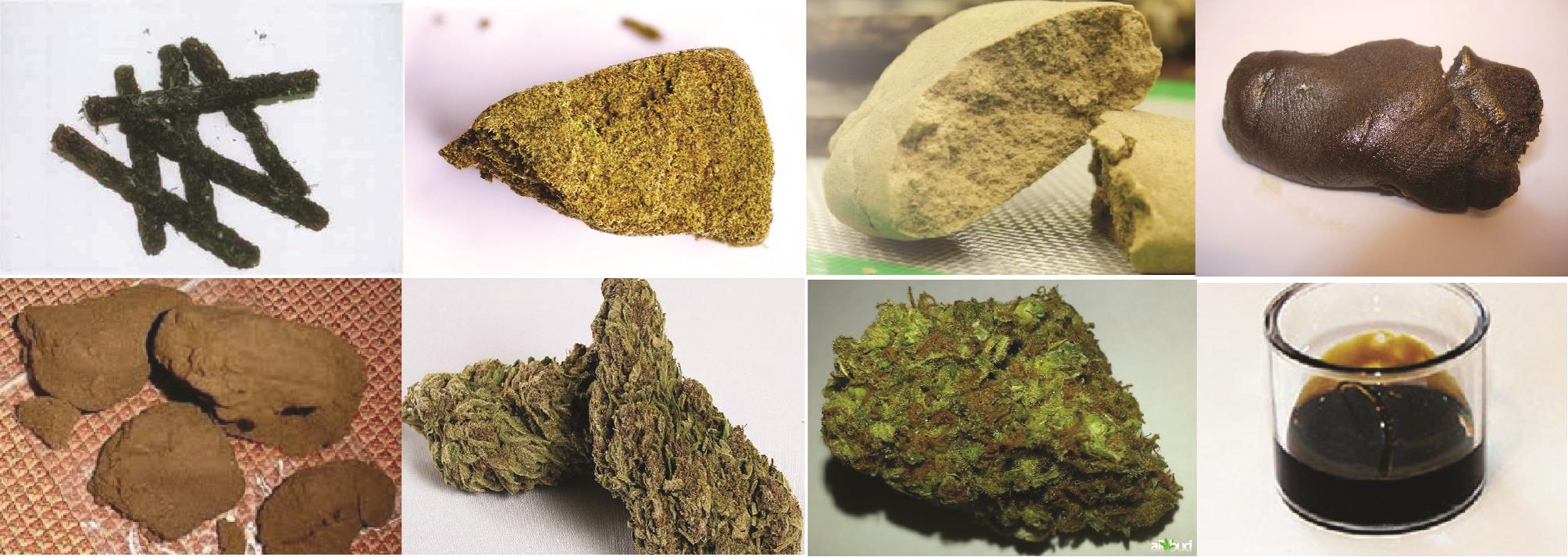 “Cannabis products. First row, left to right: Indian, Lebanese, Turkish and Pakistani hashish. Second row, left to right: Swiss hashish, Zairean marijuana, Swiss marijuana, Moroccan hash oil.”]]>
  “Vascular dementia (VaD) is characteristic of chronic brain ischemia and progressive memory decline, which has a high incidence in the elderly. However, there are no effective treatments for VaD, and the underlying mechanism of its pathogenesis remains unclear.
This study investigated the effects of a synthetic
“Vascular dementia (VaD) is characteristic of chronic brain ischemia and progressive memory decline, which has a high incidence in the elderly. However, there are no effective treatments for VaD, and the underlying mechanism of its pathogenesis remains unclear.
This study investigated the effects of a synthetic