Cannabinoids and Schizophrenia: Therapeutic Prospects.

“Approximately one third of patients diagnosed with schizophrenia do not achieve adequate symptom control with standard antipsychotic drugs (APs).

The endocannabinoid system (ECS) in the brain plays an important role in maintaining normal mental health.

ECS modulates emotion, reward processing, sleep regulation, aversive memory extinction and HPA axis regulation…

The cannabis plant synthesises a large number of pharmacologically active compounds unique to it known as phytocannabinoids. In contrast to the euphoric and pro-psychotic effects of delta-9-tetrahydrocannabinol (THC), certain non-intoxicating phytocannabinoids have emerged in pre-clinical and clinical models as potential APs.

Since the likely mechanism of action does not rely upon dopamine D2 receptor antagonism, synergistic combinations with existing APs are plausible.

The anti-inflammatory and immunomodulatory effects of the non-intoxicating phytocannabinoid cannabidiol (CBD) are well established and are summarised below.

Preliminary data reviewed in this paper suggest that CBD in combination with a CB1 receptor neutral antagonist could not only augment the effects of standard APs but also target the metabolic, inflammatory and stress-related components of the schizophrenia phenotype.”

http://www.ncbi.nlm.nih.gov/pubmed/23829368

“6”-Azidohex-2″-yne-cannabidiol: a potential neutral, competitive cannabinoid CB1 receptor antagonist… 6″-azidohex-2″-yne-cannabidiol was as potent as cannabidiol in producing surmountable antagonism… it is a competitive cannabinoid CB(1) receptor antagonist…it may be a neutral cannabinoid CB(1) receptor antagonist.”  http://www.ncbi.nlm.nih.gov/pubmed/15033394
 

Anti-inflammatory compound from cannabis found in herbs

“A compound found in cannabis as well as in herbs such as basil and oregano could help to treat inflammatory bowel diseases and arthritis, Swiss scientists believe.”

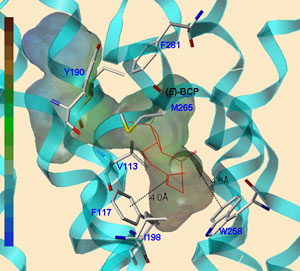
Model of the interaction of BCP with the CB2 receptor

“(E)-beta-caryophyllene (BCP) is an aromatic sesquiterpene that has used for many years as a food additive because of its peppery flavour. The researchers now say that it interacts selectively with one of two cannabinoid receptors, CB2, blocking the chemical signals that lead to inflammation without triggering cannabis’s mood-altering effects.
 
Many cannabinoids bind to the CB2 receptor, but few target it selectively. Most also interact with CB1, which is responsible for cannabis’ psychoactive properties. CB1 is found in brain tissue, whereas CB2is found only in cells elsewhere in the body.”
 

More:http://www.rsc.org/chemistryworld/News/2008/June/24060801.asp

Anti-inflammatory property of the cannabinoid receptor-2-selective agonist JWH-133 in a rodent model of autoimmune uveoretinitis.

“Previous studies have shown that cannabinoids have anti-inflammatory and immune-modulating effects, but the precise mechanisms of action remain to be elucidated.

In this study, we investigated the effect of JWH 133, a selective agonist for cannabinoid receptor 2, the main receptor expressed on immune cells, in a model of autoimmune disease, experimental autoimmune uveoretinitis (EAU).

JWH 133 suppressed EAU in a dose-dependent manner (0.015-15 mg/kg), and the suppressive effect could be achieved in the disease-induction stage and the effector stage. Leukocytes from mice, which had been treated with JWH 133, had diminished responses to retinal peptide and mitogen Con A stimulation in vitro. In vivo JWH 133 treatment also abrogated leukocyte cytokine/chemokine production. Further in vitro studies indicated that JWH 133 down-regulated the TLR4 via Myd88 signal transduction, which may be responsible for its moderate, suppressive effect on antigen presentation. In vivo JWH 133 treatment (1 mg/kg) also suppressed leukocyte trafficking (rolling and infiltration) in inflamed retina as a result of an effect on reducing adhesion molecules CD162 (P-selectin glycoprotein ligand 1) and CD11a (LFA-1) expression on T cells.

In conclusion, the cannabinoid agonist JWH 133 has a high in vivo, anti-inflammatory property and may exert its effect via inhibiting the activation and function of autoreactive T cells and preventing leukocyte trafficking into the inflamed tissue.”

Full text: http://www.jleukbio.org/content/82/3/532.long

1′,1′-Dimethylheptyl-delta-8-tetrahydrocannabinol-11-oic acid: a novel, orally effective cannabinoid with analgesic and anti-inflammatory properties.

“Chemical structures of Δ-9-THC (dronabinol), nabilone, and CT-3”

Figure 1

“1′,1′-Dimethylheptyl-Delta-8-tetrahydrocannabinol-11-oic acid (CT-3) is a novel cannabinoid that is under development by Atlantic Pharmaceuticals as an anti-inflammatory and analgesic drug.

The objective of the study was to investigate the effects of CT-3 on overt symptom complex (Irwin’s test), nociception, gastrointestinal (GI) ulceration, and pharmacological availability after intragastric (i.g.) and intraperitoneal (i.p.) administration.

  The evidence indicates that CT-3 exhibits a large dissociation between its anti-inflammatory/analgesic effects and its ulcerogenic actions. CT-3 warrants clinical development as a novel anti-inflammatory and analgesic drug.”

Full text: http://jpet.aspetjournals.org/content/291/1/31.long

WIN55212-2 attenuates amyloid-beta-induced neuroinflammation in rats through activation of cannabinoid receptors and PPAR-γ pathway.

“Cannabinoids have been shown to exert neuroprotective effects in a plethora of neurodegenerative conditions.

Over the past decade, some studies demonstrate that cannabinoids can interact with nuclear peroxisome proliferator-activated receptors (PPARs).We investigated protective properties of WIN55212-2 (WIN, a non-selective cannabinoid receptor agonist) in beta-amyloid (Aβ)-induced neurodegeneration in rat hippocampus and possible involvement of PPAR-gamma (PPAR-γ). Aβ (1-42) was injected into the hippocampus of male rats. Animals were administered by intracerebroventricular rout the following treatments on days 1, 3, 5, 7: vehicle, WIN, GW9662 (selective PPAR-γ antagonist) plus WIN, AM251 (selective CB₁ receptor antagonist) plus WIN, SR144528 (selective CB₂ receptor antagonist) plus WIN, each of antagonists alone. Injection of Aβ-induced spatial memory impairment and a dramatic rise in hippocampal TNF-α, active caspase 3, nuclear NF-kB levels and TUNEL-positive neurons. WIN administration significantly improved memory function and diminished the elevated levels of these markers, while antagonizing either CB₁ or CB₂ receptor subtype partially attenuated the protective effects. Intriguingly, WIN significantly increased PPAR-γ level and transcriptional activity, the latter being partially inhibited with AM251 but not with SR144528. The enhancing effect on PPAR-γ pathway was crucial to WIN-induced neuroprotection since GW9662 partially reversed the beneficial actions of WIN. Co-administration of the three antagonists led to the complete abrogation of WIN effects.

Our findings indicate that WIN exerts neuroprotective and anti-inflammatory actions against Aβ damage through both CB₁ and CB₂ receptors. Of great note, both direct and CB₁-mediated increase in PPAR-γ signaling also contributes to WIN-induced neuroprotection.”

http://www.ncbi.nlm.nih.gov/pubmed/22634229

The role of CB1 in immune modulation by cannabinoids.

“There is clear evidence that CB(2), historically referred to as the peripheral cannabinoid receptor, mediates many of the immune modulatory effects of cannabinoids.

 However, cannabinoid receptors cannot be classified simply as central or peripheral since CB(2) has been shown to play a role in the central nervous system (CNS) and CB(1) mediates many immune system effects. Although Cnr1 mRNA and CB(1) protein expression is lower than Cnr2 mRNA or CB(2) protein expression in cells of the immune system, several studies have shown direct modulation of immune function via CB(1) by endogenous and exogenous cannabinoids in T cells, innate cells, and to a lesser extent, B cells.

In addition, indirect, but CB(1)-dependent, mechanisms of immune modulation exist. In fact, the mechanism by which cannabinoids attenuate neuroinflammation via CB(1) is likely a combination of immune suppression and neuroprotection.

 Although many studies demonstrate that agonists for CB(1) are immune suppressive and anti-inflammatory, CB(1) antagonists also exhibit anti-inflammatory properties. Overall, the data demonstrate that many of the immune modulatory effects of cannabinoids are mediated via CB(1).”

http://www.ncbi.nlm.nih.gov/pubmed/23261520

Activation of cannabinoid receptor 2 attenuates leukocyte-endothelial cell interactions and blood-brain barrier dysfunction under inflammatory conditions.

“Previous studies have shown that modulation of the receptor-mediated cannabinoid system during neuroinflammation can produce potent neuroprotective and anti-inflammatory effects

…Together, these results suggest that pharmacological CB2R ligands offer a new strategy for BBB protection during neuroinflammation.”

Full text: http://www.ncbi.nlm.nih.gov/pmc/articles/PMC3325902/

Emerging role of the cannabinoid receptor CB2 in immune regulation: therapeutic prospects for neuroinflammation.

“There is now a large body of data indicating that the cannabinoid receptor type 2 (CB2) is linked to a variety of immune events. This functional relevance appears to be most salient in the course of inflammation, a process during which there is an increased number of receptors that are available for activation. Studies aimed at elucidating signal transduction events resulting from CB2 interaction with its native ligands, and of the role of exogenous cannabinoids in modulating this process, are providing novel insights into the role of CB2 in maintaining a homeostatic immune balance within the host. Furthermore, these studies suggest that the CB2 may serve as a selective molecular target for therapeutic manipulation of untoward immune responses, including those associated with a variety of neuropathies that exhibit a hyperinflammatory component.”

Full text: http://www.ncbi.nlm.nih.gov/pmc/articles/PMC2768535/

Researchers Have Discovered Synthetic Agents Used To Treat HIV Inflammation – Medical News Today

“HIV can cause serious inflammation, regardless of drug therapy, as it develops slowly in immune cells called macrophages. However, new research conducted at the Temple University School of Medicine’s Department of Pathology and Laboratory Medicine and Center for Substance Abuse Research (CSAR) has just found that there are synthetic agents with anti-inflammatory properties, related to the active ingredient in cannabis, THC (tetrahydrocannabinol) which could limit and treat the chronic inflammation.

These findings suggest that CB2 agonists could be used along with antiretroviral drugs which could lead to a new form of therapy for HIV/AIDS.

It also suggests that the human immune system itself could be used to fight off the HIV infection.

According to Persidsky: “Our study suggests that the body’s own natural defenses can be made more powerful to fight some of the worst symptoms of HIV.”

Stimulating CB2 receptors could also be applied for treating other infections.”

More: http://www.medicalnewstoday.com/articles/260152.php

TEMPLE SCIENTISTS WEAKEN HIV INFECTION IN IMMUNE CELLS USING SYNTHETIC AGENTS RELATED TO ACTIVE INGREDIENT IN MARIJUANA

“HIV, the virus that causes AIDS, is notorious for hiding within certain types of cells, where it reproduces at a slowed rate and eventually gives rise to chronic inflammation, despite drug therapy. But researchers at Temple University School of Medicine’s Department of Pathology and Laboratory Medicine and Center for Substance Abuse Research (CSAR) recently discovered that synthetic anti-inflammatory substances distantly related to the active ingredient of marijuana may be able to take the punch out of HIV while inside one of its major hideouts – immune cells known as macrophages. 

The breakthrough comes at a crucial time in the HIV/AIDS pandemic…

To better understand the connection between inflammation and neurocognitive conditions linked to long-term exposure to HIV, Ramirez and colleagues looked specifically at the CB2 receptor, a protein located on the surface of macrophages. CB2 is a binding site for substances called cannabinoids, the primary active compounds of cannabis (marijuana), and it may play a role in blocking inflammation in the CNS. Unlike its counterpart, the CB1 receptor, which is found primarily on neurons in the brain, CB2 does not mediate the psychoactive effects for which cannabis is popularly known.

Ramirez explained that there has been much pharmacological interest in developing agents that selectively target CB2. Ideally, these compounds would help limit chronic inflammatory responses and would not bind to CB1. The most promising compounds are those derived from THC (tetrahydrocannabinol), the main active substance in cannabis. 

The scientists landed on their discovery by conducting a series of experiments in a well-established, non-clinical HIV macrophage cell model. They began by treating the HIV-infected cells with one of three different synthetic CB2-activating compounds. The cells were then sampled periodically to measure the activity of an enzyme called reverse transcriptase, which is essential for HIV replication. After seven days, the team found that all three compounds had successfully attenuated HIV replication. The experiments and findings are detailed in the May issue of the Journal of Leukocyte Biology. 

The results suggest that selective CB2 agonists could potentially be used in tandem with existing antiretroviral drugs, opening the door to the generation of new drug therapies for HIV/AIDS. The data also support the idea that the human immune system could be leveraged to fight HIV infection. 

“Our study suggests that the body’s own natural defenses can be made more powerful to fight some of the worst symptoms of HIV,” Persidsky explained. He also noted that stimulating CB2 receptors in white blood cells could produce similar benefits against other viral infections.”

More: http://www.temple.edu/medicine/hiv_immune_cells.htm