
“Cannabis has been used medicinally for centuries and numerous species of this genus are undoubtedly amongst the primeval plant remedies known to humans.
Cannabis sativa in particular is the most reported species, due to its substantial therapeutic implications that are owed to the presence of chemically and pharmacologically diverse cannabinoids.
These compounds have long been used for the palliative treatment of cancer.
Recent advancements in receptor pharmacology research have led to the identification of cannabinoids as effective antitumor agents.
This property is accredited for their ability to induce apoptosis, suppress proliferative cell signalling pathways and promote cell growth inhibition.
Evolving lines of evidence suggest that cannabinoid analogues, as well as their receptor agonists, may offer a novel strategy to treat various forms of cancer.
This review summarizes the historical perspective of C. sativa, its potential mechanism of action, and pharmacokinetic and pharmacodynamic aspects of cannabinoids, with special emphasis on their anticancer potentials.”
http://www.xiahepublishing.com/ArticleFullText.aspx?sid=2&jid=3&id=10.14218%2FJERP.2017.00012
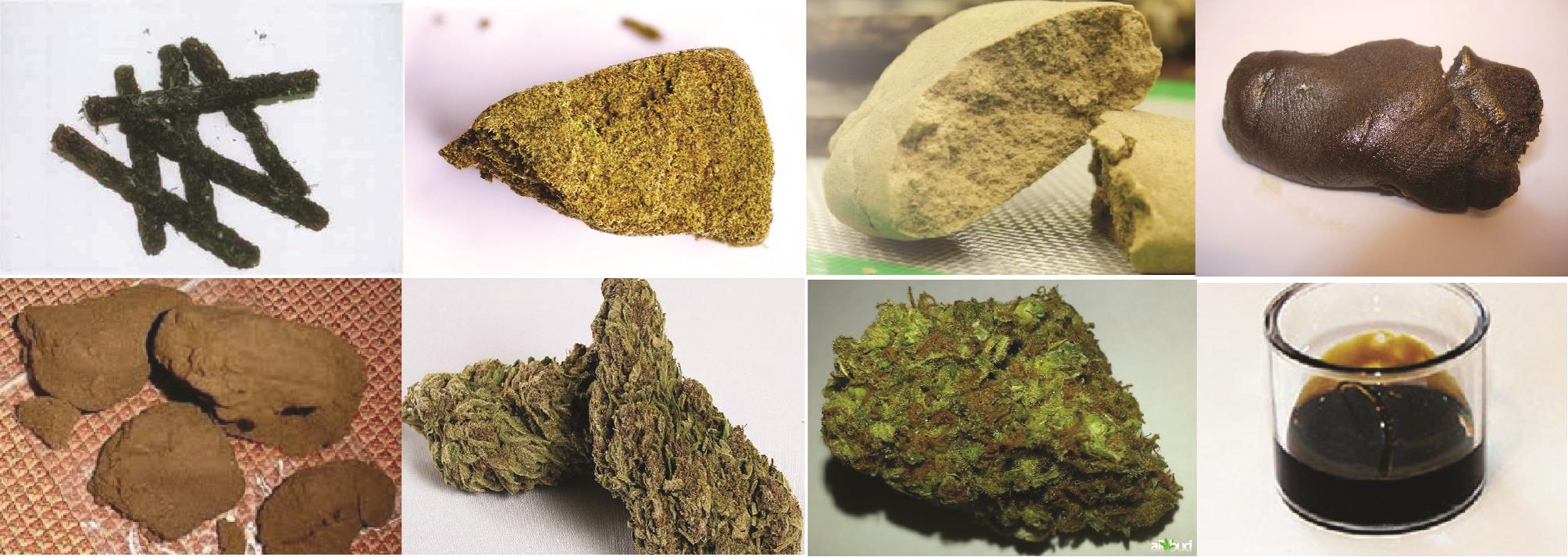 “Cannabis products. First row, left to right: Indian, Lebanese, Turkish and Pakistani hashish. Second row, left to right: Swiss hashish, Zairean marijuana, Swiss marijuana, Moroccan hash oil.”]]>
Tag Archives: treatment
The potential protective effects of cannabinoid receptor agonist WIN55,212-2 on cognitive dysfunction is associated with the suppression of autophagy and inflammation in an experimental model of vascular dementia.
 “Vascular dementia (VaD) is characteristic of chronic brain ischemia and progressive memory decline, which has a high incidence in the elderly. However, there are no effective treatments for VaD, and the underlying mechanism of its pathogenesis remains unclear.
This study investigated the effects of a synthetic cannabinoid receptor agonist WIN55,212-2 (WIN) on VaD, and molecular mechanisms of the effects.
These data indicate that WIN exerts a neuroprotective effect on the cognitive deficits of VaD rats, which may be associated with the suppression of excessive autophagy and inflammation.”
https://www.ncbi.nlm.nih.gov/pubmed/29945070
https://www.psy-journal.com/article/S0165-1781(17)31479-8/fulltext
“Vascular dementia (VaD) is characteristic of chronic brain ischemia and progressive memory decline, which has a high incidence in the elderly. However, there are no effective treatments for VaD, and the underlying mechanism of its pathogenesis remains unclear.
This study investigated the effects of a synthetic cannabinoid receptor agonist WIN55,212-2 (WIN) on VaD, and molecular mechanisms of the effects.
These data indicate that WIN exerts a neuroprotective effect on the cognitive deficits of VaD rats, which may be associated with the suppression of excessive autophagy and inflammation.”
https://www.ncbi.nlm.nih.gov/pubmed/29945070
https://www.psy-journal.com/article/S0165-1781(17)31479-8/fulltext
Structure-Activity Relationship of Cannabis Derived Compounds for the Treatment of Neuronal Activity-Related Diseases.
“Cannabis sativa active compounds are extensively studied for their therapeutic effects, beyond the well-known psychotropic activity. C. Sativa is used to treat different medical indications, such as multiple sclerosis, spasticity, epilepsy, ulcerative colitis and pain. Simultaneously, basic research is discovering new constituents of cannabis-derived compounds and their receptors capable of neuroprotection and neuronal activity modulation. The function of the various phytochemicals in different therapeutic processes is not fully understood, but their significant role is starting to emerge and be appreciated. In this review, we will consider the structure-activity relationship (SAR) of cannabinoid compounds able to bind to cannabinoid receptors and act as therapeutic agents in neuronal diseases, e.g., Parkinson’s disease.” https://www.ncbi.nlm.nih.gov/pubmed/29941830 http://www.mdpi.com/1420-3049/23/7/1526]]>
Pain Modulation after Oromucosal Cannabinoid Spray (SATIVEX®) in Patients with Multiple Sclerosis: A Study with Quantitative Sensory Testing and Laser-Evoked Potentials.
 “Delta-9-tetrahydrocannabinol (THC)/cannabidiol (CBD) (nabiximols or Sativex®) is an oromucosal spray formulation containing THC and CBD at an approximately 1:1 fixed ratio. Its administration for the treatment of pain in patients with multiple sclerosis (MS) has been established.
MS patients generally complain of different kinds of pain, including spasticity-related and neuropathic pain. In this study, we compared and evaluated pain modulation and thermal/pain threshold of MS patients before and after THC/CBD administration.
Patients reported a significant reduction in pain.
Our results indicate that Sativex® therapy provides pain relief in MS patients and suggest that it might modulate peripheral cold-sensitive TRP channels.”
https://www.ncbi.nlm.nih.gov/pubmed/29933552
http://www.mdpi.com/2305-6320/5/3/59
“Delta-9-tetrahydrocannabinol (THC)/cannabidiol (CBD) (nabiximols or Sativex®) is an oromucosal spray formulation containing THC and CBD at an approximately 1:1 fixed ratio. Its administration for the treatment of pain in patients with multiple sclerosis (MS) has been established.
MS patients generally complain of different kinds of pain, including spasticity-related and neuropathic pain. In this study, we compared and evaluated pain modulation and thermal/pain threshold of MS patients before and after THC/CBD administration.
Patients reported a significant reduction in pain.
Our results indicate that Sativex® therapy provides pain relief in MS patients and suggest that it might modulate peripheral cold-sensitive TRP channels.”
https://www.ncbi.nlm.nih.gov/pubmed/29933552
http://www.mdpi.com/2305-6320/5/3/59
 “There is an increasing interest in the medical use of
  “Cannabis and
  “The treatment of symptoms in people with palliative diagnoses begins with meticulous clinical assessment with treatment choice (s) selected based on an understanding of the symptom aetiology and the evidence which underpins its treatment.
Increasingly the merits of palliative care have been established earlier in the disease trajectory where treatment outcomes may include increased survival and maintenance of function.
There is strong public support for the availability of medicinal cannabis, particularly for people with palliative diagnoses.
There are several areas where there is potential for symptom benefits through modulation of the endocannabinoid system, though clinical data to date has been inconclusive in key symptoms such as pain and nausea, and data from other settings such as chemotherapy-induced nausea and vomiting not readily extrapolated.
Ideally exploration of medicinal cannabinoids should occur within a clinical trial to accelerate the evidence base to inform practice. In people with refractory symptoms the consideration of unregistered products or off label prescribing should be guided by the potential influences of pharmacokinetic, pharmacodynamic and drug-drug interactions, supported by an informed discussion with the patient, and regular review of net clinical benefit.”
“The treatment of symptoms in people with palliative diagnoses begins with meticulous clinical assessment with treatment choice (s) selected based on an understanding of the symptom aetiology and the evidence which underpins its treatment.
Increasingly the merits of palliative care have been established earlier in the disease trajectory where treatment outcomes may include increased survival and maintenance of function.
There is strong public support for the availability of medicinal cannabis, particularly for people with palliative diagnoses.
There are several areas where there is potential for symptom benefits through modulation of the endocannabinoid system, though clinical data to date has been inconclusive in key symptoms such as pain and nausea, and data from other settings such as chemotherapy-induced nausea and vomiting not readily extrapolated.
Ideally exploration of medicinal cannabinoids should occur within a clinical trial to accelerate the evidence base to inform practice. In people with refractory symptoms the consideration of unregistered products or off label prescribing should be guided by the potential influences of pharmacokinetic, pharmacodynamic and drug-drug interactions, supported by an informed discussion with the patient, and regular review of net clinical benefit.”
 “Cannabidiol (CBD) is a non-psychotomimetic compound of the
  “Hallmark features of acute kidney injury (AKI) include mobilization of immune and inflammatory mechanisms culminating in tissue injury. Emerging information indicates heterogeneity of neutrophils with pro- and anti-inflammatory functions (N1 and N2, respectively). Also, regulatory T-17 (Treg17) cells curtail Th-17-mediated pro-inflammatory responses. However, the status of Treg17 cells and neutrophil phenotypes in AKI are not established.
Further,
“Hallmark features of acute kidney injury (AKI) include mobilization of immune and inflammatory mechanisms culminating in tissue injury. Emerging information indicates heterogeneity of neutrophils with pro- and anti-inflammatory functions (N1 and N2, respectively). Also, regulatory T-17 (Treg17) cells curtail Th-17-mediated pro-inflammatory responses. However, the status of Treg17 cells and neutrophil phenotypes in AKI are not established.
Further,