Cannabidiol Inhibits Inflammation Induced by Cutibacterium acnes-Derived Extracellular Vesicles via Activation of CB2 Receptor in Keratinocytes

“Background: Acne is a common inflammatory skin disease, while cannabidiol (CBD) is a representative non-psychoactive phytocannabinoid which has been proved to exert universal anti-inflammatory properties. This study aimed to explore the effect of CBD on acne inflammation induced by Cutibacterium acnes-derived extracellular vesicles (CEVs) in keratinocytes and reveal the underlying mechanisms.

Results: The expression of inflammatory cytokines (IL-6, IL-8 and TNF-α) in CEVs-stimulated NHEKs was suppressed by CBD. CB2 receptor expression was upregulated by CBD, whereas CEVs-promoted TRPV1 expression was downregulated by CBD. AM630 reversed TNF-α levels inhibited by CBD. Capsazepine exerted an inhibitory effect on CEVs-induced inflammation and had synergistic effect with CBD. The phosphorylation of ERK1/2 and NF-κB p65 and nuclear translocation of NF-κB p65 were induced by CEVs but reduced by CBD.

Conclusion: The results indicated that CBD could inhibit inflammation induced by CEVs in NHEKs, which was mediated by activation of CB2 receptor and enhanced by the TRPV1 antagonist, through inactivation of the MAPK and NF-κB signaling pathways. CBD might be a potential novel strategy for acne treatment in the future.”

https://pubmed.ncbi.nlm.nih.gov/35982758/

“In conclusion, our results provided the evidence that CBD exerted an inhibitory effect on acne inflammation in keratinocytes induced by CEVs, which was mediated by CB2 receptor and through inactivating the MAPK and NF-κB signaling pathways. The TRPV1 antagonist Capsazepine had synergistic effect with CBD, but whether TRPV1 directly mediated the anti-inflammatory action of CBD still remains to be confirmed. Besides, the regulatory effect of CB2 receptor and TRPV1 on the MAPK and NF-κB signaling pathways in the acne model should also be further unraveled. Despite several limitations above, our study proposes the anti-acne property of CBD and a potent novel therapeutic approach for acne.”


https://www.dovepress.com/cannabidiol-inhibits-inflammation-induced-by-cutibacterium-acnes-deriv-peer-reviewed-fulltext-article-JIR

Cannabidiol and epilepsy in Brazil: a current review

SciELO - Wikipedia

“Background: Cannabidiol (CBD) has become a promising therapeutic option in the treatment of epilepsy. Recent studies provide robust evidence that CBD is effective and safe. Limitations in current knowledge and regulatory issues still limit CBD use. CBD use regarding epilepsy types still lacks clear guidelines.

Objective: To critically review the main current pharmacological features and clinical issues regarding CBD use in epilepsy, to provide current regulatory background regarding CBD use in Brazil, and to suggest a practical CBD therapeutic guide in Brazil.

Methods: Non-systematic literature review (up to February 2022) of current concepts of CBD and epilepsy, including the authors’ personal experience.

Results: Five pivotal trials have led to CBD approval as an adjunctive treatment for Dravet and Lennox-Gastaut syndromes, and for the tuberous sclerosis complex. Efficacy of CBD in other drug-resistant epilepsies remains not completely understood. CBD adverse event profile and drug interactions are better understood. CBD is well tolerated. In Brazil, CBD is not classified as a medication, but as a product subject to a distinct regulatory legislation. CBD is still not offered by the National Brazilian health system, but can be purchased in authorized pharmacies or imported under prescription and signed informed consent.

Conclusion: CBD is a recognized novel treatment for epilepsy. Future well-designed studies and public health strategies are needed to offer widespread access to CBD, and to improve the quality of life of people living with epilepsy in Brazil.”

https://pubmed.ncbi.nlm.nih.gov/35976327/

“In conclusion, epilepsy burden, especially medically refractory epilepsy, affects patients and families, particularly for medically refractory epilepsy. CBD offers hope in treating epilepsy. Current evidence demonstrates efficacy and safety in prescribing CBD for Dravet and Lennox-Gastaut syndrome and Tuberous Sclerosis Complex.”

https://www.scielo.br/j/anp/a/Hw3WJKnhvbxvdCqxc9tNDNd/?lang=en

Safety and efficacy of cannabidiol-cannabidiolic acid rich hemp extract in the treatment of refractory epileptic seizures in dogs

Archive of "Frontiers in Veterinary Science". - PMC

“The use of cannabidiol (CBD) in childhood refractory seizures has become a common therapeutic approach for specific seizure disorders in human medicine. Similarly, there is an interest in using CBD, cannabidiolic acid (CBDA) or cannabinoid-rich hemp products in the treatment of idiopathic epilepsy in dogs.

We aimed to examine a small cohort in a pilot investigation using a CBD and CBDA-rich hemp product for the treatment of refractory epileptic seizures in dogs.

Fourteen dogs were examined in a 24-week randomized cross-over study being provided placebo or CBD/CBDA-rich hemp extract treatment at 2 mg/kg orally every 12 h for each 12-week arm of the study. Serum chemistry, complete blood counts, serum anti-seizure medication (ASM) concentrations and epileptic seizure frequency were followed over both arms of the cross-over trial.

Results demonstrated that besides a mild increase in alkaline phosphatase, there were no alterations observed on routine bloodwork at 2, 6, and 12 weeks during either arm of the study.

Epileptic seizure frequency decreased across the population from a mean of 8.0 ± 4.8 during placebo treatment to 5.0 ± 3.6 with CBD/CBDA-rich hemp extract (P = 0.02). In addition, epileptic seizure event days over the 12 weeks of CBD/CBDA-rich hemp treatment were 4.1 ± 3.4, which was significantly different than during the 12 weeks of placebo treatment (5.8 ± 3.1; P =0.02). The number of dogs with a 50% reduction in epileptic activity while on treatment were 6/14, whereas 0/14 had reductions of 50% or greater while on the placebo (P = 0.02).

No differences were observed in serum zonisamide, phenobarbital or bromide concentrations while on the treatment across groups. Adverse events were minimal, but included somnolence (3/14) and transient increases in ataxia (4/14) during CBD/CBDA-rich hemp extract treatment; this was not significantly different from placebo. This further indicates that providing CBD/CBDA-rich hemp extract during refractory epilepsy (only partially responsive to ASM), in conjunction with other ASM appears safe.

Based on this information, the use of 2 mg/kg every 12 h of a CBD/CBDA-rich hemp extract can have benefits in reducing the incidence of epileptic seizures, when used concurrently with other ASMs.”

https://pubmed.ncbi.nlm.nih.gov/35967998/

“Since the 1970’s or earlier, cannabinoids have been found to have anti-epileptic effects in animal seizure models. In conclusion, there appears to be a population of dogs that respond favorably to CBD/CBDA-rich hemp products for epileptic seizure reduction similar to other human, dog and rodent data.”

https://www.frontiersin.org/articles/10.3389/fvets.2022.939966/full

Anticancer activity of Δ9-tetrahydrocannabinol and cannabinol in vitro and in human lung cancer xenograft

Asian Pacific Journal of Tropical Biomedicine

“Objective: To investigate the effects of Δ9-tetrahydrocannabinol, the principal psychoactive compound of Cannabis sativa, and cannabinol, a Δ9-tetrahydrocannabinol degradative product, on human non-small cell lung cancer cells.
Methods: Δ9-Tetrahydrocannabinol and cannabinol were tested for anticancer activity in human non-small cell lung cancer (A549) cells. The effects on cell proliferation, apoptosis, and phosphorylation profiles were examined. The effects of Δ9-tetrahydrocannabinol and cannabinol on tumor growth were also investigated using a xenograft nude mouse model. Apoptosis and targeted phosphorylation were verified by immunohistochemistry.
Results: Δ9-Tetrahydrocannabinol and cannabinol significantly inhibited cell proliferation and increased the number of apoptotic cells in a concentration-dependent manner. The Δ9-tetrahydrocannabinol- and cannabinol-treated cells had lower levels of phosphorylated protein kinase B [AKT (S473)], glycogen synthase kinase 3 alpha/beta, and endothelial nitric oxide synthase compared to the controls. The study of xenograft mice revealed that tumors treated with 15 mg/kg Δ9-tetrahydrocannabinol or 40 mg/kg cannabinol were significantly smaller than those of the control mice. The tumor progression rates in mice treated with 15 mg/kg Δ9-tetrahydrocannabinol or 40 mg/kg cannabinol were significantly slower than in the control group.
Conclusions: These findings indicate that Δ9-tetrahydrocannabinol and cannabinol inhibit lung cancer cell growth by inhibiting AKT and its signaling pathways, which include glycogen synthase kinase 3 alpha/beta and endothelial nitric oxide synthase.”

https://journals.lww.com/aptb/fulltext/2022/12080/anticancer_activity_of__9_tetrahydrocannabinol_and.1.aspx

In Vitro Anti-Proliferative Activity of Cannabis Extract on Human Cancer Cell Lines

“Background: Cannabis is classified as a Schedule 5 substance under the Narcotics Act B.E. 2522. Among with various modulatory effects of cannabinoids on body functions, two major cannabinoids are known to be used as medicines. They are a psychoactive delta-9-tetrahydrocannabinol (THC) and non-psychoactive cannabidiol (CBD). Currently, THC and CBD are advised to be used for treatment of a variety of medical conditions. Such as cell growth inhibition, anti-inflammatory effects and tumor regression. Although, potential benefit can be found in the medical condition above mentioned. The use of cannabis in some disease states such as cancer remain to be clinically evaluated in both efficacy and safety aspects through systematic research before being generalized for routine use.

Objective: The purpose of this study to investigate the In vitro effects of cannabis extracts on 10 types of human cancer cell line.

Methods: Two cannabis extracts (high THC level and high CBD level) were kept in sterile bottles, in refrigerator, until further use when it was dissolved in DMSO to give a stock solution, filtered and stored at 4 °C. The small percentage of DMSO present in the wells (maximal 0.1%) was found not to affect the experiment. The anti-proliferative activities of cannabis extract on cancer cell lines was determined by MTT assay.

Results: To evaluate the anti-proliferative activity of the cannabis extracts on 10 types of cancer cell line (lung cancer, breast cancer, colorectal cancer, gastric cancer, cervical cancer, ovarian cancer, liver cancer, pancreatic cancer, cholangiocarcinoma cancer, lymphoma cancer), the cells were treated with different concentrations of high THC level and high CBD level for 72h and cell viability was determined using MTT assay.

The results showed that all of cancer cell lines viability significantly reduced in concentration and time dependent manner following treatment with the extract. The IC50 of the high THC level values ranging from 10.80 ±1.03 to 54.60±1.27 μg/mL, and exhibited very strong activity against RBE with IC50 values of 10.80±1.03 μg/mL. The IC50 of the high CBD level values ranging from 6.00±1.16 to 26.00±1.37 μg/mL, and exhibited very strong activity against NCI-N87 with IC50 values of 6.00±1.16 μg/mL.

Conclusions: The results suggest that high THC level and high CBD level is a potent human cancer cells proliferation. Further investigations are needed to elucidate the mechanism of anticancer actions.”

https://he02.tci-thaijo.org/index.php/JDMS/article/view/255013

Association between cannabis use with urological cancers: A population-based cohort study and a mendelian randomization study in the UK biobank

“Background: Legislation of cannabis use has been approved in many European and North American countries. Its impact on urological cancers is unclear. This study was conducted to explore the association between cannabis use and the risk of urological cancers.

Methods: We identified 151,945 individuals with information on cannabis use in the UK Biobank from 2006 to 2010. Crude and age-standardized incidence ratios of different urological cancers were evaluated in the entire cohort and subgroups. Cox regression was performed for survival analysis.

Results: Previous use of cannabis was a significant protective factor for renal cell carcinoma (HR = 0.61, 95%CI:0.40-0.93, p = 0.021) and prostate cancer (HR = 0.82, 95%CI:0.73-0.93, p = 0.002) in multivariable analysis. The association between previous cannabis use and both renal cell carcinoma and bladder cancer was only observed in females (HRRCC = 0.42, 95%CI:0.19-0.94, p = 0.034; HRBCa = 0.43, 95%CI:0.21-0.86, p = 0.018) but not in men. There was no significant association between cannabis use and testicular cancer incidence. Mendelian randomization demonstrated a potential causal effect of cannabis use on a lower incidence of renal cell carcinoma.

Conclusions: Previous use of cannabis was associated with a lower risk of bladder cancer, renal cell carcinoma, and prostate cancer. The inverse association between cannabis and both renal cell carcinoma and bladder cancer was only found in females but not in males.”

https://pubmed.ncbi.nlm.nih.gov/35975633/

“Cannabis, also known as marijuana, is the most used substance derived from Cannabis Sativa which can be used for recreational or medical purposes. Some evidence also suggested that cannabinoids might induce apoptosis of cancer cells and inhibit oncogenesis, indicating a potential treatment effect”

https://onlinelibrary.wiley.com/doi/10.1002/cam4.5132

“Previous Cannabis Use Linked to Lower Risk of Some Genitourinary Cancers”

https://www.cancertherapyadvisor.com/home/cancer-topics/urologic-cancers/genitourinary-cancers-previous-cannabis-use-lower-risk/

Incidence and Predictors of Cannabis-Related Poisoning and Mental and Behavioral Disorders among Patients with Medical Cannabis Authorization: A Cohort Study

Publication Cover

“Objective: As medical cannabis use increases in North America, establishing its safety profile is a priority. The objective of this study was to assess rates of emergency department (ED) visits and hospitalizations due to poisoning by cannabis, and cannabis-related mental health disorders among medically authorized cannabis patients in Ontario, Canada, between 2014 and 2017.

Methods: This is a retrospective cohort study of patients who received medical cannabis authorization in Ontario, Canada, using data collected in participating cannabis clinics. Outcomes included ED visit/hospitalization with a main diagnosis code for: cannabis/cannabinoid poisoning; and mental/behavioral disorders due to cannabis use. Cox proportional hazard regressions were utilized to analyze the data.

Results: From 29,153 patients who received medical authorization, 23,091 satisfied the inclusion criteria. During a median follow-up of 240 days, 14 patients visited the ED or were hospitalized for cannabis poisoning-with an incidence rate of 8.06 per 10,000 person-years (95% CI: 4.8-13.6). A total of 26 patients visited the ED or were hospitalized for mental and behavioral disorders due to cannabis use-with an incidence rate of 15.0 per 10,000 person-years (95% CI: 10.2-22.0). Predictors of cannabis-related mental and behavioral disorders include prior substance use disorders, other mental disorders, age, diabetes, and chronic obstructive pulmonary disease.

Conclusions: The results suggest that the incidence of cannabis poisoning or cannabis-related mental and behavioral disorders was low among patients who were authorized to use cannabis for medical care. Identified predictors can help to target patients with potential risk of the studied outcomes.”

https://pubmed.ncbi.nlm.nih.gov/35866679/

https://www.tandfonline.com/doi/abs/10.1080/10826084.2022.2102193?journalCode=isum20

Cannabinoids, Medical Cannabis, and Colorectal Cancer Immunotherapy

www.frontiersin.org

“Colorectal cancer is a major public health problem. Unfortunately, currently, no effective curative option exists for this type of malignancy. The most promising cancer treatment nowadays is immunotherapy which is also called biological or targeted therapy.

This type of therapy boosts the patient’s immune system ability to fight the malignant tumor. However, cancer cells may become resistant to immunotherapy and escape immune surveillance by obtaining genetic alterations. Therefore, new treatment strategies are required.

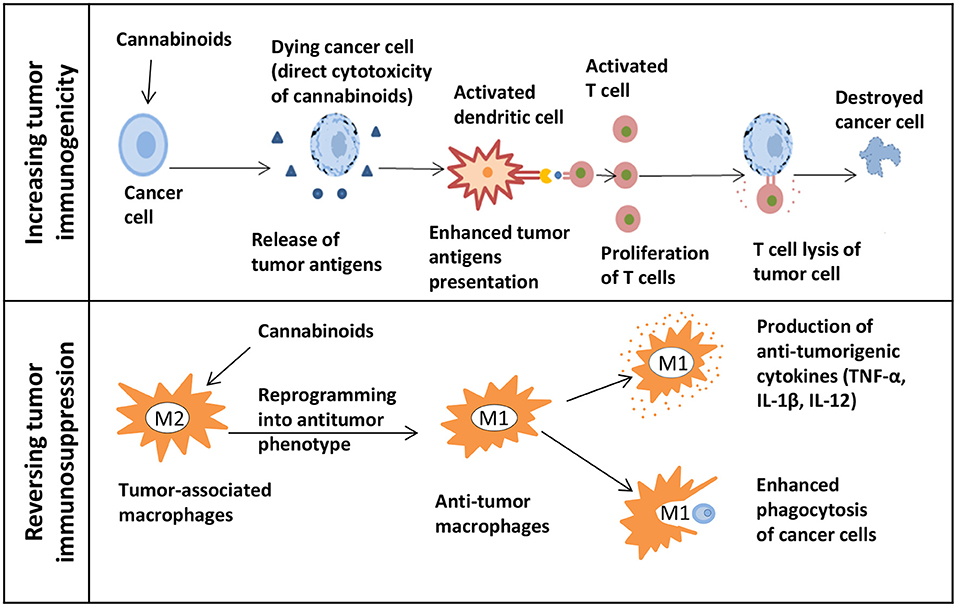
In the recent decade, several reports suggest the effectiveness of cannabinoids and Cannabis sativa extracts for inhibiting cancer proliferation in vitro and in vivo, including intestinal malignancies.

Cannabinoids were shown to modulate the pathways involved in cell proliferation, angiogenesis, programmed cell death and metastasis. Because of that, they are proposed as adjunct therapy for many malignancies. By far less information exists on the potential of the use of cannabis in combination with immunotherapy.

Here, we explore the possibility of the use of cannabinoids for modulation of immunotherapy of colon cancer and discuss possible advantages and limitations.”

https://pubmed.ncbi.nlm.nih.gov/34631734/

“Among new potential therapeutic approaches, treatment with cannabinoids and Cannabis sativa extracts have been shown to be efficient in inhibiting cancer growth in vitro and in vivo. It has been strongly suggested in the literature that cannabinoids and cannabis extracts can be used for the treatment of colorectal cancer. Evidence shows that cannabinoids have a high potential to be turned into promising drugs. It is obvious that these compounds can target the key signaling pathways of cancer development.”

https://www.frontiersin.org/articles/10.3389/fmed.2021.713153/full

Antifungal and anti-aflatoxigenic properties of organs of Cannabis sativa L.: relation to phenolic content and antioxidant capacities

SpringerLink

“Aflatoxin B1 is a carcinogenic mycotoxin that frequently contaminates crops worldwide.

Current research indicates that the use of natural extracts to combat mycotoxin contamination may represent an eco-friendly, sustainable strategy to ensure food safety. Although Cannabis sativa L. has long been known for its psychoactive cannabinoids, it is also rich in many other bioactive molecules.

This study examines extracts from various organs of Cannabis sativa L. to determine their ability to limit aflatoxin production and growth of Aspergillus flavus.

The results indicate that flower extract is most effective for limiting the synthesis of aflatoxin B1, leading to an almost-complete inhibition of toxin production at a concentration of 0.225 mg dry matter per gram of culture medium. Since flower extract is rich in phenolic compounds, its total antioxidant ability and radical-scavenging capacity are determined.

Compared with other anti-aflatoxigenic extracts, the anti-oxidative potential of Cannabis sativa L. flower extract appears moderate, suggesting that its anti-mycotoxin effect may be related to other bioactive compounds.”

https://pubmed.ncbi.nlm.nih.gov/34143269/

https://link.springer.com/article/10.1007/s00203-021-02444-x

Cannabidiol inhibits invasion and metastasis in colorectal cancer cells by reversing epithelial-mesenchymal transition through the Wnt/β-catenin signaling pathway

SpringerLink

“Colorectal cancer (CRC) is the leading cause of cancer deaths worldwide, wherein distant metastasis is the main reason for death. The non-psychoactive phytocannabinoid cannabidiol (CBD) effectively induces the apoptosis of CRC cells. We investigated the role of CBD in the migration and metastasis of CRC cells.

CBD significantly inhibited proliferation, migration, and invasion of colon cancer cells in a dose- or time-dependent manner. CBD could also inhibit epithelial-mesenchymal transition (EMT) by upregulating epithelial markers such as E-cadherin and downregulating mesenchymal markers such as N-cadherin, Snail, Vimentin, and HIF-1α. CBD could suppress the activation of the Wnt/β-catenin signaling pathway, inhibit the expression of β-catenin target genes such as APC and CK1, and increase the expression of Axin1. Compared to the control group, the volume and weight of orthotopic xenograft tumors significantly decreased after the CBD treatment.

The results demonstrated that CBD inhibits invasion and metastasis in CRC cells. This was the first study elucidating the underlying molecular mechanism of CBD in inhibiting EMT and metastasis via the Wnt/β-catenin signaling pathway in CRC cells. The molecular mechanism by which CBD inhibits EMT and metastasis of CRC cells was shown to be through the Wnt/β-catenin signaling pathway for the first time.”

https://pubmed.ncbi.nlm.nih.gov/35960375/

https://link.springer.com/article/10.1007/s00432-022-04265-x