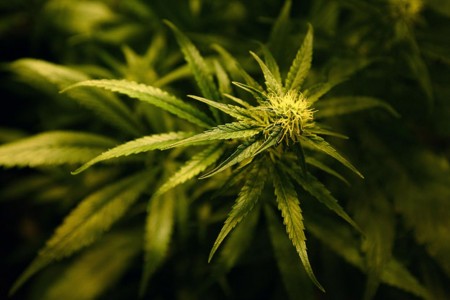
The medical necessity for medicinal cannabis: prospective, observational study evaluating the treatment in cancer patients on supportive or palliative care.

“Cancer patients using cannabis report better influence from the plant extract than from synthetic products… We followed patients with a medicinal cannabis license to evaluate the advantages and side effects of using cannabis by cancer patients…

 All cancer or anticancer treatment-related symptoms showed significant improvement.

 No significant side effects except for memory lessening in patients with prolonged cannabis use were noted.

Conclusion. The positive effects of cannabis on various cancer-related symptoms are tempered by reliance on self-reporting for many of the variables. Although studies with a control group are missing, the improvement in symptoms should push the use of cannabis in palliative treatment of oncology patients.”

http://www.ncbi.nlm.nih.gov/pubmed/23956774

Full Text: http://www.hindawi.com/journals/ecam/2013/510392/

Study Links Aspartame To Cancer – News/Science

“Study Links Aspartame To Cancer” http://www.cbsnews.com/2100-500368_162-712605.html

 Controversial: The authority¿s view will be welcomed by manufacturers who use aspartame and similar sweeteners in fizzy drinks such as Diet Coke

“First Experimental Demonstration of the Multipotential Carcinogenic Effects of Aspartame Administered in the Feed to Sprague-Dawley Rats” http://www.ncbi.nlm.nih.gov/pmc/articles/PMC1392232/ 

“Aspartame administered in feed, beginning prenatally through life span, induces cancers of the liver and lung in male Swiss mice.” http://www.ncbi.nlm.nih.gov/pubmed/20886530 

“Life-Span Exposure to Low Doses of Aspartame Beginning during Prenatal Life Increases Cancer Effects in Rats” http://www.ncbi.nlm.nih.gov/pmc/articles/PMC1964906/

“Aspartame induces lymphomas and leukaemias in rats ” http://www.scribd.com/doc/74930468/Aspartame-induces-lymphomas-and-leukaemias-in-rats 

“Aspartame and Incidence of Brain Malignancies” http://cebp.aacrjournals.org/content/17/5/1295.long

“Aspartame bioassay findings portend human cancer hazards.” http://www.ncbi.nlm.nih.gov/pubmed/18085058 

“Sour Finding on Popular Sweetener: Increased Cancer Incidence Associated with Low-Dose Aspartame Intake” http://www.ncbi.nlm.nih.gov/pmc/articles/PMC1392271/

“Rat Study Shows Cancer, Aspartame Link” http://www.webmd.com/cancer/news/20051118/rat-study-shows-cancer-aspartame-link

 “Rat Study Shows Cancer, Aspartame Link” http://www.foxnews.com/story/0,2933,176258,00.html

“Aspartame Linked to Three Types of Cancer” http://www.foxnews.com/story/2007/06/28/aspartame-linked-to-three-types-cancer/

 “Study: Aspartame linked to blood cancers” http://www.digitaljournal.com/article/336384 

“Aspartame found to cause breast cancer, leukemia and lymphomas in latest animal experiments”  http://www.naturalnews.com/021920_aspartame_public_safety.html
 

 “Aspartame Causes Cancer in Rats at Levels Currently Approved for Humans” http://www.medicalnewstoday.com/releases/34040.php

“Aspartame linked to increased cancer risk in rats” http://www.nature.com/news/2005/051114/full/news051114-15.html 

Prevention and Treatment of Colorectal Cancer by Natural Agents From Mother Nature.

“Colorectal cancer (CRC) is the third most commonly diagnosed cancer in the United States after cancers of the lung and the breast/prostate. While the incidence of CRC in the United States is among the highest in the world (approximately 52/100,000), its incidence in countries in India is among the lowest (approximately 7/100,000), suggesting that lifestyle factors may play a role in development of the disease. Whereas obesity, excessive alcohol consumption, a high-calorie diet, and a lack of physical activity promote this cancer, evidence indicates that foods containing folates, selenium, Vitamin D, dietary fiber, garlic, milk, calcium, spices, vegetables, and fruits are protective against CRC in humans. Numerous agents from “mother nature” (also called “nutraceuticals,”) that have potential to both prevent and treat CRC have been identified. The most significant discoveries relate to compounds such as cardamonin, celastrol, curcumin, deguelin, diosgenin, thymoquinone, tocotrienol, ursolic acid, and zerumbone. Unlike pharmaceutical drugs, these agents modulate multiple targets, including transcription factors, growth factors, tumor cell survival factors, inflammatory pathways, and invasion and angiogenesis linked closely to CRC. We describe the potential of these dietary agents to suppress the growth of human CRC cells in culture and to inhibit tumor growth in animal models. We also describe clinical trials in which these agents have been tested for efficacy in humans. Because of their safety and affordability, these nutraceuticals provide a novel opportunity for treatment of CRC, an “old age” disease with an “age old” solution.”

http://www.ncbi.nlm.nih.gov/pubmed/23814530

Chocolate Fights Cancer – News/Science

“Dark Chocolate Fights Cancer”

http://cancerdirectory.com/cancer-nutrition/dark-chocolate-fights-cancer/

“Chocolate: food as medicine/medicine as food.” http://www.ncbi.nlm.nih.gov/pubmed/11603654

“Dark chocolate will help ward off pancreatic cancer”  http://www.nydailynews.com/life-style/health/dark-chocolate-ward-pancreatic-cancer-article-1.2484620

“Modulatory effects of polyphenols on apoptosis induction: relevance for cancer prevention.” http://www.ncbi.nlm.nih.gov/pmc/articles/PMC2635670/

“Effects of dark chocolate on azoxymethane-induced colonic aberrant crypt foci.” http://www.ncbi.nlm.nih.gov/pubmed/23859035

“Cancer protective properties of cocoa: a review of the epidemiologic evidence.” http://www.ncbi.nlm.nih.gov/pubmed/19838930

“Flavanols and procyanidins of cocoa and chocolate inhibit growth and polyamine biosynthesis of human colonic cancer cells.” http://www.ncbi.nlm.nih.gov/pubmed/11741742

“Potential for preventive effects of cocoa and cocoa polyphenols in cancer.” http://www.ncbi.nlm.nih.gov/pubmed/23439478

“In-vitro effects of polyphenols from cocoa and beta-sitosterol on the growth of human prostate cancer and normal cells.” http://www.ncbi.nlm.nih.gov/pubmed/16835506

“In Vitro and In Vivo Effects of Water Extract of White Cocoa Tea (Camellia ptilophylla) Against Human Prostate Cancer” http://www.ncbi.nlm.nih.gov/pmc/articles/PMC2992824/

“Inhibitory effects of cocoa tea (Camellia ptilophylla) in human hepatocellular carcinoma HepG2 in vitro and in vivo through apoptosis.” http://www.ncbi.nlm.nih.gov/pubmed/22018604

“Chemopreventive effects of cocoa polyphenols on chronic diseases.” http://www.ncbi.nlm.nih.gov/pubmed/11682694

“Cocoa-rich diet prevents azoxymethane-induced colonic preneoplastic lesions in rats by restraining oxidative stress and cell proliferation and inducing apoptosis.” http://www.ncbi.nlm.nih.gov/pubmed/21953728

“Antitumor activity against murine lymphoma L5178Y model of proteins from cacao (Theobroma cacao L.) seeds in relation with in vitro antioxidant activity” http://www.ncbi.nlm.nih.gov/pmc/articles/PMC2974655/

“Protective activity of Theobroma cacao L. phenolic extract on AML12 and MLP29 liver cells by preventing apoptosis and inducing autophagy.” http://www.ncbi.nlm.nih.gov/pubmed/19883072

“Effect of cacao liquor extract on tumor marker enzymes during chemical hepatocarcinogenesis in rats.” http://www.ncbi.nlm.nih.gov/pubmed/15117546

“Pentameric procyanidin from Theobroma cacao selectively inhibits growth of human breast cancer cells.” http://mct.aacrjournals.org/content/4/4/537.long

“Chemoprevention of lung carcinogenesis by cacao liquor proanthocyanidins in a male rat multi-organ carcinogenesis model.” http://www.ncbi.nlm.nih.gov/pubmed/12609709

“Effects of cacao liquor proanthocyanidins on PhIP-induced mutagenesis in vitro, and in vivo mammary and pancreatic tumorigenesis in female Sprague-Dawley rats.” http://www.ncbi.nlm.nih.gov/pubmed/12169385

“Antimutagenesis and anticarcinogenesis, from the past to the future.” http://www.ncbi.nlm.nih.gov/pubmed/11506796

“Chronic toxicity/carcinogenicity studies of cocoa powder in rats.” http://www.ncbi.nlm.nih.gov/pubmed/1999308

“Cocoa Froths With Cancer-Preventing Compounds” http://www.sciencedaily.com/releases/2003/11/031119080419.htm

“Cancer-Fighting Organic Cocoa” http://www.organicauthority.com/blog/organic/cancer-fighting-organic-cocoa/

“Cocoa is loaded with anti-cancer phytochemicals and compounds, says research” http://www.naturalnews.com/000132.html

“Potential Role of Naturally Derived Polyphenols and Their Nanotechnology Delivery in Cancer.” http://www.ncbi.nlm.nih.gov/pubmed/23371307

“Natural polyphenols that display anticancer properties through inhibition of kinase activity.” http://www.ncbi.nlm.nih.gov/pubmed/20156174


Active Ingredient in Marijuana Kills Brain Cancer Cells – ABCNews

ABC News


“New research out of Spain suggests that THC — the active ingredient in marijuana — appears to prompt the death of brain cancer cells.

The finding is based on work with mice designed to carry human cancer tumors, as well as from an analysis of THC’s impact on tumor cells extracted from two patients coping with a highly aggressive form of brain cancer.

Explaining that the introduction of THC into the brain triggers a cellular self-digestion process known as “autophagy,” study co-author Guillermo Velasco said his team has isolated the specific pathway by which this process unfolds, and noted that it appears “to kill cancer cells, while it does not affect normal cells…”

 The findings were published in the April issue of The Journal of Clinical Investigation.”: http://www.jci.org/articles/view/37948

More: http://abcnews.go.com/Health/Healthday/story?id=7235037&page=1

“Cannabinoid action induces autophagy-mediated cell death through stimulation of ER stress in human glioma cells” Full Text: http://www.ncbi.nlm.nih.gov/pmc/articles/PMC2673842/

THC, found in cannabis, shown to be effective in the treatment of brain tumors

“In 2000, scientists at the Complutense University of Madrid carried out an extensive experiment, testing the effects of THC on cancerous brain cells in laboratory rats. Their discoveries were nothing short of amazing, as THC had effectively managed to destroy all cancer cells, while leaving healthy cells unaffected.
 
 Research into the effects of THC on glioblastoma would have had the potential to revolutionize available cancer treatments, yet due to insufficient funding and poor public exposure, the science team was unable to further their research.Manuel Guzman explained that “cannabinoids are selective antitumor compounds, as they can kill tumor cells without affecting their non-transformed counterparts.” In contrast to this, chemotherapy, the prevalent anticancer treatment of today, consists of a combination of antineoplastic drugs that have devastating physical and psychological side-effects… 
 
THC works by triggering the build-up of a chemical messenger known as ceramide, which in turn induces apoptosis (or programmed cell death) in mutated tumor cells.
Subsequent research into the properties of THC has revealed that it is among the very few naturally occurring, harmless substances that are capable of inducing programmed cell death in cancerous cells. Other substances with this property include anandamide, other cannabinoids and tumor necrosis factors produced by the immune system in its attempt to fight cancer.
 
After months of effort to obtain funding for testing the medical effects of THC on human tissues, the Madrid science team was forced to abandon this project, although there is currently no effective treatment available for malignant brain tumors.” 


Marijuana Compounds Possess Synergistic Anti-Cancer Effects, Study Says

“Marijuana’s active compounds act synergistically to inhibit the growth of cancer cells and induce malignant cell death, according to preclinical trial data published online by the journal Molecular Cancer Therapeutics.

Investigators at the University of California, Pacific Medical Center Research Institute assessed whether the administration of the non-psychoactive cannabidiol would enhance the anti-cancer effects of THC on glioblastoma (brain cancer) cells.

Researchers reported that a combination of cannabinoids showed greater anti-cancer activity than the administration of either compound individually. “We discovered that cannabidiol enhanced the ability of THC to inhibit cell proliferation and induce cell cycle arrest and apoptosis (programmed cell death),” authors reported.

Investigators concluded: “Individually, THC and cannabidiol can activate distinct pathways in glioblastoma cells that ultimately culminate in inhibition of cancer cell growth and invasion as well as induction of cell death. We hypothesized that, if the individual agents were combined, a convergence on shared pathways may ensue, leading to an enhanced ability of the combination treatment to inhibit certain cancer cell phenotypes. We found this to be true in this investigation.”

A 2008 scientific review published in the journal Cancer Research reported that the cannabinioids inhibit cell proliferation in a wide range of cancers, including brain cancer, prostate cancer, breast cancer, lung cancer, skin cancer, pancreatic cancer, and lymphoma.”

http://norml.org/news/2010/01/21/marijuana-compounds-possess-synergistic-anti-cancer-effects-study-says

Cannabidiol enhances the inhibitory effects of Δ9-tetrahydrocannabinol on human glioblastoma cell proliferation and survival

Molecular Cancer Therapeutics

Δ9-THC and other cannabinoids can act as direct anticancer agents in multiple types of cancer in culture and in vivo. 

Individually, Δ9-THC and CBD can activate distinct pathways in glioblastoma cells that ultimately culminate in inhibition of cancer cell growth and invasion as well as induction of cell death.

We hypothesized that, if the individual agents were combined, a convergence on shared pathways may ensue leading to an enhanced ability of the combination treatment to inhibit certain cancer cell phenotypes.

We found this to be true in this investigation.

CBD enhances the inhibitory effects of Δ9-THC on glioblastoma cell growth.

Cannabidiol significantly improved the inhibitory effects of Δ9-tetrahydrocannabinol on glioblastoma cell proliferation and survival.

The Combination Treatment of Δ9-THC and Cannabidiol Inhibits Cell Cycle and Induces Apoptosis.

Our results suggest that the addition of CBD to Δ9-THC may improve the overall effectiveness of Δ9-THC in the treatment of glioblastoma in cancer patients.”

http://www.ncbi.nlm.nih.gov/pmc/articles/PMC2806496/

http://mct.aacrjournals.org/content/9/1/180.full

“CBD Enhances the Anticancer Effects of THC”  https://www.scribd.com/document/50154001/CBD-Enhances-the-Anticancer-Effects-of-THC-Journal-MCT-Marcu

Cannabinoids can inhibit tumor cell growth in highly invasive cancers

“A new study has found that Cannabinoids, the active components in marijuana, may aid in inhibiting tumor cell growth in highly invasive cancers.”

Fig. 4

“Although, Cannabinoids are used in reducing the side effects of cancer treatment, such as pain, weight loss, and vomiting, evidences indicate that they might even help in suppressing tumor invasion.

Robert Ramer, Ph.D., and Burkhard Hinz, Ph.D., of the University of Rostock in Germany investigated whether and by what mechanism cannabinoids hold back tumor cell invasion.

It was found that Cannabinoids did suppress tumor cell invasion and stimulated TIMP-1 expression.

TIMP-1 is an inhibitor of a group of enzymes involved in tumor cell invasion.

“To our knowledge, this is the first report of TIMP-1-dependent anti-invasive effects of cannabinoids,” the authors said.

They added: “This signaling pathway may play an important role in the antimetastatic action of cannabinoids, whose potential therapeutic benefit in the treatment of highly invasive cancers should be addressed in clinical trials.”

The study was published in the Journal of the National Cancer Institute (ANI)”

“Inhibition of Cancer Cell Invasion by Cannabinoids via Increased Expression of Tissue Inhibitor of Matrix Metalloproteinases-1” http://jnci.oxfordjournals.org/content/100/1/59.long

http://www.topnews.in/health/cannabinoids-can-inhibit-tumor-cell-growth-highly-invasive-cancers-2380 

Active Chemicals in Cannabis Inhibits Prostate Cancer Cell Growth

“According to researchers, active chemicals in cannabis inhibits prostate cancer cell growth…

cannabis

Professor Ines Diaz-Laviada, study author said: “Our research shows that there are areas on prostate cancer cells which can recognize and talk to chemicals found in cannabis called cannabinoids. These chemicals can stop the division and growth of prostate cancer cells and could become a target for new research into potential drugs to treat prostate cancer.””  http://www.elements4health.com/active-chemicals-in-cannabis-inhibits-prostate-cancer-cell-growth.html

“Inhibition of human tumour prostate PC-3 cell growth by cannabinoids R(+)-Methanandamide and JWH-015: Involvement of CB2″ http://www.ncbi.nlm.nih.gov/pmc/articles/PMC2743360/

“Delta9-tetrahydrocannabinol induces apoptosis in human prostate PC-3 cells via a receptor-independent mechanism.” http://www.ncbi.nlm.nih.gov/pubmed/10570948