Marijuana Blood Sugar: A New Study Shows That Pot Smoking May Reduce Weight and Diabetes Risk

“A new study has shown there may be a link between marijuana and diabetes prevention.”
 
joint
 

“A new study has found that people who had used marijuana in the past month had smaller waists and lower levels of insulin resistance, which is a diabetes precursor, than those who had never tried the drug, according to Reuters.

“These are preliminary findings,” Dr. Murray Mittleman, who worked on the study at Beth Israel Deaconess Medical Center in Boston, told Reuters. “It looks like there may be some favorable effects on blood sugar control.”

More: http://www.travelerstoday.com/articles/6386/20130524/marijuana-blood-sugar-new-study-shows-pot-smoking-reduce-weight.htm

Marijuana, blood sugar control linked, study says – ABC

“Regular marijuana use is associated with favorable indices related to diabetic control, say investigators. They found that current marijuana users had significantly lower fasting insulin and were less likely to be insulin resistant, even after excluding patients with a diagnosis of diabetes mellitus. Their findings are reported in the current issue of The American Journal of Medicine.”

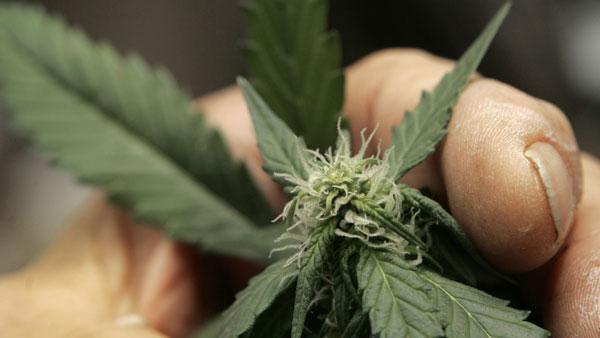
File photo. (AP)
 
“Marijuana has been used for centuries to relieve pain, improve mood and increase appetite. Outlawed in the United States in 1937, its social use continues to increase and public opinion is swinging in favor of the medicinal use of marijuana…”
 

More: http://abclocal.go.com/wabc/story?section=news/health&id=9114798

Cannabidiol (CBD): Fighting Inflammation & Aggressive Forms of Cancer

“Marijuana contains at least 60 known chemicals called cannabinoids, which activate cannabinoid receptors in your body. Tetrahydrocannabinol, or THC, is the main component responsible for the psychoactive effects, or “high,” marijuana is known for. While THC is known to have some medicinal value, there has been recent investigation into a new cannabinoid that is rumored to have more medicinal benefits than any single pharmaceutical drug on the market.”

“What is Cannabidiol (CBD)?

This cannabinoid is known as Cannabidiol (CBD), and is the second most abundant cannabinoid in cannabis. Research done by G.W. Pharmaceuticals suggests that CBD could be used for treating symptoms of rheumatoid arthritis and other autoimmune diseases, diabetes, nausea, bowel disorders, and many other hard-to-control side effects. According to an article from Projectcbd.com, CBD has even demonstrated neuroprotective effects, and its anti-cancer potential is currently being explored.

While it was originally believed that THC is a breakdown product of CBD, it is now known that both THC and CBD are actually metabolites of their decarboxylated acidic forms, THCa and CBDa. These acidic precursors are decarboxylated (essentially dried) by heat or extraction to produce THC and CBD; only then do they become psychoactive. The compound has medicinal benefits without the “high” that some patients do not desire. This makes CBD appealing to patients who are looking for an alternative to their current meds, which often have opiate-like effects.”

More: http://www.medicaljane.com/2012/12/20/cannabidiol-cbd-medicine-of-the-future/

Study: Cannabinoids Offer Likely Therapeutic Option For Patients With Post-Traumatic Stress

“Future research targeting cannabinoids and their receptors may lead to evidence-based treatments for patients diagnosed with post-traumatic stress disorder (PTSD), according to clinical trial data published in May in the journal Molecular Psychiatry.

Investigators at the New York University School of Medicine reported that subjects diagnosed with PTSD typically possess elevated quantities of endogenous cannabinoid receptors in regions of the brain associated with fear and anxiety. Investigators also determined that many of these subjects experience a decrease in their natural production of anandamide, an endogenous cannabinoid neurotransmitter, resulting in an imbalanced endocannibinoid regulatory system.

Researchers speculated that an increase in the body’s production of cannabinoids would likely restore subjects’ natural brain chemistry and psychological balance. They affirmed, “[Our] findings substantiate, at least in part, emerging evidence that … plant-derived cannabinoids such as marijuana may possess some benefits in individuals with PTSD by helping relieve haunting nightmares and other symptoms of PTSD.”

Authors concluded: “The data reported herein are the first of which we are aware of to demonstrate the critical role of CB1 (cannabinoid) receptors and endocannabinoids in the etiology of PTSD in humans. As such, they provide a foundation upon which to develop and validate informative biomarkers of PTSD vulnerability, as well as to guide the rational development of the next generation of evidence-based treatments for PTSD.”

More: http://norml.org/news/2013/05/30/study-cannabinoids-offer-likely-therapeutic-option-for-patients-with-post-traumatic-trauma

Study: Cannabis may prevent brain damage – FOX

“Marijuana continues to be a paradox as it makes its way from illicit drug to wonder medicine being used to treat a number of symptoms and disorders more safely than traditional pharmaceuticals.”

  • 110712_fr_marijuana2_640.jpg
     

“In the latest news, cannabis, which has been associated with long-term cognitive deficits in chronic users, is now being tested as a treatment to preserve brain function after traumatic injury.

…some reports have shown that cannabis has neuroprotective effects. Studies have suggested that it has protective effects in neurodegenerative diseases like multiple sclerosis, Alzheimer’s, Huntington’s and Parkinson’s diseases.”

More: http://www.foxnews.com/health/2013/06/06/study-cannabis-may-prevent-brain-damage/

Read more: http://www.foxnews.com/health/2013/06/06/study-cannabis-may-prevent-brain-damage/#ixzz2VXJJw9yc

Marijuana habit not linked to lung cancer – Clinical Psychiatry News

“Regular cannabis smokers are no more likely to develop lung cancer than are people who indulge occasionally.”

“The finding of no significant increased risk held true whether the smokers imbibed once or twice – or more – each day, and regardless of how many years they had smoked, Dr. Li Rita Zhang reported at the annual meeting of the American Association of Cancer Research.”More: http://www.clinicalpsychiatrynews.com/news/across-specialties/single-article/marijuana-habit-not-linked-to-lung-cancer/73840afd2cca226b9e6a9ddc7cb0d039.html

http://www.oncologypractice.com/single-view/marijuana-habit-not-linked-to-lung-cancer/73840afd2cca226b9e6a9ddc7cb0d039.html

Medicinal Use of Marijuana — Polling Results – The New England Journal of Medicine

“Readers recently joined in a lively debate about the use of medicinal marijuana. In Clinical Decisions,1 an interactive feature in which experts discuss a controversial topic and readers vote and post comments, we presented the case of Marilyn, a 68-year-old woman with metastatic breast cancer. We asked whether she should be prescribed marijuana to help alleviate her symptoms. To frame this issue, we invited experts to present opposing viewpoints about the medicinal use of marijuana. J. Michael Bostwick, M.D., a professor of psychiatry at Mayo Clinic, proposed the use of marijuana “only when conservative options have failed for fully informed patients treated in ongoing therapeutic relationships.” Gary M. Reisfield, M.D., from the University of Florida, certified in anesthesiology and pain medicine, and Robert L. DuPont, M.D., a clinical professor of psychiatry at Georgetown Medical School, provide a counterpoint, concluding that “there is little scientific basis” for physicians to endorse smoked marijuana as a medical therapy.

We were surprised by the outcome of polling and comments, with 76% of all votes in favor of the use of marijuana for medicinal purposes — even though marijuana use is illegal in most countries. A total of 1446 votes were cast from 72 countries and 56 states and provinces in North America, and 118 comments were posted. However, despite the global participation, the vast majority of votes (1063) came from the United States, Canada, and Mexico. Given that North America represents only a minority of the general online readership of the Journal, this skew in voting suggests that the subject of this particular Clinical Decisions stirs more passion among readers from North America than among those residing elsewhere. Analysis of voting across all regions of North America showed that 76% of voters supported medicinal marijuana. Each state and province with at least 10 participants casting votes had more than 50% support for medicinal marijuana except Utah. In Utah, only 1% of 76 voters supported medicinal marijuana. Pennsylvania represented the opposite extreme, with 96% of 107 votes in support of medicinal marijuana.

Outside North America, we received the greatest participation from countries in Latin America and Europe, and overall results were similar to those of North America, with 78% of voters supporting the use of medicinal marijuana. All countries with 10 or more voters worldwide were at or above 50% in favor. There were only 43 votes from Asia and 7 votes from Africa, suggesting that in those continents, this topic does not resonate as much as other issues.

Where does this strong support for medicinal marijuana come from? Your comments show that individual perspectives were as polarized as the experts’ opinions. Physicians in favor of medicinal marijuana often focused on our responsibility as caregivers to alleviate suffering. Many pointed out the known dangers of prescription narcotics, supported patient choice, or described personal experience with patients who benefited from the use of marijuana. Those who opposed the use of medicinal marijuana targeted the lack of evidence, the lack of provenance, inconsistency of dosage, and concern about side effects, including psychosis. Common in this debate was the question of whether marijuana even belongs within the purview of physicians or whether the substance should be legalized and patients allowed to decide for themselves whether to make use of it.

In sum, the majority of clinicians would recommend the use of medicinal marijuana in certain circumstances. Large numbers of voices from all camps called for more research to move the discussion toward a stronger basis of evidence.”

http://www.nejm.org/doi/full/10.1056/NEJMclde1305159

“New England Journal of Medicine Endorses Medical Marijuana; San Francisco Medical Society Releases Study; New York Times Editorial Welcomes Debate” http://ndsn.org/feb97/nejm.html

Three out of four doctors recommend marijuana in New England Journal of Medicine poll

More than three out of four doctors support medical cannabis for a hypothetical breast cancer patient, New England Journal of Medicine reports“More than three out of four doctors support medical cannabis for a hypothetical breast cancer patient, New England Journal of Medicine reports

In a poll by the well-respected New England Journal of Medicine released today, more than three out of four doctors recommended medical cannabis for a hypothetical late-stage breast cancer patient.

“We were surprised by the outcome of polling and comments, with 76% of all votes in favor of the use of marijuana for medicinal purposes — even though marijuana use is illegal in most countries,” Jonathan N. Adler, M.D., and James A. Colbert, M.D. wrote for the NEJOM May 30th.

Marijuana is a federally illegal – schedule one drug – that the U.S. government claims has no medical value and is more dangerous than heroin or LSD. Yet 19 states have legalized cannabis for medical use, given its 10,000 year history as a safe herbal remedy for nausea, pain and insomnia among other conditions.”

More: http://blog.sfgate.com/smellthetruth/2013/05/30/three-out-of-four-doctors-recommend-marijuana-in-new-england-journal-of-medicine-poll/

Majority Support Medical Pot in New NEJM Poll

“To recommend, or not to recommend, medicinal marijuana? That’s the question recently posed in a New England Journal of Medicine interactive online poll. To get a feel for physicians’ opinions, NEJM presented readers with a fictional clinical situation. Here’s the scenario:

“Marilyn is a 68-year-old woman with breast cancer metastatic to the lungs and the thoracic and lumbar spine. She is currently undergoing chemotherapy with doxorubicin. She reports having very low energy, minimal appetite, and substantial pain in her thoracic and lumbar spine. For relief of nausea, she has taken ondansetron and prochlorperazine, with minimal success. She has been taking 1000 mg of acetaminophen every 8 hours for the pain. Sometimes at night she takes 5 mg or 10 mg of oxycodone to help provide pain relief. During a visit with her primary care physician she asks about the possibility of using marijuana to help alleviate the nausea, pain, and fatigue. She lives in a state that allows marijuana for personal medicinal use, and she says her family could grow the plants. As her physician, what advice would you offer with regard to the use of marijuana to alleviate her current symptoms? Do you believe that the overall medicinal benefits of marijuana outweigh the risks and potential harms?”

Readers weighed in with a variety of impassioned opinions. And the results, the authors said, were  surprising: 76% of respondents said they would recommend medicinal marijuana. Here’s part of the discussion:

“Physicians in favor of medicinal marijuana often focused on our responsibility as caregivers to alleviate suffering. Many pointed out the known dangers of prescription narcotics, supported patient choice, or described personal experience with patients who benefited from the use of marijuana. Those who opposed the use of medicinal marijuana targeted the lack of evidence, the lack of provenance, inconsistency of dosage, and concern about side effects, including psychosis. Common in this debate was the question of whether marijuana even belongs within the purview of physicians or whether the substance should be legalized and patients allowed to decide for themselves whether to make use of it.”” 

More: http://ripr.org/post/majority-support-medical-pot-new-nejm-poll 

Majority of Clinicians Support Medicinal Marijuana Use

“A majority of clinicians appears to support the use of medicinal marijuana, according to research published in the May 30 issue of the New England Journal of Medicine.”

Majority of Clinicians Support Medicinal Marijuana Use 
“(HealthDay News) – A majority of clinicians appears to support the use of medicinal marijuana, according to research published in the May 30 issue of the New England Journal of Medicine.
 

Jonathan N. Adler, MD, and James A. Colbert, MD, associate editors for the New England Journal of Medicine, describe the results of polling and comments in an interactive feature in which experts discussed the use of medicinal marijuana for a 68-year old woman with metastatic breast cancer.”

More: http://www.empr.com/majority-of-clinicians-support-medicinal-marijuana-use/article/295539/#