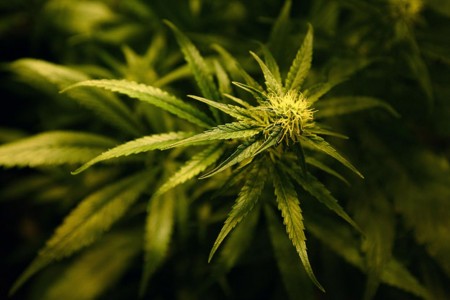
Targeting CB2 cannabinoid receptors as a novel therapy to treat malignant lymphoblastic disease

“In the current study, we examined whether ligation of CB2 receptors would lead to induction of apoptosis in tumors of immune origin and whether CB2 agonist could be used to treat such cancers.

 Exposure of murine tumors EL-4, LSA, and P815 to delta-9-tetrahydrocannabinol (THC) in vitro led to a significant reduction in cell viability and an increase in apoptosis…

Culture of primary acute lymphoblastic leukemia cells with THC in vitro reduced cell viability and induced apoptosis.

Together, the current data demonstrate that CB2 cannabinoid receptors expressed on malignancies of the immune system may serve as potential targets for the induction of apoptosis. Also, because CB2 agonists lack psychotropic effects, they may serve as novel anticancer agents to selectively target and kill tumors of immune origin.”

http://bloodjournal.hematologylibrary.org/content/100/2/627.long

“We examined whether treatment of tumor-bearing mice with THC was effective at killing tumor cells in vivo… These data suggest that THC was effective in vivo to induce apoptosis and kill the tumor cells… THC treatment can cure tumor-bearing mice… they were completely cured…Taken together, these results suggest that THC can exert anticancer properties in vivo.” http://bloodjournal.hematologylibrary.org/content/100/2/627.long?sso-checked=1


Targeting cannabinoid receptors to treat leukemia: role of cross-talk between extrinsic and intrinsic pathways in Delta9-tetrahydrocannabinol (THC)-induced apoptosis of Jurkat cells.

“Targeting cannabinoid receptors has recently been shown to trigger apoptosis and offers a novel treatment modality against malignancies of the immune system.

  In this study, we used human Jurkat leukemia cell lines with defects in intrinsic and extrinsic signaling pathways to elucidate the mechanism of apoptosis induced by Delta9-tetrahydrocannabinol (THC)…

Together, these data suggest that the intrinsic pathway plays a more critical role in THC-induced apoptosis while the extrinsic pathway may facilitate apoptosis via cross-talk with the intrinsic pathway.”

http://www.ncbi.nlm.nih.gov/pubmed/15978942

Marijuana’s Active Ingredient Targets Deadly Brain Cancer – WebMD

“If results of a recent rat study hold true in human trials, marijuana could be the treatment of choice for patients with malignant glioma — an especially aggressive and often fatal form of brain cancer.

 No, rats haven’t started smoking pot. But when researchers injected tumorous animals with cannabinoids — the drug’s active ingredient — about a third of them went into remission, and another third lived significantly longer than untreated rats.

The findings appear in the March issue of the journal Nature Medicine

According to lead researcher Manuel Guzmán, PhD, his team’s previous studies showed that cannabinoids could stop growth and kill cancer cells but did not harm normal cells. The current work examined the action behind this effect and whether it would also work in living animals…

The researchers first caused tumors in the brains of 18 rats. They then injected the animals over the course of seven days with either a natural or artificial cannabinoid, or a placebo for comparison. Additional groups of healthy, tumor-free rats also received the various treatments…

All of the untreated animals with tumors died between days 12 and 18, but those treated with the cannabinoids lived much longer, and had significantly smaller tumors…

There were no negative side effects at all in the healthy animals receiving treatment.”

More:http://www.webmd.com/cancer/news/20000228/marijuanas-active-ingredient-targets-deadly-brain-cancer

“Anti-tumoral action of cannabinoids: Involvement of sustained ceramide accumulation and extracellular signal-regulated kinase activation” http://www.nature.com/nm/journal/v6/n3/abs/nm0300_313.html

Marijuana May Stall Brain Tumor Growth – WebMD

“Active Ingredient in Marijuana Inhibits Cancer Growth in Early Study.
 
The active ingredient in marijuana may help fight brain tumors, a new study suggests.
 

Researchers say the cannabinoids found in marijuana may aid in brain tumor treatment by targeting the genes needed for the tumors to sprout blood vessels and grow.

Their study showed that cannabinoids inhibited genes needed for the production of vascular growth factor (VEGF) in laboratory mice with glioma brain tumors and two patients with late-stage glioblastoma multiforme, a form of brain cancer.

VEGF is a protein that stimulates blood vessels to grow. Tumors need an abundant blood supply because they generally grow rapidly. So when VEGF is blocked, tumors starve from lack of blood supply and nutrients.

Blocking of VEGF constitutes one of the most promising tumor-fighting approaches currently available, says researcher Manuel Guzman, professor of biochemistry and molecular biology, at the Complutense University in Madrid, Spain, in a news release.”

More:http://www.webmd.com/cancer/news/20040815/marijuana-stall-brain-tumor-growth 

“Cannabinoids Inhibit the Vascular Endothelial Growth Factor Pathway in Gliomas”:  http://cancerres.aacrjournals.org/content/64/16/5617.long


Unhappy Couple
 

Pot Slows Cancer in Test Tube – WebMD

“THC and another marijuana-derived compound slow the spread of cervical and lung cancers, test-tube studies suggest.

The new findings add to the fast-growing number of animal and cell-culture studies showing different anticancer effects for cannabinoids, chemical compounds derived from marijuana.

Cannabinoids, and sometimes marijuana itself, are currently used to lessen the nausea and pain experienced by many cancer patients. The new findings — suggest that cannabinoids may have a direct anticancer effect.

“Cannabinoids’ … potential therapeutic benefit in the treatment of highly invasive cancers should be addressed in clinical trials,” conclude Robert Ramer, PhD, and Burkhard Hinz, PhD, of the University of Rostock, Germany…

Doses of THC that reduce pain in cancer patients yield blood concentrations much higher than the concentrations needed to inhibit cancer invasion.

“Thus the effects of THC on cell invasion occurred at therapeutically relevant concentrations,” Ramer and Hinz note…

Ramer and Hinz report the findings in the Jan. 2, 2008 issue of the Journal of the National Cancer Institute.”

More: http://www.webmd.com/cancer/news/20071226/pot-slows-cancer-in-test-tube

“Inhibition of Cancer Cell Invasion by Cannabinoids via Increased Expression of Tissue Inhibitor of Matrix Metalloproteinases-1”: http://jnci.oxfordjournals.org/content/100/1/59.long

Marijuana Inhibits Tumors

Towards a better Cannabis drug.

“Opium smoking has been mostly replaced by i.v. injection of morphine and heroin and we see cocaine sniffing rather than chewing of coca leaves. Cannabis use – be it of marijuana, hashish or bhang – differs.

Any cannabis cognoscente will insist that the crude material is ‘much better’ than pure Δ9 – tetrahydrocannabinol (THC), the only major psychoactive constituent of cannabis (Mechoulam et al., 1970).

Indeed, although pure THC is available as a drug (named Dronabinol) it is apparently not used illicitly.

The pharmacological/biochemical basis for this difference is not clear and is presumably due to several factors. A major reason seems to be the pharmacokinetic difference between cannabis smoking and the oral administration of THC.

 On smoking, the cannabis effects are noted almost immediately, while a 1.5 – 2 hour delay is observed on oral administration.

A further factor may be conditioning to the smell, although there are no published data along these lines. A further factor may be the presence of the terpenoid CB2 agonist beta-caryophyllene in cannabis (Gertsch et al., 2008).

CB2 agonists are well known to cause numerous effects (mostly of a protective nature) which may counteract some of the effects of THC (Pacher & Mechoulam, 2011).”

http://www.ncbi.nlm.nih.gov/pubmed/24024867

Therapeutic potential of cannabinoid medicines.

Drug Testing and Analysis

“Cannabis was extensively used as a medicine throughout the developed world in the nineteenth century but went into decline early in the twentieth century ahead of its emergence as the most widely used illicit recreational drug later that century. Recent advances in cannabinoid pharmacology alongside the discovery of the endocannabinoid system (ECS) have re-ignited interest in cannabis-based medicines.

The ECS has emerged as an important physiological system and plausible target for new medicines. Its receptors and endogenous ligands play a vital modulatory role in diverse functions including immune response, food intake, cognition, emotion, perception, behavioural reinforcement, motor co-ordination, body temperature, wake/sleep cycle, bone formation and resorption, and various aspects of hormonal control. In disease it may act as part of the physiological response or as a component of the underlying pathology.

In the forefront of clinical research are the cannabinoids delta-9-tetrahydrocannabinol and cannabidiol, and their contrasting pharmacology will be briefly outlined. The therapeutic potential and possible risks of drugs that inhibit the ECS will also be considered. This paper will then go on to review clinical research exploring the potential of cannabinoid medicines in the following indications: symptomatic relief in multiple sclerosis, chronic neuropathic pain, intractable nausea and vomiting, loss of appetite and weight in the context of cancer or AIDS, psychosis, epilepsy, addiction, and metabolic disorders.”

http://www.ncbi.nlm.nih.gov/pubmed/24006213

http://onlinelibrary.wiley.com/doi/10.1002/dta.1529/abstract

Cannabis Kills Cancer Cells

“Marijuana also found to prevent pain associated with chemotherapy”

Cannabis Kills Cancer Cells

“Studies in Spain have shown findings that Tetrahydrocannabinol (THC), the active ingredient found in marijuana, can induce the death of brain cancer cells, according to scientist Guillermo Velasco and his research team from the School of Biology at Complutense University in Madrid.

In a laboratory study where mice were “engineered” to carry three varying kinds of human cancer tumor grafts, THC was introduced into the brain, triggering a self-digestion development on a cellular level, known as “autophagy.” Within this process, the research team managed to isolate the particular activation route from which this process evolved.

The research team was also conducting clinical trials in concert, on two consenting brain cancer patients, said to be suffering from a rapidly aggressive form of cancer, known as “recurrent glioblastoma multiforme.”

The team, using electron microscopes to analyze brain tissue extracted before and after the 26 to 30-day regime, found that the THC had eradicated cancer cells, leaving the healthy cells undamaged.

The findings can now lend themselves to future design in newer cancer therapies, using the concept of autophagy activation.”

More: http://guardianlv.com/2013/08/cannabis-kills-cancer-cells/

Active Ingredient in Marijuana Kills Brain Cancer Cells

“New research out of Spain suggests that THC — the active ingredient in marijuana — appears to prompt the death of brain cancer cells.”

 
“The finding is based on work with mice designed to carry human cancer tumors, as well as from an analysis of THC’s impact on tumor cells extracted from two patients coping with a highly aggressive form of brain cancer.”
 

THC is anticarcinogenic: marijuana may be cancer cure!

“Toxicology and Carcinogenesis Studies of 1-Trans-[Delta.sup.9]-Tetrahydrocannabinol

Summation of above:

“Thus, in our studies, rats and mice that received THC for 2 years exhibited body weight reductions, enhanced survival rates, and decreased tumor incidences in several sites, mainly organs under hormonal control. These earlier experimental carcinogenesis results on THC clearly lend further validity to the notion that cannabinoids may indeed be anticarcinogenic.””

 link
http://www.thefreelibrary.com/Antitumor+Effects+of+THC-a06814…

http://www.sodahead.com/united-states/thc-is-anticarcinogenic-marijuana-may-be-cancer-cure/question-1031413/?link=ibaf&q=THC+anti-carcinogenic+news