Primary Macrophage Chemotaxis Induced by Cannabinoid Receptor 2 Agonists Occurs Independently of the CB2 Receptor.

“Activation of CB2 has been demonstrated to induce directed immune cell migration. However, the ability of CB2 to act as a chemoattractant receptor in macrophages remains largely unexplored…

Taken together our results conclusively demonstrate that CB2 is not a chemoattractant receptor for murine macrophages. Furthermore we show for the first time that JWH133, HU308, L-759,656 and L-759,633 have off-target effects of functional consequence in primary cells and we believe that our findings have wide ranging implications for the entire cannabinoid field.”

http://www.ncbi.nlm.nih.gov/pubmed/26033291

High prevalence of cannabis use among Aka foragers of the Congo Basin and its possible relationship to helminthiasis

Cover image for Vol. 27 Issue 3

“Little is known about cannabis use in hunter-gatherers. Therefore, we investigated cannabis use in the Aka, a population of foragers of the Congo Basin.

Because cannabis contains anthelminthic compounds,” http://medical-dictionary.thefreedictionary.com/anthelmintic ” and the Aka have a high prevalence of helminthiasis, we also tested the hypothesis that cannabis use might be an unconscious form of self-medication against helminths.

THCA levels were negatively correlated with parasite infection and reinfection, supporting the self-medication hypothesis.

This, to our knowledge, is the first biomarker-validated study of cannabis use in a hunting-gathering population, and also the first to explore the relationship between the use of cannabis, which is toxic to helminths, and intestinal helminth infection.

Although the conventional view is that drug abuse impairs immunity, thus increasing susceptibility to infection, if recreational drug use is explained by the drugs’ antiparasitic properties, this would suggest that the immune system plays a key role in regulating drug use.”  

http://onlinelibrary.wiley.com/doi/10.1002/ajhb.22740/full

“Medical Marijuana Smoking Linked to Parasite Prevention. Scientists from Washington State University have suggested that smoking cannabis may have a beneficial effect with regard to the avoidance of intestinal parasite infections, which could explain why the drug has such a long history of recreational use… those who smoked cannabis had a lower rate of infection.” http://www.newhistorian.com/medical-marijuana-smoking-linked-to-parasite-prevention/3936/

Maternal marijuana use and neonatal morbidity.

“Marijuana use is becoming increasingly common in the obstetric population, however it is unknown whether it is associated with poor neonatal outcomes. We sought to determine the prevalence and risk factors for marijuana use in pregnancy, and to evaluate whether marijuana use is independently associated with poor neonatal outcomes.

CONCLUSION:

Marijuana use is common in pregnancy, but may not be an independent risk factor for poor neonatal outcomes in term pregnancies.”

http://www.ncbi.nlm.nih.gov/pubmed/26026918

Comprehensive Review of Medicinal Marijuana, Cannabinoids, and Therapeutic Implications in Medicine and Headache: What a Long Strange Trip It’s Been ….

“The use of cannabis, or marijuana, for medicinal purposes is deeply rooted though history, dating back to ancient times. It once held a prominent position in the history of medicine, recommended by many eminent physicians for numerous diseases, particularly headache and migraine.

Through the decades, this plant has taken a fascinating journey from a legal and frequently prescribed status to illegal, driven by political and social factors rather than by science.

However, with an abundance of growing support for its multitude of medicinal uses, the misguided stigma of cannabis is fading, and there has been a dramatic push for legalizing medicinal cannabis and research.

Almost half of the United States has now legalized medicinal cannabis, several states have legalized recreational use, and others have legalized cannabidiol-only use, which is one of many therapeutic cannabinoids extracted from cannabis.

Physicians need to be educated on the history, pharmacology, clinical indications, and proper clinical use of cannabis, as patients will inevitably inquire about it for many diseases, including chronic pain and headache disorders for which there is some intriguing supportive evidence…

The literature suggests that the medicinal use of cannabis may have a therapeutic role for a multitude of diseases, particularly chronic pain disorders including headache.

Supporting literature suggests a role for medicinal cannabis and cannabinoids in several types of headache disorders including migraine and cluster headache, although it is primarily limited to case based, anecdotal, or laboratory-based scientific research.

Cannabis contains an extensive number of pharmacological and biochemical compounds, of which only a minority are understood, so many potential therapeutic uses likely remain undiscovered.

Cannabinoids appear to modulate and interact at many pathways inherent to migraine, triptan mechanisms ofaction, and opiate pathways, suggesting potential synergistic or similar benefits.

Modulation of the endocannabinoid system through agonism or antagonism of its receptors, targeting its metabolic pathways, or combining cannabinoids with other analgesics for synergistic effects, may provide the foundation for many new classes of medications.”

http://www.ncbi.nlm.nih.gov/pubmed/26015168

http://www.thctotalhealthcare.com/category/headachemigraine/

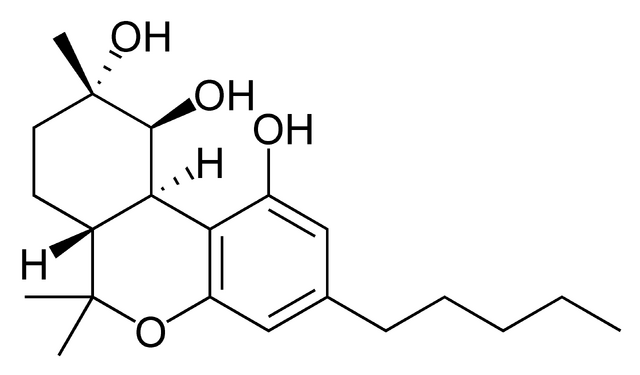
(+/-)9,10-Dihydroxy-delta6a(10a)-tetrahydrocannabinol and (+/-)8,9-dihydroxy-delta6a(10a)-tetrahydrocannabinol: 2 new cannabinoids from Cannabis sativa L.

“The structures of 2 new polyhydroxylated cannabinoids, (+/-)9,10-dihydroxy-delta6a(10a)-tetrahydrocannabinol and (+/-)8,9-dihydroxy-delta6a(10a)-tetrahydrocannabinol, obtained from a hexane extract of an Indian Cannabis variant were determined by spectral means and correlation with cannabinol.”

http://www.ncbi.nlm.nih.gov/pubmed/720501

Isolation and Pharmacological Evaluation of Minor Cannabinoids from High-Potency Cannabis sativa.

“Seven new naturally occurring hydroxylated cannabinoids (1-7), along with the known cannabiripsol (8), have been isolated from the aerial parts of high-potency Cannabis sativa.

The structures of the new compounds were determined by 1D and 2D NMR spectroscopic analysis, GC-MS, and HRESIMS as 8α-hydroxy-Δ9-tetrahydrocannabinol (1), 8β-hydroxy-Δ9-tetrahydrocannabinol (2), 10α-hydroxy-Δ8-tetrahydrocannabinol (3), 10β-hydroxy-Δ8-tetrahydrocannabinol (4), 10α-hydroxy-Δ9,11-hexahydrocannabinol (5), 9β,10β-epoxyhexahydrocannabinol (6), and 11-acetoxy-Δ9-tetrahydrocannabinolic acid A (7).

The binding affinity of isolated compounds 1-8, Δ9-tetrahydrocannabinol, and Δ8-tetrahydrocannabinol toward CB1 and CB2 receptors as well as their behavioral effects in a mouse tetrad assay were studied.

The results indicated that compound 3, with the highest affinity to the CB1 receptors, exerted the most potent cannabimimetic-like actions in the tetrad assay, while compound 4 showed partial cannabimimetic actions. Compound 2, on the other hand, displayed a dose-dependent hypolocomotive effect only.”

http://www.ncbi.nlm.nih.gov/pubmed/26000707

Lipid nanoparticles as an emerging platform for cannabinoid delivery: physicochemical optimization and biocompatibility.

“This work aims at developing and optimizing a valuable oral delivery carrier for the cannabinoid derivative CB13, which presents a high therapeutic potential in chronic pain states that respond poorly to conventional analgesics, but also shows highly unfavorable physicochemical properties.

CB13-loaded lipid nanoparticles (LNP) formulations were developed…

The LNP formulation proposed proved to be a promising carrier for the oral delivery of CB13, a cannabinoid with high therapeutic potential in chronic pain states that currently lack a valid oral treatment.”

http://www.ncbi.nlm.nih.gov/pubmed/25996463

Synthetic and endogenous cannabinoids protect retinal neurons from AMPA excitotoxicity in vivo, via activation of CB1 receptors: Involvement of PI3K/Akt and MEK/ERK signaling pathways.

“Cannabinoids have been suggested to protect retinal ganglion cells in different models of toxicity…

These results suggest that endogenous and synthetic cannabinoids protect retinal amacrine neurons from AMPA excitotoxicity in vivo via a mechanism involving the CB1 receptors, and the PI3K/Akt and/or MEK/ERK1/2 signaling pathways.”

http://www.ncbi.nlm.nih.gov/pubmed/25989217