“Agitation is a common complication of Alzheimer’s dementia (Agit-AD) associated with substantial morbidity, high healthcare service utilization, and adverse emotional and physical impact on care partners. There are currently no FDA-approved pharmacological treatments for Agit-AD.
We present the study design and baseline data for an ongoing multisite, three-week, double-blind, placebo-controlled, randomized clinical trial of dronabinol (synthetic tetrahydrocannabinol [THC]), titrated to a dose of 10 mg daily, in 80 participants to examine the safety and efficacy of dronabinol as an adjunctive treatment for Agit-AD.
Preliminary findings for 44 participants enrolled thus far show a predominately female, white sample with advanced cognitive impairment (Mini Mental Status Examination mean 7.8) and agitation (Neuropsychiatric Inventory-Clinician Agitation subscale mean 14.1). Adjustments to study design in light of the COVID-19 pandemic are described.
Findings from this study will provide guidance for the clinical utility of dronabinol for Agit-AD. ClinicalTrials.gov Identifier: NCT02792257.”
“Background: Preclinical studies have demonstrated that cannabidiol (CBD) reduces alcohol-seeking behaviors and may have potential for managing alcohol use disorder (AUD). In this study, we examined the effects of CBD versus placebo on (i) psychophysiological, craving and anxiety responses to alcohol and appetitive cues; (ii) tolerability measures including cognitive functioning.
Methods: Twenty-two non-treatment-seeking individuals with AUD (DSM-5) participated in a cross-over, double-blind, randomized trial, receiving either 800 mg of CBD or matched placebo over 3 days. A laboratory alcohol cue reactivity task with appetitive control (juice) and alcohol exposures, and subsequent recovery periods to examine regulation of cue-elicited responses after cue-offset (recovery) was completed, with psychophysiological indices of autonomic nervous system activity (skin conductance, high-frequency heart rate variability [HF-HRV]) and self-reported measures (alcohol craving and anxiety). Self-reported scales of sedation and neuropsychological executive function tasks were also completed.
Results: CBD sessions were significantly associated with elevated parasympathetic nervous system (PNS) activity across the task, as indicated by increased HF-HRV. Reductions in self-reported anxiety during cue exposure stages compared to placebo sessions were also evidenced. Reductions in self-reported alcohol craving after cue exposure were seen during CBD sessions only. There were no significant differences between CBD and placebo on executive functioning performance.
Conclusions: In a short-term regimen, CBD appears to modulate PNS activity, reduce cue-elicited anxiety during cue exposure and reduce alcohol craving after cue exposure while not significantly impairing cognition. Large, parallel clinical trials with longer term regimens are now needed to determine the therapeutic potential of CBD in the management of AUD.”
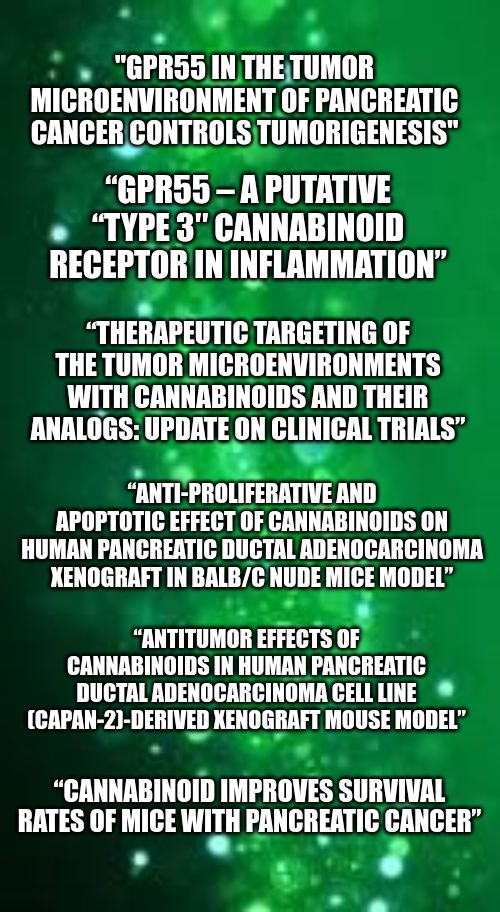
“Background: The G protein-coupled receptor 55 (GPR55) is part of an expanded endocannabinoid system (ECS), and plays a pro-tumorigenic role in different cancer models, including pancreatic cancer. Next to cancer cells, various cells of the immune tumor microenvironment (TME) express receptors of the ECS that critically determine tumor growth. The role of GPR55 in cancer cells has been widely described, but its role in the immune TME is not well understood.
Methods: We intended to uncover the role of GPR55 in tumor immunity in a model of pancreatic ductal adenocarcinoma (PDAC). To this end, a KPCY tumor cell line or a GPR55-overexpressing KPCY cell line (KPCY55) from murine PDAC were subcutaneously injected into wildtype (WT) and GPR55 knockout (KO) mice, and immune cell populations were evaluated by flow cytometry.
Results: Deficiency of GPR55 in the TME led to reduced tumor weight and volume, and altered the immune cell composition of tumors, favoring an anti-tumorigenic environment by increasing the number of CD3+ T cells, particularly CD8+ T cells, and the expression of PDL1 on macrophages. RNA-seq pathway analysis revealed higher T cell activity in KPCY55 tumors of GPR55 KO vs. WT mice. In addition, tumors from GPR55 KO mice displayed increased levels of T cell chemokines Cxcl9 and Cxcl10. Migration of T cells from GPR55 KO mice towards CXCL9 was increased in comparison to T cells from WT mice, suggesting that a CXCR3/CXCL9 axis was involved in T cell influx into tumors of GPR55 KO mice. Notably, anti-PD-1 immunotherapy increased tumor burden in WT mice, while this effect was absent in the GPR55 KO mice.
Conclusion: Our study indicates that GPR55 in TME cells may drive tumor growth by suppressing T cell functions, such as migration, in a model of PDAC, making it an interesting target for immunotherapies.”
“Our study indicates that GPR55 in TME cells may drive tumor growth by suppressing T cell functions, such as migration, in a model of PDAC, making it an interesting target for immunotherapies.”
“Background: Highly purified cannabidiol (CBD), recently approved for various neurological disorders, is explored as a potential therapeutic avenue for drug-resistant epilepsy (DRE) among adult people with epilepsy (PWE) in this systematic review and meta-analysis.
Objectives: To conduct an extensive literature review and meta-analysis of CBD use for DRE in adult PWE.
Design: Systematic review and meta-analysis.
Data sources and methods: We conducted a systematic review of the literature according to the Preferred Reporting Items for Systematic Reviews and Meta-Analyses guidelines and two electronic resources; we searched Ovid MEDLINE and Scopus using appropriate keywords until August 2023. Data were presented as standardized mean difference (SMD) and odds ratio with confidence interval (CI) via random effect. We appraised the risk of bias of the included studies using the Joanna Briggs Institute critical appraisal tool while their strength of evidence with the Oxford Centre for Evidence-Based Medicine (OCEBM) and Grading of Recommendations Assessment Development and Education (GRADE) Levels of Evidence.
Results: We identified 16 studies, 3 of which were randomized controlled trials and 3 prospective cohort studies, while the rest were expanded access programs, deriving a total of 668 participants receiving CBD for seizure control. CBD was used concomitantly with antiseizure medications in all studies. There was a statistically significant seizure reduction in the group receiving CBD therapy compared to the placebo group (SMD: -1.50, 95% CI (-3.47, 0.47), p < 0.01).
Conclusion: The evidence on CBD use in adult patients with DRE demonstrates a moderate level of certainty according to GRADE level and OCEBM level 2. Further prospective studies involving multiple centers are encouraged to study both the efficacy and safety of CBD in adult patients with DRE.”
“While benzodiazepines have been a mainstay of the pharmacotherapy of anxiety disorders, their short-term efficacy and risk of abuse have driven the exploration of alternative treatment approaches.
The endocannabinoid (eCB) system has emerged as a key modulator of anxiety-related processes, with evidence suggesting dynamic interactions between the eCB system and the GABAergic system, the primary target of benzodiazepines.
According to the existing literature, the activation of the cannabinoid receptors has been shown to exert anxiolytic effects, while their blockade or genetic deletion results in heightened anxiety-like responses. Moreover, studies have provided evidence of interactions between the eCB system and benzodiazepines in anxiety modulation. For instance, the attenuation of benzodiazepine-induced anxiolysis by cannabinoid receptor antagonism or genetic variations in the eCB system components in animal studies, have been associated with variations in benzodiazepine response and susceptibility to anxiety disorders.
The combined use of cannabinoid-based medications, such as cannabinoid receptor agonists and benzodiazepine co-administration, has shown promise in augmenting anxiolytic effects and reducing benzodiazepine dosage requirements.
This article aims to comprehensively review and discuss the current evidence on the involvement of the eCB system as a key modulator of benzodiazepine-related anxiolytic effects, and further, the possible mechanisms by which the region-specific eCB system-GABAergic connectivity modulates the neuro-endocrine/behavioral stress response, providing an inclusive understanding of the complex interplay between the eCB system and benzodiazepines in the context of anxiety regulation, to inform future research and clinical practice.”
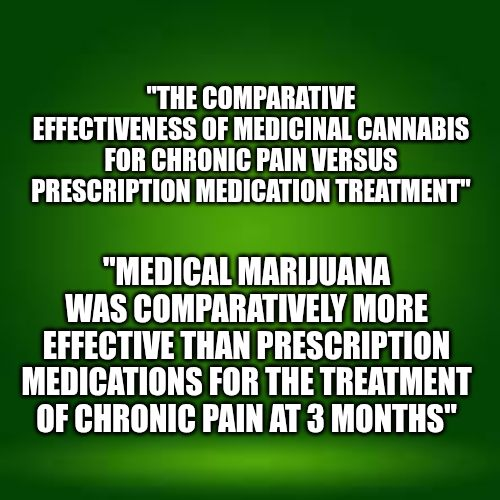
“Reviews of the effectiveness of medicinal cannabis for chronic pain vary in their conclusions. IASP has identified that a key missing evidence in this debate is data from observational cohort studies, analyzed with comparative effectiveness methods.
In a medically supervised context to the use of marijuana for chronic pain, we identified 440 patients certified for medical marijuana by pain specialists in a single healthcare system. They were characterized by a battery of patient-reported outcomes stored electronically in the University of Pittsburgh Patient Outcomes Repository for Treatment (PORT).
At 3 months, 38.6% were responders, based on clinically meaningful improvements in pain, function, or global impression of change, and maintained this response at 6 months. In the 157 patients who were coprescribed opioids, at 6 months there was a mean 39.3% decrease in morphine milligram equivalents (P < 0.05 for the difference vs baseline).
In addition, 8114 patients treated in the same pain clinics with prescription pain medications instead (nonopioid or opioid) during the same timeframe were selected from PORT as a control group for comparison. They had a 34.9% rate of response at 3 months. Using the causal inference method of stratified modeling, logistic regression revealed an odds ratio of 2.6 in favor of medical marijuana vs medication treatment (P < 0.01). Potential harms data were not available in the PORT registry.
Medical marijuana was comparatively more effective than prescription medications for the treatment of chronic pain at 3 months, although the populations compared were slightly different.”
“Background: Doxorubicin (DOX) is a chemotherapeutic agent widely used for cancer treatment and has non-negligible cardiotoxicity. Some previous studies have reported that cannabidiol (CBD) has cardioprotective effects. In this study, we evaluated the protective effects of CBD against DOX-induced cardiomyocyte injury, and explored the downstream molecular mechanism.
Methods and materials: GSE193861, containing healthy myocardial tissues and myocardial tissues with DOX-induced injury, was analyzed to screen for the involved proteins and pathways. Molecular docking was performed to identify candidate drugs. After H9c2 cells were treated with DOX and CBD, their viability, oxidative stress, and apoptosis were assessed. After YAP depletion, the role of the Hippo pathway in CBD function was investigated. C57BL/6 mice were treated with DOX to establish an in vivo model, and CBD and verteporfin (VP) were used to treat the mice. Histological analyses and immunofluorescence were used to evaluate myocardial tissue injury, and apoptosis and oxidative stress of the myocardial tissues were also analyzed. Western blotting was used to investigate the regulatory effects of CBD on the Hippo and apoptosis-related pathways.
Results: Bioinformatic analysis suggested that the Hippo pathway was a crucial pathway involved in DOX-induced myocardial injury. Molecular docking showed that CBD targeted multiple regulators of the Hippo pathway. CBD showed cardioprotective effects against DOX-induced myocardial injury both in vitro and in vivo and regulated Hippo pathway activity in cardiomyocytes. After inactivation of the Hippo pathway by YAP knockdown or VP intervention, the protective effects of CBD were reversed.
Conclusion: For the first time, we revealed that CBD is likely to reduce DOX-induced myocardial injury by regulating the Hippo signaling pathway.”
“Cannabis sativa is recognized for its chemical diversity and therapeutic potential, particularly in addressing neurodegenerative diseases such as Alzheimer’s disease (AD). Given the complexity of AD, where single-target therapies often prove inadequate, a multi-target approach utilizing cannabis-derived compounds may offer promising alternatives.
This review first highlights the chemical diversity of cannabis by categorizing its compounds into cannabinoids and non-cannabinoids. It then examines studies investigating the effects of these compounds on AD-related pathological features.
By synthesizing existing knowledge, identifying research gaps, and facilitating comparative analysis, this review aims to advance future research and understanding. It underscores cannabis’s potential as a multi-target therapeutic strategy for AD, contributing valuable insights to ongoing scientific discussions.”
Cannabis is presently legalized in several countries owing to its medicinal property. The antibacterial properties of active ingredients of cannabis have been mentioned. Their usefulness in the management of tuberculosis is very interesting.
Materials and methods
The authors performed a bioinformatics analysis to assess the possibility of important active ingredients of cannabis.
Results
Based on the present analysis, it can be seen that the studied active ingredients of cannabis can effectively pass through the cell wall of Mycobacterium tuberculosis, indicating the possibility of further pharmacological actions.
Conclusion
The active ingredients of cannabis are the possible new targets for further antituberculosis drug development.”
“Cannabis is presently legalized in several countries owing to its medicinal properties[3]. The antibacterial property of active ingredients of cannabis is mentioned. Their usefulness in management of tuberculosis is very interesting. In the present study, the authors studied the permeability of active ingredients detectable in cannabis. The studied ingredients are the important main ingredients including tetrahydrocannabinol (THC) and cannabidiol (CBD)[4]. The study is a useful basic study for further antituberculosis drug search.”
“Here, it can be shown that the studied active ingredients of cannabis have the possibility to pass into the mycobacterial cell. Difference in permeability based on the size of the ingredients can be observed. Of interest, it can confirm the previous reports that the Mycobacteria can cause biotransformation of CBD[9], delta-8-THC[9], and delta-9 THC[10]. This observation can show that CHD, delta-8-THC, and delta-9 THC can be a further target for antituberculosis drug development. The three studied main active ingredients of cannabis are reported for bactericidal activity for some gram-positive bacteria.”
“The present study is a medical pharmacoinformatics study. It can confirm that the active ingredients of cannabis are the possible new targets for further antituberculosis drug development.”
“Neuroinflammation is a key factor in the progression of neurodegenerative diseases, driven by the dysregulation of molecular pathways and activation of the brain’s immune system, resulting in the release of pro-inflammatory and oxidative molecules. This chronic inflammation is exacerbated by peripheral leukocyte infiltration into the central nervous system.
Medicinal plants, with their historical use in traditional medicine, have emerged as promising candidates to mitigate neuroinflammation and offer a sustainable alternative for addressing neurodegenerative conditions in a green healthcare framework.
This review evaluates the effects of medicinal plants on neuroinflammation, emphasizing their mechanisms of action, effective dosages, and clinical implications, based on a systematic search of databases such as PubMed, SCOPUS, and Web of Science.
The key findings highlight that plants like Cleistocalyx nervosum var. paniala, Curcuma longa,
Cannabis sativa,
and Dioscorea nipponica reduce pro-inflammatory cytokines (TNF-α, IL-6, and IL-1β), inhibit enzymes (COX-2 and iNOS), and activate antioxidant pathways, particularly Nrf2. NF-κB emerged as the primary pro-inflammatory pathway inhibited across studies. While the anti-inflammatory potential of these plants is significant, the variability in dosages and phytochemical compositions limits clinical translation.
Here, we highlight that medicinal plants are effective modulators of neuroinflammation, underscoring their therapeutic potential. Future research should focus on animal models, standardized protocols, and safety assessments, integrating advanced methodologies, such as genetic studies and nanotechnology, to enhance their applicability in neurodegenerative disease management.”
“Addressing neuroinflammation to reduce disease severity and improve patient outcomes is a promising strategy against neurodegeneration. From a molecular perspective, there are several conventional drug targets for neuroinflammation, such as enzymes, receptors, and ion channels. However, the high cost of synthetic drugs presents a challenge, emphasizing the need for alternative approaches. This has heightened interest in naturally occurring medicinal plants known for their antioxidant, anti-inflammatory, and neuroprotective properties. These plants are often more cost-effective and have been safely utilized in treatments for thousands of year.”