Childhood trauma and being at-risk for psychosis are associated with higher peripheral endocannabinoids.

Image result for Psychological Medicine “Evidence has been accumulating regarding alterations in components of the endocannabinoid system in patients with psychosis.

Of all the putative risk factors associated with psychosis, being at clinical high-risk for psychosis (CHR) has the strongest association with the onset of psychosis, and exposure to childhood trauma has been linked to an increased risk of development of psychotic disorder.

We aimed to investigate whether being at-risk for psychosis and exposure to childhood trauma were associated with altered endocannabinoid levels.

RESULTS:

Individuals with both CHR and experience of childhood trauma had higher N-palmitoylethanolamine (p < 0.001) and anandamide (p < 0.001) levels in peripheral blood compared to healthy controls (HC) and those with no childhood trauma. There was also a significant correlation between N-palmitoylethanolamine levels and symptoms as well as childhood trauma.

CONCLUSIONS:

Our results suggest an association between CHR and/or childhood maltreatment and elevated endocannabinoid levels in peripheral blood, with a greater alteration in those with both CHR status and history of childhood maltreatment compared to those with either of those risks alone. Furthermore, endocannabinoid levels increased linearly with the number of risk factors and elevated endocannabinoid levels correlated with the severity of CHR symptoms and extent of childhood maltreatment. Further studies in larger cohorts, employing longitudinal designs are needed to confirm these findings and delineate the precise role of endocannabinoid alterations in the pathophysiology of psychosis.”

https://www.ncbi.nlm.nih.gov/pubmed/31422779

https://www.cambridge.org/core/journals/psychological-medicine/article/childhood-trauma-and-being-atrisk-for-psychosis-are-associated-with-higher-peripheral-endocannabinoids/BFFDA252EF2250C2F2B45786CC152CDC

N-Eicosapentaenoyl Dopamine, A Conjugate of Dopamine and Eicosapentaenoic Acid (EPA), Exerts Anti-inflammatory Properties in Mouse and Human Macrophages.

nutrients-logo“A large body of evidence suggests that dietary n-3 polyunsaturated fatty acids (PUFAs), including eicosapentaenoic acid (EPA) and docosahexaenoic acid (DHA), contribute to a reduced inflammatory tone thereby lowering the risk for several chronic and degenerative diseases. Different mechanisms have been proposed to explain these anti-inflammatory effects, including those involving endocannabinoids and endocannabinoid-like molecules.

In this context, fatty acid amides (FAAs), conjugates of fatty acids with amines or amino acids, are an emerging class of compounds. Dopamine conjugates of DHA (N-docosahexaenoyl dopamine, DHDA) and EPA (N-eicosapentaenoyl dopamine, EPDA) have previously been shown to induce autophagy, apoptosis, and cell death in different tumor lines. Additionally, DHDA has displayed anti-inflammatory properties in vitro.

Here, we tested the immune-modulatory properties of EPDA in mouse RAW 264.7 and human THP-1 macrophages stimulated with lipopolysaccharide (LPS). EPDA suppressed the production of monocyte chemoattractant protein-1 (MCP-1), and interleukin-6 (IL-6) in both cell lines, and nitric oxide (NO), and macrophage-inflammatory protein-3α (MIP3A) in RAW 264.7 macrophages. At a transcriptional level, EPDA attenuated cyclooxygenase-2 (COX-2) expression in both cell lines and that of MCP-1, IL-6, and interleukin-1β (IL-1β) in THP-1 macrophages.

Although further research is needed to reveal whether EPDA is an endogenous metabolite, our data suggest that this EPA-derived conjugate possesses interesting immune-modulating properties.”

Stress and Western diets increase vulnerability to neuropsychiatric disorders: A common mechanism.

Publication Cover“In modern lifestyle, stress and Western diets are two major environmental risk factors involved in the etiology of neuropsychiatric disorders. Lifelong interactions between stress, Western diets, and how they can affect brain physiology, remain unknown.
A possible relation between dietary long chain polyunsaturated fatty acids (PUFA), endocannabinoids, and stress is proposed.

This review suggests that both Western diets and negative stress or distress increase n-6/n-3 PUFA ratio in the phospholipids of the plasma membrane in neurons, allowing an over-activation of the endocannabinoid system in the limbic areas that control emotions. As a consequence, an excitatory/inhibitory imbalance is induced, which may affect the ability to synchronize brain areas involved in the control of stress responses. These alterations increase vulnerability to neuropsychiatric disorders.

Accordingly, dietary intake of n-3 PUFA would counter the effects of stress on the brain of stressed subjects. In conclusion, this article proposes that PUFA, endocannabinoids, and stress form a unique system which is self-regulated in limbic areas which in turn controls the effects of stress on the brain throughout a lifetime.”

Novel Anti-inflammatory and Vasodilatory ω-3 Endocannabinoid Epoxide Regioisomers.

 “Accumulating evidence suggests that diets rich in ω-3 polyunsaturated fatty acids (PUFAs) offer protection against vascular inflammation, neuroinflammation, hypertension, and thrombosis.

Recently, biochemical studies have demonstrated that these benefits are partially mediated by their conversion to ω-3 endocannabinoid epoxide metabolites. These lipid metabolites originate from the epoxidation of ω-3 endocannabinoids, docosahexanoyl ethanolamide (DHEA) and eicosapentaenoyl ethanolamide (EPEA) by cytochrome P450 (CYP) epoxygenases to form epoxydocosapentaenoic acid-ethanolamides (EDP-EAs) and epoxyeicosatetraenoic acid-ethanolamides (EEQ-EAs), respectively.

The EDP-EAs and EEQ-EAs are endogenously produced in rat brain and peripheral organs. Additionally, EDP-EAs and EEQ-EAs dose-dependently decrease pro-inflammatory IL-6 cytokine and increased anti-inflammatory IL-10 cytokine. Furthermore, the EEQ-EAs and EDP-EAs attenuate angiogenesis and cell migration in cancer cells, induce vasodilation in bovine coronary arteries, and reciprocally regulate platelet aggregation in washed human platelets.

Taken together, the ω-3 endocannabinoid epoxides represent a new class of dual acting molecules that display unique pharmacological properties.”

https://www.ncbi.nlm.nih.gov/pubmed/31562632

https://link.springer.com/chapter/10.1007%2F978-3-030-21735-8_17

Enhancing Breast Cancer Treatment Using a Combination of Cannabidiol and Gold Nanoparticles for Photodynamic Therapy.

ijms-logo“Indisputably, cancer is a global crisis that requires immediate intervention. Despite the use of conventional treatments over the past decades, it is acceptable to admit that these are expensive, invasive, associated with many side effects and, therefore, a reduced quality of life.
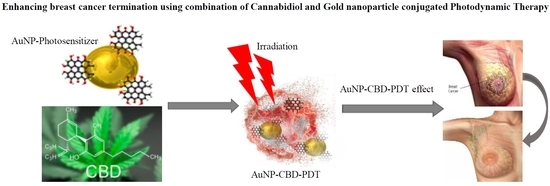
One of the most possible solutions to this could be the use of gold nanoparticle (AuNP) conjugated photodynamic therapy (PDT) in combination with cannabidiol (CBD), a Cannabis derivative from the Cannabis sativa.

Since the use of Cannabis has always been associated with recreation and psychoactive qualities, the positive effects of Cannabis or its derivatives on cancer treatment have been misunderstood and hence misinterpreted.

On the other hand, AuNP-PDT is the most favoured form of treatment for cancer, due to its augmented specificity and minimal risk of side effects compared to conventional treatments. However, its use requires the consideration of several physical, biologic, pharmacologic and immunological factors, which may hinder its effectiveness if not taken into consideration.

In this review, the role of gold nanoparticle mediated PDT combined with CBD treatment on breast cancer cells will be deliberated.”

https://www.ncbi.nlm.nih.gov/pubmed/31561450

https://www.mdpi.com/1422-0067/20/19/4771

Preclinical and Clinical Evidence Supporting Use of Cannabidiol in Psychiatry.

Image result for hindawi “Cannabidiol (CBD) is a major chemical compound present in Cannabis sativa.

CBD is a nonpsychotomimetic substance, and it is considered one of the most promising candidates for the treatment of psychiatric disorders.

The aim of this review is to illustrate the state of art about scientific research and the evidence of effectiveness of CBD in psychiatric patients.

RESULTS:

Preclinical and clinical studies on potential role of CBD in psychiatry were collected and further discussed. We found four clinical studies describing the effects of CBD in psychiatric patients: two studies about schizophrenic patients and the other two studies carried out on CBD effects in patients affected by generalized social anxiety disorder (SAD).

CONCLUSION:

Results from these studies are promising and suggest that CBD may have a role in the development of new therapeutic strategies in mental diseases, and they justify an in-depth commitment in this field. However, clinical evidence we show for CBD in psychiatric patients is instead still poor and limited to schizophrenia and anxiety, and it needs to be implemented with further studies carried out on psychiatric patients.”

https://www.ncbi.nlm.nih.gov/pubmed/31558911

“Results of our research, enriched in assessment of methodological quality of the studies, confirm the view of this cannabinoid as a promising molecule especially in particular sectors of psychiatry such as schizophrenia, anxiety, depression, and autism. CBD is considered a safe substance and is one of the most promising candidates for the treatment of psychiatric disorders”.

https://www.hindawi.com/journals/ecam/2019/2509129/

The non-euphoric phytocannabinoid cannabidivarin counteracts intestinal inflammation in mice and cytokine expression in biopsies from UC pediatric patients.

Pharmacological Research“Patients with ulcerative colitis (UC) using marijuana have been reported to experience symptomatic benefit.

Cannabidivarin (CBDV) is a safe non-psychoactive phytocannabinoid able to activate TRPA1, a member of TRP channels superfamily, which plays a pivotal role in intestinal inflammation.

Here, we have investigated the potential intestinal anti-inflammatory effect of CBDV in mice and in biopsies from pediatric patients with active UC.

Our preclinical study shows that CBDV exerts intestinal anti-inflammatory effects in mice via TRPA1, and in children with active UC.

Since CBDV has a favorable safety profile in humans, it may be considered for possible clinical trials in patients with UC.”

https://www.ncbi.nlm.nih.gov/pubmed/31553934

https://linkinghub.elsevier.com/retrieve/pii/S1043661819311077

Cannabidiol Is a Novel Modulator of Bacterial Membrane Vesicles.

 Image result for frontiers in cellular and infection microbiology“Membrane vesicles (MVs) released from bacteria participate in cell communication and host-pathogen interactions.

Roles for MVs in antibiotic resistance are gaining increased attention and in this study we investigated if known anti-bacterial effects of cannabidiol (CBD), a phytocannabinoid from Cannabis sativa, could be in part attributed to effects on bacterial MV profile and MV release.

We found that CBD is a strong inhibitor of MV release from Gram-negative bacteria (E. coli VCS257), while inhibitory effect on MV release from Gram-positive bacteria (S. aureus subsp. aureus Rosenbach) was negligible. When used in combination with selected antibiotics, CBD significantly increased the bactericidal action of several antibiotics in the Gram-negative bacteria.

In addition, CBD increased antibiotic effects of kanamycin in the Gram-positive bacteria, without affecting MV release. CBD furthermore changed protein profiles of MVs released from E. coli after 1 h CBD treatment.

Our findings indicate that CBD may pose as a putative adjuvant agent for tailored co-application with selected antibiotics, depending on bacterial species, to increase antibiotic activity, including via MV inhibition, and help reduce antibiotic resistance.”

https://www.ncbi.nlm.nih.gov/pubmed/31552202

https://www.frontiersin.org/articles/10.3389/fcimb.2019.00324/full 

Δ9-Tetrahydrocannabinol During Adolescence Attenuates Disruption of Dopamine Function Induced in Rats by Maternal Immune Activation.

Image result for frontiers in behavioral neuroscience“Here, we hypothesized that adolescent Δ9-tetrahydrocannabinol (THC) worsens the impact of prenatal maternal immune activation (MIA) on ventral tegmental area (VTA) dopamine cells in rat offspring.

Adolescent THC attenuated several MIA-induced effects.

Contrary to our expectations, adolescent THC did not worsen MIA-induced deficits.”

https://www.ncbi.nlm.nih.gov/pubmed/31551729

https://www.frontiersin.org/articles/10.3389/fnbeh.2019.00202/full