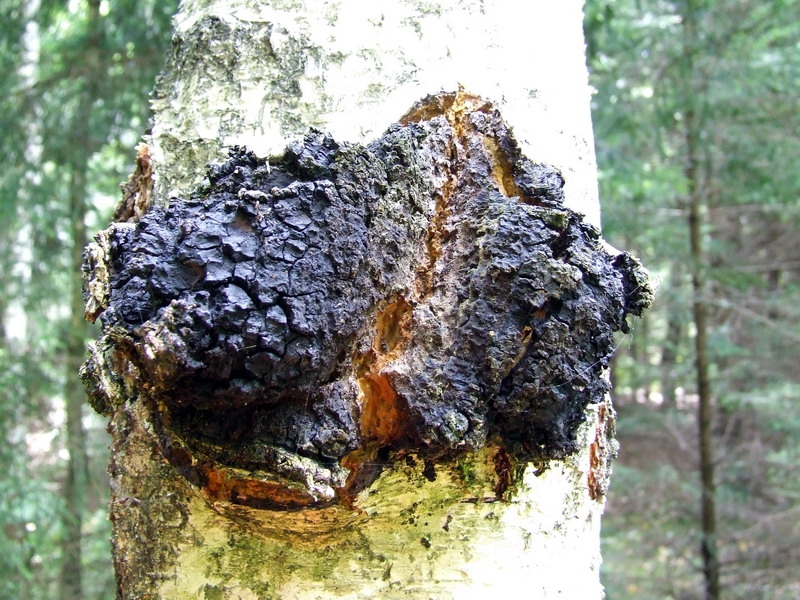
Anticancer activity of Chaga mushroom (Inonotus obliquus)

“Most chemotherapeutic agents for the treatment of cancer can destroy tumors and arrest cancer progress but cancer treatment may damage healthy cells and tissues. Thus, new anticancer drugs from natural products are expected to play an important role in the development of more effective and safer agents to inhibit the onset of cancer… Anticancer activity of subfractions containing pure compounds of Chaga mushroom (Inonotus obliquus) extract in human cancer cells..In conclusion, the three subfractions (3β-hydroxy-lanosta-8,24-dien-21-al, inotodiol, and lanosterol) inhibited in vitro proliferation of various human cancer cell lines… 3β-hydroxy-lanosta-8,24-dien-21-al, inotodiol, and lanosterol may therefore be interesting compounds for the development of novel anticancer drugs and functional anticancer food.” http://www.ncbi.nlm.nih.gov/pmc/articles/PMC2895696/

“Anti-cancer effect and structural characterization of endo-polysaccharide from cultivated mycelia of Inonotus obliquus.”  http://www.ncbi.nlm.nih.gov/pubmed/16458328

“Anticancer effects of fraction isolated from fruiting bodies of Chaga medicinal mushroom, Inonotus obliquus (Pers.:Fr.) Pilát (Aphyllophoromycetideae): in vitro studies.” http://www.ncbi.nlm.nih.gov/pubmed/22135889

“Antitumor and immunomodulatory activity of water-soluble polysaccharide from Inonotus obliquus.” http://www.ncbi.nlm.nih.gov/pubmed/22840014

“Identification of Inonotus obliquus and analysis of antioxidation and antitumor activities of polysaccharides.” http://www.ncbi.nlm.nih.gov/pubmed/18795365

Antitumor activity of water extract of a mushroom, Inonotus obliquus…”  http://www.ncbi.nlm.nih.gov/pubmed/19367670

“Progress on understanding the anticancer mechanisms of medicinal mushroom: inonotus obliquus. Cancer is a leading cause of death worldwide. Recently, the demand for more effective and safer therapeutic agents for the chemoprevention of human cancer has increased. As a white rot fungus, Inonotus obliquus is valued as an edible and medicinal resource. Chemical investigations have shown that I. obliquus produces a diverse range of secondary metabolites, including phenolic compounds, melanins, and lanostane-type triterpenoids. Among these are active components for antioxidant, antitumoral, and antiviral activities and for improving human immunity against infection of pathogenic microbes…polysaccharides from I. obliquus can indirectly be involved in anticancer processes mainly via stimulating the immune system. Furthermore, the antioxidative ability of I. obliquus extracts can prevent generation of cancer cells… mechanisms underlying the anticancer influence of I. obliquus…”  http://www.ncbi.nlm.nih.gov/pubmed/23679238

In vitro antitumor activity and structure characterization of ethanol extracts from wild and cultivated Chaga medicinal mushroom, Inonotus obliquus (Pers.:Fr.) Pilát (Aphyllophoromycetideae).” http://www.ncbi.nlm.nih.gov/pubmed/22135888

“Potential anticancer properties of the water extract of Inonotus obliquus by induction of apoptosis in melanoma cells…This study showed that the water extract of Inonotus obliquus mushroom exhibited a potential anticancer activity against melanoma cells in vitro and in vivo through the inhibition of proliferation and induction of differentiation and apoptosis of cancer cells…”  http://www.ncbi.nlm.nih.gov/pubmed/19041933

Comparative study of antioxidant activity and antiproliferative effect of hot water and ethanol extracts from the mushroom Inonotus obliquus.” http://www.ncbi.nlm.nih.gov/pubmed/19147108

“Anti-inflammatory and anticancer activities of extracts and compounds from the mushroom Inonotus obliquus.” http://www.ncbi.nlm.nih.gov/pubmed/23561137

“Chaga mushroom (Inonotus obliquus)…Chaga mushroom may provide a new therapeutic option, as a potential anticancer agent…”  http://www.ncbi.nlm.nih.gov/pmc/articles/PMC2681140/

Anticancer Activity of Mushrooms

An external file that holds a picture, illustration, etc.<br /><br /><br /><br /><br /><br /><br /><br /><br /><br /><br /><br /><br /><br /><br /><br /><br /><br /><br />
Object name is pone.0066504.g001.jpg

“Medicinal mushrooms and cancer therapy: translating a traditional practice into Western medicine… novel anticancer agents are being sought from traditional medicine… Purified bioactive compounds derived from medicinal mushrooms are a potentially important new source of anticancer agents.”  http://www.ncbi.nlm.nih.gov/pubmed/16702701

“New scientific approaches to cancer treatment: can medicinal mushrooms defeat the curse of the century? Unfortunately, our age, heredity, lifestyle, race, and ethnicity are directly connected to the development of carcinogenesis… It is already well established that medicinal mushrooms represent a potential source for biologically active compounds with immunomodulating, free radical scavenging, anti-inflammatory, antibacterial, antifungal, antiviral, hepatoprotective, antidiabetic, and anticancer activities… low-molecular weight mushroom substances… representing a new scientific approach to cancer treatment and prevention.”  http://www.ncbi.nlm.nih.gov/pubmed/22339703

“Medicinal mushroom modulators of molecular targets as cancer therapeutics..high-molecular-weight polysaccharides or polysaccharide-protein complexes from mushrooms appear to enhance innate and cell-mediated immune responses, exhibit antitumor activities in animals and humans, and demonstrate anticancer properties”  http://www.ncbi.nlm.nih.gov/pubmed/15726350

“Antitumor activity of mushroom polysaccharides: a review” http://www.ncbi.nlm.nih.gov/pubmed/22865023

“Bioactive polysaccharides from traditional Chinese medicine herbs as anticancer adjuvants.” http://www.ncbi.nlm.nih.gov/pubmed/12470436

“Immunomodulatory and anti-tumour polysaccharides from medicinal plants.”  http://www.ncbi.nlm.nih.gov/pubmed/7895893

“Medicinal mushrooms as a source of antitumor and immunomodulating polysaccharides. The number of mushrooms on Earth is estimated at 140,000, yet maybe only 10% (approximately 14,000 named species) are known. Mushrooms comprise a vast and yet largely untapped source of powerful new pharmaceutical products. In particular, and most importantly for modern medicine, they represent an unlimited source of polysaccharides with antitumor and immunostimulating properties.” http://www.ncbi.nlm.nih.gov/pubmed/12436306

Recent developments in mushrooms as anti-cancer therapeutics: a review. From time immemorial, mushrooms have been valued by humankind as a culinary wonder and folk medicine in Oriental practice…The chief medicinal uses of mushrooms discovered so far are as anti-oxidant, anti-diabetic, hypocholesterolemic, anti-tumor, anti-cancer, immunomodulatory, anti-allergic, nephroprotective, and anti-microbial agents.The mounting evidences from various research groups across the globe, regarding anti-tumor application of mushroom extracts unarguably make it a fast-track research area worth mass attention.” http://www.ncbi.nlm.nih.gov/pmc/articles/PMC3339609/

“Biotechnological cultivation of edible macrofungi: an alternative for obtaining nutraceutics” http://www.ncbi.nlm.nih.gov/pubmed/22449697

“Therapeutic potential of various beta-glucan sources in conjunction with anti-tumor monoclonal antibody in cancer therapy.”  http://www.ncbi.nlm.nih.gov/pubmed/19106638

“Commonly consumed and specialty dietary mushrooms reduce cellular proliferation in human breastcancer cells…both common and specialty mushrooms may be chemoprotective against breast cancer.”  http://www.ncbi.nlm.nih.gov/pubmed/20921274

Enhanced antiproliferative effects of aqueous extracts of some medicinal mushrooms on colon cancer cells. Auricularia polytricha, Macrolepiota procera, and Pleurotus ostreatus…the aqueous extracts of all 3 species of mushrooms have a remarkable irreversible antiproliferative effect on cancer cell lines… treatment with the extracts validated the anticancerous property of these mushroom species.”  http://www.ncbi.nlm.nih.gov/pubmed/23662617

Effect of various natural products on growth of bladder cancer cells: two promising mushroom extracts… GD- and PL-fractions…It is thus plausible that these substances could be used, solely or combined with conventional modalities, for the treatment of superficial bladder cancer.”  http://www.ncbi.nlm.nih.gov/pubmed/17397268


“Anticancer Activity of Amauroderma rude… medicinal mushrooms have been widely used as a miraculous herb for health promotion, especially by cancer patients… we found that the extract of Amauroderma rude exerted the highest activity in killing most of these cancer cell lines…Taken together, Amauroderma rude represented a powerful medicinal mushroom with anti-cancer activities.” http://www.ncbi.nlm.nih.gov/pmc/articles/PMC3688780/


“Medicinal mushroom Phellinus linteus as an alternative cancer therapy.”  http://www.ncbi.nlm.nih.gov/pmc/articles/PMC3445909/

“Phellinus linteus activates different pathways to induce apoptosis in prostate cancer cells…polysaccharides extracted from the Phellinus linteus (PL) mushroom possess antitumour activity.” http://www.ncbi.nlm.nih.gov/pmc/articles/PMC2360058/

“Dramatic remission of hormone refractory prostate cancer achieved with extract of the mushroom, Phellinus linteus.” http://www.ncbi.nlm.nih.gov/pubmed/15331908

“Protein-bound polysaccharide from Phellinus linteus inhibits tumor growth, invasion, and angiogenesis in human colon cancer cells. Polysaccharides extracted from the Phellinus linteus (PL) mushroom are known to possess anti-tumor effects…These data suggest that PL suppresses tumor growth, invasion, and angiogenesis through the inhibition of Wnt/β-catenin signaling in certain colon cancer cells.” http://www.ncbi.nlm.nih.gov/pmc/articles/PMC3154178/

“Phellinus linteus suppresses growth, angiogenesis and invasive behaviour of breast cancer cells…our study suggests potential therapeutic effect of PL against invasive breast cancer.” http://www.ncbi.nlm.nih.gov/pmc/articles/PMC2361714/

“Mycelial Extract of Phellinus linteus Induces Cell Death in Lung Cancer Cells…  may be a potential therapeutic agent for the control of human lung carcinoma cells.”  http://www.ncbi.nlm.nih.gov/pmc/articles/PMC3769563/


“Constituents isolated from Cordyceps militaris suppress enhanced inflammatory mediator’s production and human cancer cell proliferation. The present study provides scientific supporting information for the ethnopharmacological use of Cordyceps militaris as an anti-inflammatory and anticancer agent.”  http://www.ncbi.nlm.nih.gov/pubmed/20633630

Antifungal and Anticancer Activities of a Protein from the Mushroom Cordyceps militaris… These results indicate that C. militaris represents a source of a novel protein that might be applied in diverse biological and medicinal applications…mushroom C. militaris could be used as a nutraceutical for cancer patients, and also as a fungicide or for meat tenderizer.” http://www.ncbi.nlm.nih.gov/pmc/articles/PMC2766723/

Cordycepin-enriched Cordyceps militaris induces immunomodulation and tumor growth delay in mouse-derived breast cancer. Cordyceps militaris (C. militaris) and its main functional component, cordycepin, has been shown to possess a number of pharmacological activities including immunological stimulation and antitumor effects. ” http://www.ncbi.nlm.nih.gov/pubmed/23921598

“Induction of apoptosis by aqueous extract of Cordyceps militaris…Cordyceps militaris is well known as a traditional medicinal mushroom and has been shown to exhibit immunostimulatory and anticancer activities.”  http://www.ncbi.nlm.nih.gov/pubmed/19131705


“Anticancer, antioxidant and antibiotic activities of mushroom Ramaria flava… These results suggest that R. flava could hold a good potential source for human health.” http://www.ncbi.nlm.nih.gov/pubmed/23684998


A comparison of cannabidiolic acid with other treatments for anticipatory nausea using a rat model of contextually elicited conditioned gaping

“The effectiveness of cannabidiolic acid (CBDA) was compared with other potential treatments for anticipatory nausea (AN), using a rat model of contextually elicited conditioned gaping reactions…

Conclusions

CBDA has therapeutic potential as a highly potent and selective treatment for AN without psychoactive or locomotor effects.”

http://link.springer.com/article/10.1007/s00213-014-3498-1

Relationship between working-memory network function and substance use: a 3-year longitudinal fMRI study in heavy cannabis users and controls.

“The aim of this 3-year longitudinal neuro-imaging study was to investigate the relationship between substance use (e.g. alcohol, cannabis, nicotine, illegal psychotropic drugs) and working-memory network function over time in heavy cannabis users and controls.

Within the group of cannabis users, cannabis-related problems remained stable, whereas alcohol-related problems, nicotine dependence and illegal psychotropic substance use increased over time. At both measurements, behavioral performance and network functionality during the n-back task did not differ between heavy cannabis users and controls. Although n-back accuracy improved, working-memory network function remained stable over time.

Within the group of cannabis users, working-memory network functionality was not associated with substance use.

These results suggest that sustained moderate to heavy levels of cannabis, nicotine, alcohol and illegal psychotropic substance use do not change working-memory network functionality.

Moreover, baseline network functionality did not predict cannabis use and related problems three years later, warranting longitudinal studies in more chronic or dependent cannabis users.”

http://www.ncbi.nlm.nih.gov/pubmed/24589297

Combining rimonabant and fentanyl in a single entity: preparation and pharmacological results.

“Based on numerous pharmacological studies that have revealed an interaction between cannabinoid and opioid systems at the molecular, neurochemical, and behavioral levels, a new series of hybrid molecules has been prepared by coupling the molecular features of two wellknown drugs, ie, rimonabant and fentanyl. The new compounds have been tested for their affinity and functionality regarding CB1 and CB2 cannabinoid and μ opioid receptors. In [(35)S]-GTPγS (guanosine 5′-O-[gamma-thio]triphosphate) binding assays from the post-mortem human frontal cortex, they proved to be CB1 cannabinoid antagonists and μ opioid antagonists. Interestingly, in vivo, the new compounds exhibited a significant dual antagonist action on the endocannabinoid and opioid systems.”

http://www.ncbi.nlm.nih.gov/pubmed/24591816

Brain Innate Immunity In The Regulation Of Neuroinflammation: Therapeutic Strategies By Modulating Cd200-Cd200r Interaction Involve The Cannabinoid System.

“The central nervous system (CNS) innate immune response includes an arsenal of molecules and receptors expressed by professional phagocytes, glial cells and neurons that is involved in host defence and clearance of toxic and dangerous cell debris. However, any uncontrolled innate immune responses within the CNS are widely recognized as playing a major role in the development of autoimmune disorders and neurodegeneration, with multiple sclerosis (MS) and Alzheimer’s disease (AD) being primary examples. Hence, it is important to identify the key regulatory mechanisms involved in the control of CNS innate immunity and which could be harnessed to explore novel therapeutic avenues. Neuroimmune regulatory proteins (NIReg) such as CD95L, CD200, CD47, sialic acid, complement regulatory proteins (CD55, CD46, fH, C3a), HMGB1, may control the adverse immune responses in health and diseases. In the absence of these regulators, when neurons die by apoptosis, become infected or damaged, microglia and infiltrating immune cells are free to cause injury as well as an adverse inflammatory response in acute and chronic settings. We will herein provide new emphasis on the role of the pair CD200-CD200R in MS and its experimental models: experimental autoimmune encephalomyelitis (EAE) and Theiler’s virus induced demyelinating disease (TMEV-IDD). The interest of the cannabinoid system as inhibitor of inflammation prompt us to introduce our findings about the role of endocannabinoids (eCBs) in promoting CD200-CD200 receptor (CD200R) interaction and the benefits caused in TMEV-IDD. Finally, we also review the current data on CD200-CD200R interaction in AD, as well as, in the aging brain.”

http://www.ncbi.nlm.nih.gov/pubmed/24588829

Role of the Endocannabinoid System in the Neuroendocrine Responses to Inflammation.

“… the endocannabinoid system has been recognized as a major neuromodulatory system whose main functions are to exert and maintain the body homeostasis.

The coordinated neural, immune, behavioral and endocrine responses to inflammation are orchestrated to provide an important defense against infections and help homeostasis restoration in the body. These responses are executed and controlled mainly by the hypothalamic-pituitary adrenal axis. Also, the hypothalamic-neurohypophyseal system is essential for survival and plays a role recovering the homeostasis under a variety of stress conditions, including inflammation and infection.

Since the endocannabinoid system components are present at sites involved in the hypothalamic-pituitary axis regulation, several studies were performed in order to investigate the endocannabinoid-mediated neurotransmitters and hormones secretion under physiological and pathological conditions.

In the present review we focused on the endocannabinoids actions on the neuroendocrine response to inflammation and infection. We provide a detailed overview of the current understanding of the role of the endocannabinoid system in the recovering of homeostasis as well as potential pharmacological therapies based on the manipulation of endocannabinoid system components that could provide novel treatments for a wide range of disorders.”

http://www.ncbi.nlm.nih.gov/pubmed/24588819

Distinctive pattern of cannabinoid receptor type II (CB2) expression in adult and pediatric brain tumors.

“The efficacy of cannabinoids against high-grade glioma in animal models, mediated by two specific receptors, CB1 and CB2, raised promises for targeted treatment of the most frequent and malignant primary brain tumors.

Unlike the abundantly expressed CB1, the CB2 receptor shows a restricted distribution in normal brain. Although brain tumors constitute the second most common malignancy in children and the prevalence of histological types of brain tumors vary significantly between the adult and pediatric populations, cannabinoid receptor expression in pediatric tumors remains unknown.

In the present study, we compared the expression of the CB2 receptor in paraffin-embedded sections from primary brain tumors of adult and pediatric patients. Most glioblastomas expressed very high levels of CB2 receptors and the expression correlated with tumor grade.

Interestingly, some benign pediatric astrocytic tumors, such as subependymal giant cell astrocytoma (SEGA), which may occasionally cause mortality owing to progressive growth, also displayed high CB2 immunoreactivity.

The high levels of CB2 expression would predestine those tumors to be vulnerable to cannabinoid treatment.

In contrast, all examined cases of embryonal tumors (medulloblastoma and S-PNET), the most frequently diagnosed malignant brain tumors in childhood, showed no or trace CB2 immunoreactivity.

Our results suggest that the CB2 receptor expression depends primarily on the histopathological origin of the brain tumor cells and differentiation state, reflecting the tumor grade.”

http://www.ncbi.nlm.nih.gov/pubmed/17239827

Multiple sleep alterations in mice lacking cannabinoid type 1 receptors.

“Cannabinoid type 1 (CB1) receptors are highly expressed in the brain… Endogenous cannabinoid signaling is modulated by high-fat diet (HFD).

We investigated the consequences of congenital lack of CB1 receptors on sleep in mice fed standard diet (SD) and HFD.

CB1 cannabinoid receptor knock-out (KO) and wild-type (WT) mice were fed SD or HFD for 4 months .

The occurrence of multiple sleep alterations in KO indicates important roles of CB1 cannabinoid receptors in limiting arousal during the active period of the day, in sleep regulation, and in sleep EEG in mice.”

http://www.ncbi.nlm.nih.gov/pubmed/24586776

Target-Selective Phototherapy Using a Ligand-Based Photosensitizer for Type 2 Cannabinoid Receptor.

“Phototherapy is a powerful, noninvasive approach for cancer treatment, with several agents currently in clinical use.

…we developed a phototherapy agent that combines a functional ligand and a near infrared phthalocyanine dye. Our target is type 2 cannabinoid receptor (CB2R), considered an attractive therapeutic target for phototherapy given it is overexpressed by many types of cancers that are located at a surface or can be reached by an endoscope.

Overall, this opens up the opportunity for development of an alternative treatment option for CB2R-positive cancers.”

http://www.ncbi.nlm.nih.gov/pubmed/24583052