Chemicals in Marijuana Could Help Treat MS

TAU researchers have found that chemicals in marijuana could help treat multiple sclerosis. (Source: AFTAU)

“TAU researchers have found that chemicals in marijuana could help treat multiple sclerosis.

Multiple sclerosis is an inflammatory disease in which the immune system attacks the nervous system. The result can be a wide range of debilitating motor, physical, and mental problems. No one knows why people get the disease or how to treat it. 

In a new study published in the Journal of Neuroimmune Pharmacology, Drs. Ewa Kozela, Ana Juknat, Neta Rimmerman and Zvi Vogel of Tel Aviv University’s Dr. Miriam and Sheldon G. Adelson Center for the Biology of Addictive Diseases and Sackler Faculty of Medicine demonstrate that some chemical compounds found in marijuana can help treat MS-like diseases in mice by preventing inflammation in the brain and spinal cord…”


“Cannabinoids Decrease the Th17 Inflammatory Autoimmune Phenotype” http://link.springer.com/article/10.1007/s11481-013-9493-1 

Sending Multiple Sclerosis Up in Smoke

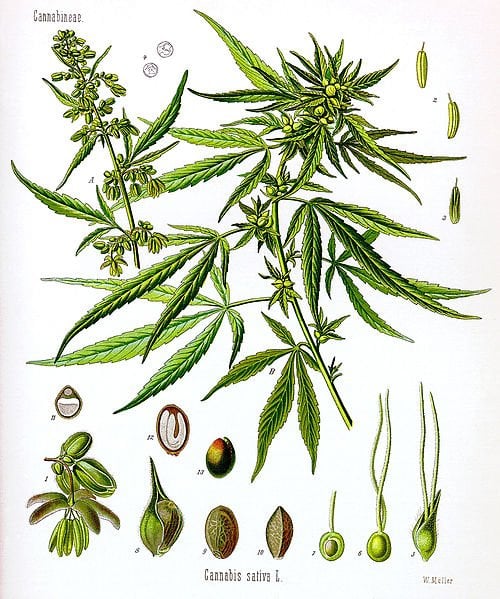
The illustration is of the cannabis sativa plant.

 “TAU researchers find chemicals in marijuana could help treat MS.

Multiple sclerosis is an inflammatory disease in which the immune system attacks the nervous system. The result can be a wide range of debilitating motor, physical, and mental problems. No one knows why people get the disease or how to treat it.

In a new study published in the Journal of Neuroimmune Pharmacology, Drs. Ewa Kozela, Ana Juknat, Neta Rimmerman and Zvi Vogel of Tel Aviv University’s Dr. Miriam and Sheldon G. Adelson Center for the Biology of Addictive Diseases and Sackler Faculty of Medicine demonstrate that some chemical compounds found in marijuana can help treat MS-like diseases in mice by preventing inflammation in the brain and spinal cord.

“Inflammation is part of the body’s natural immune response, but in cases like MS it gets out of hand,” says Kozela. “Our study looks at how compounds isolated from marijuana can be used to regulate inflammation to protect the nervous system and its functions.” Researchers from the Weizmann Institute of Science co-authored the study…”

More: http://neurosciencenews.com/neurology-thc-cbd-multiple-sclerosis-482/

 “Sending Multiple Sclerosis Up in Smoke” http://www.sciencedaily.com/releases/2013/10/131007132253.htm

“Cannabinoids Decrease the Th17 Inflammatory Autoimmune Phenotype” http://link.springer.com/article/10.1007/s11481-013-9493-1

Researchers find chemicals in marijuana could help treat MS

Researchers find chemicals in marijuana could help treat MS

“In a new study published in the Journal of Neuroimmune Pharmacology, Drs. Ewa Kozela, Ana Juknat, Neta Rimmerman and Zvi Vogel of Tel Aviv University’s Dr. Miriam and Sheldon G. Adelson Center for the Biology of Addictive Diseases and Sackler Faculty of Medicine demonstrate that some chemical compounds found in marijuana can help treat MS-like diseases in mice by preventing inflammation in the brain and spinal cord.

“Inflammation is part of the body’s natural immune response, but in cases like MS it gets out of hand,” says Kozela. “Our study looks at how compounds isolated from marijuana can be used to regulate inflammation to protect the nervous system and its functions.” Researchers from the Weizmann Institute of Science co-authored the study.”

More: http://medicalxpress.com/news/2013-10-chemicals-marijuana-ms.html

“Cannabinoids Decrease the Th17 Inflammatory Autoimmune Phenotype” http://link.springer.com/article/10.1007/s11481-013-9493-1

Parkinson’s Symptoms Reduced by Smoking Cannabis – Parkinson Research Foundation

Cannabis_Clones_in_Box

 “Ruth Djaldetti, M.D., of Tel Aviv University in Israel, presented the findings of her research at a recent International Congress on Parkinson’s Disease and Movement Disorders.  She reported improvement in tremor, pain, rigidity and bradykinesia (slowness of movement).  Twenty subjects, all in their mid-sixties, and were rated using the Unified Parkinson’s Disease Rating Scale (UPDRS) both before and after smoking.  Their overall “before” scores were over 30 and within 30 minutes of smoking, their scores dropped to 24..  Their tremor scores averaged 7.5 on the UPDRS before and dropped to a score of 3.5 after smoking cannabis.  Bradykinesia scores dropped from 13.2 to 8.6 and rigidity went from 7.4 to 6.4.  Dr. Djaldetti also saw a marked relief in the pain her subjects were experiencing and this relief of pain led to better sleep and feeling more rested.

This bears out the results of other studies.  A study done in Great Britain that was published in 2011 found the principal ingredient in cannabis provided neuroprotection for people with Parkinson’s disease.  Its neuroprotective properties included reduction of inflammation and control of spasms, making it an ideal drug for treating Parkinson’s.  However, its confusing legal status make it very difficult for people to obtain or consider using and for doctors to even recommend to patients.

Another interesting study done in 2010 found that cannabinoid receptors are located in many parts of the brain and that cannabinoids are produced naturally in the brain.  People with Parkinson’s have even higher levels of endocannabinoids (cannabinoids produced within the brain).  The main ingredient in cannabis, Tetrahydrcannibol (THC) actually increases dopamine production temporarily.  Cannabidiol (CBD) another component of cannabis, also provides neuroprotective properties and has been shown to reduce dystonias .  CDB could be a very vital improvement for treating Parkinson’s, and a recent study has shown it useful in treating certain cancers as well.

While there have been many, many people reporting the anecdotal benefits of smoking cannabis, clinical trials are lagging behind.  Laboratory and animal studies have shown many benefits, but perplexing issues around the legality of cannabis are slowing the efforts and impeding progress.”

http://parkinsonresearchfoundation.org/blog/2013/07/11/parkinsons-symptoms-reduced-by-smoking-cannabis/

Δ9-TETRAHYDROCANNABINOL IS PROTECTIVE THROUGH PPARγ DEPENDENT MITOCHONDRIAL BIOGENESIS IN A CELL CULTURE MODEL OF PARKINSON’S DISEASE

“Cannabinoids such as Δ9-tetrahydrocannabinol (Δ9-THC) are neuroprotective in animal and cell culture models of Parkinson’s disease (PD).

In a PD cell culture model we recently demonstrated that Δ9-THC is neuroprotective through activation of the nuclear receptor peroxisomal proliferator-activated receptor γ (PPARγ)…

Here we investigate the effect of Δ9-THC and pioglitazone on mitochondrial biogenesis…

CONCLUSIONS:

Even though Δ9-THC and pioglitazone are both protective against MPP+ only Δ9-THC induces PPARγ dependent mitochondrial biogenesis, a mechanism that may be beneficial for the treatment of PD.”

http://jnnp.bmj.com/content/84/11/e2.58

“Δ⁹-tetrahydrocannabinol (Δ⁹-THC) exerts a direct neuroprotective effect in a human cell culture model of Parkinson’s disease.” http://www.ncbi.nlm.nih.gov/pubmed/22236282

THC Gives Cancer Cells the Munchies Too

“…THC and other cannabinoids are actively being investigated for various useful clinical purposes, including the treatment of cancer through the inhibition of tumor growth.

A new study by Salazar et al. in The Journal of Clinical Investigation demonstrates that THC causes tumor cells to begin to degrade themselves from the inside (a process called autophagy, i.e. “self-eating”). Although autophagy has been shown to promote cell survival in some cases and cell death in others, the authors show that in this case it causes cancer cells to undergo programmed cell death (apoptosis). Thus, THC activates a series of events within cancer cells, inhibiting tumor growth.”

More: http://scienceblogs.com/scientificactivist/2009/04/02/thc-gives-cancer-cells-the-mun/

“Cannabinoid action induces autophagy-mediated cell death through stimulation of ER stress in human glioma cells” http://www.ncbi.nlm.nih.gov/pmc/articles/PMC2673842/

Structure-Activity Relationship Study of Indole-2-carboxamides Identifies a Potent Allosteric Modulator for the Cannabinoid Receptor 1 (CB1).

“The cannabinoid CB1 receptor is involved in complex physiological functions. The discovery of CB1 allosteric modulators generates new opportunities for drug discovery targeting the pharmacologically important CB1 receptor…”

 http://www.ncbi.nlm.nih.gov/pubmed/24053617

Critical appraisal of the potential use of cannabinoids in cancer management

“Cannabinoids have been attracting a great deal of interest as potential anticancer agents. Originally derived from the plant Cannabis sativa, there are now a number of endo-, phyto- and synthetic cannabinoids available. This review summarizes the key literature to date around the actions, antitumor activity, and mechanisms of action for this broad range of compounds…

Two therapeutic avenues exist for the development of cannabinoids as anticancer agents. As antiemetic and analgesic compounds, this class of compounds has been explored in terms of palliative care. More recently, cannabinoid agonists and antagonists have been screened for potential direct antitumorigenic properties.

… results suggest that overall the cannabinoids affect multiple cellular signaling pathways, which means they have the potential to decrease cancer development, growth, and metastasis.

Overall, the cannabinoids may show future promise in the treatment of cancer, but there are many significant hurdles to be overcome. There is much still to be learned about the action of the cannabinoids and the endocannabinoid system.

It is a distinct possibility that the cannabinoids may have a place in the future treatment of cancer.”

Full Text: http://www.ncbi.nlm.nih.gov/pmc/articles/PMC3770515/

Clinical experiences with cannabinoids in spasticity management in multiple sclerosis.

“Spasticity is a common symptom among patients with multiple sclerosis (MS). This study aims to assess the effectiveness and safety of the combination of delta-9-tetrahydrocannabinol (THC) and cannabidiol (CBD) in clinical practice for the treatment of spasticity in MS…

Retrospective observational study with patients treated with inhaled THC/CBD…

 THC/CBD was effective in 80% of patients…

CONCLUSIONS:

THC/CBD appears to be a good alternative to standard treatment as it improves refractory spasticity in MS and has an acceptable toxicity profile.”

http://www.ncbi.nlm.nih.gov/pubmed/24035293

Therapeutic Potential of a Novel Cannabinoid Agent CB52 in the Mouse Model ofExperimental Autoimmune Encephalomyelitis.

“The endocannabinoid system has recently emerged as a promising therapeutic target for MS. The protective mechanisms of cannabinoids are thought to be mediated by activation of cannabinoid receptor 1 (CB1) and 2 (CB2)…

activation of CB1 receptors contributes significantly to the anti-inflammatory and neuroprotective effects of cannabinoids on MS.”

http://www.ncbi.nlm.nih.gov/pubmed/24036373