
“The prevalence of opioid-associated morbidity and mortality underscores the need for research on non-opioid treatments for chronic non-cancer pain (CNCP). Pain is the most common medical condition for which patients request medical cannabis. Limited research indicates that patients are interested in cannabis as a potential addition to or replacement for opioid medication. This analysis reports on CNCP patient and clinician perceptions about the co-use of cannabis and opioids for CNCP management.
Tag Archives: cannabis
Impact of recreational and medicinal marijuana on surgical patients: A review.
“As medicinal and recreational marijuana use broadens across the United States, knowledge of its effects on the body will become increasingly important to all health care providers, including surgeons.
DATA SOURCES:
We performed a literature review of Pubmed for articles discussing the basic science related to cannabinoids, as well as articles regarding cannabinoid medications, and cannabis use in surgical patients.CONCLUSIONS:
The primary components in the cannabis plant, tetrahydrocannabinol (THC) and cannabidiol (CBD), have been made available in numerous forms and formulations to treat multiple medical conditions, and recreational access to marijuana is increasing. Of particular importance to the surgeon may be their effects on prolonging intestinal motility, decreasing inflammation, increasing hunger, mitigating pain, and reducing nausea and vomiting. Perioperative use of medicinal or recreational marijuana will become increasingly prevalent, and the surgeon should be aware of the positive and negative effects of these cannabinoids.” https://www.ncbi.nlm.nih.gov/pubmed/30471810 https://www.americanjournalofsurgery.com/article/S0002-9610(18)31123-1/fulltext]]>IMPACT OF NEUROIMMUNE ACTIVATION INDUCED BY ALCOHOL OR DRUG ABUSE ON ADOLESCENT BRAIN DEVELOPMENT.
“Evidence obtained in recent decades has demonstrated that the brain still matures in adolescence. Changes in neural connectivity occur in different regions, including cortical and subcortical structures, which undergo modifications in white and gray matter densities. These alterations concomitantly occur in some neurotransmitter systems and hormone secretion, which markedly influence the refinement of certain brain areas and neural circuits. The immaturity of the adolescent brain makes it more vulnerable to the effects of alcohol and drug abuse, whose use can trigger long-term behavioral dysfunction. This article reviews the action of alcohol and drug abuse (cannabis, cocaine, opioids, amphetamines, anabolic androgenic steroids) in the adolescent brain, and their impact on both cognition and behavioral dysfunction, including predisposition to drug abuse in later life. It also discusses recent evidence that indicates the role of the neuroimmune system response and neuroinflammation as mechanisms that participate in many actions of ethanol and drug abuse in adolescence, including the neurotoxicity and alterations in neurocircuitry that contribute to the dysfunctional behaviors associated with addiction. The new data suggest the therapeutic potential of anti-inflammatory targets to prevent the long-term consequences of drug abuse in adolescence.” https://www.ncbi.nlm.nih.gov/pubmed/30468786 https://www.sciencedirect.com/science/article/pii/S073657481830251X?via%3Dihub
“Cannabinoids as novel anti-inflammatory drugs.” https://www.ncbi.nlm.nih.gov/pubmed/20191092
]]>A meta-analysis of the crash risk of cannabis-positive drivers in culpability studies-Avoiding interpretational bias.
“Culpability studies, a common study design in the cannabis crash risk literature, typically report odds-ratios (OR) indicating the raised risks of a culpable accident. This parameter is of unclear policy relevance, and is frequently misinterpreted as an estimate of the increased crash risk, a practice that introduces a substantial “interpretational bias”.
RESULTS:
The model outperforms the culpability OR in bootstrap analyses. Used on actual study data, the average increase in crash risk is estimated at 1.28 (1.16-1.40). The pooled increased risk of a culpable crash is estimated as 1.42 (95% credibility interval 1.11-1.75), which is similar to pooled estimates using traditional ORs (1.46, 95% CI: 1.24-1.72). The attributable risk fraction of cannabis impaired driving is estimated to lie below 2% for all but two of the included studies.CONCLUSIONS:
Culpability ORs exaggerate risk increases and parameter uncertainty when misinterpreted as total crash ORs. The increased crash risk associated with THC-positive drivers in culpability studies is low.” https://www.ncbi.nlm.nih.gov/pubmed/30468948 https://www.sciencedirect.com/science/article/pii/S0001457518304706?via%3Dihub]]>Neuroprotection by cannabidiol and hypothermia in a piglet model of newborn hypoxic-ischemic brain damage.
“Hypothermia, the gold standard after a hypoxic-ischemic insult, is not beneficial in all treated newborns. Cannabidiol is neuroprotective in animal models of newborn hypoxic-ischemic encephalopathy. This study compared the relative efficacies of cannabidiol and hypothermia in newborn hypoxic-ischemic piglets and assessed whether addition of cannabidiol augments hypothermic neuroprotection.
RESULTS:
HI led to sustained depressed brain activity and increased microglial activation, which was significantly improved by cannabidiol alone or with hypothermia but not by hypothermia alone. Hypoxic-ischemic-induced increases in Lac/NAA, Glu/NAA, TNFα or apoptosis were not reversed by either hypothermia or cannabidiol alone, but combination of the therapies did. No treatment modified the effects of HI on oxidative stress or astroglial activation. Cannabidiol treatment was well tolerated.CONCLUSIONS:
cannabidiol administration after hypoxia-ischemia in piglets offers some neuroprotective effects but the combination of cannabidiol and hypothermia shows some additive effect leading to more complete neuroprotection than cannabidiol or hypothermia alone.” https://www.ncbi.nlm.nih.gov/pubmed/30468796 https://www.sciencedirect.com/science/article/pii/S0028390818308554?via%3Dihub]]>Long-Term Safety, Tolerability, and Efficacy of Cannabidiol in Children with Refractory Epilepsy: Results from an Expanded Access Program in the US.
 “Purified cannabidiol is a new antiepileptic drug that has recently been approved for use in patients with Lennox-Gastaut and Dravet syndromes, but most published studies have not extended beyond 12-16 weeks.
The objective of this study was to evaluate the long-term safety, tolerability, and efficacy of cannabidiol in children with epilepsy.
Twenty-six children were enrolled. Most had genetic epilepsies with daily or weekly seizures and multiple seizure types. All were refractory to prior antiepileptic drugs (range 4-11, mean 7), and were taking two antiepileptic drugs on average. Duration of therapy ranged from 4 to 53 months (mean 21 months). Adverse events were reported in 21 patients (80.8%), including reduced appetite in ten (38.4%), diarrhea in nine (34.6%), and weight loss in eight (30.7%). Four (15.4%) had changes in antiepileptic drug concentrations and three had elevated aspartate aminotransferase and alanine aminotransferase levels when cannabidiol was administered together with valproate. Serious adverse events, reported in six patients (23.1%), included status epilepticus in three, catatonia in two, and hypoalbuminemia in one. Fifteen patients (57.7%) discontinued cannabidiol for lack of efficacy, one because of status epilepticus, and one for severe weight loss. The retention rate declined rapidly in the first 6 months and more gradually thereafter. At 24 months, the number of patients continuing cannabidiol as adjunctive therapy was nine of the original 26 (34.6%). Of these patients, seven (26.9%) had a sustained > 50% reduction in motor seizures, including three (11.5%) who remain seizure free.CONCLUSION:
Over a 4-year period, cannabidiol was effective in 26.9% of children with otherwise refractory epilepsy. It was well tolerated in about 20% of patients, but 80.8% had adverse events, including 23.1% with serious adverse events. Decreased appetite and diarrhea were frequent along with weight loss that became evident only later in the treatment.”The level of evidence of medical marijuana use for treating disabilities: a scoping review.
 “There is sufficient evidence that medical marijuana is effective in treating epileptic seizures and chronic pain.
Medical marijuana may improve the level of functioning and quality of life for individuals with certain disabilities.”
https://www.ncbi.nlm.nih.gov/pubmed/30456993
https://www.tandfonline.com/doi/abs/10.1080/09638288.2018.1523952?journalCode=idre20
“There is sufficient evidence that medical marijuana is effective in treating epileptic seizures and chronic pain.
Medical marijuana may improve the level of functioning and quality of life for individuals with certain disabilities.”
https://www.ncbi.nlm.nih.gov/pubmed/30456993
https://www.tandfonline.com/doi/abs/10.1080/09638288.2018.1523952?journalCode=idre20
 “The plant Cannabis sativa produces over 140 known
 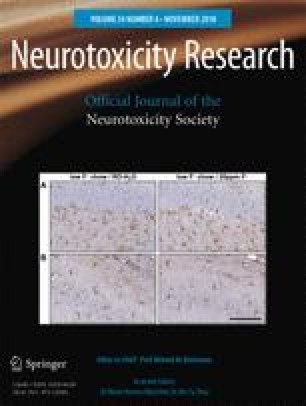 “Diabetes and aging are risk factors for cognitive impairments after chronic cerebral hypoperfusion (CCH).
Cannabidiol (CBD) is a phytocannabinoid present in the
“Diabetes and aging are risk factors for cognitive impairments after chronic cerebral hypoperfusion (CCH).
Cannabidiol (CBD) is a phytocannabinoid present in the