Selective Activation of Cannabinoid Receptor 2 in Leukocytes Suppresses Their Engagement of the Brain Endothelium and Protects the Blood-Brain Barrier.

“Cannabinoid receptor 2 (CB2) is highly expressed in immune cells and stimulation decreases inflammatory responses. We tested the idea that selective CB2 activation in human monocytes suppresses their ability to engage the brain endothelium and migrate across the blood-brain barrier (BBB), preventing consequent injury…

These results indicate that selective CB2 activation in leukocytes decreases key steps in monocyte-BBB engagement, thus suppressing inflammatory leukocyte responses and preventing neuroinflammation.”

http://www.ncbi.nlm.nih.gov/pubmed/24055259

The CB2 cannabinoid receptor signals apoptosis via ceramide-dependent activation of the mitochondrial intrinsic pathway.

“Delta9-tetrahydrocannabinol and other cannabinoids exert pro-apoptotic actions in tumor cells via the CB2 cannabinoid receptor…

 Here we used the human leukemia cell line Jurkat-that expresses CB2 as the unique CB receptor-to investigate…

 In summary, results presented here show that CB2 receptor activation signals apoptosis via a ceramide-dependent stimulation of the mitochondrial intrinsic pathway.”

http://www.ncbi.nlm.nih.gov/pubmed/16624285

Targeting CB2 cannabinoid receptors as a novel therapy to treat malignant lymphoblastic disease

“In the current study, we examined whether ligation of CB2 receptors would lead to induction of apoptosis in tumors of immune origin and whether CB2 agonist could be used to treat such cancers.

 Exposure of murine tumors EL-4, LSA, and P815 to delta-9-tetrahydrocannabinol (THC) in vitro led to a significant reduction in cell viability and an increase in apoptosis…

Culture of primary acute lymphoblastic leukemia cells with THC in vitro reduced cell viability and induced apoptosis.

Together, the current data demonstrate that CB2 cannabinoid receptors expressed on malignancies of the immune system may serve as potential targets for the induction of apoptosis. Also, because CB2 agonists lack psychotropic effects, they may serve as novel anticancer agents to selectively target and kill tumors of immune origin.”

http://bloodjournal.hematologylibrary.org/content/100/2/627.long

“We examined whether treatment of tumor-bearing mice with THC was effective at killing tumor cells in vivo… These data suggest that THC was effective in vivo to induce apoptosis and kill the tumor cells… THC treatment can cure tumor-bearing mice… they were completely cured…Taken together, these results suggest that THC can exert anticancer properties in vivo.” http://bloodjournal.hematologylibrary.org/content/100/2/627.long?sso-checked=1


Texas A&M Pharmacy Researcher Fights Cancer, Pain With New Cannabinoid Receptor Drug

DrDaiLu

“Dr. Lu has been working to find new types of chemotherapeutic drugs that both kill pancreatic cancer and suppress the cancer pain at the same time by targeting a special G-protein coupled receptor that belongs to the biological system responsible for the effects of Tetrahydrocannabinol (THC), a compound derived from some varieties of cannabis (hemp) or made synthetically, that is the primary psychoactive agent in marijuana and hashish.

 Dr. Lu says pancreatic cancer cells have more type 2 cannabinoid receptors than do healthy cells.

 Consequently, drug molecules that selectively activate this receptor can induce cancer cell death without affecting normal pancreatic cells, noting that when given to mice with pancreatic tumors, the molecule prevented tumor growth and suppressed the spread of cancer to healthy organs.

 Meanwhile, this class of compounds also generates painkillers comparable to morphine’s pain killing effect…”

More: http://www.bionews-tx.com/news/2013/08/20/texas-am-pharmacy-researcher-fights-cancer-pain-with-new-cannabinoid-receptor-drug/

Cannabinoid Receptor CB2 Modulates Axon Guidance.

“Navigation of retinal projections towards their targets is regulated by guidance molecules and growth cone transduction mechanisms. Here, we present in vitro and in vivo evidences that the cannabinoid receptor 2 (CB2R) is expressed along the retino-thalamic pathway and exerts a modulatory action on axon guidance….

Overall, this study demonstrates that the contribution of endocannabinoids to brain development is not solely mediated by CB1R, but also involves CB2R.”

http://www.ncbi.nlm.nih.gov/pubmed/23951024

Activation of spinal cannabinoid cb2 receptors inhibits neuropathic pain in streptozotocin-induced diabetic mice.

“The role of spinal cannabinoid systems in neuropathic pain of streptozotocin-induced diabetic mice was studied…

 … A low dose of WIN-55,212-2  significantly recovered the tail-flick latency in streptozotocin-induced diabetic mice… The selective cannabinoid CB2 receptor agonist L-759,656 also dose-dependently recovered the tail-flick latency in streptozotocin-induced diabetic mice…

 These results indicate that spinal cannabinoid systems are changed in diabetic mice and suggest that cannabinoid CB2 receptor agonists might have an ability to recover diabetic neuropathic pain.”

http://www.ncbi.nlm.nih.gov/pubmed/23892011

Therapeutic Utility of Cannabinoid Receptor Type 2 (CB2) Selective Agonists.

“The cannabinoid receptor type 2 (CB2), is a class A GPCR that was cloned in 1993 while looking for an alternate receptor that could explain the pharmacological properties of 9- tetrahydrocannabinol. CB2 was identified among cDNAs based on its similarity in amino-acid sequence to the CB1 receptor and helped provide an explanation for the established effects of cannabinoids on the immune system.

In addition to the immune system, CB2 has widespread tissue expression and has been found in brain, PNS and GI tract. Several “mixed” cannabinoid agonists are currently in clinical use primarily for controlling pain and it is believed that selective CB2 agonism may afford a superior analgesic agent devoid of the centrally mediated CB1 effects.

Thus, selective CB2 receptor agonists represent high value putative therapeutics for treating pain and other disease states. In this perspective, we seek to provide a concise update of progress in the field.”

http://www.ncbi.nlm.nih.gov/pubmed/23865723

Role of cannabinoid CB2 receptor in the reinforcing actions of ethanol.

“This study examines the role of the cannabinoid CB2 receptor (CB2 r) on the vulnerability to ethanol consumption… These results suggest that deletion of the CB2 r gene increased preference for and vulnerability to ethanol consumption…

Future studies will determine the role of CB2 r as a target for the treatment of problems related with alcohol consumption.”

http://www.ncbi.nlm.nih.gov/pubmed/23855434

Anti-inflammatory compound from cannabis found in herbs

“A compound found in cannabis as well as in herbs such as basil and oregano could help to treat inflammatory bowel diseases and arthritis, Swiss scientists believe.”

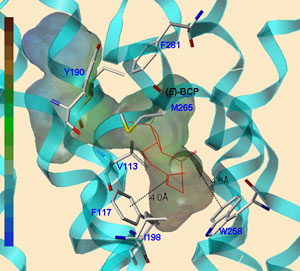
Model of the interaction of BCP with the CB2 receptor

“(E)-beta-caryophyllene (BCP) is an aromatic sesquiterpene that has used for many years as a food additive because of its peppery flavour. The researchers now say that it interacts selectively with one of two cannabinoid receptors, CB2, blocking the chemical signals that lead to inflammation without triggering cannabis’s mood-altering effects.
 
Many cannabinoids bind to the CB2 receptor, but few target it selectively. Most also interact with CB1, which is responsible for cannabis’ psychoactive properties. CB1 is found in brain tissue, whereas CB2is found only in cells elsewhere in the body.”
 

More:http://www.rsc.org/chemistryworld/News/2008/June/24060801.asp

Anti-inflammatory property of the cannabinoid receptor-2-selective agonist JWH-133 in a rodent model of autoimmune uveoretinitis.

“Previous studies have shown that cannabinoids have anti-inflammatory and immune-modulating effects, but the precise mechanisms of action remain to be elucidated.

In this study, we investigated the effect of JWH 133, a selective agonist for cannabinoid receptor 2, the main receptor expressed on immune cells, in a model of autoimmune disease, experimental autoimmune uveoretinitis (EAU).

JWH 133 suppressed EAU in a dose-dependent manner (0.015-15 mg/kg), and the suppressive effect could be achieved in the disease-induction stage and the effector stage. Leukocytes from mice, which had been treated with JWH 133, had diminished responses to retinal peptide and mitogen Con A stimulation in vitro. In vivo JWH 133 treatment also abrogated leukocyte cytokine/chemokine production. Further in vitro studies indicated that JWH 133 down-regulated the TLR4 via Myd88 signal transduction, which may be responsible for its moderate, suppressive effect on antigen presentation. In vivo JWH 133 treatment (1 mg/kg) also suppressed leukocyte trafficking (rolling and infiltration) in inflamed retina as a result of an effect on reducing adhesion molecules CD162 (P-selectin glycoprotein ligand 1) and CD11a (LFA-1) expression on T cells.

In conclusion, the cannabinoid agonist JWH 133 has a high in vivo, anti-inflammatory property and may exert its effect via inhibiting the activation and function of autoreactive T cells and preventing leukocyte trafficking into the inflamed tissue.”

Full text: http://www.jleukbio.org/content/82/3/532.long