Method: We carried out a systematic review of studies that investigated the clinical effects of cannabis and cannabinoid use on ASD, according to the Preferred Reporting Items for Systematic Reviews and Meta-Analyses (PRISMA checklist). The search was carried out in four databases: MEDLINE/PubMed, Scientific Electronic Library Online (SciELO), Scopus, and Web of Science. No limits were established for language during the selection process. Nine studies were selected and analyzed.
Results: Some studies showed that cannabis products reduced the number and/or intensity of different symptoms, including hyperactivity, attacks of self-mutilation and anger, sleep problems, anxiety, restlessness, psychomotor agitation, irritability, aggressiveness perseverance, and depression. Moreover, they found an improvement in cognition, sensory sensitivity, attention, social interaction, and language. The most common adverse effects were sleep disorders, restlessness, nervousness and change in appetite.
Conclusion: Cannabis and cannabinoids may have promising effects in the treatment of symptoms related to ASD, and can be used as a therapeutic alternative in the relief of those symptoms. However, randomized, blind, placebo-controlled clinical trials are necessary to clarify findings on the effects of cannabis and its cannabinoids in individuals with ASD.”
https://pubmed.ncbi.nlm.nih.gov/34043900/
“Cannabis and cannabinoids have very promising effects in the treatment of autistic symptoms and can be used in the future as an important therapeutic alternative to relieve those symptoms, especially bouts of self-mutilation and anger, hyperactivity, sleep problems, anxiety, restlessness, psychomotor agitation, irritability, and aggressiveness; as well as improve sensory sensitivity, cognition, attention, social interaction, language, perseverance, and depression.”
https://www.scielo.br/j/trends/a/LBmJK6d8bqr5jVK6fp3CHXt/?lang=en
 “Cannabinoids such as ▵-9-THC and CBD can downregulate the immune response by modulating the endocannabinoid system. This modulation is relevant for the treatment of prevalent autoimmune diseases (ADs), such as multiple sclerosis (MS), systemic lupus erythematosus (SLE), diabetes mellitus type 1 (DMT1), and rheumatoid arthritis (RA). These conditions require new therapeutic options with fewer side effects for the control of the autoimmune response. Objective: to conduct a literature review of preclinical scientific evidence that supports further clinical investigations for the use of cannabinoids (natural or synthetic) as potential immunomodulators of the immune response in ADs.
  “Positive effect of some cannabinoids in the treatment and prophylaxis of a wide variety of oxidation-associated diseases and growing popularity of supplements containing cannabinoids, mainly cannabinoid oils (e.g. CBD oil, CBG oil), in the self-medication of humans cause a growing interest in the antioxidant properties of these compounds, especially those not showing psychotropic effects.
  “Streptococcus mutans
 “The relevance and incidence of intestinal bowel diseases (IBD) have been increasing over the last 50 years and the current therapies are characterized by severe side effects, making essential the development of new strategies that combine efficacy and safety in the management of human IBD. Herbal products are highly considered in research aimed at discovering new approaches for IBD therapy and, among others,
  “An observational research design was used to evaluate which types of commonly labeled Cannabis flower product characteristics are associated with changes in momentary feelings of distress-related symptoms.
 “Foodborne protein hydrolysates exhibit biological activity that may be therapeutic in a number of human disease settings. Hemp peptides (HP) generated by controlled hydrolysis of hemp proteins have a number of health benefits and are of pharmaceutical value. In the present study, we produce small molecular weight HP from hemp seed and investigate its anticancer properties in Hep3B human liver cancer cells. We demonstrate that HP treatment increased apoptosis, reduced cell viability, and reduced cell migration in Hep3B human liver cancer cells without affecting the normal liver cell line L02. We correlate these phenotypes with increased cellular ROS levels, upregulation of cleaved caspase 3 and Bad, and downregulation of antiapoptotic Bcl-2. HP treatment led to increased Akt and GSK-3β phosphorylation, with subsequent downregulation of β-catenin, suggesting β-catenin signaling modulation as a critical mechanism by which HP exhibits anticancer properties. Our findings suggest HP are of potential therapeutic interest for liver cancer treatment.”
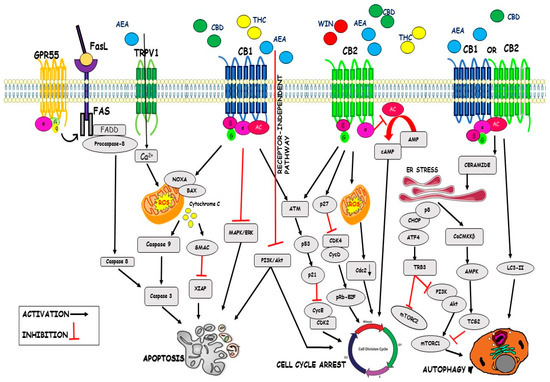
 “Cannabinoids are a family of heterogeneous compounds that mostly interact with receptors eliciting several physiological effects both in the central and peripheral nervous systems and in peripheral organs. They exert anticancer action by modulating signaling pathways involved in cancer progression; furthermore, the effects induced by their use depend on both the type of tumor and their action on the components of the endocannabinoid system. This review will explore the mechanism of action of the cannabinoids in signaling pathways involved in cancer proliferation, neovascularisation, migration, invasion, metastasis, and tumor angiogenesis.”