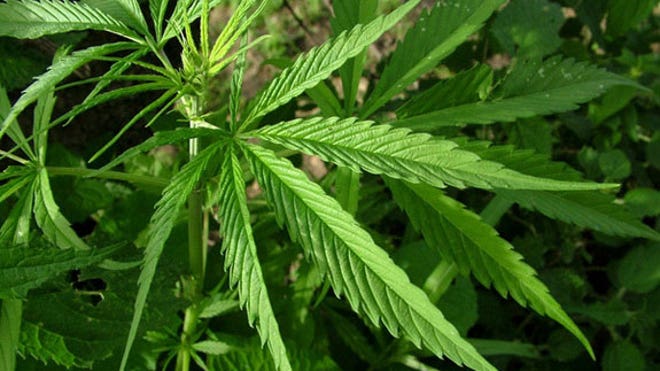
“‘Absurd’ laws dealing with magic mushrooms, ecstasy and cannabis are hindering medical research, according to a former government drugs adviser.”
“Prof David Nutt says he has funding to research the use of the chemical psilocybin – found in fungi known as “magic mushrooms” to treat depression.But he says “insane” regulations mean he cannot get hold of the drug.”
“The outlawing of drugs such as cannabis, magic mushrooms and other psychoactive substances amounts to scientific censorship and is hampering research into potentially important medicinal uses, leading scientists argued on Wednesday.”
“Laws and international conventions dating back to the 1960s have set back research in key areas such as consciousness by decades, they argued in the journal Nature Reviews Neuroscience.
“The decision to outlaw these drugs was based on their perceived dangers, but in many cases the harms have been overstated,” said David Nutt, a professor of neuropsychopharmacology at Imperial College London.
In a statement accompanying the Nature Reviews paper, he said the laws amounted “to the worst case of scientific censorship since the Catholic Church banned the works of Copernicus and Galileo”.
“The laws have never been updated despite scientific advances and growing evidence that many of these drugs are relatively safe. And there appears to be no way for the international community to make such changes,” he said.
“This hindering of research and therapy is motivated by politics, not science.””
“The outlawing of drugs such as cannabis, magic mushrooms and other psychoactive substances amounts to scientific censorship and is hampering research into potentially important medicinal uses, leading scientists argued on Wednesday.”
“Laws and international conventions dating back to the 1960s have set back research in key areas such as consciousness by decades, they argued in the journal Nature Reviews Neuroscience.
“The decision to outlaw these drugs was based on their perceived dangers, but in many cases the harms have been overstated,” said David Nutt, a professor of neuropsychopharmacology at Imperial College London.
In a statement accompanying the Nature Reviews paper, he said the laws amounted “to the worst case of scientific censorship since the Catholic Church banned the works of Copernicus and Galileo”.
“The laws have never been updated despite scientific advances and growing evidence that many of these drugs are relatively safe. And there appears to be no way for the international community to make such changes,” he said.
“This hindering of research and therapy is motivated by politics, not science.”
Nutt and Leslie King, both former British government drugs advisers, and co-author David Nichols of the University of North Carolina, called for the use of psychoactive drugs in research to be exempted from severe restrictions.
“If we adopted a more rational approach to drug regulation, it would empower researchers to make advances in the study of consciousness and brain mechanisms of psychosis, and could lead to major treatment innovations in areas such as depression and PTSD,” Nutt said.
Nutt was sacked as a government adviser in 2009 after publicly criticizing the government for ignoring scientific advice on cannabis and ecstasy. He has conducted a small human trial using psilocybin, the psychedelic ingredient in magic mushrooms.
His study, using volunteers, suggested the drug had the potential to alleviate severe forms of depression in people who did not respond to other treatments.
But in April, Nutt said his plans to conduct the first full clinical trial to explore psilocybin as a treatment had stalled because of stringent rules on the use of illegal drugs in research.
The scientists said their call for reform had been endorsed by the British Neuroscience Association and the British Association for Psychopharmacology.”
“The outlawing of drugs such as cannabis, MDMA and LSD amounts to the “the worst case of scientific censorship since the Catholic Church banned the works of Copernicus and Galileo”, the former Government drugs advisor Professor David Nutt has claimed.”
Professor Nutt, who was dismissed from the Home Office’s advisory council on drugs in 2009 after clashing with ministers, said that UN conventions on drugs in the 1960s and 1970s have delayed the development of “innovative treatments” for PTSD and depression by 30 years and also set back research into areas of neuroscience such as consciousness.
In a paper published today with two other scientists in the journal Nature Reviews Neuroscience, he said that drugs policy is being driven by “politics, not science”.
Professor Nutt left the Home Officer in 2009 after suggesting that taking MDMA ecstasy was no more dangerous than horse-riding and that alcohol and tobacco were more dangerous than many illegal drugs.
The possession of psychoactive drugs such cannabis, MDMA (ecstasy) and LSD for scientific purposes is stringently regulated in the UK and most other countries, in accordance with UN conventions that were agreed in response to the emergence of drug culture in the 1960s and 1970s.
Applying for a Government licence can be costly and time-consuming and many scientists are put off by a culture of “repression” surrounding drug science, Professor Nutt said.
“The laws scare off funders and most scientists are scared because they think if they break the law, they might get arrested,” he told The Independent. “I’m sure at some point someone’s going to arrest me. There is a sense of repression to the point that most people won’t do it.”
The paper, which is published to coincide with a conference on scientific research with psychedelics at Imperial College London, points to evidence that cannabis, MDMA and psychedelics such as LSD and psilocybin (the compound found in magic mushrooms) have unexplored medicinal benefits and argues that laws should be updated.
Small clinical studies of MDMA, which was originally used in the USA in the 1970s to improve communication in psychotherapy sessions, suggested that it could play a highly beneficial role in the treatment of PTSD patients. The paper’s authors said the drug could also help with “end of life anxiety” and couples therapy”.
Medical use of marijuana is already legal in 17 US states, and the drug has been shown to have benefits such as anxiety reduction and pain relief. However, Professor Nutt said that UK restrictions had blocked development of therapeutic applications for any of cannabis’ 16 active ingredients.
LSD, meanwhile, was widely researched in the 1950s and 1960s, with more than 1,000 papers investigating outcomes for more than 40,000 patients, with evidence suggesting that the drug might be an effective treatment for alcoholism, before bans on the drug around the world ended further research.”
“Laws and medicine clash over medicinal marijuana use. If it weren’t for his few daily tokes from marijuana cigarettes, Kiyoshi Kuromiya believes he would no longer be alive.The Philadelphia AIDS patient and activist had lost 40 pounds over a four-month period and spent most days nauseated before he began smoking pot in 1995 to boost an appetite suppressed by his disease.”Marijuana saved my life,” says Kuromiya, 57, who was diagnosed with AIDS in 1988. “It’s a great irony to me that I can buy cigarettes, which will kill me, anywhere. But marijuana, which has kept me breathing, is illegal.”Kuromiya and others with debilitating ailments have long argued that marijuana should be legally available when standard medical treatment can’t relieve a patient’s suffering and pain.”
“The physician-supervised use of medical marijuana does not adversely affect the outcomes of individuals enrolled in substance abuse treatment programs, according to clinical trial data published last week in the Harm Reduction Journal.
An investigator at Humboldt State University in California assessed whether medical cannabis use was associated with negative outcomes in patients referred to a substance abuse treatment program.
The study reported that treatment outcomes for medically authorized cannabis users were comparable to those of subjects who were not supervised to use the drug.
“Cannabis use did not seem to compromise substance abuse treatment amongst the medical marijuana using group, who (based on these preliminary data) fared equal to or better than non-medical marijuana users in several important outcome categories (e.g., treatment completion, criminal justice involvement, medical concerns),” the study concluded. “This exploratory study suggests that medical marijuana … may not adversely affect positive treatment outcomes.””
“Six-year-old Jayden David violently shakes on the ground, his blue eyes vacant and then filled with searing pain. The video shows an unvarnished look at a seizure, something Jayden once experienced routinely.
Not anymore, says his father, thanks to medical marijuana.
Before he started taking a liquid, nonpsychoactive form of marijuana, Jayden couldn’t walk, eat solid food or take a bath.
He has Dravet’s syndrome, a rare and catastrophic form of childhood epilepsy. It has triggered seizures so frequent that 44 times he has been rushed to the hospital in an ambulance, his distraught father by his side.
Jayden’s doctors prescribed 22 anti-seizure pills a day, which controlled the seizures but left him immobilized due to the side effects.
“He’s in pain and suffering and crying,” said Jayden’s father, Jason David. “You can’t help him no matter what. What are you supposed to do? You have to do whatever it takes to save their life.”
Last year, he had enough. Delirious with fatigue and emotional pain, Jason David called his motherto say he wanted to put a gun to his head, just to end the heartbreak of seeing his son suffer. His mother convinced him to not give up.
David turned to something he had seen on television: medical marijuana.
On June 4, 2011, David gave his son marijuana. For the first time since Jayden was 4 months old, the boy went through an entire day without a seizure.
“Instead of medical marijuana, this is miracle marijuana,” said David, holding up a jam jar full of liquefied and cooled cannabis.”
“Medical marijuana shouldn’t be for ‘adults only’.
My 9-year-old daughter has Aicardi syndrome, a rare genetic disorder that causes extremely hard-to-control seizures, debilitation, disability and early mortality. She began having seizures at three months of age, and since that time has had multiple seizures every day, with rare exception — probably to the tune of nearly 200,000 seizures in her lifetime…
She is one of the 3 million Americans who have epilepsy, and one of the 40 percent whose seizures cannot be controlled by anti-seizure drugs. She has tried 10 anti-seizure medications as well as a high-protein/low-carbohydrate diet called the ketogenic diet; she takes three anti-seizure medications at once and has a vagus nerve stimulator implant that sends mild electrical pulses to the brain. These drugs help her, but she nonetheless experiences an average of three seizures every day. Moreover, the medications cause persistent side effects that negatively impact her quality of life, particularly her gastrointestinal, bone, dental, cognitive and mental health.
The Illinois Senate Executive Committee recently voted, 10-5, to move the House-passed medical marijuana legislation to the Senate for a vote. The bill is expected to pass, and though Gov. Pat Quinn has not committed to signing it, the general expectation is that the bill will become law. This should be received as great news for the many people with “debilitating” conditions that the bill is supposed to help — people for whom medical science has documented real, measurable and safe outcomes of the controlled use of cannabis or its component of chemical compounds.
It’s too bad that the legislature has ignored the medical needs of some of the most debilitated, and most vulnerable, patients in the state: children with epilepsy.
Imagine her father’s and my reaction upon learning that the legislature, in its concern not to send a “message” to kids that it is safe to smoke marijuana, decided that kids like ours, for whom medical cannabis has the potential to be as safe and effective as typical anti-seizure drugs, should be excluded from the benefits of this new law.
They have done so, I hope, only out of ignorance…
There is no likelihood that my daughter will become a drug addict from using a compound within cannabis in a medically controlled setting. There is, however, a good chance that participation in a controlled study of these compounds could open the door to new treatments for her, and the many children like her, who desperately need medical innovation to save or improve their lives.”
“A California father’s desperate quest to find a viable solution to his young son’s rare form of epilepsy has led him to incredible success in medicinal marijuana. The Los Angeles Times (LAT) reports that Jason David’s son Jayden now functions normally, eats solid food, and takes only four prescription medications for his condition rather than the 22 he had been takingprior to starting the cannabis protocol.Young Jayden suffers from an extremely rare, and potentially fatal, epileptic condition known as Dravet syndrome that is categorized as a “catastrophic form of intractable epilepsy.” For Jayden, symptoms of the condition have included things like intense “grand mal” seizure fits, continuous muscle twitching, inability to respond to or interact with others, difficulty chewing, and frequent screaming episodes.
According to Jayden’s father Jason, Jayden had spent most of his life either sleeping or seizing, which put incredible strain on the family as it unsuccessfully tried using prescription drug after prescription drug to at least ease Jayden’s symptoms. But Jayden’s condition only got progressively worse in response to pharmaceuticals, which led Jason to actually consider committing suicide as he says he simply could no longer bear watching his son suffer in this horrific way.
After praying intensely about the situation and meeting with their local religious congregation for guidance; however, the Davids stumbled upon medical marijuana, and particularly cannabidiol (CBD), one of the many cannabinoid compounds naturally found in certain varieties of marijuana. Following a period of heavy research into the history and effectiveness of CBD, Jason decided it was worth giving the treatment a try with his son — and upon doing so, the Davids observed an almost immediate improvement in Jayden’s condition.”
“Six-year-old Charlotte Figi, a picture of precious in her “Gatsby”-style bob and blue toenails, stands patiently as her mother reaches up her dress to change her out of her soiled Pull-Ups. – Charlotte never says a word. She hasn’t in the past hour, and won’t for at least another 30 minutes, when she finally whispers the name of a visitor who is about to leave.
In the Figi household, these are signs of progress: Charlotte saying something. Charlotte eating and drinking. Charlotte standing and walking.
Charlotte breathing.
About 18 months ago, in the winter of 2011, Paige and Matt Figi signed a “do not resuscitate” order telling medical personnel to forgo life-saving measures for their daughter and let fate take its course.
They’d done all they could to control the seemingly endless, violent seizures that hit Charlotte 20, 40, 60 times a day. They put her on an extreme diet. They tried at least a dozen medications, many with harmful side effects. Despite some promising starts, nothing worked. And the rescue medications they were giving her to stop the seizures in fact stopped her breathing. CPR brought her back to life more than once.
After years of watching a cruel, incurable genetic disorder called Dravet Syndome rob their daughter of her basic bodily functions and send her into convulsions that caused head injuries and broken teeth, they had reached the end.
“We really thought, this is a horrible existence; she’s not going to live much longer.” Paige says. “This is not a life for her. This is torture. She is suffering all day. I’m not OK with this. She wasn’t even human anymore. She’d lie in my arms drooling, seizing, screaming and crying.”
Then, in an act of desperation, or inspiration – or maybe both – Matt called Paige from overseas, where he was working, and suggested a radical approach to Charlotte’s treatment.
“We need to try cannabis for Charlotte,” he told Paige. “We live in a compassionate state.”
Fifteen months later, the little girl with the DNR order is standing in the kitchen of their Black Forest home with her mother getting her Pull-Ups changed, cuddling in the arms of a visitor, playing with toys and strategically pushing the buttons on her “talker,” an electronic device that communicates when Charlotte can’t.
Her seizures have dropped from 1,200 a month to three, and the ones she has are shorter in duration and less severe. She’s off all the other medications with their troubling side effects. And, as one of the youngest medical marijuana patients in Colorado, her dramatic turnaround is starting to draw national attention, with a CNN report on the horizon.”