Getting High on the Endocannabinoid System

“The endogenous cannabinoid system—named for the plant that led to its discovery—is one of the most important physiologic systems involved in establishing and maintaining human health.

Endocannabinoids and their receptors are found throughout the body: in the brain, organs, connective tissues, glands, and immune cells. With its complex actions in our immune system, nervous system, and virtually all of the body’s organs, the endocannabinoids are literally a bridge between body and mind.

By understanding this system, we begin to see a mechanism that could connect brain activity and states of physical health and disease.

…either stimulating or inhibiting the endocannabinoid system could have beneficial effects.

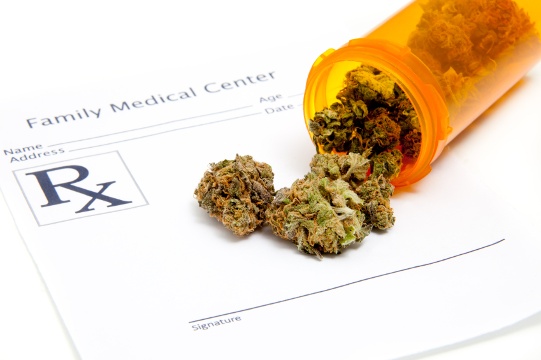
The most direct route of THC administration is by smoking marijuana or other forms of cannabis. Yet purified, FDA-approved medicinal preparations of THC are available in pill form… Why not just take a pill? There are several reasons that some patients prefer puffing over swallowing. One quantitatively minor factor is potential lethality.

It is possible to get a fatal overdose by swallowing too many THC pills at once, whereas documented evidence of death simply from smoking too much cannabis does not seem to exist.”

http://www.ncbi.nlm.nih.gov/pmc/articles/PMC3997295/

The draft genome and transcriptome of Cannabis sativa

“Cannabis sativa has been cultivated throughout human history as a source of fiber, oil and food, and for its medicinal and intoxicating properties.

The availability of the Cannabis sativa genome enables the study of a multifunctional plant that occupies a unique role in human culture. Its availability will aid the development of therapeutic marijuana strains with tailored cannabinoid profiles and provide a basis for the breeding of hemp with improved agronomic characteristics.”

http://www.ncbi.nlm.nih.gov/pmc/articles/PMC3359589/

Pro-resolution, protective and anti-nociceptive effects of a cannabis extract in the rat gastrointestinal tract.

“Cannabis is widely used for treating a number of gastrointestinal ailments…

In the present study, we tested the effects (in rats) of a simple extract of medicinal cannabis (called “MFF”) for its ability to promote resolution of colitis…

These results demonstrate that a simple extract of medicinal cannabis can significantly enhance resolution of inflammation and injury, as well as prevent injury, in the gastrointestinal tract. Interestingly, different cannabinoid receptors were involved in some of the effects. MFF may serve as the basis for a simple preparation of cannabis that would produce beneficial effects in the GI tract with reduced systemic toxicity.”

http://www.ncbi.nlm.nih.gov/pubmed/23756391

Cannabis Finds Its Way into Treatment of Crohn’s Disease.

“In ancient medicine, cannabis has been widely used to cure disturbances and inflammation of the bowel. A recent clinical study now shows that the medicinal plant Cannabis sativa has lived up to expectations and proved to be highly efficient in cases of inflammatory bowel diseases.

In a prospective placebo-controlled study, it has been shown what has been largely anticipated from anecdotal reports, i.e. that cannabis produces significant clinical benefits in patients with Crohn’s disease. The mechanisms involved are not yet clear but most likely include peripheral actions on cannabinoid receptors 1 and 2, and may also include central actions.”

http://www.ncbi.nlm.nih.gov/pubmed/24356243

“In their prospective study, Naftali et al. used THC-free Cannabis as placebo with no other cannabinoids present. However, we should consider that also other ingredients of Cannabis, such as cannabidiol, cannabigerol, and tetrahydrocannabivarine (THCV), all of them non-psychotropic components of Cannabis, have proven antiinflammatory effects in experimental intestinal inflammation. Their actions partly involve non-CB receptor mechanisms via, for instance, peroxisome proliferator-activated receptors (PPAR) and transient receptor potential cation channels subfamily V receptors (TRPV) and should be regarded as additive beneficial effects of Cannabis in the improvement of colitis in addition to THC-mediated effects.

 …an 8-week treatment with THC-rich Cannabis caused a decrease of the Crohn’s disease activity index (CDAI) in 90% of patients without producing significant side effects…

In summary, in agreement with the ancient use of Cannabis in intestinal disturbances and one decade of animal research, Cannabis was shown in a clinical trial to reduce symptoms in patients with CD. This elegant translation should be followed by larger trials confirming these results and by trials establishing the involved mechanisms to open a promising direction for future treatment of IBD.”

Full-text: http://www.ncbi.nlm.nih.gov/pmc/articles/PMC4076530/

A controlled family study of cannabis users with and without psychosis.

“Several studies suggest a link between adolescent cannabis use and schizophrenia. An understanding of this link would have significant implications for legalization of cannabis and its medicinal value. The present study aims to determine whether familial morbid risk for schizophrenia is the crucial factor that underlies the association of adolescent cannabis use with the development of schizophrenia…

There was no significant difference in morbid risk for schizophrenia between relatives of the patients who use or do not use cannabis.


CONCLUSIONS: The results of the current study suggest that having an increased familial morbid risk for schizophrenia may be the underlying basis for schizophrenia in cannabis users and not cannabis use by itself.”

http://www.ncbi.nlm.nih.gov/pubmed/24309013

Breast Cancer Patients Helped With Marijuana

breast cancer

“Marijuana has become more widely studied recently for its medicinal properties, but the area is no longer limited to people suffering from pain, nausea, vomiting, anxiety, sleeplessness or disease-induced anorexia. It has now been discovered that breast cancer patients are helped with marijuana through direct anticancer actions that the cannabis species is able to provide.”

More: http://guardianlv.com/2013/12/breast-cancer-patients-helped-with-marijuana/

The oral administration of trans-caryophyllene attenuates acute and chronic pain in mice.

“Trans-caryophyllene is a sesquiterpene present in many medicinal plants’ essential oils, such as Ocimum gratissimum and Cannabis sativa. In this study, we evaluated the antinociceptive activity of trans-caryophyllene in murine models of acute and chronic pain and the involvement of trans-caryophyllene in the opioid and endocannabinoid systems…

 These results demonstrate that trans-caryophyllene reduced both acute and chronic pain in mice, which may be mediated through the opioid and endocannabinoid systems.”

http://www.ncbi.nlm.nih.gov/pubmed/24055516

Around-the-clock oral THC effects on sleep in male chronic daily cannabis smokers.

“Δ9-tetrahydrocannabinol (THC) promotes sleep in animals; clinical use of THC is associated with somnolence (sleepiness)…

These findings suggest that tolerance to the somnolent effects of THC may have occurred…

Somnolence from oral THC may dissipate with chronic, high-dose use.

This has implications for patients who may take chronic oral THC for medicinal purposes, including cannabis dependence treatment.”

http://www.ncbi.nlm.nih.gov/pubmed/23952899

Marijuana cannabinoids found to help combat autism

cannabinoids

“(NaturalNews) The cannabinoid compounds naturally found in many varieties of cannabis, also known more commonly as marijuana, may help children with autism spectrum disorders experience dramatic behavioral improvements, and potentially even full recovery from their symptoms. These are the findings of a new study published in the journal Nature Communications that help reinforce the growing body of evidence which shows that medicinal cannabinoids hold incredible potential in both treating and potentially curing chronic illness…
 

Can non-psychoactive cannabinoid compounds actually cure chronic illness?

Though the researchers were quick to deny that cannabinoids hold any potential at actually curing autism, which more than likely was a politically-motivated denial rather than a factual admission, other research and actual case studies suggest that cannabinoid compounds are, indeed, powerful enough to mitigate many or all of the symptoms associated with autism, as well as many other diseases.”


Medical Marijuana is Being Used to Successfully Treat the Symptoms of Lupus in Patients

“Cannabis is considered an ideal medication to help Lupus patients cope with the symptoms of the disorder like nausea and pain. It’s also known to be an anti-inflammatory, suppressing certain parts of the immune system.”

By lowering the levels of the inflammation-promoting protein interleukin-2, and raising levels of the anti-inflammatory protein interleukin-10, cannabis shows that it may be beneficial for treating autoimmune disorders where inflammation is the main complication.”

“There is no doubt that cannabis has some medicinal benefits, and helps patients to cope with symptoms of Lupus. On the contrary, medical cannabis is only legal in a number of states. The naturally grown “drug” remains illegal on a federal level, so one should consider the law and its consequences before deciding to self-medicate. Even if you live in a state where cannabis is legal medicinally, always consult your doctor before using cannabis to treat your condition.”

More Helpful Medical Marijuana & Lupus Resources:

  • http://www.mcsocal.com/blog/plaquenil-rheumatoid-arthritis-lupus-and-marijuana-cannabis
  • http://cure4lupus.org/store/index.php?main_page=page&id=164&chapter=1
  • http://www.thelupussite.com/
  • http://www.medicalnewstoday.com/info/lupus/
  • http://www.lupus.org/newsite/index.html
  • http://lupus.webmd.com/news/20030415/cannabis-may-suppress-immune-system
  • http://www.webmd.com/rheumatoid-arthritis/features/autoimmune-disease-and-ra
  • http://www.mayoclinic.com/health/lupus/DS00115/DSECTION=alternative-medicine

More: http://www.medicaljane.com/2013/01/07/lupus-and-medical-marijuana/