
“Accumulating evidence suggests that cannabinoid ligands play delicate roles in cell survival and apoptosis decisions, and that cannabinoid CB1 receptors (CB1R) modulate dopaminergic function. However, the role of CB1R in methamphetamine (MA)-induced dopaminergic neurotoxicity in vivo remains elusive. Multiple high doses of MA increased phospho-ERK and CB1R mRNA expressions in the striatum of CB1R (+/+) mice. These increases were attenuated by CB1R antagonists (i.e., AM251 and rimonabant), an ERK inhibitor (U0126), or dopamine D2R antagonist (sulpiride). CB1R agonist-induced toxic effects were significantly attenuated by CB1R knockout, CB1R antagonists or PKCδ knockout. Therefore, our results suggest that interaction between D2R, ERK and CB1R is critical for MA-induced dopaminergic neurotoxicity and that PKCδ mediates dopaminergic damage induced by high-doses of CB1R agonist.” https://www.ncbi.nlm.nih.gov/pubmed/28363605]]>
Tag Archives: protects
Endocannabinoid 2-arachidonoylglycerol protects inflammatory insults from sulfur dioxide inhalation via cannabinoid receptors in the brain.
“Sulfur dioxide (SO2) pollution in the atmospheric environment causes brain inflammatory insult and inflammatory-related microvasculature dysfunction. However, there are currently no effective medications targeting the harmful outcomes from chemical inhalation. Endocannabinoids (eCBs) are involved in neuronal protection against inflammation-induced neuronal injury. The 2-arachidonoylglycerol (2-AG), the most abundant eCBs and a full agonist for cannabinoid receptors (CB1 and CB2), is also capable of suppressing proinflammatory stimuli and improving microvasculature dysfunction. Here, we indicated that endogenous 2-AG protected against neuroinflammation in response to SO2 inhalation by inhibiting the activation of microglia and astrocytes and attenuating the overexpression of inflammatory cytokines, including tumor necrosis factor alpha (TNF-a), interleukin (IL)-1β, and inducible nitric oxide synthase (iNOS). In addition, endogenous 2-AG prevented cerebral vasculature dysfunction following SO2 inhalation by inhibiting endothelin 1 (ET-1), vascular cell adhesion molecule-1 (VCAM-1) and intercellular adhesion molecule 1 (ICAM-1) expression, elevating endothelial nitric oxide synthase (eNOS) level, and restoring the imbalance between thromboxane A2 (TXA2) and prostaglandin I2 (PGI2). In addition, the action of endogenous 2-AG on the suppression of inflammatory insult and inflammatory-related microvasculature dysfunction appeared to be mainly mediated by CB1 and CB2 receptors. Our results provided a mechanistic basis for the development of new therapeutic approaches for protecting brain injuries from SO2 inhalation.” https://www.ncbi.nlm.nih.gov/pubmed/28115138]]>
Cannabis compound benefits blood vessels
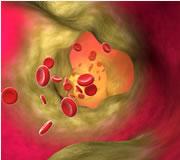
“Low dose helps combat formation of arterial blockages.
A compound derived from the cannabis plant protects blood vessels from dangerous clogging, a study of mice has shown.
The compound, called delta-9-tetrahydrocannabinol (THC), combats the blood-vessel disease atherosclerosis in mice.
The discovery could lead to new drugs to ward off heart disease and stroke.”
http://www.nature.com/news/2005/050404/full/news050404-7.html
Protective effect of cannabidiol on hydrogen peroxide‑induced apoptosis, inflammation and oxidative stress in nucleus pulposus cells.

“Cannabidiol, a major component of marijuana, protects nerves, and exerts antispasmodic, anti-inflammatory and anti‑anxiety effects.
In the current study, the protective effect of cannabidiol was observed to prevent hydrogen peroxide (H2O2)‑induced apoptosis, inflammation and oxidative stress in nucleus pulposus cells.
Taken together, these results suggest that cannabidiol potentially exerts its protective effect on LDH via the suppression of anti‑apoptosis, anti‑inflammation and anti‑oxidative activities in nucleus pulposus cells.”
The Cannabinoid Receptor 2 Protects Against Alcoholic Liver Disease Via a Macrophage Autophagy-Dependent Pathway.
“Kupffer cells, the resident macrophages of the liver, play a major role in the pathogenesis of alcoholic liver disease. We have previously demonstrated that CB2 receptor protects against alcoholic liver disease by inhibiting alcohol-induced inflammation and steatosis via the regulation of Kupffer cell activation.
Here, we explored the mechanism underlying these effects and hypothesized that the anti-inflammatory properties of CB2 receptor in Kupffer cells rely on activation of autophagy.
Altogether these results demonstrate that CB2 receptor activation in macrophages protects from alcohol-induced steatosis by inhibiting hepatic inflammation through an autophagy-dependent pathway.”
Enhancing Brain Pregnenolone May Protect Cannabis Intoxication but Should Not Be Considered as an Anti-addiction Therapeutic: Hypothesizing Dopaminergic Blockade and Promoting Anti-Reward.
“Pregnenolone considered the inactive precursor of all steroid hormones, has recently been shown to protect the brain from Cannabis intoxication.
The major active ingredient of Cannabis sativa (marijuana), Δ9-tetrahydrocannabinol (THC) enhances Pregnenolone synthesis in the brain via stimulation of the type-1 cannabinoid (CB1) receptor.
This steroid has been shown to inhibit the activity of the CB1 receptor thereby reducing many of the effects of THC.
While this mechanism seems correct, in our opinion, Vallee et al., incorrectly suggest that blocking CB1 receptors could open unforeseen approaches to the treatment of cannabis intoxication and addiction.
In this hypothesis, we caution the scientific community that, other CB1 receptor blockers, such as, Rimonabant (SR141718) have been pulled off the market in Europe. In addition, CB1 receptor blockers were rejected by the FDA due to mood changes including suicide ideation.
Blocking CB1 receptors would result in reduced neuronal release of Dopamine by disinhibition of GABA signaling.
Long-term blockade of cannabinoid receptors could occur with raising Pregnenolone brain levels…”
Delta-9-tetrahydrocannabinol protects cardiac cells from hypoxia via CB2 receptor activation and nitric oxide production.

“Delta-9-tetrahydrocannabinol (THC), the major active component of marijuana, has a beneficial effect on the cardiovascular system during stress conditions…
The present study was designed to investigate the central (CB1) and the peripheral (CB2)cannabinoid receptor expression in neonatal cardiomyoctes and possible function in the cardioprotection of THC from hypoxia.
The antagonist for the CB2, but not CB1 receptor antagonist abolished the protective effect of THC.
In agreement with these results using RT-PCR, it was shown that neonatal cardiac cells express CB2, but not CB1 receptors.
Involvement of NO in the signal transduction pathway activated by THC through CB2 was examined. It was found that THC induces nitric oxide (NO) production by induction of NO synthase (iNOS) via CB2 receptors.
L-NAME (NOS inhibitor, 100 microM) prevented the cardioprotection provided by THC.
Taken together, our findings suggest that THC protects cardiac cells against hypoxia via CB2 receptor activation by induction of NO production.
An NO mechanism occurs also in the classical pre-conditioning process; therefore, THC probably pre-trains the cardiomyocytes to hypoxic conditions.”
Cannabinoid receptor type 1 protects against age-related osteoporosis by regulating osteoblast and adipocyte differentiation in marrow stromal cells.

“Age-related osteoporosis is characterized by reduced bone formation and accumulation of fat in the bone marrow compartment.
Here, we report that the type 1 cannabinoid receptor (CB1) regulates this process…
The CB1 receptor is therefore unique in that it regulates peak bone mass through an effect on osteoclast activity, but protects against age-related bone loss by regulating adipocyte and osteoblast differentiation of bone marrow stromal cells.”
http://www.ncbi.nlm.nih.gov/pubmed/19656492
“Cannabis may prevent osteoporosis” http://news.bbc.co.uk/2/hi/uk_news/scotland/edinburgh_and_east/8199007.stm
Delta9-tetrahydrocannabinol protects hippocampal neurons from excitotoxicity.
“Excitotoxic neuronal death underlies many neurodegenerative disorders…
Delta9-tetrahydrocannabinol protects hippocampal neurons from excitotoxicity…
…desensitization of CB(1) receptors diminishes the neuroprotective effects of cannabinoids.
This study demonstrates the importance of agonist efficacy and the duration of treatment on the neuroprotective effects of cannabinoids.
It will be important to consider these effects on neuronal survival when evaluating pharmacologic treatments that modulate the endocannabinoid system.”
http://www.ncbi.nlm.nih.gov/pubmed/17140550
“Molecular Mechanisms of Cannabinoid Protection from Neuronal Excitotoxicity” http://molpharm.aspetjournals.org/content/69/3/691.long