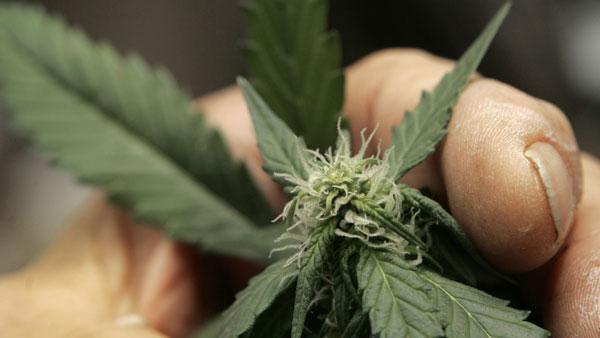
Marijuana Use May Protect Against Diabetes and Obesity

“Marijuana may help protect against diabetes, according to a study published in The American Journal of Medicine.”

marijuana

“Despite being linked to increased hunger, researchers further discovered significant correlations between marijuana use and smaller waist circumferences, which is also known to decrease a person’s risk of developing diabetes.”

More: http://www.natureworldnews.com/articles/1958/20130516/marijuana-use-protect-against-diabetes-obesity.htm

Marijuana tied to better blood sugar control – Reuters

“(Reuters Health) – People who had used marijuana in the past month had smaller waists and lower levels of insulin resistance – a diabetes precursor – than those who never tried the drug, in a new study.”diabetes

More: http://uk.reuters.com/article/2013/05/23/us-marijuana-diabetes-idUKBRE94M14C20130523?feedType=RSS&feedName=healthNews

Marijuana blood sugar study shows potential health benefits for users

“A study shows a positive link between marijuana and blood sugar control in diabetes patients. A study by the National Health and Nutrition Surveyfound that marijuana use is linked to smaller waists, better blood sugar control and insulin resistance.”
 
File/UPI /Jim Bryant
 

“Researchers based in Boston compared five years’ worth of data from 579 marijuana users and thousands of non-users, LA Weekly reported.

The results come from a comparison of insulin and glucose levels in both groups. Participants that had used pot in the last month had much lower levels of fasting insulin and higher levels of so-called “good” cholesterol HDL-C — which may mean big news for diabetics.

Researchers hypothesize that marijuana could be used to control and manage diabetics’ blood sugar levels.”

More: http://www.upi.com/blog/2013/05/23/Marijuana-blood-sugar-study-shows-potential-health-benefits-for-users/8731369343626/

Marijuana Blood Sugar: A New Study Shows That Pot Smoking May Reduce Weight and Diabetes Risk

“A new study has shown there may be a link between marijuana and diabetes prevention.”
 
joint
 

“A new study has found that people who had used marijuana in the past month had smaller waists and lower levels of insulin resistance, which is a diabetes precursor, than those who had never tried the drug, according to Reuters.

“These are preliminary findings,” Dr. Murray Mittleman, who worked on the study at Beth Israel Deaconess Medical Center in Boston, told Reuters. “It looks like there may be some favorable effects on blood sugar control.”

More: http://www.travelerstoday.com/articles/6386/20130524/marijuana-blood-sugar-new-study-shows-pot-smoking-reduce-weight.htm

Marijuana, blood sugar control linked, study says – ABC

“Regular marijuana use is associated with favorable indices related to diabetic control, say investigators. They found that current marijuana users had significantly lower fasting insulin and were less likely to be insulin resistant, even after excluding patients with a diagnosis of diabetes mellitus. Their findings are reported in the current issue of The American Journal of Medicine.”

File photo. (AP)
 
“Marijuana has been used for centuries to relieve pain, improve mood and increase appetite. Outlawed in the United States in 1937, its social use continues to increase and public opinion is swinging in favor of the medicinal use of marijuana…”
 

More: http://abclocal.go.com/wabc/story?section=news/health&id=9114798

Cannabidiol (CBD): Fighting Inflammation & Aggressive Forms of Cancer

“Marijuana contains at least 60 known chemicals called cannabinoids, which activate cannabinoid receptors in your body. Tetrahydrocannabinol, or THC, is the main component responsible for the psychoactive effects, or “high,” marijuana is known for. While THC is known to have some medicinal value, there has been recent investigation into a new cannabinoid that is rumored to have more medicinal benefits than any single pharmaceutical drug on the market.”

“What is Cannabidiol (CBD)?

This cannabinoid is known as Cannabidiol (CBD), and is the second most abundant cannabinoid in cannabis. Research done by G.W. Pharmaceuticals suggests that CBD could be used for treating symptoms of rheumatoid arthritis and other autoimmune diseases, diabetes, nausea, bowel disorders, and many other hard-to-control side effects. According to an article from Projectcbd.com, CBD has even demonstrated neuroprotective effects, and its anti-cancer potential is currently being explored.

While it was originally believed that THC is a breakdown product of CBD, it is now known that both THC and CBD are actually metabolites of their decarboxylated acidic forms, THCa and CBDa. These acidic precursors are decarboxylated (essentially dried) by heat or extraction to produce THC and CBD; only then do they become psychoactive. The compound has medicinal benefits without the “high” that some patients do not desire. This makes CBD appealing to patients who are looking for an alternative to their current meds, which often have opiate-like effects.”

More: http://www.medicaljane.com/2012/12/20/cannabidiol-cbd-medicine-of-the-future/

Study: Cannabinoids Offer Likely Therapeutic Option For Patients With Post-Traumatic Stress

“Future research targeting cannabinoids and their receptors may lead to evidence-based treatments for patients diagnosed with post-traumatic stress disorder (PTSD), according to clinical trial data published in May in the journal Molecular Psychiatry.

Investigators at the New York University School of Medicine reported that subjects diagnosed with PTSD typically possess elevated quantities of endogenous cannabinoid receptors in regions of the brain associated with fear and anxiety. Investigators also determined that many of these subjects experience a decrease in their natural production of anandamide, an endogenous cannabinoid neurotransmitter, resulting in an imbalanced endocannibinoid regulatory system.

Researchers speculated that an increase in the body’s production of cannabinoids would likely restore subjects’ natural brain chemistry and psychological balance. They affirmed, “[Our] findings substantiate, at least in part, emerging evidence that … plant-derived cannabinoids such as marijuana may possess some benefits in individuals with PTSD by helping relieve haunting nightmares and other symptoms of PTSD.”

Authors concluded: “The data reported herein are the first of which we are aware of to demonstrate the critical role of CB1 (cannabinoid) receptors and endocannabinoids in the etiology of PTSD in humans. As such, they provide a foundation upon which to develop and validate informative biomarkers of PTSD vulnerability, as well as to guide the rational development of the next generation of evidence-based treatments for PTSD.”

More: http://norml.org/news/2013/05/30/study-cannabinoids-offer-likely-therapeutic-option-for-patients-with-post-traumatic-trauma

[From cannabis to selective CB2R agonists: molecules with numerous therapeutical virtues].

“Originally used in Asia for the treatment of pain, spasms, nausea and insomnia, marijuana is the most consumed psychotropic drug worldwide. The interest of medical cannabis has been reconsidered recently, leading to many scientific researches and commercialization of these drugs.

Natural and synthetic cannabinoids display beneficial antiemetic, anti-inflammatory and analgesic effects in numerous diseases, however accompanied with undesirable effects due to the CB1 receptor. Present researches focus on the design of therapeutical molecules targeting the CB2 receptors, and thus avoiding central side effects and therefore psychotropic effects caused by the CB1 receptor.”

http://www.ncbi.nlm.nih.gov/pubmed/23732102

Association between Cannabinoid CB1 Receptor Expression and Akt Signalling in Prostate Cancer

“In prostate cancer, tumour expression of cannabinoid CB1 receptors is associated with a poor prognosis. One explanation for this association comes from experiments with transfected astrocytoma cells, where a high CB receptor expression recruits the Akt signalling survival pathway. In the present study, we have investigated the association between CB1 receptor expression and the Akt pathway in a well-characterised prostate cancer tissue microarray.

Conclusions/Significance

The present study provides data that is consistent with the hypothesis that at a high CB1 receptor expression, the Akt signalling pathway becomes operative.”

Full Text: http://www.plosone.org/article/info%3Adoi%2F10.1371%2Fjournal.pone.0065798

Study: Cannabis may prevent brain damage – FOX

“Marijuana continues to be a paradox as it makes its way from illicit drug to wonder medicine being used to treat a number of symptoms and disorders more safely than traditional pharmaceuticals.”

  • 110712_fr_marijuana2_640.jpg
     

“In the latest news, cannabis, which has been associated with long-term cognitive deficits in chronic users, is now being tested as a treatment to preserve brain function after traumatic injury.

…some reports have shown that cannabis has neuroprotective effects. Studies have suggested that it has protective effects in neurodegenerative diseases like multiple sclerosis, Alzheimer’s, Huntington’s and Parkinson’s diseases.”

More: http://www.foxnews.com/health/2013/06/06/study-cannabis-may-prevent-brain-damage/

Read more: http://www.foxnews.com/health/2013/06/06/study-cannabis-may-prevent-brain-damage/#ixzz2VXJJw9yc