Inhibitory Effects of Cannabinoids on Acetylcholinesterase and Butyrylcholinesterase Enzyme Activities

Karger Publishers Further Expands into Open Access and Open Science | STM  Publishing News

Acetylcholinesterase (AChE) and butyrylcholinesterase (BChE) are two cholinergic enzymes catalyzing the reaction of cleaving acetylcholine into acetate and choline at the neuromuscular junction. Abnormal hyperactivity of AChE and BChE can lead to cholinergic deficiency, which is associated with several neurological disorders including cognitive decline and memory impairments.

Preclinical studies support that some cannabinoids including cannabidiol (CBD) and tetrahydrocannabinol (THC) may exert pharmacological effects on the cholinergic system, but it remains unclear whether cannabinoids can inhibit AChE and BChE activities.

Herein, we aimed to evaluate the inhibitory effects of a panel of cannabinoids including CBD, Δ8-THC, cannabigerol (CBG), cannabigerolic acid (CBGA), cannabicitran (CBT), cannabidivarin (CBDV), cannabichromene (CBC), and cannabinol (CBN) on AChE and BChE activities.

Results: Cannabinoids including CBD, Δ8-THC, CBG, CBGA, CBT, CBDV, CBC, and CBN (at 200 µM) inhibited the activities of AChE and BChE by 70.8, 83.7, 92.9, 76.7, 66.0, 79.3, 13.7, and 30.5%, and by 86.8, 80.8, 93.2, 87.1, 77.0, 78.5, 27.9, and 22.0%, respectively. The inhibitory effects of these cannabinoids (with IC50 values ranging from 85.2 to >200 µM for AChE and 107.1 to >200 µM for BChE) were less potent as compared to the positive control galantamine (IC50 1.21 and 6.86 µM for AChE and BChE, respectively). In addition, CBD, as a representative cannabinoid, displayed a competitive type of inhibition on both AChE and BChE. Data from the molecular docking studies suggested that cannabinoids interacted with several amino acid residues on the enzyme proteins, which supported their overall inhibitory effects on AChE and BChE.

Conclusion: Cannabinoids showed moderate inhibitory effects on the activities of AChE and BChE enzymes, which may contribute to their modulatory effects on the cholinergic system. Further studies using cell-based and in vivo models are warranted to evaluate whether cannabinoids’ neuroprotective effects are associated with their anti-cholinesterase activities.”

https://pubmed.ncbi.nlm.nih.gov/35702400/

“Previously published work from our group has shown that medicinal plants and their derived natural products show neuroprotective and anti-inflammatory properties.

Notably, cannabinoids from Cannabis sativa (C. sativa) have been increasingly evaluated in studies to treat chronic pain, inflammation, multiple sclerosis, post-traumatic stress disorder, and neurological diseases, specifically AD.

Furthermore, a study implicated that phytochemicals of C. sativa, including several cannabinoids, are inhibitors of AChE,

In summary, several cannabinoids exhibited moderate inhibitory effects against the activities of cholinesterases including AChE and BChE.”

https://www.karger.com/Article/FullText/524086

“Naturally Occurring Acetylcholinesterase Inhibitors and Their Potential Use for Alzheimer’s Disease Therapy”

https://www.frontiersin.org/articles/10.3389/fphar.2018.01192/full


Topical cannabidiol (CBD) in skin pathology – A comprehensive review and prospects for new therapeutic opportunities

“Humans have utilised cannabis products in various forms throughout the recorded history. To date, more than 500 biologically active components have been identified in the plants of the Cannabis genus, amongst which more than 100 were classified as phytocannabinoids (exocannabinoids).

The plant genus Cannabis is a member of the plant family Cannabaceae, and there are three primary cannabis species which vary in their biochemical constituents: Cannabis sativa, Cannabis indica and Cannabis ruderalis. There has been a growing level of interest in research on the topical usage of a cannabis-based extract as a safer and more effective alternative to the usage of topical corticosteroids in treating some dermatoses.

Together with the discovery of the cannabinoid receptors on the skin, it has been further illustrated that topical cannabis has anti-inflammatory, anti-itching, analgesics, wound healing and anti-proliferative effects on the skin.”

https://pubmed.ncbi.nlm.nih.gov/35695447/

https://safpj.co.za/index.php/safpj/article/view/5493

Cannabis decriminalization and racial disparity in arrests for cannabis possession

Social Science & Medicine

“Rationale: Minorities often bear the brunt of unequal enforcement of drug laws. In the U.S., Blacks have been disproportionately more likely to be arrested for cannabis possession than Whites despite a similar rate of cannabis use. Decriminalizing cannabis has been argued as a way to reduce racial disparity in cannabis possession arrests. To date, however, the empirical evidence to support this argument is almost non-existent.

Objectives: To examine whether cannabis decriminalization was associated with reduced racial disparity in arrests for cannabis possession between Blacks and Whites in the U.S.

Methods: Using FBI Uniform Crime Report data from 37 U.S. states, cannabis possession arrest rates were calculated separately for Blacks and Whites from 2000 to 2019. A difference-in-differences framework was used to estimate the association between cannabis decriminalization and racial disparity in cannabis possession arrest rates (Blacks/Whites ratio) among adults and youths.

Results: Cannabis possession arrest rates declined over 70% among adults and over 40% among youths after the implementation of cannabis decriminalization in 11 states. Among adults, decriminalization was associated with a roughly 17% decrease in racial disparity in arrest rates between Blacks and Whites. Among youths, arrest rates declined among both Blacks and Whites but there was no evidence for a change in racial disparity between Blacks and Whites following decriminalization.

Conclusions: Cannabis decriminalization was associated with substantially lower cannabis possession arrest rates among both adults and youths and among both Blacks and Whites. It reduced racial disparity between Blacks and Whites among adults but not youths. These findings suggested that cannabis decriminalization had its intended consequence of reducing arrests and may have potential to reduce racial disparity in arrests at least among adults.”

https://pubmed.ncbi.nlm.nih.gov/34954673/

“Cannabis decriminalization decreased arrests in both adults and youths.•

Cannabis decriminalization decreased arrests in both Blacks and Whites.•

Cannabis decriminalization decreased racial disparity in arrests only in adults.”

https://www.sciencedirect.com/science/article/abs/pii/S0277953621010042?via%3Dihub

“Cannabis Decriminalization Reduces The Racial Disparity, A New Study Suggests”

https://www.forbes.com/sites/dariosabaghi/2021/12/28/cannabis-decriminalization-reduces-the-racial-disparity-a-new-study-suggests/?sh=305b32d91357


A nutraceutical product, extracted from Cannabis sativa, modulates voltage-gated sodium channel function

ISRCTN - Publish with BioMed Central

“Background: Purified cannabidiol (CBD), a non-psychoactive phytocannabinoid, has gained regulatory approval to treat intractable childhood epilepsies. Despite this, artisanal and commercial CBD-dominant hemp-based products continue to be used by epilepsy patients. Notably, the CBD doses used in these latter products are much lower than that found to be effective in reducing seizures in clinical trials with purified CBD. This might be because these CBD-dominant hemp products contain other bioactive compounds, including phytocannabinoids and terpenes, which may exert unique effects on epilepsy-relevant drug targets. Voltage-gated sodium (NaV) channels are vital for initiation of neuronal action potential propagation and genetic mutations in these channels result in epilepsy phenotypes. Recent studies suggest that NaV channels are inhibited by purified CBD. However, the effect of cannabis-based products on the function of NaV channels is unknown.

Methods: Using automated-planar patch-clamp technology, we profile a hemp-derived nutraceutical product (NP) against human NaV1.1-NaV1.8 expressed in mammalian cells to examine effects on the biophysical properties of channel conductance, steady-state fast inactivation and recovery from fast inactivation.

Results: NP modifies peak current amplitude of the NaV1.1-NaV1.7 subtypes and has variable effects on the biophysical properties for all channel subtypes tested. NP potently inhibits NaV channels revealing half-maximal inhibitory concentration (IC50) values of between 1.6 and 4.2 μg NP/mL. Purified CBD inhibits NaV1.1, NaV1.2, NaV1.6 and NaV1.7 to reveal IC50 values in the micromolar range. The CBD content of the product equates to IC50 values (93-245 nM), which are at least an order of magnitude lower than purified CBD. Unlike NP, hemp seed oil vehicle alone did not inhibit NaV channels, suggesting that the inhibitory effects of NP are independent of hemp seed oil.

Conclusions: This CBD-dominant NP potently inhibits NaV channels. Future study of the individual elements of NP, including phytocannabinoids and terpenes, may reveal a potent individual component or that its components interact to modulate NaV channels.”

https://pubmed.ncbi.nlm.nih.gov/35689251/

https://jcannabisresearch.biomedcentral.com/articles/10.1186/s42238-022-00136-x


Detection of Cannabinoid Receptor Expression by Endometriotic Lesions in Women with Endometriosis as an Alternative to Opioid-Based Pain Medication

The Journal of Immunology

“Emerging information suggests a potential role of medicinal cannabis in pain medication in addition to enhancing immune functions.

Endometriosis is a disease of women of reproductive age associated with infertility and reproductive failure as well as chronic pain of varying degrees depending on the stage of the disease. Currently, opioids are being preferred over nonsteroidal anti-inflammatory drugs (NSAID) due to the latter’s side effects. However, as the opioids are becoming a source of addiction, additional pain medication is urgently needed.

Cannabis offers an alternative therapy for treating the pain associated with endometriosis.

Information on the use and effectiveness of cannabis against endometriotic pain is lacking. Moreover, expression of receptors for endocannabinoids by the ovarian endometriotic lesions is not known. The goal of this study was to examine whether cannabinoid receptors 1 and 2 (CB1 and CB2) are expressed by ovarian endometriotic lesions.

Archived normal ovarian tissues, ovaries with endometriotic lesions, and normal endometrial tissues were examined for the presence of endometrial stromal cells using CD10 (a marker of endometrial stromal cells). Expression of CB1 and CB2 were determined by immunohistochemistry, immunoblotting, and gene expression studies.

Intense expression for CB1 and CB2 was detected in the epithelial cells in ovarian endometriotic lesions. Compared with stroma in ovaries with endometriotic lesions, the expression of CB1 and CB2 was significantly higher in the epithelial cells in endometriotic lesions in the ovary (P < 0.0001 and P < 0.05, respectively). Immunoblotting and gene expression assays showed similar patterns for CB1 and CB2 protein and CNR1 (gene encoding CB1) and CNR2 (gene encoding CB2) gene expression.

These results suggest that ovarian endometriotic lesions express CB1 and CB2 receptors, and these lesions may respond to cannabinoids as pain medication. These results will form a foundation for a clinical study with larger cohorts.”

https://pubmed.ncbi.nlm.nih.gov/35692500/

“Cannabinoids are compounds found in cannabis.”

https://www.hindawi.com/journals/jir/2022/4323259/


Cross-Talk between the (Endo)Cannabinoid and Renin-Angiotensin Systems: Basic Evidence and Potential Therapeutic Significance

ijms-logo

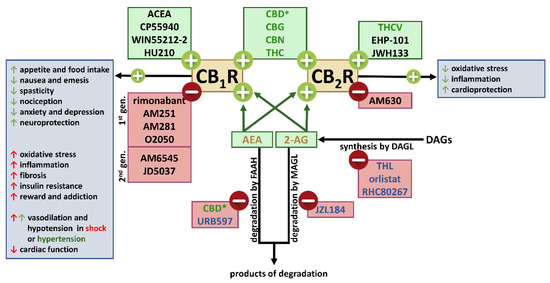
“This review is dedicated to the cross-talk between the (endo)cannabinoid and renin angiotensin systems (RAS). Activation of AT1 receptors (AT1Rs) by angiotensin II (Ang II) can release endocannabinoids that, by acting at cannabinoid CB1 receptors (CB1Rs), modify the response to AT1R stimulation.

CB1R blockade may enhance AT1R-mediated responses (mainly vasoconstrictor effects) or reduce them (mainly central nervous system-mediated effects). The final effects depend on whether stimulation of CB1Rs and AT1Rs induces opposite or the same effects. Second, CB1R blockade may diminish AT1R levels. Third, phytocannabinoids modulate angiotensin-converting enzyme-2. Additional studies are required to clarify (1) the existence of a cross-talk between the protective axis of the RAS (Ang II-AT2 receptor system or angiotensin 1-7-Mas receptor system) with components of the endocannabinoid system, (2) the influence of Ang II on constituents of the endocannabinoid system and (3) the (patho)physiological significance of AT1R-CB1R heteromerization.

As a therapeutic consequence, CB1R antagonists may influence effects elicited by the activation or blockade of the RAS; phytocannabinoids may be useful as adjuvant therapy against COVID-19; single drugs acting on the (endo)cannabinoid system (cannabidiol) and the RAS (telmisartan) may show pharmacokinetic interactions since they are substrates of the same metabolizing enzyme of the transport mechanism.”

https://pubmed.ncbi.nlm.nih.gov/35683028/

https://www.mdpi.com/1422-0067/23/11/6350


Medical cannabis and automobile accidents: Evidence from auto insurance

“While many states have legalized medical cannabis, many unintended consequences remain under-studied. We focus on one potential detriment-the effect of cannabis legalization on automobile safety. We examine this relationship through auto insurance premiums.

Employing a modern difference-in-differences framework and zip code-level premium data from 2014 to 2019, we find that premiums declined, on average, by $22 per year following medical cannabis legalization. The effect is more substantial in areas near a dispensary and in areas with a higher prevalence of drunk driving before legalization.

We estimate that existing legalization has reduced health expenditures related to auto accidents by almost $820 million per year with the potential for a further $350 million reduction if legalized nationally.”

https://pubmed.ncbi.nlm.nih.gov/35691014/

https://onlinelibrary.wiley.com/doi/10.1002/hec.4553

Cannabis use as a factor of lower corpulence in hepatitis C-infected patients: results from the ANRS CO22 Hepather cohort

“Background: Patients with chronic hepatitis C virus (HCV) infection are at greater risk of developing metabolic disorders. Obesity is a major risk factor for these disorders, and therefore, managing body weight is crucial. Cannabis use, which is common in these patients, has been associated with lower corpulence in various populations. However, this relationship has not yet been studied in persons with chronic HCV infection.

Methods: Using baseline data from the French ANRS CO22 Hepather cohort, we used binary logistic and multinomial logistic regression models to test for an inverse relationship between cannabis use (former/current) and (i) central obesity (i.e., large waist circumference) and (ii) overweight and obesity (i.e., elevated body mass index (BMI)) in patients from the cohort who had chronic HCV infection. We also tested for relationships between cannabis use and both waist circumference and BMI as continuous variables, using linear regression models.

Results: Among the 6348 participants in the study population, 55% had central obesity, 13.7% had obesity according to their BMI, and 12.4% were current cannabis users. After multivariable adjustment, current cannabis use was associated with lower risk of central obesity (adjusted odds ratio, aOR [95% confidence interval, CI]: 0.45 [0.37-0.55]), BMI-based obesity (adjusted relative risk ratio (aRRR) [95% CI]: 0.27 [0.19-0.39]), and overweight (aRRR [95% CI]: 0.47 [0.38-0.59]). This was also true for former use, but to a lesser extent. Former and current cannabis use were inversely associated with waist circumference and BMI.

Conclusions: We found that former and, to a greater extent, current cannabis use were consistently associated with smaller waist circumference, lower BMI, and lower risks of overweight, obesity, and central obesity in patients with chronic HCV infection. Longitudinal studies are needed to confirm these relationships and to assess the effect of cannabis use on corpulence and liver outcomes after HCV cure.”

https://pubmed.ncbi.nlm.nih.gov/35690798/

“To conclude, we found that both former and, to a greater extent, current cannabis use were consistently associated with lower waist circumference, lower BMI values, and lower risks of overweight, obesity, and central obesity in patients with chronic HCV infection.”

https://jcannabisresearch.biomedcentral.com/articles/10.1186/s42238-022-00138-9


Part of Springer Nature

Sex-Dependent Prescription Patterns and Clinical Outcomes Associated With the Use of Two Oral Cannabis Formulations in the Multimodal Management of Chronic Pain Patients in Colombia

Frontiers - Home | Facebook

“To date, the therapeutic use of cannabinoids in chronic pain management remains controversial owing to the limited clinical evidence found in randomized clinical trials (RCTs), the heterogeneous nature of the clinical indication, and the broad range of cannabis-based medicinal products (CBMPs) used in both experimental and observational clinical studies.

Here we evaluate patient-reported clinical outcomes (PROMS) in a cohort of adult patients, diagnosed with chronic pain of diverse etiology, who received adjuvant treatment with oral, cannabis-based, magistral formulations between May and September 2021 at the Latin American Institute of Neurology and Nervous System (ILANS-Zerenia) in Bogotá, Colombia.

During this period, 2,112 patients completed a PROMS questionnaire aimed at capturing the degree of clinical improvement of their primary symptom and any potential side effects. Most participants were female (76.1%) with an average age of 58.7 years old, and 92.5% (1,955 patients) reported some improvement in their primary symptom (p < 0.001). Two monovarietal, full-spectrum, cannabis formulations containing either cannabidiol (CBD 30 mg/mL; THC <2 mg/mL) or a balanced composition (THC 12 mg/mL; CBD 14 mg/mL) accounted for more than 99% of all prescriptions (59.5 and 39.8%, respectively).

The degree of improvement was similar between both formulations, although males reported less effectiveness in the first 4 weeks of treatment. Sex-specific differences were also found in prescription patterns, with male patients increasing the intake of the balanced chemotype overtime. For many patients (71.7%) there were no adverse side effects associated to the treatment and those most reported were mild, such as somnolence (13.0%), dizziness (8.1%) and dry mouth (4.2%), which also appeared to fade over time.

Our results constitute the first real-world evidence on the clinical use of medicinal cannabis in Colombia and suggest that cannabis-based oral magistral formulations represent a safe and efficacious adjuvant therapeutic option in the management of chronic pain.”

https://pubmed.ncbi.nlm.nih.gov/35399153/

“Cannabis sativa L. is one of the oldest plants cultivated by humanity and its medicinal and ethnobotanical properties have been exploited for centuries by many different ancient cultures. Medicinal cannabis in the form of oral magistral formulations may represent a valuable option for physicians as an adjuvant therapeutic intervention in the management of chronic pain and associated comorbidities. “

https://www.frontiersin.org/articles/10.3389/fpain.2022.854795/full


Molecular and Biochemical Mechanism of Cannabidiol in the Management of the Inflammatory and Oxidative Processes Associated with Endometriosis

ijms-logo

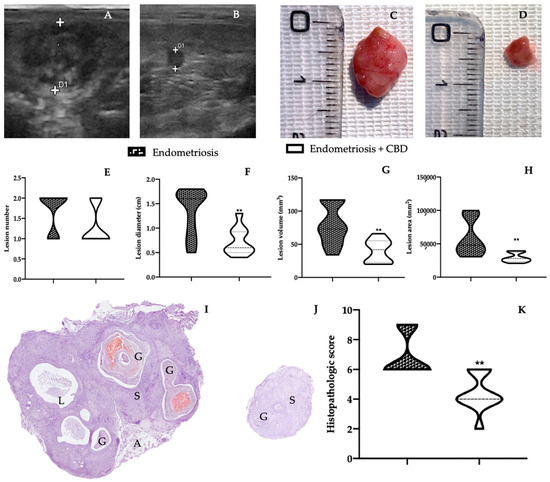
“Endometriosis is usually associated with inflammation and chronic pelvic pain. This paper focuses the attention on the anti-inflammatory, anti-oxidant and analgesic effects of cannabidiol (CBD) and on its potential role in endometriosis. We employed an in vivo model of endometriosis and administered CBD daily by gavage.

CBD administration strongly reduced lesions diameter, volume and area. In particular, it was able to modify lesion morphology, reducing epithelial glands and stroma.

CBD showed anti-oxidant effects reducing lipid peroxidation, the expression of Nox-1 and Nox-4 enzymes.

CBD restored the oxidative equilibrium of the endogenous cellular defense as showed by the SOD activity and the GSH levels in the lesions.

CBD also showed important antifibrotic effects as showed by the Masson trichrome staining and by downregulated expression of MMP-9, iNOS and TGF-β.

CBD was able to reduce inflammation both in the harvested lesions, as showed by the increased Ikb-α and reduced COX2 cytosolic expressions and reduced NFkB nuclear localization, and in the peritoneal fluids as showed by the decreased TNF-α, PGE2 and IL-1α levels.

CBD has important analgesic effects as showed by the reduced mast cells recruitment in the spinal cord and the reduced release of neuro-sensitizing and pro-inflammatory mediators.

In conclusion, the collected data showed that CBD has an effective and coordinated effects in endometriosis suppression.”

https://pubmed.ncbi.nlm.nih.gov/35628240/

https://www.mdpi.com/1422-0067/23/10/5427