Anti-inflammatory effects of recreational marijuana in virally suppressed youth with HIV-1 are reversed by use of tobacco products in combination with marijuana

Retrovirology | Home page

“Background: Marijuana’s putative anti-inflammatory properties may benefit HIV-associated comorbidities. How recreational marijuana use affects gene expression in peripheral blood cells (PBC) among youth with HIV-1 (YWH) is unknown.

Approach: YWH with defined substance use (n = 54) receiving similar antiretroviral therapy (ART) were assigned to one of four analysis groups: YWH with detectable plasma HIV-1 (> 50 RNA copies/ml) who did not use substances (H+V+S-), and YWH with undetectable plasma HIV-1 who did not use substances (H+V-S-), or used marijuana alone (H+V-S+[M]), or marijuana in combination with tobacco (H+V-S+[M/T]). Non-substance using youth without HIV infection (H-S-, n = 25) provided a reference group. PBC mRNA was profiled by Affymetrix GeneChip Human Genome U133 Plus 2.0 Array. Differentially expressed genes (DEG) within outcome groups were identified by Significance Analysis of Microarrays and used for Hierarchical Clustering, Principal Component Analysis, and Ingenuity Pathways Analysis.

Results: HIV-1 replication resulted in > 3000 DEG involving 27 perturbed pathways. Viral suppression reduced DEG to 313, normalized all 27 pathways, and down-regulated two additional pathways, while marijuana use among virally suppressed YWH resulted in 434 DEG and no perturbed pathways. Relative to H+V-S-, multiple DEG normalized in H+V-S+[M]. In contrast, H+V-S+[M/T] had 1140 DEG and 10 dysregulated pathways, including multiple proinflammatory genes and six pathways shared by H+V+S-.

Conclusions: YWH receiving ART display unique transcriptome bioprofiles based on viral replication and substance use. In the context of HIV suppression, marijuana use, alone or combined with tobacco, has opposing effects on inflammatory gene expression.”

https://pubmed.ncbi.nlm.nih.gov/35642061/

“Cannabis is effective in the treatment of HIV-associated peripheral neuropathic pain, improves appetite, and enhances overall quality of life in people with HIV. There is emerging evidence that marijuana use attenuates pro-inflammatory pathways in HIV-infected adults, as well as in non-human primates infected with simian immunodeficiency virus.”

https://retrovirology.biomedcentral.com/articles/10.1186/s12977-022-00594-4

Cannabis for the Treatment of Attention Deficit Hyperactivity Disorder: A Report of 3 Cases

Abstract of Case Report

“Attention deficit hyperactivity disorder (ADHD) is a chronic neurobehavioral disorder that is highly prevalent in children and adults. An increasing number of patients with ADHD are self-medicating with cannabis, despite a lack of evidence on efficacy and safety. This case report describes 3 males (ages 18, 22, and 23) who have integrated cannabis into their treatment regimen with positive results. Semistructured interviews conducted with the patients describe subjective improvements in symptoms and on quality of life. Improvements on validated rating scales conducted post-cannabis initiation, compared to pre-cannabis initiation obtained from the medical chart, corroborated their personal accounts. Scores on the PHQ-9 (measuring depression) improved by 8-22 points (30-81%), and the SCARED (measuring anxiety) ranged from 0 to 27 points (up to 33%). Improvements on the CEER-9 scale (measuring regulation) ranged from 2 to 7 points (22-78%), and the 9-item SNAP scale (measuring inattention) showed improvements of 2-8 points (7-30%). Mild adverse events including short-term memory problems, dry mouth, and sleepiness were reported. Blood samples were also collected from the patients to determine the plasma concentrations of the cannabinoids and relevant metabolites before and after a cannabis administration. After cannabis use, the plasma levels for CBD and THC ranged from 0 to 15.29 ng/mL and 1.32 to 13.76 ng/mL, respectively. Cannabinoids, however, were not detected prior to dosing, suggesting that cannabis played a complimentary role in the therapeutic regimen of these 3 patients. Clinical trials are recommended to confirm the efficacy of cannabis in the treatment of ADHD.”

https://pubmed.ncbi.nlm.nih.gov/35224434/

https://www.karger.com/Article/FullText/521370

The antidepressant and anxiolytic effects of cannabinoids in chronic unpredictable stress: a preclinical systematic review and meta-analysis

Translational Psychiatry

“Neuroscience research presents contradictory evidence in support of both the protective and destructive effects of cannabinoids in depression. Therefore, this systematic review and meta-analysis summarizes the existing preclinical literature on the effects of cannabinoid administration in the chronic unpredictable stress model of depression in order to evaluate the effects of cannabinoids and identify gaps in the literature. After protocol registration (PROSPERO #CRD42020219986), we systematically searched Scopus, Embase, Psychology & Behavioral Sciences Collection, APA PsychINFO, PubMed, CINAHL Complete, and ProQuest Dissertations & Theses Global from the earliest record of the databases, February 1964, to November 2020 for articles that met inclusion criteria (e.g., rodent subjects and administration of a cannabinoid. A total of 26 articles were included representing a sample size estimate of 1132 rodents with the majority of articles administering daily intraperitoneal injections during chronic unpredictable stress. These articles were evaluated using a modified SYRCLE’s risk-of-bias tool. For each continuous behavioral measure, the standardized mean difference was calculated between cannabinoid and vehicle groups in rodents subjected to chronic unpredictable stress. The effects of cannabinoids on depressive-like behavior was evaluated using a multilevel mixed-effects model with effect size weights nested within control groups. Cannabinoid administration moderately improved the pooled negative effects of chronic unpredictable stress on anhedonia, learned helplessness, novelty suppressed feeding, time in the anxiogenic context, and entries into the anxiogenic context. Although the interpretations are limited, these findings suggest that with further investigation, cannabinoids may be a viable long-term treatment for stress-related psychopathologies such as depression.”

https://pubmed.ncbi.nlm.nih.gov/35641487/

https://www.nature.com/articles/s41398-022-01967-1


Effects of cannabidiol on simulated driving and cognitive performance: A dose-ranging randomised controlled trial

SAGE Journals

“Background: Cannabidiol (CBD), a major cannabinoid of Cannabis sativa, is widely consumed in prescription and non-prescription products. While CBD is generally considered ‘non-intoxicating’, its effects on safety-sensitive tasks are still under scrutiny.

Aim: We investigated the effects of CBD on driving performance.

Methods: Healthy adults (n = 17) completed four treatment sessions involving the oral administration of a placebo, or 15, 300 or 1500 mg CBD in a randomised, double-blind, crossover design. Simulated driving performance was assessed between ~45-75 and ~210-240 min post-treatment (Drives 1 and 2) using a two-part scenario with ‘standard’ and ‘car following’ (CF) components. The primary outcome was standard deviation of lateral position (SDLP), a well-established measure of vehicular control. Cognitive function, subjective experiences and plasma CBD concentrations were also measured. Non-inferiority analyses tested the hypothesis that CBD would not increase SDLP by more than a margin equivalent to a 0.05% blood alcohol concentration (Cohen’s dz = 0.50).

Results: Non-inferiority was established during the standard component of Drive 1 and CF component of Drive 2 on all CBD treatments and during the standard component of Drive 2 on the 15 and 1500 mg treatments (95% CIs < 0.5). The remaining comparisons to placebo were inconclusive (the 95% CIs included 0 and 0.50). No dose of CBD impaired cognition or induced feelings of intoxication (ps > 0.05). CBD was unexpectedly found to persist in plasma for prolonged periods of time (e.g. >4 weeks at 1500 mg).

Conclusion: Acute, oral CBD treatment does not appear to induce feelings of intoxication and is unlikely to impair cognitive function or driving performance.”

https://pubmed.ncbi.nlm.nih.gov/35637624/

“The results of this study suggest that acute, oral CBD treatment at doses up to 1500 mg does not induce feelings of intoxication and is unlikely to impair cognitive function or driving performance.”

https://journals.sagepub.com/doi/10.1177/02698811221095356

Cannabinoid Receptor-1 suppresses M2 macrophage polarization in colorectal cancer by downregulating EGFR

Cell Death Discovery

“Cannabinoid receptors, CB1 and CB2, have been implicated as emerging targets for cancer therapy. Herein, we investigated the potential regulation mechanism of CB1 and its implications in colorectal cancer. CB1 and EGFR expression were examined in colorectal cancer cell lines. The effects of CB1 agonist ACEA and its antagonist AM251 on the proliferation, migration and invasion of colorectal cancer cells and the expression of M1 and M2 macrophage markers were examined. EGFR overexpression was performed with plasmids containing EGFR gene. Tumor xenografts were constructed to explore the effects of CB1 activation on tumorigenesis. We showed that CB1 was downregulated while EGFR was upregulated in colorectal cancer cells. The activation of CB1 suppressed the proliferation, migration and invasion of colorectal cancer cells and the differentiation of M2 macrophages, while CB1 inhibition had opposite effects. Moreover, the alterations in tumorigenesis and M2 macrophage activation induced by CB1 activation were counteracted by EGFR overexpression. Besides, CB1 silencing promoted tumor cell proliferation and M2 polarization which was counteracted by EGFR knockdown. In vivo, CB1 activation also repressed tumorigenesis and M2 macrophage activation. The present study demonstrated that CB1 activation suppressed M2 macrophage through EGFR downregulation in colorectal cancers. These findings first unveiled the potential avenue of CB1 as a targeted therapy for colorectal cancer.”

https://pubmed.ncbi.nlm.nih.gov/35641479/

“In conclusion, our study showed that CB1 activation suppressed tumor growth and M2 macrophage activation in colorectal cancer by downregulating EGFR. Our study provided the first evidence that CB1 activation was capable to suppress M2 macrophage activation. Since M2 macrophage are linked with immune evasion in various cancers, CB1 might be a promising target for cancer treatment.”

https://www.nature.com/articles/s41420-022-01064-8

“The use of THC, or selective targeting of the CB1 receptor, may represent a novel strategy for colorectal cancer therapy.”

https://pubmed.ncbi.nlm.nih.gov/17583570/

The Effectiveness of Common Cannabis Products for Treatment of Nausea

Current Issue Cover Image

“Background: Even though the Cannabis plant has been used to treat nausea for millennia, few studies have measured real-time effects of common and commercially available cannabis-based products.

Study: Using the Releaf App, 886 people completed 2220 cannabis self-administration sessions intended to treat nausea between June 6, 2016 and July 8, 2019. They recorded the characteristics of self-administered cannabis products and baseline symptom intensity levels before tracking real-time changes in the intensity of their nausea.

Results: By 1 hour postconsumption, 96.4% of people had experienced symptom relief with an average symptom intensity reduction of -3.85 points on a 0 to 10 visual analog scale (SD=2.45, d=1.85, P<0.001). Symptom relief was statistically significant at 5 minutes and increased with time. Among product characteristics, flower and concentrates yielded the strongest, yet similar results; products labeled as Cannabis indica underperformed those labeled as Cannabis sativa or hybrid; and joints were associated with greater symptom relief than pipes or vaporizers. In sessions using flower, higher tetrahydrocannbinol and lower cannabidiol were generally associated with greater symptom relief (eg, within 5 min).

Conclusions: The findings suggest that the vast majority of patients self-selecting into cannabis use for treatment of nausea likely experience relief within a relative short duration of time, but the level of antiemetic effect varies with the characteristics of the cannabis products consumed in vivo. Future research should focus on longer term symptom relief, including nausea-free intervals and dosing frequency; the risks of consumption of medical cannabis, especially among high-risk populations, such as pregnant women and children; and potential interactions between cannabis, conventional antiemetics, other medications, food, tobacco, alcohol, and street drugs among specific patient populations.”

https://pubmed.ncbi.nlm.nih.gov/35258504/

https://journals.lww.com/jcge/Abstract/2022/04000/The_Effectiveness_of_Common_Cannabis_Products_for.8.aspx


The Effectiveness and Safety of Medical Cannabis for Treating Cancer Related Symptoms in Oncology Patients

Frontiers in Pain Research (@FrontPain) / Twitter

“The use of medical cannabis (MC) to treat cancer-related symptoms is rising. However, there is a lack of long-term trials to assess the benefits and safety of MC treatment in this population. In this work, we followed up prospectively and longitudinally on the effectiveness and safety of MC treatment.

Oncology patients reported on multiple symptoms before and after MC treatment initiation at one-, three-, and 6-month follow-ups. Oncologists reported on the patients’ disease characteristics. Intention-to-treat models were used to assess changes in outcomes from baseline. MC treatment was initiated by 324 patients and 212, 158 and 126 reported at follow-ups.

Most outcome measures improved significantly during MC treatment for most patients (p < 0.005). Specifically, at 6 months, total cancer symptoms burden declined from baseline by a median of 18%, from 122 (82–157) at baseline to 89 (45–138) at endpoint (−18.98; 95%CI= −26.95 to −11.00; p < 0.001). Reported adverse effects were common but mostly non-serious and remained stable during MC treatment.

The results of this study suggest that MC treatment is generally safe for oncology patients and can potentially reduce the burden of associated symptoms with no serious MC-related adverse effects.

The main finding of the current study is that most cancer comorbid symptoms improved significantly during 6 months of MC treatment.

Additionally, we found that MC treatment in cancer patients was well tolerated and safe.”

https://pubmed.ncbi.nlm.nih.gov/35669038/

https://www.frontiersin.org/articles/10.3389/fpain.2022.861037/full?utm_source=fweb

“Cancer Pain Treatment Using Marijuana Safe and Effective, Large Study Finds”

https://www.newsweek.com/cannabis-medicinal-cancer-patient-symptoms-pain-relief-1711981


Antiseizure Effects of Cannabidiol Leading to Increased Peroxisome Proliferator-Activated Receptor Gamma Levels in the Hippocampal CA3 Subfield of Epileptic Rats

pharmaceuticals-logo

“We evaluated the effects of cannabidiol (CBD) on seizures and peroxisome proliferator-activated receptor gamma (PPARγ) levels in an animal model of temporal lobe epilepsy (TLE). Adult male Sprague-Dawley rats were continuously monitored by video-electrocorticography up to 10 weeks after an intraperitoneal kainic acid (15 mg/kg) injection. Sixty-seven days after the induction of status epilepticus and the appearance of spontaneous recurrent seizures in all rats, CBD was dissolved in medium-chain triglyceride (MCT) oil and administered subcutaneously at 120 mg/kg (n = 10) or 12 mg/kg (n = 10), twice a day for three days. Similarly, the vehicle was administered to ten epileptic rats. Brain levels of PPARγ immunoreactivity were compared to those of six healthy controls. CBD at 120 mg/kg abolished the seizures in 50% of rats (p = 0.033 vs. pre-treatment, Fisher’s exact test) and reduced total seizure duration (p < 0.05, Tukey Test) and occurrence (p < 0.05). PPARγ levels increased with CBD in the hippocampal CA1 subfield and subiculum (p < 0.05 vs. controls, Holm-Šidák test), but only the highest dose increased the immunoreactivity in the hippocampal CA3 subfield (p < 0.001), perirhinal cortex, and amygdala (p < 0.05). Overall, these results suggest that the antiseizure effects of CBD are associated with upregulation of PPARγ in the hippocampal CA3 region.”

https://pubmed.ncbi.nlm.nih.gov/35631322/

https://www.mdpi.com/1424-8247/15/5/495/htm


Cannabidiol Improves Antioxidant Capacity and Reduces Inflammation in the Lungs of Rats with Monocrotaline-Induced Pulmonary Hypertension

molecules-logo

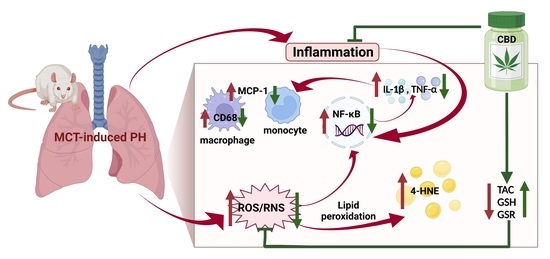
“Cannabidiol (CBD) is a plant-derived compound with antioxidant and anti-inflammatory properties. Pulmonary hypertension (PH) is still an incurable disease. CBD has been suggested to ameliorate monocrotaline (MCT)-induced PH, including reduction in right ventricular systolic pressure (RVSP), a vasorelaxant effect on pulmonary arteries and a decrease in the white blood cell count. The aim of our study was to investigate the effect of chronic administration of CBD (10 mg/kg daily for 21 days) on the parameters of oxidative stress and inflammation in the lungs of rats with MCT-induced PH. In MCT-induced PH, we found a decrease in total antioxidant capacity (TAC) and glutathione level (GSH), an increase in inflammatory parameters, e.g., tumor necrosis factor alpha (TNF-α), interleukin-1β (IL-1β), nuclear factor kappa B (NF-κB), monocyte chemoattractant protein-1 (MCP-1), and cluster of differentiation 68 (CD68), and the overexpression of cannabinoid receptors type 1 and 2 (CB1-Rs, CB2-Rs). Administration of CBD increased TAC and GSH concentrations, glutathione reductase (GSR) activity, and decreased CB1-Rs expression and levels of inflammatory mediators such as TNF-α, IL -1β, NF-κB, MCP-1 and CD68. In conclusion, CBD has antioxidant and anti-inflammatory effects in MCT-induced PH. CBD may act as an adjuvant therapy for PH, but further detailed preclinical and clinical studies are recommended to confirm our promising results.”

https://pubmed.ncbi.nlm.nih.gov/35630804/

https://www.mdpi.com/1420-3049/27/10/3327


The Efficacy of Cannabis on Multiple Sclerosis-Related Symptoms

life-logo

“Multiple sclerosis (MS) is known as an autoimmune disease that damages the neurons in the central nervous system. MS is characterized by its most common symptoms of spasticity, muscle spasms, neuropathic pain, tremors, bladder dysfunction, dysarthria, and some intellectual problems, including memory disturbances. Several clinical studies have been conducted to investigate the effects of cannabis on the relief of these symptoms in MS patients. The efficacy of Cannabis sativa (C. Sativa) in the management of MS outcomes such as spasticity, pain, tremors, ataxia, bladder functions, sleep, quality of life, and adverse effects were assessed in this review.

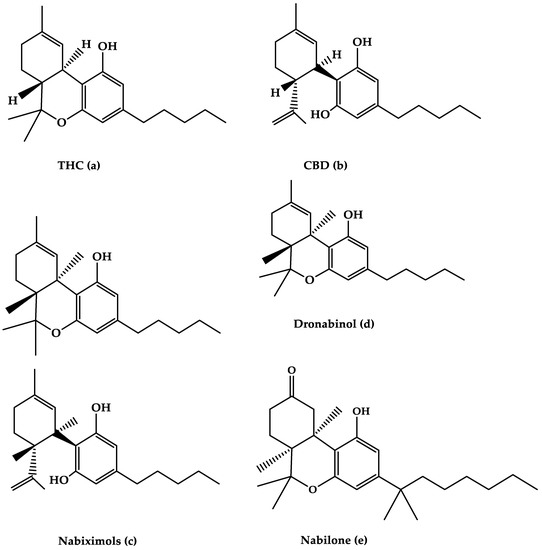
Most clinical studies showed the positive effects of cannabinoids with their different routes of administration, such as oromucosal spray and oral form, in reducing most MS symptoms. The oromucosal spray Nabiximols demonstrated an improvement in reducing MS spasticity, pain, and quality of life with a tolerated adverse effect. Oral cannabinoids are significantly effective for treating MS pain and spasticity, while the other symptoms indicate slight improvement and the evidence is quite inconsistent. Oromucosal spray and oral cannabis are mainly used for treating patients with MS and have positive effects on treating the most common symptoms of MS, such as pain and spasticity, whereas the other MS symptoms indicated slight improvement, for which further studies are needed.”

https://pubmed.ncbi.nlm.nih.gov/35629350/

https://www.mdpi.com/2075-1729/12/5/682