Effect of cannabidiol on apoptosis and cellular interferon and interferon-stimulated gene responses to the SARS-CoV-2 genes ORF8, ORF10 and M protein

Life Sciences

“Aims: To study effects on cellular innate immune responses to ORF8, ORF10, and Membrane protein (M protein) from the Severe acute respiratory syndrome coronavirus 2 (SARS-CoV-2) that causes COVID-19, in combination with cannabidiol (CBD).

Main methods: HEK293 cells transfected with plasmids expressing control vector, ORF8, ORF10, or M protein were assayed for cell number and markers of apoptosis at 24 h, and interferon and interferon-stimulated gene expression at 14 h, with or without CBD. Cells transfected with polyinosinic:polycytidylic acid (Poly (I:C)) were also studied as a general model of RNA-type viral infection.

Key findings: Reduced cell number and increased early and late apoptosis were found when expression of viral genes was combined with 1-2 μM CBD treatment, but not in control-transfected cells treated with CBD, or in cells expressing viral genes but treated only with vehicle. In cells expressing viral genes, CBD augmented expression of IFNγ, IFNλ1 and IFNλ2/3, as well as the 2′-5′-oligoadenylate synthetase (OAS) family members OAS1, OAS2, OAS3, and OASL. CBD also augmented expression of these genes in control cells not expressing viral genes, but without enhancing apoptosis. CBD similarly enhanced the cellular anti-viral response to Poly (I:C).

Significance: Our results demonstrate a poor ability of HEK293 cells to respond to SARS-CoV-2 genes alone, but an augmented innate anti-viral response to these genes in the presence of CBD. Thus, CBD may prime components of the innate immune system, increasing readiness to respond to RNA-type viral infection without activating apoptosis, and could be studied for potential in prophylaxis.”

https://pubmed.ncbi.nlm.nih.gov/35568225/

https://www.sciencedirect.com/science/article/pii/S0024320522003241?via%3Dihub

The Role of Cannabis sativa L. as a Source of Cannabinoids against Coronavirus 2 (SARS-CoV-2): An In Silico Study to Evaluate Their Activities and ADMET Properties

molecules-logo

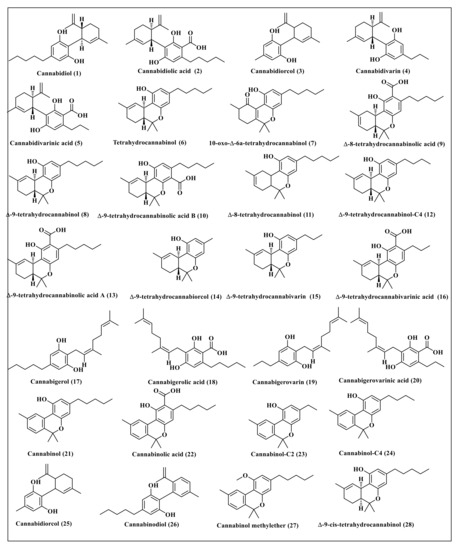
“Cannabis sativa L. is an annual herbaceous plant that belongs to the family Cannabinaceae. In this study, the potential use of forty-five cannabinoids, previously identified from Cannabis sativa to alleviate COVID-19 infection via prohibition of crucial SARS-CoV-2 proteins using molecular docking, was examined. In silico studies were performed on three vital enzymes that serve as principle therapeutic targets to prevent SARS-CoV-2 replication. These enzymes are the main protease SARS-CoV-2 MPro, papain-like protease SARS-CoV-2 PLpro and angiotensin-converting enzyme 2 (ACE2). Regarding SARS-CoV-2 MPro, cannabichromanon (32) showed the best fitting within its active centers, followed by cannabinolic acid (22) and cannabinol (21), displaying ∆G of -33.63, -23.24, and -21.60 kcal/mol, respectively. Concerning SARS-CoV-2 PLpro, cannabichromanon (32) followed by cannabinolic acid (22) and cannabicyclolic acid (41) revealed the best binding within its active pockets owing to multiple bond formation with ∆G values of -28.36, -22.81, and -19.89 kcal/mol. Furthermore, cannabichromanon (32), cannabinolic acid (22), and cannabinol (21) showed considerable fitting within the active sites of angiotensin-converting enzyme 2 (ACE2) evidenced by their significant ∆G values that were estimated as -41.77, -31.34, and -30.36 kcal/mol, respectively. ADME/TOPKAT (absorption, distribution, metabolism, excretion, and toxicity) evaluation was performed on the tested cannabinoids to further explore their pharmacokinetics, pharmacodynamics, and toxicity properties. The results indicated the considerable pharmacokinetic, pharmacodynamic, and toxicity properties of cannabinol (21), cannabinolic acid (22), cannabichromanon (32), and cannabicyclolic acid (41) that showed best fitting scores within the active sites of the tested enzymes. Multivariate data analysis revealed that cannabichromanon and cannabinolic acid showed a discriminant nature and hence can be incorporated in pharmaceutical dosage forms to alleviate COVID-19 infection.”

https://pubmed.ncbi.nlm.nih.gov/35566148/

https://www.mdpi.com/1420-3049/27/9/2797


Cannabinoids Alleviate the LPS-Induced Cytokine Storm via Attenuating NLRP3 Inflammasome Signaling and TYK2-Mediated STAT3 Signaling Pathways In Vitro

cells-logo

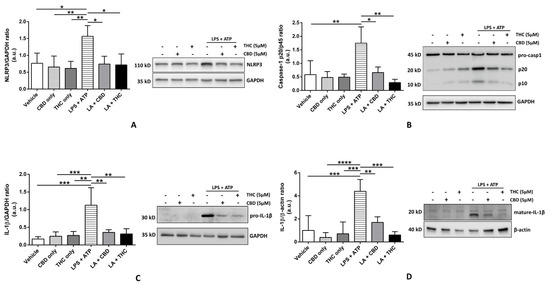
“Cannabinoids, mainly cannabidiol (CBD) and Δ9-tetrahydrocannabinol (THC), are the most studied group of compounds obtained from Cannabis sativa because of their several pharmaceutical properties. Current evidence suggests a crucial role of cannabinoids as potent anti-inflammatory agents for the treatment of chronic inflammatory diseases; however, the mechanisms remain largely unclear. Cytokine storm, a dysregulated severe inflammatory response by our immune system, is involved in the pathogenesis of numerous chronic inflammatory disorders, including coronavirus disease 2019 (COVID-19), which results in the accumulation of pro-inflammatory cytokines. Therefore, we hypothesized that CBD and THC reduce the levels of pro-inflammatory cytokines by inhibiting key inflammatory signaling pathways. The nucleotide-binding and oligomerization domain (NOD)-like receptor family pyrin domain-containing 3 (NLRP3) inflammasome signaling has been implicated in a variety of chronic inflammatory diseases, which results in the release of pyroptotic cytokines, interleukin-1β (IL-1β) and IL-18. Likewise, the activation of the signal transducer and activator of transcription-3 (STAT3) causes increased expression of pro-inflammatory cytokines. We studied the effects of CBD and THC on lipopolysaccharide (LPS)-induced inflammatory response in human THP-1 macrophages and primary human bronchial epithelial cells (HBECs). Our results revealed that CBD and, for the first time, THC significantly inhibited NLRP3 inflammasome activation following LPS + ATP stimulation, leading to a reduction in the levels of IL-1β in THP-1 macrophages and HBECs. CBD attenuated the phosphorylation of nuclear factor-κB (NF-κB), and both cannabinoids inhibited the generation of oxidative stress post-LPS. Our multiplex ELISA data revealed that CBD and THC significantly diminished the levels of IL-6, IL-8, and tumor necrosis factor-α (TNF-α) after LPS treatment in THP-1 macrophages and HBECs. In addition, the phosphorylation of STAT3 was significantly downregulated by CBD and THC in THP-1 macrophages and HBECs, which was in turn attributed to the reduced phosphorylation of tyrosine kinase-2 (TYK2) by CBD and THC after LPS stimulation in these cells. Overall, CBD and THC were found to be effective in alleviating the LPS-induced cytokine storm in human macrophages and primary HBECs, at least via modulation of NLRP3 inflammasome and STAT3 signaling pathways. The encouraging results from this study warrant further investigation of these cannabinoids in vivo.”

https://pubmed.ncbi.nlm.nih.gov/35563697/

https://www.mdpi.com/2073-4409/11/9/1391


Cannabis sativa CBD Extract Shows Promising Antibacterial Activity against Salmonella typhimurium and S. newington

molecules-logo

“Products derived from Cannabis sativa L. have gained increased interest and popularity. As these products become common amongst the public, the health and potential therapeutic values associated with hemp have become a premier focus of research. While the psychoactive and medicinal properties of Cannabis products have been extensively highlighted in the literature, the antibacterial properties of cannabidiol (CBD) have not been explored in depth. This research serves to examine the antibacterial potential of CBD against Salmonella newington and Styphimurium. In this study, we observed bacterial response to CBD exposure through biological assays, bacterial kinetics, and fluorescence microscopy. Additionally, comparative studies between CBD and ampicillin were conducted against Styphimurium and Snewington to determine comparative efficacy. Furthermore, we observed potential resistance development of our Salmonella spp. against CBD treatment.”

https://pubmed.ncbi.nlm.nih.gov/35566019/

https://www.mdpi.com/1420-3049/27/9/2669


Hempseed ( Cannabis sativa) Peptide H3 (IGFLIIWV) Exerts Cholesterol-Lowering Effects in Human Hepatic Cell Line

nutrients-logo

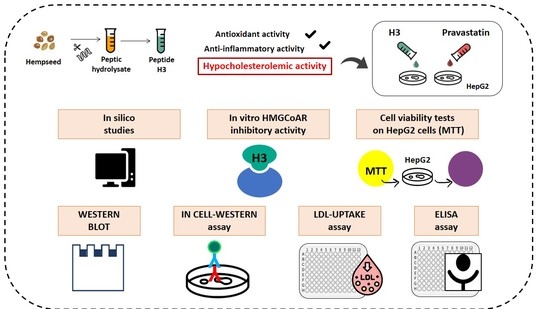
“Hempseed (Cannabis sativa) protein is an important source of bioactive peptides. H3 (IGFLIIWV), a transepithelial transported intestinal peptide obtained from the hydrolysis of hempseed protein with pepsin, carries out antioxidant and anti-inflammatory activities in HepG2 cells. In this study, the main aim was to assess its hypocholesterolemic effects at a cellular level and the mechanisms behind this health-promoting activity. The results showed that peptide H3 inhibited the 3-hydroxy-3-methylglutaryl co-enzyme A reductase (HMGCoAR) activity in vitro in a dose-dependent manner with an IC50 value of 59 μM. Furthermore, the activation of the sterol regulatory element binding proteins (SREBP)-2 transcription factor, followed by the increase of low-density lipoprotein (LDL) receptor (LDLR) protein levels, was observed in human hepatic HepG2 cells treated with peptide H3 at 25 µM. Meanwhile, peptide H3 regulated the intracellular HMGCoAR activity through the increase of its phosphorylation by the activation of AMP-activated protein kinase (AMPK)-pathways. Consequently, the augmentation of the LDLR localized on the cellular membranes led to the improved ability of HepG2 cells to uptake extracellular LDL with a positive effect on cholesterol levels. Unlike the complete hempseed hydrolysate (HP), peptide H3 can reduce the proprotein convertase subtilisin/kexin 9 (PCSK9) protein levels and its secretion in the extracellular environment via the decrease of hepatic nuclear factor 1-α (HNF1-α). Considering all these evidences, H3 may represent a new bioactive peptide to be used for the development of dietary supplements and/or peptidomimetics for cardiovascular disease (CVD) prevention.”

https://pubmed.ncbi.nlm.nih.gov/35565772/

https://www.mdpi.com/2072-6643/14/9/1804

Synthesis and In Vitro Characterization of Selective Cannabinoid CB2 Receptor Agonists: Biological Evaluation against Neuroblastoma Cancer Cells

molecules-logo

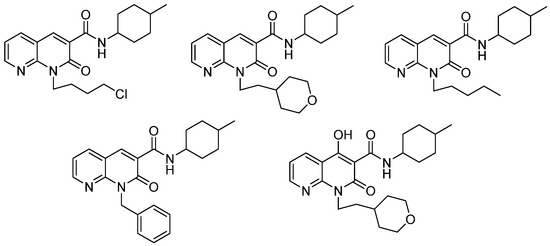
“1,8-naphthyridine-3-carboxamide structures were previously identified as a promising scaffold from which to obtain CB2R agonists with anticancer and anti-inflammatory activity. This work describes the synthesis and functional characterization of new 1,8-naphthyridin-2(1H)-one-3-carboxamides with high affinity and selectivity for CB2R. The new compounds were able to pharmacologically modulate the cAMP response without modulating CB2R-dependent β-arrestin2 recruitment. These structures were also evaluated for their anti-cancer activity against SH-SY5Y and SK-N-BE cells. They were able to reduce the cell viability of both neuroblastoma cancer cell lines with micromolar potency (IC50 of FG158a = 11.8 μM and FG160a = 13.2 μM in SH-SY5Y cells) by a CB2R-mediated mechanism. Finally, in SH-SY5Y cells one of the newly synthesized compounds, FG158a, was able to modulate ERK1/2 expression by a CB2R-mediated effect, thus suggesting that this signaling pathway might be involved in its potential anti-cancer effect.”

https://pubmed.ncbi.nlm.nih.gov/35566369/

https://www.mdpi.com/1420-3049/27/9/3019


The Role of Nutritional Status, Gastrointestinal Peptides, and Endocannabinoids in the Prognosis and Treatment of Children with Cancer

ijms-logo

“Neoplastic diseases in children are the second most frequent cause of death among the young. It is estimated that 400,000 children worldwide will be diagnosed with cancer each year. The nutritional status at diagnosis is a prognostic indicator and influences the treatment tolerance. Both malnutrition and obesity increase the risk of mortality and complications during treatment. It is necessary to constantly search for new factors that impair the nutritional status.

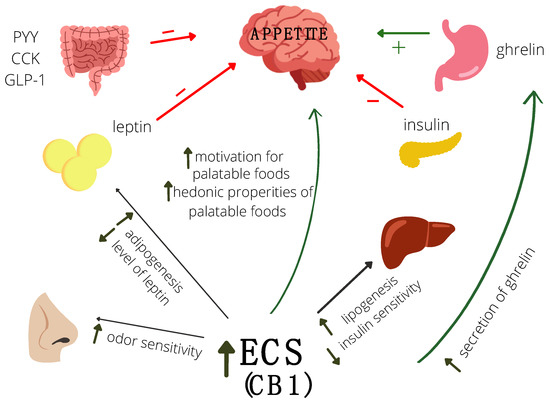
The endocannabinoid system (ECS) is a signaling system whose best-known function is regulating energy balance and food intake, but it also plays a role in pain control, embryogenesis, neurogenesis, learning, and the regulation of lipid and glucose metabolism. Its action is multidirectional, and its role is being discovered in an increasing number of diseases.

In adults, cannabinoids have been shown to have anti-cancer properties against breast and pancreatic cancer, melanoma, lymphoma, and brain tumors. Data on the importance of both the endocannabinoid system and synthetic cannabinoids are lacking in children with cancer.

This review highlights the role of nutritional status in the oncological treatment process, and describes the role of ECS and gastrointestinal peptides in regulating appetite. We also point to the need for research to evaluate the role of the endocannabinoid system in children with cancer, together with a prospective assessment of nutritional status during oncological treatment.”

https://pubmed.ncbi.nlm.nih.gov/35563548/

https://www.mdpi.com/1422-0067/23/9/5159


CBD formulation improves energetic homeostasis in dermal fibroblasts from Gulf War Illness patients

“Gulf War Illness (GWI) corresponds to an array of symptoms that includes chronic fatigue, musculoskeletal pain, cognitive dysfunction, sleep disturbance, gastrointestinal, respiratory, and dermatological symptoms that affect ~250,000 U.S. military veterans that served in Operation Desert Storm/Desert Shield (1990-1991). Mitochondrial function impairments have been shown in GWI patients. GWI patients report partial amelioration of chronic fatigue and brain fog after medicinal marijuana and CBD oils. Interestingly, cannabidiol (CBD) modulates mitochondrial physiology though this has not been characterized in detail. We hypothesize that GWI mitochondrial pathology can be recapitulated in dermal fibroblasts (DF) from subjects to help define and develop a cell-based model to study GWI and CBD treatment of DF promotes energy production by improving mitochondrial physiology. GWI patients (gender/age matched to healthy controls) were recruited to collect skin punch biopsy explants that were processed and cultured in DMEM FBS 10% for 30-days to obtain dermal fibroblasts. DF were treated with serial dilutions of Verséa™ CBD (50mg/mL) lipid formulation (VESIsorb® that increases 4.4-fold Cmax ). Using real time mitochondrial analysis by Seahorse, energy phenotype and mitochondrial function was analyzed in control and GWI DF. Mitochondrial networks and ultrastructure were studied by live-imaging using MitoTracker™ and transmission electron microscopy, respectively. Energy phenotype studies suggest that GWI DF present with lower mitochondrial metabolism and higher glycolytic activity, compared with controls. Additionally, mitochondrial stress suggests a significant reduction in mitochondrial maximal capacity. Such data establish GWI derived DF as a personalized model system to study mitochondrial pathology in GWI. After 18h treatment with Verséa™ CBD, GWI DF show a significant improvement in mitochondrial and glycolytic metabolism; control patients show no increases in mitochondrial metabolism but improved glycolysis. Verséa™ CBD treatment induced mitochondrial networks re-organization in DF. These findings suggest that CBD improves GWI DF mitochondrial physiology, thus improving energy homeostasis. Our data provide new evidence that will validate the potential of cannabinoids as a therapeutic strategy to mitigate energy imbalance that may contribute to detrimental symptomatology (i.e., chronic fatigue, brain fog, cognitive dysfunction, etc.) in GWI patients.”

https://pubmed.ncbi.nlm.nih.gov/35560565/

https://faseb.onlinelibrary.wiley.com/doi/10.1096/fasebj.2022.36.S1.0R790

Cannabis for Medical Use: Versatile Plant Rather Than a Single Drug

Frontiers in Pharmacology welcomes new Field Chief Editor – Science &  research news | Frontiers

“Medical Cannabis and its major cannabinoids (-)-trans9-tetrahydrocannabinol (THC) and cannabidiol (CBD) are gaining momentum for various medical purposes as their therapeutic qualities are becoming better established. However, studies regarding their efficacy are oftentimes inconclusive. This is chiefly because Cannabis is a versatile plant rather than a single drug and its effects do not depend only on the amount of THC and CBD. Hundreds of Cannabis cultivars and hybrids exist worldwide, each with a unique and distinct chemical profile. Most studies focus on THC and CBD, but these are just two of over 140 phytocannabinoids found in the plant in addition to a milieu of terpenoids, flavonoids and other compounds with potential therapeutic activities. Different plants contain a very different array of these metabolites in varying relative ratios, and it is the interplay between these molecules from the plant and the endocannabinoid system in the body that determines the ultimate therapeutic response and associated adverse effects. Here, we discuss how phytocannabinoid profiles differ between plants depending on the chemovar types, review the major factors that affect secondary metabolite accumulation in the plant including the genotype, growth conditions, processing, storage and the delivery route; and highlight how these factors make Cannabis treatment highly complex.”

https://pubmed.ncbi.nlm.nih.gov/35548332/

“The use of medical Cannabis is ever increasing in the treatment of numerous conditions as it has been proven to be both effective and safe, but the Cannabis plant contains more than 500 different components, each with potential therapeutic qualities. The components of Cannabis act together, hitting several targets at once and mutually enhancing each other’s activity so that the overall outcome is greater than that of their additive effect.

Cannabis can treat a multitude of very different conditions as it exerts its effects via the ECS, which is involved in many physiological processes. Cannabis treatment can be personalized to both the condition and the person to improve treatment outcomes while also reducing the drug load and minimizing the adverse effects. “

https://www.frontiersin.org/articles/10.3389/fphar.2022.894960/full


Synthesis of A Tetrahydrocannabinol (THC) Analog For Analyzing Cellular Proliferation in Concert With Epigallocatechin Gallate (EGCG) on A Bone-like Cancer Cell Line (UMR 106-01 BSP)

“Cannabinoids have been extensively studied in the field of cancer research. Tetrahydrocannabinol (THC) has shown promising results in influencing cellular proliferation when in association with other cannabinoids. This traditional entourage effect solely focuses on the study of THC with other cannabinoids. However, not many studies have been done to explore the synergistic effect of THC analogs when used with non-cannabinoid compounds. THC in its isolate form for experimentation is very strictly regulated. Therefore, this study was conducted in the pursuit of synthesizing and experimenting with analogs of THC to observe a potential entourage effect with epigallocatechin gallate (EGCG), a compound known for its efficacy to reduce proliferation at higher concentrations in UMR cells. It was hypothesized that active analogs of THC can be synthesized and used in concert with EGCG to potentiate decreased proliferation in the bone-like cancer cell line UMR 106-01 BSP (UMR cells). Briefly, a Knoevenagel condensation and a Diels-Alder reaction using 1,3-cyclohexanediol dissolved in methanol (MeOH) and citronellal with ethylenediamine diacetic acid (EDDA) at a temperature of 60℃ was used to synthesize a novel THC analog, 3,10,10-Trimethyl-1,2,3,4,4a,6,7,8,10,10a-decahydro-9-oxa-5-phenanthrenone (TDP). UMR cells were routinely passaged, counted, plated in six-well culture plates at 480,00 cells/mL, then treated with 10-fold dilutions of TDP. The plates were incubated for 72 hours in a humidified incubator at 37 degrees Celsius with 5% carbon dioxide infusion. At the end of the experiment, the cells were routinely washed with HANKS buffered saline solution (HBSS), then routinely counted using the Luna Automated Cell Counter. In another experiment, designated cells were co-treated with TDP+EGCG, following the protocol above. F test ANOVA was used to compare variances and all values in the results were expressed as means ± SD. The results from the attempted cannabinoid analog synthesis yielded a novel active THC analog, TDP. Serial dilutions treatment of the UMR cells with TDP alone showed its ability to decrease cell count in a concentration dependent manner. However, when coupled with higher concentrations of EGCG, the co-treatment increased cell count rather than potentiating the effect of decreasing cellular proliferation. The F Test ANOVA showed robust statistical significance (p values <0.05) with regard to TDP’s effect of decreasing cell proliferation in UMR cells in a concentration-dependent manner. Overall, the outcomes of this study suggest that active forms of THC analogs can be synthesized and tested in concert with other non-cannabinoid compounds like EGCG. This study opens the door to explore the entourage effect of TDP with other non-cannabinoid compounds that may provide another tool in the therapeutic treatment of bone cancer cells.”

https://pubmed.ncbi.nlm.nih.gov/35555816/

https://faseb.onlinelibrary.wiley.com/doi/10.1096/fasebj.2022.36.S1.L8061