Marijuana-Derived Compound Targets Pain, Inflammation

   “Researchers are developing a marijuana-derived synthetic compound to relieve pain and inflammation without the mood-altering side effects associated with other marijuana based drugs.

  They say the compound could improve treatment of a variety of conditions, including chronic pain, arthritis and multiple sclerosis. Their findings were presented at the 224th national meeting of the American Chemical Society, the world’s largest scientific society.

   The compound, called ajulemic acid, has produced encouraging results in animal studies of pain and inflammation. It is undergoing tests in a group of people with chronic pain and could be available by prescription within two to three years, the researchers say.

 “We believe that [the compound] will replace aspirin and similar drugs in most applications primarily because of a lack of toxic side effects,” says Sumner Burstein, Ph.D., lead investigator in the study and a professor in the department of biochemistry and molecular pharmacology at the University of Massachusetts Medical School in Worcester. “The indications so far are that it’s safe and effective,” he added.”

Read more: http://www.sciencedaily.com/releases/2002/08/020822071026.htm
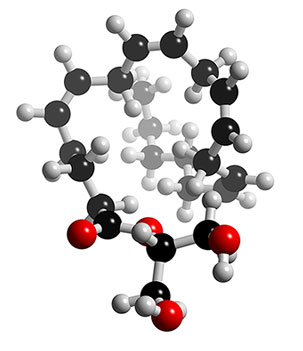
The cannabinoid acids: nonpsychoactive derivatives with therapeutic potential.

Abstract

   “The discovery of carboxylic acid metabolites of the cannabinoids (CBs) dates back more than three decades. Their lack of psychotropic activity was noted early on, and this resulted in a total absence of further research on their possible role in the actions of the CBs. More recent studies have revealed that the acids possess both analgesic and anti-inflammatory properties and may contribute to the actions of the parent drug. A synthetic analog showed similar actions at considerably lower doses. In this review, a brief survey of the extensive literature on metabolism of delta 9-tetrahydrocannabinol to the acids is presented, while more emphasis is given to the recent findings on the biological actions of this class of CBs. A possible mechanism involving effects on eicosanoids for some of these actions is also suggested. Finally, an analogy with a putative metabolite of anandamide, an endogenous CB, is discussed.”

http://www.ncbi.nlm.nih.gov/pubmed/10341359

Inhibitory effect of cannabichromene, a major non-psychotropic cannabinoid extracted from Cannabis sativa, on inflammation-induced hypermotility in mice.

“BACKGROUND AND PURPOSE:

Cannabichromene (CBC) is a major non-psychotropic phytocannabinoid that inhibits endocannabinoid inactivation and activates the transient receptor potential ankyrin-1 (TRPA1). Both endocannabinoids and TRPA1 may modulate gastrointestinal motility. Here, we investigated the effect of CBC on mouse intestinal motility in physiological and pathological states.”

“CONCLUSION AND IMPLICATIONS:

CBC selectively reduces inflammation-induced hypermotility in vivo in a manner that is not dependent on cannabinoid receptors or TRPA1.”

http://www.ncbi.nlm.nih.gov/pubmed/22300105

Cannabinoid receptor type 2 activation induces a microglial anti-inflammatory phenotype and reduces migration via MKP induction and ERK dephosphorylation

“Cannabinoid receptor type 2 (CBR2) inhibits microglial reactivity through a molecular mechanism yet to be elucidated. We hypothesized that CBR2 activation induces an anti-inflammatory phenotype in microglia by inhibiting extracellular signal-regulated kinase (ERK) pathway, via mitogen-activated protein kinase-phosphatase (MKP) induction. MKPs regulate mitogen activated protein kinases, but their role in the modulation of microglial phenotype is not fully understood.”

“Our results uncover a cellular microglial pathway triggered by CBR2 activation. These data suggest that the reduction of pro-inflammatory factors and microglial migration via MKP-3 induction is part of the mechanism of action of CBR2 agonists. These findings may have clinical implications for further drug development.”

“In summary, our current results uncovered a cellular mechanism of action of CBR2 agonists that produces a microglial anti-inflammatory phenotype, which may modulate microglial motility in vivo. We identified MKP-3 and microglial migration as potential new targets for drug development. The clinical utility of CBR2 agonists is supported by their analgesic efficacy and their lack of neurological side effects in animal models of postoperative or neuropathic pain.”

http://www.ncbi.nlm.nih.gov/pmc/articles/PMC2704199/

Analgesic and antiinflammatory activity of constituents of Cannabis sativa L.

Abstract

“Two extracts of Cannabis sativa herb, one being cannabinoid-free (ethanol) and the other containing the cannabinoids (petroleum), were shown to inhibit PBQ-induced writhing in mouse when given orally and also to antagonize tetradecanoylphorbol acetate (TPA)-induced erythema of mouse skin when applied topically. With the exception of cannabinol (CBN) and delta 1-tetrahydrocannabinol (delta 1-THC), the cannabinoids and olivetol (their biosynthetic precursor) demonstrated activity in the PBQ test exhibiting their maximal effect at doses of about 100 micrograms/kg. delta 1-THC only became maximally effective in doses of 10 mg/kg. This higher dose corresponded to that which induced catalepsy and is indicative of a central action. CNB demonstrated little activity and even at doses in excess of 10 mg/kg could only produce a 40% inhibition of PBQ-induced writhing. Cannabinoid (CBD) was the most effective of the cannabinoids at doses of 100 micrograms/kg. Doses of cannabinoids that were effective in the analgesic test orally were used topically to antagonize TPA-induced erythema of skin. The fact that delta 1-THC and CBN were the least effective in this test suggests a structural relationship between analgesic activity and antiinflammatory activity among the cannabinoids related to their peripheral actions and separate from the central effects of delta 1-THC.”

http://www.ncbi.nlm.nih.gov/pubmed/3169967

A peripheral cannabinoid mechanism suppresses spinal fos protein expression and pain behavior in a rat model of inflammation.

  “The present studies were conducted to test the hypothesis that systemically inactive doses of cannabinoids suppress inflammation-evoked neuronal activity in vivo via a peripheral mechanism…

…These data provide direct evidence that a peripheral cannabinoid mechanism suppresses the development of inflammation-evoked neuronal activity at the level of the spinal dorsal horn and implicate a role for CB(2) and CB(1) in peripheral cannabinoid modulation of inflammatory nociception.”

http://www.ncbi.nlm.nih.gov/pubmed/12617970

Selective activation of cannabinoid CB(2) receptors suppresses spinal fos protein expression and pain behavior in a rat model of inflammation.

“Activation of cannabinoid CB(2) receptors attenuates thermal nociception in untreated animals while failing to produce centrally mediated effects such as hypothermia and catalepsy. The present study was conducted to test the hypothesis that activation of CB(2) in the periphery suppresses the development of inflammatory pain as well as inflammation-evoked neuronal activity at the level of the CNS…”

“These data provide evidence that actions at cannabinoid CB(2) receptors are sufficient to suppress inflammation-evoked neuronal activity at rostral levels of processing in the spinal dorsal horn…”

http://www.ncbi.nlm.nih.gov/pubmed/12809695

Activation of peripheral cannabinoid CB1 and CB2 receptors suppresses the maintenance of inflammatory nociception: a comparative analysis

“Effects of locally administered agonists and antagonists for cannabinoid CB1 and CB2 receptors on mechanical and thermal hypersensitivity were compared after the establishment of chronic inflammation.”

“Cannabinoids act locally through distinct CB1 and CB2 mechanisms to suppress mechanical hypersensitivity after the establishment of chronic inflammation, at doses that produced modest changes in thermal hyperalgesia. Additive antihyperalgesic effects were observed following prophylactic co-administration of the CB1– and CB2-selective agonists. Our results suggest that peripheral cannabinoid antihyperalgesic actions may be exploited for treatment of inflammatory pain states.”

“In summary, our results demonstrate that selective activation of CB1 or CB2 receptors in the inflamed paw is sufficient to suppress tactile allodynia and mechanical hyperalgesia. This suppression is observed under conditions in which only a partial suppression of thermal hyperalgesia was observed. Collectively, our data suggest that peripheral cannabinoid analgesic mechanisms may be exploited to suppress the tactile hypersensitivity observed in chronic inflammatory pain states.”

http://www.ncbi.nlm.nih.gov/pmc/articles/PMC2042894/

Hippies Vindicated: Human-produced Cannabinoids Have Anti-inflammatory Powers

“Extracts of the hemp plant cannabis are traditionally used as a popular remedy against inflammation. At the beginning of the last century this natural remedy was even available at every chemist’s. But due to the intoxicating effect of the component THC (tetrahydrocannabinol) the plant was taken off the chemist’s shelves in the 1930s.”

“Scientists from the University of Bonn have discovered in experiments with mice that Endocannabinoids play an important role in regulating inflammation processes. In their animal experiments, a solution with an important component made from cannabis reduced allergic reactions of the skin.”

 “When inflammation occurs the endocannabinoids act like someone stepping on the brakes. They prevent the body from doing too much of a good thing and the immune reaction from getting out of control. This is consistent with the fact that at the beginning of the infection the endocannabinoid concentration increased in the mice. ‘Apart from that there are strains of mice in which the breakdown of these active substances produced by the body is malfunction-ing,’ Evelyn Gaffal says. ‘They have an increased endocannabinoid concen-tration in their skin. In our experiments these animals also showed a less marked allergic reaction.'”

“The results open up new options for the treatment of skin allergies and inflammation. Firstly, drugs which prevent the breakdown of endocannabin-oids look promising. But the old household remedy cannabis could also make a comeback as an ointment. In the experiment on mice this approach has already been successful. ‘If we dabbed THC solution on to the animals’ skin shortly before and after applying the allergen, a lot less swelling occurred than normal,’ Professor Thomas Tüting explains. ‘THC attaches itself to cannabin-oid receptors and activates them. In this way the active substance reduces the allergic reaction.’ Incidentally, ointment like this would probably not have an intoxicating effect, for this the amount of THC contained would be much too small.”

http://www.science20.com//news/marijuana_benefit_also_human_produced_cannabinoids_have_anti_inflammatory_powers?fb_action_ids=459596310743682&fb_action_types=og.likes&fb_source=aggregation&fb_aggregation_id=288381481237582