
 “High mobility group box 1 (HMGB1) is a late phase inflammatory mediator in many inflammatory diseases. Extracellular HMGB1 could bind to many membrane receptors to activate downstream signaling molecules and promote inflammation resulting in cell and tissue damage.
In our previous work, we found cannabinoid receptor Ⅱ(CB2R) inhibited the expression of HMGB1 in lipopolysaccharide (LPS)-induced septic models in vivo and in vitro, but the underlying mechanism is still unclear.
The present study was aimed to explore the possible pathway through which CB2R suppressed HMGB1.
Here, we found that the specific agonist of CB2R, GW405833 (GW) could induce intracellular HMGB1 degradation without influencing HMGB1 mRNA in peritoneal macrophages. Then we observed that autophagy inhibitor 3-methyladenine (3-MA) but not proteasome inhibitor MG-132 (MG) could block GW-induced HMGB1 degradation, which indicated that the autophagy-lysosome but not the ubiquitination pathway was involved in this process.
Further study showed that GW could promote the integrity of autophagy flux in macrophages in terms of increased level of LC3Ⅱand decreased expression of p62 protein. It also observed that inhibition of autophagy blocked GW-induced nuclear translocation of HMGB1 in macrophages. GW could up-regulate expression of Cathepsin B (CTSB), and inhibition of CTSB blocked GW-induced HMGB1 degradation.
In summary, all the data showed that activation of CB2R could promote the intracellular degradation of HMGB1 via the autophagy-lysosome pathway in macrophage.”
https://www.ncbi.nlm.nih.gov/pubmed/31806570
https://www.sciencedirect.com/science/article/pii/S1567576919321186?via%3Dihub
 “The endocannabinoid system (ECS) has emerged in recent years as a potential treatment target for alcohol use disorders (AUD).
 “Endometriosis affects a large proportion of women during their reproductive years and is associated with pain and infertility, also affecting psychological wellbeing and quality of life. The pathogenesis of the disease remains unclear, although it is believed to be multifactorial.
 “Transcutaneous electrical nerve stimulation (TENS) promotes antinociception by activating the descending pain modulation pathway and consequently releasing endogenous analgesic substances.
 “Available data support the notion that
  “Endocannabinoid system consists of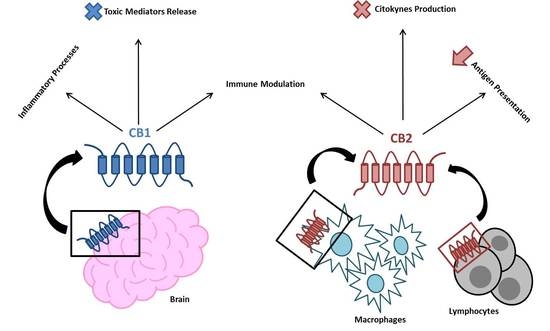
 “As we learn more about the endocannabinoid system (ECS), our understanding and grasp of the system’s ubiquitous presence is expanding. In light of this, there is also a growing body of evidence for the therapeutic potential of ECS modulation in a range of clinical situations. Strategies include for example manipulation of the
  “Excessive binge alcohol drinking may adversely affect cardiovascular function. In this study we characterize the detailed hemodynamic effects of an acute alcohol binge in mice using multiple approaches and investigate the role of the endocannabinoid-
 “Hepatorenal syndrome (HRS) is a life-threatening complication of end-stage liver disease characterized by the rapid decline of kidney function. Herein, we explored the therapeutic potential of targeting the