UK Medical Cannabis Registry: a case series analysing clinical outcomes of medicinal cannabis therapy for fibromyalgia

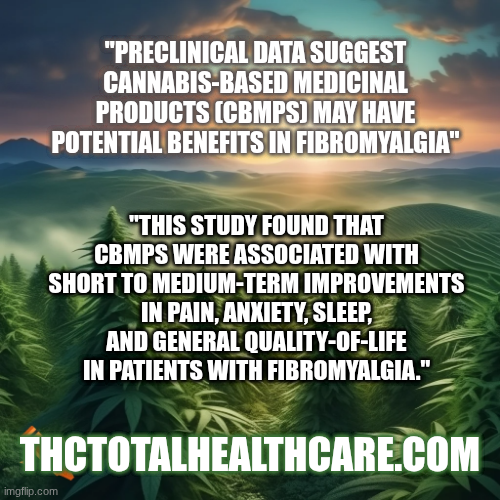
Introduction: Fibromyalgia is a common condition characterised by widespread chronic pain, associated with comorbid mental health disorders and reduced quality of life. Preclinical data suggest cannabis-based medicinal products (CBMPs) may have potential benefits in fibromyalgia, but there is a paucity of high-quality clinical evidence. This study aims to assess the change in patient-reported outcome measures (PROMs) and incidence of adverse events (AEs) in patients treated with CBMPs for fibromyalgia.

Methods: This case series analysed data from the UK Medical Cannabis Registry (UKMCR). The primary outcome was change in PROMs [Fibromyalgia Symptom Severity, Fibromyalgia Widespread Pain Index, EQ-5D-5L, Generalised Anxiety Disorder-7, and Single-Item Sleep Quality Scale] from baseline to follow-up at 1, 3, 6, 12, and 18 months. Statistical significance was defined as p < 0.050.

Results: Four hundred ninety-seven patients were included. The mean age was 44.66 ± 12.02 years, 341 patients (68.61%) were female, and the majority of patients were unemployed (n = 268, 53.92%). There was an improvement in all PROMs (p < 0.010) from baseline to all follow-up periods. Higher CBD doses (> 25.00 mg/day) and previous cannabis use were associated with increased odds of improvement on fibromyalgia-specific scales (p < 0.050). 227 patients (45.67%) reported 2100 AEs (422.54%). Most AEs were mild-to-moderate (n = 1792, 85.33%). The most common AE was fatigue (n = 153, 30.78%).

Conclusions: There was an association between treatment with CBMPs and improvements in pain, anxiety, sleep, and general quality of life. The high incidence of AEs in relation to other patient cohorts from the UKMCR may relate to the central sensitisation mechanism of fibromyalgia. Key Points • This study found that CBMPs were associated with short to medium-term improvements in pain, anxiety, sleep, and general quality-of-life in patients with fibromyalgia. • More randomised controlled trials are warranted to consolidate the literature, but this large analysis provides real-world data to inform their rollout.”

https://pubmed.ncbi.nlm.nih.gov/41343025

The impact of tetrahydrocannabinol on central pain modulation in chronic pain: a randomized clinical comparative study of offset analgesia and conditioned pain modulation in fibromyalgia

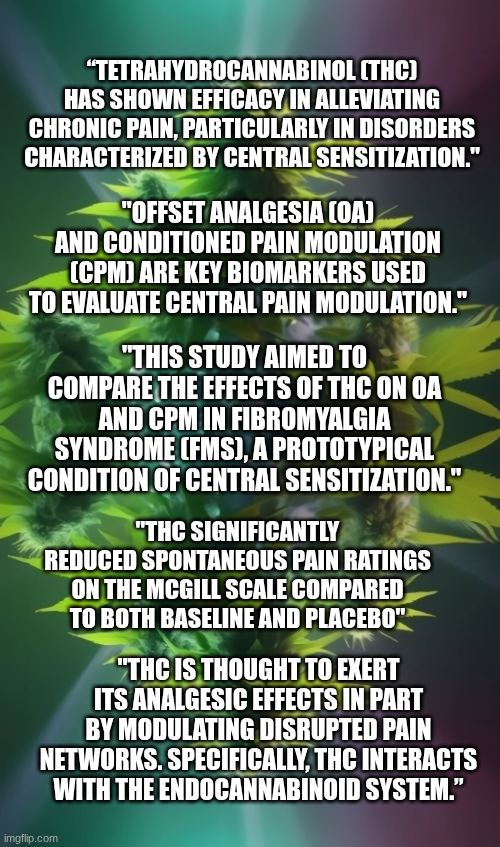
“Tetrahydrocannabinol (THC) has shown efficacy in alleviating chronic pain, particularly in disorders characterized by central sensitization. Offset analgesia (OA) and conditioned pain modulation (CPM) are key biomarkers used to evaluate central pain modulation.

This study aimed to compare the effects of THC on OA and CPM in fibromyalgia syndrome (FMS), a prototypical condition of central sensitization.

Methods

In a randomized, double-blind, placebo-controlled crossover design, 23 FMS patients participated in two experimental sessions. Each session included the McGill Pain Questionnaire, visual analogue scale (VAS) assessments, and evaluations of OA and CPM, conducted both before and after sublingual administration of either THC (0.2 mg/kg) or placebo.

Results

THC significantly reduced spontaneous pain ratings on the McGill scale compared to both baseline and placebo (P = 0.01 and P = 0.02, respectively). THC also significantly enhanced OA relative to baseline and placebo (P = 0.04 and P = 0.008), while no effect was observed on CPM (P = 0.27). Notably, baseline OA magnitude significantly predicted THC-induced pain relief (R² = 0.404, P = 0.003), whereas CPM did not show a significant association (P = 0.121).

Conclusions

This is the first study to evaluate THC’s distinct effects on central pain modulation using both OA and CPM. THC selectively enhanced OA without influencing CPM, highlighting differential neural mechanisms underlying these paradigms. Furthermore, OA predicted treatment response, suggesting its potential as a biomarker for personalized cannabinoid-based therapies in FMS and other central sensitization disorders.”

https://pubmed.ncbi.nlm.nih.gov/41199355/

“Cannabis, particularly its psychoactive component delta-9-tetrahydrocannabinol (THC), has attracted increasing attention as a therapeutic option for chronic pain management. Clinically, THC has been shown to reduce pain intensity, improve quality of life and attenuate hyperalgesia in various chronic pain conditions, including neuropathic pain and fibromyalgia “

“THC is thought to exert its analgesic effects in part by modulating disrupted pain networks. Specifically, THC interacts with the endocannabinoid system.”

“To conclude, this study corroborates the possible effectiveness of THC in alleviating experimental and spontaneous pain in FMS, a study case of central sensitization, and shows an enhancement of OA responses after THC treatment in FMS patients compared to baseline and placebo.”

“This, in turn, reinforces the potential of OA as a reliable marker of pain modulation in FMS and may pave the way for personalized cannabinoid-based therapies for chronic pain in the future.”

https://jcannabisresearch.biomedcentral.com/articles/10.1186/s42238-025-00348-x

Role of the Endocannabinoid System in Fibromyalgia

pubmed logo

“Fibromyalgia is a chronic disease marked by extensive musculoskeletal pain, persistent fatigue, and cognitive impairments. Despite its high prevalence, the underlying pathological mechanisms of fibromyalgia are still not fully elucidated.

Emerging research has identified the endocannabinoid system as an essential factor in modulating pain and other symptoms related to fibromyalgia. The endocannabinoid system plays a key role in many physiological processes such as pain perception, mood regulation, and inflammation.

This review provides a powerful analysis of the principal aspects of fibromyalgia and examines the evidence regarding the involvement of the endocannabinoid system in this condition, focusing on its influence on pain modulation. Moreover, the dysregulation of the endocannabinoid system in fibromyalgia patients will be examined, with an assessment of how variations in endocannabinoid levels and receptor activity may contribute to the clinical manifestations of the condition.

A better knowledge of this physiological system could lead to the development of novel strategies for managing fibromyalgia.”

https://pubmed.ncbi.nlm.nih.gov/40699629/

https://www.mdpi.com/1467-3045/47/4/230

The effect of medical cannabis on gastrointestinal symptoms in fibromyalgia and disorders of gut-brain interaction: a patient‑centred real‑world observational study

pubmed logo

“Objectives: Fibromyalgia (FM) is frequently associated with gastrointestinal (GI) disorders such as disorders of gut-brain interaction (DGBIs). Current treatments for FM offer limited relief, leading to the exploration of alternative therapies such as medical cannabis. This study evaluates in the impact of Bedrocan® medical cannabis in FM patients and GI symptoms over six months.

Methods: Sixty FM patients were enrolled, receiving a Bedrocan® cannabis treatment for 6 months. A standardised questionnaire evaluating upper and lower GI symptoms and the Revised Fibromyalgia Impact Questionnaire (FIQR) evaluating FM severity were administered at enrolment and 3 and 6-month follow-up evaluations. DGBIs, in particular, irritable bowel syndrome (IBS), and functional dyspepsia (FD) were diagnosed according to Rome IV criteria.

Results: Forty-six/60 (76.6%) FM patients fulfilled the diagnostic criteria for at least one DGBI; 10/60 (16.7%) FM patients fulfilled the diagnostic criteria for IBS, 17/60 (28.3%) for FD, and 19/60 (31.7%) for both IBS/FD. The FIQR severity score log-transformed significantly decreased during the months-by-month comparison period (repeated-measures ANOVA, p<0.001). Among GI symptoms, the log-transformed intensity-frequency score of epigastric pain, epigastric burning, abdominal pain, abdominal distension, and bloating significantly decreased during the month-by-month comparison period (repeated-measures ANOVA, p<0.01).

Conclusions: This study supports Bedrocan® medical cannabis as an alternative treatment for FM with a potential effect on FD and IBS symptoms. Despite positive outcomes, the study acknowledges limitations, such as the small sample size and absence of a control group. Further research is required to confirm the efficacy of medical cannabis in FM patients, particularly regarding its effects on GI symptoms.”

https://pubmed.ncbi.nlm.nih.gov/40556630/

https://www.clinexprheumatol.org/abstract.asp?a=22389

Therapeutic potential of cannabinoids in neurological conditions: a systematic review of clinical trials

pubmed logo

“Overview: Cannabinoids have gained increasing attention for their therapeutic potential in treating several neurological conditions, including neurodegenerative diseases, chronic pain, and epilepsy. This review aims to assess the current clinical trials investigating cannabinoids, primarily Tetrahydrocannabinol and Cannabidiol, for neurological disorders. This review will aim to highlight the efficacy, safety, and outcome measures used in these trials.

Methods: Clinical trials were identified using ClinicalTrials.gov, focusing on studies that examined the effects of cannabinoids in treating neurological conditions. All trials that fulfilled the following criteria were included: Phase 1-4, focused on cannabinoids as primary intervention, and measured relevant outcomes such as pain relief, cognitive function, or spasticity reduction. Data on conditions, interventions, primary and secondary outcomes, and trial phases were extracted and analysed.

Results: A total of 47 clinical trials were identified, including different neurological conditions. The most frequently studied conditions were Multiple Sclerosis, Fibromyalgia, and Parkinson’s Disease. Most trials were in Phase 2, with the primary outcome measures focused on pain management, spasticity, and cognitive function. Secondary outcomes included safety and tolerability measures.

Conclusion: The review highlights the broad therapeutic potential of cannabinoids in neurology, with promising results in symptom management for conditions like Multiple Sclerosis and Fibromyalgia. However, the lack of standardized study protocols, dosing, and outcome measures presents challenges for broader clinical implementation.”

https://pubmed.ncbi.nlm.nih.gov/39981181/

“The results of this analysis showed that both CBD and THC have significant potential as therapeutic agents for neurological disorders, particularly in managing pain, motor dysfunction, and behavioural disturbances. However, their different pharmacological profiles and side effect risks mean that each cannabinoid may be better suited to different patient populations and conditions. While THC’s broader range of applications in cognitive and motor symptoms positions it as a more multipurpose treatment option, the psychoactive risks associated with its use should not be ignored. On the other hand, CBD’s safety and non-psychoactive nature make it more preferred option for managing chronic pain, but its therapeutic benefits may be more limited. Future research should focus on addressing the gaps in long-term safety and efficacy data, as well as exploring the full potential of lesser-known cannabinoids and combination therapies to further enhance the treatment of neurological disorders.”

https://www.frontiersin.org/journals/pharmacology/articles/10.3389/fphar.2025.1521792/full

Therapeutic potential of cannabinoids in neurological conditions: a systematic review of clinical trials

“Overview: Cannabinoids have gained increasing attention for their therapeutic potential in treating several neurological conditions, including neurodegenerative diseases, chronic pain, and epilepsy. This review aims to assess the current clinical trials investigating cannabinoids, primarily Tetrahydrocannabinol and Cannabidiol, for neurological disorders. This review will aim to highlight the efficacy, safety, and outcome measures used in these trials.

Methods: Clinical trials were identified using ClinicalTrials.gov, focusing on studies that examined the effects of cannabinoids in treating neurological conditions. All trials that fulfilled the following criteria were included: Phase 1–4, focused on cannabinoids as primary intervention, and measured relevant outcomes such as pain relief, cognitive function, or spasticity reduction. Data on conditions, interventions, primary and secondary outcomes, and trial phases were extracted and analysed.

Results: A total of 47 clinical trials were identified, including different neurological conditions. The most frequently studied conditions were Multiple Sclerosis, Fibromyalgia, and Parkinson’s Disease. Most trials were in Phase 2, with the primary outcome measures focused on pain management, spasticity, and cognitive function. Secondary outcomes included safety and tolerability measures.

Conclusion: The review highlights the broad therapeutic potential of cannabinoids in neurology, with promising results in symptom management for conditions like Multiple Sclerosis and Fibromyalgia. However, the lack of standardized study protocols, dosing, and outcome measures presents challenges for broader clinical implementation.”

“The results of this analysis showed that both CBD and THC have significant potential as therapeutic agents for neurological disorders, particularly in managing pain, motor dysfunction, and behavioural disturbances. However, their different pharmacological profiles and side effect risks mean that each cannabinoid may be better suited to different patient populations and conditions. While THC’s broader range of applications in cognitive and motor symptoms positions it as a more multipurpose treatment option, the psychoactive risks associated with its use should not be ignored. On the other hand, CBD’s safety and non-psychoactive nature make it more preferred option for managing chronic pain, but its therapeutic benefits may be more limited. Future research should focus on addressing the gaps in long-term safety and efficacy data, as well as exploring the full potential of lesser-known cannabinoids and combination therapies to further enhance the treatment of neurological disorders.”

https://www.frontiersin.org/journals/pharmacology/articles/10.3389/fphar.2025.1521792/full

Select terpenes from Cannabis sativa are antinociceptive in mouse models of post-operative pain and fibromyalgia via adenosine A2a receptors

pubmed logo

“Background: Terpenes from Cannabis show promise for pain management. Our lab found that the terpenes geraniol, linalool, β-caryophyllene, and α-humulene relieve chemotherapy-induced peripheral neuropathy via Adenosine A2a receptors (A2aR). This suggests terpenes as potential non-opioid, non-cannabinoid therapeutics. In this study, we investigated post-operative and fibromyalgia pain, expanding potential terpene applications to different pain types.

Methods: Male and female CD-1 mice had their baseline mechanical sensitivity measured via von Frey filaments and underwent either paw incision surgery or reserpine-induced fibromyalgia (0.32 mg/kg, sc). After pain was established, the mice received 200 mg/kg ip of a terpene, and their mechanical sensitivity was measured over three hours. To determine the potential mechanism of action, mice were given the A2aR antagonist istradefylline (3.2 mg/kg, ip) 10 min before terpene, with mechanical sensitivity measured after. Hot plate pain testing was performed as a control.

Results: Terpene treatment caused time-dependent elevation of the mechanical thresholds of the mice from both pain models, strongest for geraniol, then linalool or α-humulene, indicating that these four terpenes are anti-nociceptive in post-surgical and fibromyalgia pain. Pretreatment with istradefylline blocked antinociception, suggesting the terpenes act via the A2aR in these pain models. Terpenes had no effect on hot plate latencies, ruling out non-specific motor effects.

Conclusions: These results demonstrate that the terpenes geraniol, linalool, β-caryophyllene, and α-humulene may be a viable medication for post-operative and fibromyalgia pain relief. Their mechanism of action via the A2aR furthers our knowledge of its importance in pain processing and as a target of terpene drugs.”

https://pubmed.ncbi.nlm.nih.gov/39663308/

https://link.springer.com/article/10.1007/s43440-024-00687-1

Effectiveness and safety of cannabis-based products for medical use in patients with fibromyalgia syndrome: A systematic review

pubmed logo

“Background: There is a need to explore pharmacological options for syndrome (FMS), such as medical cannabis. The aim of this systematic review was to synthesize and analyze the available information about the effectiveness/efficacy and safety of cannabis-based products for medical use (CBPMs) and cannabis-based medicines (CBMs), in patients with FMS.

Methods: Interventional or observational studies, systematic reviews and meta-analysis regarding the effectiveness/efficacy and safety of CBPMs and CBMs in patients with FMS were retrieved from the PubMed/Medline database until April 2024. Then, the information was summarized in tables, with the type of CBPM and CBM, the method used in the study and the effective-ness/efficacy and safety outcomes.

Results: 19 publications were selected from the search or form the relevant references. Different CBPM and CBM were used across the studies. Also, different instruments for measuring the effectiveness were used. In general, the use of CBPMs and CBM showed an important improvement in pain, quality of life, and sleep habits. There were no serious adverse events.

Conclusions: The results show that CBMPs and CBMs could be effective and safe in patients with FMS; however, the evidence is limited and there is a need for high-quality clinical studies conducted with improved methodological design.”

https://pubmed.ncbi.nlm.nih.gov/39498228/

“Cannabis-based products for medicinal use (CBPMs) and cannabis-based medicines (CBMs) improve the fibromyalgia symptoms.”

https://www.sciencedirect.com/science/article/pii/S2667276624001215?via%3Dihub

Effectiveness of Cannabinoids Treatment in Pain Management and Other Fibromyalgia-Associated Symptoms: A Case Series

“Pharmacological therapies for FM are still ineffective in many patients, involving adverse effects that hinder their long-term use.

We aimed to assess the effectiveness of cannabinoids (Tilray Dried Flower THC18) in the management of chronic pain and other FM-associated symptoms according to patient-reported outcomes, in a series of three FM patients. 

We observed improvements after one and three months of cannabinoids treatment in Brief Pain Inventory (BPI), Visual Analogue Scale (VAS), Insomnia Severity Index (ISI), SF-36 Health Survey, and Fibromyalgia Impact Questionnaire (FIQ) allowing pain relief, and improvements in sleep quality, performance of daily life activities, and quality of life.

In conclusion, although more studies are needed, in our series of FM patients, cannabinoids treatment showed promising results in the management of chronic pain and other FM-associated symptoms, improving the quality of life of these patients.”

https://www.heraldopenaccess.us/openaccess/effectiveness-of-cannabinoids-treatment-in-pain-management-and-other-fibromyalgia-associated-symptoms-a-case-series

Cannabis therapy in rheumatological diseases: A systematic review

pubmed logo

“Cannabis has been used in rheumatic diseases as therapy for chronic pain or inflammatory conditions. Herein, the authors systematically review the rheumatological diseases in which cannabis has been studied: systemic sclerosis, fibromyalgia, osteoarthritis, rheumatoid arthritis, osteoporosis, polymyalgia rheumatica, gout, dermatomyositis, and psoriatic arthritis. We systematically searched PubMed for articles on cannabis and rheumatic diseases between 1966 and March 2023. Twenty-eight articles have been selected for review.

Most of them (n=13) were on fibromyalgia and all of them but one showed important reduction in pain; sleep and mood also improved. On rheumatoid arthritis, two papers displayed decrease in pain and in one of them a reduction in inflammatory parameters was found. In scleroderma there was a case description with good results, one study on local use for digital ulcers also with good outcomes and a third one, that disclosed good results for skin fibrosis. In dermatomyositis a single study showed improvement of skin manifestations and in osteoarthritis (3 studies) this drug has demonstrated a good analgesic effect. Several surveys (n=5) on the general use of cannabis showed that rheumatological patients (mixed diseases) do use this drug even without medical supervision. The reported side effects were mild.

In conclusion, cannabis treatment is an interesting option for the treatment of rheumatological diseases that should be further explored with more studies.”

https://pubmed.ncbi.nlm.nih.gov/39165706/

https://northclinist.com/jvi.aspx?un=NCI-43669&volume=11&issue=4