Olivia Newton John says medicinal cannabis is key to her cancer recovery

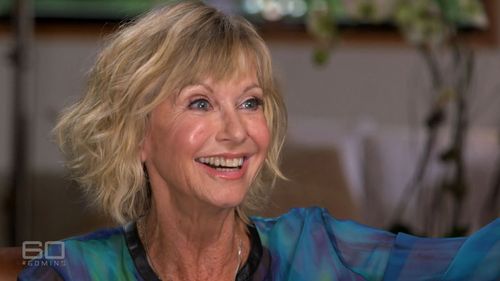
“Olivia Newton-John says medicinal marijuana is a key part of her treatment for stage four cancer. In an exclusive interview with 60 Minutes reporter Liz Hayes, Newton-John says that not only has cannabis assisted with her pain management, sleep and anxiety – but it’s having affects on her physical health too. “I’m incredibly pro cannabis,” she told Liz Hayes. “If I don’t take the cannabis, I can feel the pain so I know it’s working.”

 “Newton-John is maintaining her health with a combination of conventional and alternative medicines and remedies. But her husband of ten years, John Easterling, says he’s confident medicinal cannabis is contributing significantly to maintaining her health.
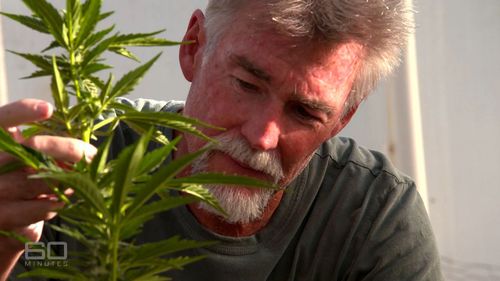
Easterling, who spent years cultivating herbs from the Amazon, has long held a strong belief in the medicinal power of plants. In a greenhouse at the Santa Barbara ranch the couple share in California, he grows various strains of cannabis that he uses to help treat his wife. “Cannabis can be used for so many things,” he told Hayes. “I don’t use the word cure…. but I’m confident. We had MRIs showing a lesser number of tumours, and the majority of the other ones are shrinking.”
 “Now a cannabis convert, Newton-John is joining the fight for medicinal cannabis to be legalised. She and Easterling want Australians to have greater access to the plant, like they do in their home state of California – where both medicinal and recreational cannabis is legal.  She’s also hoping to break down the stigma surrounding cannabis use.
“It’s not a drug, it’s a herb and a plant,” she told Hayes. “I think when people use the word drug, it’s a misconception as to what it is and it gets people thinking, ‘oh it’s just another drug’, but it’s not.” Doctors at the Olivia Newton-John Research Institute will conduct a clinical trial to determine the effectiveness of medicinal cannabis later this year.”
 
 “EXCLUSIVE: Olivia Newton-John and Chloe Lattanzi emotional interview | 60 Minutes Australia” https://www.youtube.com/watch?v=rJtPgpedcFo&feature=share

“Olivia Newton-John: ‘Medicinal cannabis enhanced my quality of life’.  For this special 60 Minutes report, Olivia Newton-John tells Liz Hayes that despite her latest diagnosis she was “getting strong again” and that her quality of life had been greatly enhanced by medicinal cannabis, grown for her by her husband John. Olivia and John are strong believers in the power of plants particularly cannabis. “I really believe the cannabis has made a huge difference,” says Olivia. “I’m confident,” John concurs. Olivia, John and Chloe are now cannabis converts, and now want medicinal cannabis legalised as an alternative treatment in Australia.” https://www.9news.com.au/national/olivia-newton-john-60-minutes-medical-cannabis-advocate-after-cancer-treatment-news/da315271-7387-47e0-a14e-c7fbb9a4b18b

“I have to credit again my wonderful husband because he gives me Cannabis oil that he makes for me, grows the plants here. We’re so lucky in California that we can grow our own, and so he’s made me these incredible tinctures that help with my pain and with sleep, and everything.” https://www.today.com/video/watch-olivia-newton-john-s-full-interview-with-natalie-morales-1455610947796

 Olivia Newton-John: “The choices of your treatment is a very personal thing. I can’t tell anyone else what they should do. I’d like to tell you all something that I did that people should know about. I’ve mixed traditional medicine and herbal medicine and homoeopathic medicine and a lot of mind-body spiritual focus. Staying positive and believing I can get well is really important. I’m very fortunate that I have a husband who’s a plant medicine man who helps me with herbs and medicinal cannabis, it’s been a huge part of my journey. I weaned myself off morphine with cannabis and I just want people to know that that is possible and it’s not going to kill you. If we can start teaching people that cannabis can help keep the pain away and not kill you, that’s an important message to get out there. I want to see an end to cancer in my lifetime. I’ve had three bouts with cancer. I am living with it well, and I think I’m going to see an end of it. And that’s my dream, that it will be gone.” https://www.image.ie/life/olivia-newton-john-shares-her-advice-for-women-with-cancer-154470
 “”I want to see an end to cancer in my lifetime. And if it could be through cannabis, or helping people with cannabis, the patients, particularly who are in pain, that’s my goal. I want everyone to have access to this amazing plant”” https://www.facebook.com/watch/?v=269501097009373
 ““I truly believe medicinal cannabis will play a huge part in defeating cancer.”“I absolutely believe all patients should have the right to try. It is a matter of common-sense and it is a compassionate thing to do for people,” she said,” https://starinvesting.com.au/medicinal-cannabis-to-play-huge-role-in-beating-cancer-olivia-newton-john/
Olivia Newton-John reveals she’s using marijuana grown by her husband to fight cancer – and says reports she was on death’s door hurt her deeply. Australian singing sensation Olivia Newton-John says she has been using marijuana grown by her husband to help her through her cancer battle. ‘I really believe the cannabis has made a huge difference,'”
“‘It Has Helped Incredibly’. It’s an amazing plant, a maligned plant, but it’s helping so many people.”” https://www.inquisitr.com/5330159/home-grown-cannabis-is-helping-olivia-newton-john-amid-cancer-battle-it-has-helped-incredibly/
“Olivia Newton-John says she uses cannabis to treat her stage 4 breast cancer… and her husband grows it at home” https://www.dailymail.co.uk/tvshowbiz/article-6782847/Olivia-Newton-John-uses-cannabis-treat-stage-4-breast-cancer.html
““I’m Living With Cancer and It’s Going Away!” Olivia Newton John Declares That Her Body is “Winning” Against Stage 4 Cancer” https://www.survivornet.com/articles/im-living-with-cancer-and-its-going-away-olivia-newton-john-declares-that-her-body-is-winning-against-stage-4-cancer/
“Mainstream media has reported that the cannabis tincture she takes helps with pain, but Amazon John Easterling eagerly expounds on its many healing properties, including the potential to cause cancer cell death. “Cannabis initiates a number of healing responses that can result in apoptosis, cancer cell death—while healing and strengthening the body,” he detailed. His focus is on the plant as chemovar, a more scientific approach to looking at the many compounds, via terpene and cannabinoid extraction from the whole plant to treat the cancer and the entire body, building the immune system so it can aid in fighting the disease.“ https://culturemagazine.com/olivia-newton-john-and-john-easterling/
“Medicinal cannabis is a big part of my recovery. I’m living proof that it works. It’s a healing herb.” https://www.facebook.com/watch/?v=1580591005362546

Lifetime marijuana use in relation to insulin resistance in lean, overweight, and obese US adults.

Journal of Diabetes banner“Obese individuals are more likely to show insulin resistance (IR). However, limited population studies on marijuanause with markers of IR have yielded mixed results.

The aim of this study was to examine the association of marijuana use with IR in US adults with different body mass index (BMI) status.

RESULTS:

Of all 129 509 adults aged 18 to 59 years, 50.3% were women. In current obese marijuana consumers, mean FINS in those with less than four uses per month was 52% (95% confidence interval [CI] 19%-71%) lower than in never users. In former obese consumers with eight or more uses per month and who stopped marijuana use <12 months ago, mean FINS was 47% (95% CI 18%-66%) lower than in never users. Mean FINS in those who quit marijuana 12 to 119 and 120 months and more prior the survey was 36% (95% CI 7%-57%) and 36% (95% CI 10%-54%) lower, respectively.

CONCLUSIONS:

Marijuana use is associated with lower FINS and HOMA-IR in obese but not non-obese adults, even at low frequency of less than four uses per month. Former marijuana consumers with high lifetime use had significantly lower FINS levels that persisted, independent of the duration of time since last use.”

https://www.ncbi.nlm.nih.gov/pubmed/31152633

https://onlinelibrary.wiley.com/doi/abs/10.1111/1753-0407.12958

“Cannabis linked to lower insulin levels in adults at risk of type 2 diabetes”   https://www.diabetes.co.uk/News/2019/Jul/cannabis-linked-to-lower-insulin-levels-in-adults-at-risk-of-type-2-diabetes-99514193.html

Employment and Marijuana Use Among Washington State Adolescents Before and After Legalization of Retail Marijuana

 Journal of Adolescent Health Home“The purpose of the study was to describe associations between employment and marijuana use among adolescents 2 years before passage of 2012 ballot initiative and 2 years after the implementation of retail recreational marijuana sales took place in Washington.

Working adolescents in all grades had higher prevalence of recent marijuana use compared with nonworking adolescents.

Working youth were more likely to use marijuana before and after Washington’s legalization of retail marijuana.”

https://www.jahonline.org/article/S1054-139X(19)30020-5/fulltext

“Study shows working teens more likely to try marijuana. Employed adolescents are more likely to use marijuana than those who don’t work, according to a study recently published in the Journal of Adolescent Health.”
“Teens with jobs are more likely to use cannabis than those who aren’t employed: study” https://www.thegrowthop.com/cannabis-news/teens-with-jobs-are-more-likely-to-use-cannabis-than-those-who-arent-employed-study

Association of Marijuana Laws With Teen Marijuana Use

Image result for jama pediatrics

“In the United States, 33 states and the District of Columbia have passed medical marijuana laws (MMLs), while 10 states and the District of Columbia have legalized the recreational use of marijuana.

A 2018 meta-analysis concluded that the results from previous studies do not lend support to the hypothesis that MMLs increase marijuana use among youth, while the evidence on the effects of recreational marijuana laws (RMLs) is mixed.

Here, we report estimates of the association between the legalization of marijuana and its use, simultaneously considering both MMLs and RMLs.

Consistent with the results of previous researchers, there was no evidence that the legalization of medical marijuana encourages marijuana use among youth.

Moreover, the estimates reported in the Table showed that marijuana use among youth may actually decline after legalization for recreational purposes.

This latter result is consistent with findings by Dilley et al and with the argument that it is more difficult for teenagers to obtain marijuana as drug dealers are replaced by licensed dispensaries that require proof of age.”

https://jamanetwork.com/journals/jamapediatrics/fullarticle/2737637?guestAccessKey=5e4e41eb-ec96-4641-86f9-b5c89cc7cc48&utm_source=For_The_Media&utm_medium=referral&utm_campaign=ftm_links&utm_content=tfl&utm_term=070819

“New JAMA study shows legalizing pot might discourage teen use”  https://www.cnbc.com/2019/07/08/new-jama-study-shows-legalizing-pot-might-discourage-teen-use.html

“Recreational marijuana legalization tied to decline in teens using pot, study says”  https://www.cnn.com/2019/07/08/health/recreational-marijuana-laws-teens-study/index.html

“Recreational marijuana legalization tied to decline in teens using pot, study says”  https://wtvr.com/2019/07/08/recreational-marijuana-legalization-tied-to-decline-in-teens-using-pot-study-says/

Use of Cannabis to Relieve Pain and Promote Sleep by Customers at an Adult Use Dispensary

Publication Cover

“Cannabis has been used for pain relief and to promote sleep for thousands of years. Over the past several decades in the United States (U.S.), a therapeutic role for cannabis in mainstream medicine has increasingly emerged. Medical cannabis patients consistently report using cannabis as a substitute for prescription medications. Both pain relief and sleep promotion are common reasons for cannabis use, and the majority of respondents who reported using cannabis for these reasons also reported decreasing or stopping their use of prescription or over-the-counter analgesics and sleep aids. While adult-use laws are frequently called “recreational,” implying that cannabis obtained through the adult use system is only for pleasure or experience-seeking, our findings suggest that many customers use cannabis for symptom relief.”

https://www.ncbi.nlm.nih.gov/pubmed/31264536

https://www.tandfonline.com/doi/full/10.1080/02791072.2019.1626953

“Cannabis Is An Effective Treatment Option For Pain Relief And Insomnia, Study Finds” https://www.inquisitr.com/5509672/cannabis-pain-medications-sleep/

“Marijuana Could Be The Alternative Pain Reliever Replacing Opioids”  https://www.medicaldaily.com/marijuana-alternative-pain-reliever-replacing-opioids-437974

“Cannabis Found Effective in Fighting Drug-Resistant Bacteria”

1957: “[Hemp (Cannabis sativa); antibiotic drug. I. Hemp in the old & popular medicine].” https://www.ncbi.nlm.nih.gov/pubmed/13484424
1958: “[Hemp (Cannabis sativa)–antibiotic drugs. II. Method & results of bacteriological experiments & preliminary clinical experience].” https://www.ncbi.nlm.nih.gov/pubmed/13553773
1959: “[Hemp (Cannabis sativa)-an antibiotic drug. 3. Isolation and constitution of two acids from Cannabis sativa].” https://www.ncbi.nlm.nih.gov/pubmed/14411912
1962: “Antibiotic activity of various types of cannabis resin.” https://www.ncbi.nlm.nih.gov/pubmed/14489783
2008: “Antibacterial cannabinoids from Cannabis sativa: a structure-activity study.” https://www.ncbi.nlm.nih.gov/pubmed/18681481
“Cannabis plant extracts can effectively fight drug-resistant bacteria.” http://abcnews.go.com/Technology/story?id=5787866
“According to research, the five most common cannabinoid compounds in weed—tetrahydrocannabinol (THC), cannabidiol, cannabigerol, cannabinol and cannabichromene—can kill antibiotic-resistant bacteria.” https://blogs.scientificamerican.com/news-blog/whoa-the-stuff-in-pot-kills-germs-2008-08-27/
“All five cannabinoids (THC, CBD, CBG, CBC, and CBN) were potent against bacteria. Notably, they performed well against bacteria that were known to be multidrug resistant, like the strains of MRSA” http://arstechnica.com/science/2008/08/killing-bacteria-with-cannabis/
2014: “Better than antibiotics, cannabinoids kill antibiotic-resistant MRSA bacteria” http://usahealthresource.blogspot.com/2014/02/marijuana-extracts-and-compounds-kill.html
2019: “Cannabis Found Effective in Fighting Drug-Resistant Bacteria” https://www.courthousenews.com/cannabis-found-effective-in-fighting-drug-resistant-bacteria/
“Cannabis oil kills bacteria better than established antibiotics… providing a possible new weapon in the war on superbugs, according to new research. It offers hope of curing killer infections – including MRSA and pneumonia, say scientists.” https://www.thelondoneconomic.com/lifestyle/cannabis-oil-kills-bacteria-better-than-established-antibiotics/24/06/ 
“CANNABIS COMPOUND COULD BE LATEST WEAPON IN WAR AGAINST SUPERBUGS”
“Marijuana skin cream kills superbugs, says Botanix” https://stockhead.com.au/health/marijuana-skin-cream-kills-superbugs-says-botanix/
“Botanix’s CBD-based product destroys superbug skin infections in another ‘world first’” https://smallcaps.com.au/botanix-cbd-based-product-destroys-skin-superbug-infections/
“Compound in cannabis found to be ‘promising’ new antibiotic that does not lose its effectiveness with use” https://www.kelownanow.com/watercooler/news/news/Cannabis/Compound_in_cannabis_found_to_be_promising_new_antibiotic_that_does_not_lose_its_effectiveness_with_use/
Image may contain: plant and text

Lifetime marijuana use in relation to insulin resistance in lean, overweight and obese U.S. adults.

Journal of Diabetes banner“Obese individuals are more likely to show insulin resistance (IR). However, limited population studies on marijuana use with markers of IR yield mixed results.

METHODS:

We abstracted data from the 2009-2016 National Health and Nutrition Examination Survey (NHANES). We estimated the minimal lifetime marijuana use using the duration of regular exposure and the frequency of use. We used generalized linear models to determine the association of marijuana use with both fasting insulin and homeostasis model assessment of insulin resistance (HOMA-IR) in lean, overweight and obese individuals, separately. We used interview weight years of data to account for the unequal probability of sampling and non-response.

RESULTS:

Of the total of 129,509 adults aged 18 to 59 years, 50.3% were women. In current obese consumers, the mean insulin in those with < 4 uses/months was 52% (95% CI: 19% to 71%) lower than in never users. Former obese consumers with ≥ 8 uses/month and who stopped marijuana use < 12 months showed 47% (95% CI: 18% to 66%) lower insulin. Those with last use of 12-119 months and ≥ 120 months had 36% (95% CI: 7% to 57%) and 36% (95% CI: 10% to 54%) lower insulin, respectively.

CONCLUSIONS:

Marijuana use is associated with lower fasting insulin and HOMA-IR in obese but not in non-obese adults, even at low frequency of < 4 uses per month. Former consumers with high lifetime use had a significant lower insulin levels which persists, independent of the duration of time since last use.”

https://www.ncbi.nlm.nih.gov/pubmed/31152633

https://onlinelibrary.wiley.com/doi/abs/10.1111/1753-0407.12958

Study: Cannabis Protective Against Diabetes Among Those Overweight”  https://norml.org/news/2019/06/20/study-cannabis-protective-against-diabetes-among-those-overweight

“Cannabis use could help prevent diabetes”  https://mogreenway.com/2019/06/24/cannabis-use-could-help-prevent-diabetes/

“Cannabis linked to lower insulin levels in adults at risk of type 2 diabetes”  https://www.diabetes.co.uk/news/2019/jul/cannabis-linked-to-lower-insulin-levels-in-adults-at-risk-of-type-2-diabetes-99514193.html

The origins of cannabis smoking: Chemical residue evidence from the first millennium BCE in the Pamirs.

 Science Advances: 5 (6)“Cannabis is one of the oldest cultivated plants in East Asia, grown for grain and fiber as well as for recreational, medical, and ritual purposes. It is one of the most widely used psychoactive drugs in the world today, but little is known about its early psychoactive use or when plants under cultivation evolved the phenotypical trait of increased specialized compound production. The archaeological evidence for ritualized consumption of cannabis is limited and contentious. Here, we present some of the earliest directly dated and scientifically verified evidence for ritual cannabis smoking. This phytochemical analysis indicates that cannabis plants were burned in wooden braziers during mortuary ceremonies at the Jirzankal Cemetery (ca. 500 BCE) in the eastern Pamirs region. This suggests cannabis was smoked as part of ritual and/or religious activities in western China by at least 2500 years ago and that the cannabis plants produced high levels of psychoactive compounds.”

https://www.ncbi.nlm.nih.gov/pubmed/31206023

https://advances.sciencemag.org/content/5/6/eaaw1391

“Earliest evidence for cannabis smoking discovered in ancient tombs”  https://www.nationalgeographic.com/culture/2019/06/earliest-evidence-cannabis-marijuana-smoking-china-tombs/

“The First Evidence of Smoking Pot Was Found in a 2,500-Year-Old Pot”  https://www.smithsonianmag.com/smart-news/2500-year-old-chinese-cemetery-offers-earliest-physical-evidence-cannabis-smoking-180972410/

“Earliest Evidence of People “Smoking” Weed Found in 2,500-Year-Old Chinese Pots”  https://www.sciencealert.com/ancient-pots-from-china-reveal-humans-smoking-cannabis-2-500-years-ago

“Oldest evidence of marijuana use discovered in 2500-year-old cemetery in peaks of western China” https://www.sciencemag.org/news/2019/06/oldest-evidence-marijuana-use-discovered-2500-year-old-cemetery-peaks-western-china

“Cannabis use for medicinal purposes dates back at least 3,000 years.”  https://www.cancer.gov/about-cancer/treatment/cam/hp/cannabis-pdq#section/_7

“Cannabis has been used for medicinal purposes for thousands of years.” https://www.cancer.gov/about-cancer/treatment/cam/hp/cannabis-pdq

“The use of Cannabis for medicinal purposes dates back to ancient times.” http://www.cancer.gov/about-cancer/treatment/cam/patient/cannabis-pdq#section/all

Biosynthesis of cannflavins A and B from Cannabis sativa L.

Phytochemistry

“In addition to the psychoactive constituents that are typically associated with Cannabis sativa L., there exist numerous other specialized metabolites in this plant that are believed to contribute to its medicinal versatility. This study focused on two such compounds, known as cannflavin A and cannflavin B. These prenylated flavonoids specifically accumulate in C. sativa and are known to exhibit potent anti-inflammatory activity in various animal cell models. However, almost nothing is known about their biosynthesis. Using a combination of phylogenomic and biochemical approaches, an aromatic prenyltransferase from C. sativa (CsPT3) was identified that catalyzes the regiospecific addition of either geranyl diphosphate (GPP) or dimethylallyl diphosphate (DMAPP) to the methylated flavone, chrysoeriol, to produce cannflavins A and B, respectively. Further evidence is presented for an O-methyltransferase (CsOMT21) encoded within the C. sativa genome that specifically converts the widespread plant flavone known as luteolin to chrysoeriol, both of which accumulate in C. sativa. These results therefore imply the following reaction sequence for cannflavins A and B biosynthesis: luteolin ► chrysoeriol ► cannflavin A and cannflavin B. Taken together, the identification of these two unique enzymes represent a branch point from the general flavonoid pathway in C. sativa and offer a tractable route towards metabolic engineering strategies that are designed to produce these two medicinally relevant Cannabis compounds.”

https://www.ncbi.nlm.nih.gov/pubmed/31151063

https://www.sciencedirect.com/science/article/pii/S0031942218303819?via%3Dihub

“U of G Researchers First to Unlock Access to Pain Relief Potential of Cannabis”  https://news.uoguelph.ca/2019/07/u-of-g%E2%80%AFresearchers-first-to-unlock-access-to-pain%E2%80%AFrelief%E2%80%AFpotential-of-cannabis%E2%80%AF/

“Scientists unlock the secrets of marijuana’s pain-relief potential, study says” HTTPS://WWW.NEWSOBSERVER.COM/NEWS/NATION-WORLD/NATIONAL/ARTICLE233045517.HTML

The Endocannabinoid System: A New Treatment Target for Obsessive Compulsive Disorder?

View details for Cannabis and Cannabinoid Research cover image

“Obsessive-compulsive disorder (OCD) is a disabling illness that is associated with significant functional impairment. Although evidence-based pharmacotherapies exist, currently available medications are ineffective in some patients and may cause intolerable side effects in others. There is an urgent need for new treatments.

Discussion: A growing body of basic and clinical research has showed that the endocannabinoid system (ECS) plays a role in anxiety, fear, and repetitive behaviors. At the same time, some patients with OCD who smoke cannabis anecdotally report that it relieves their symptoms and mitigates anxiety, and several case reports describe patients whose OCD symptoms improved after they were treated with cannabinoids. Taken together, these findings suggest that the ECS could be a potential target for novel medications for OCD. In this study, we review evidence from both animal and human studies that suggests that the ECS may play a role in OCD and related disorders. We also describe findings from studies in which cannabinoid drugs were shown to impact symptoms of these conditions.

Recent studies in both humans and animals have shown a critical role for the ECS in anxiety, stress, fear, and repetitive/habitual behaviors. Moreover, many patients with OCD who use cannabis anecdotally report that it improves their symptoms and reduces anxiety.

Conclusions: An emerging body of evidence suggests that the ECS plays a role in OCD symptoms and may be a target for the development of novel medications. Further exploration of this topic through well-designed human trials is warranted.”

https://www.liebertpub.com/doi/10.1089/can.2018.0049

“Can cannabinoids help treat obsessive-compulsive disorder?”  https://eurekalert.org/pub_releases/2019-05/mali-cch053119.php