
 “Precise cannabis treatment dosing remains a major challenge, leading to physicians’ reluctance to prescribe medical cannabis.
Objective
To test the pharmacokinetics, analgesic effect, cognitive performance and safety effects of an innovative medical device that enables the delivery of inhaled therapeutic doses of Δ9‐Tetrahydrocannabinol (THC) in patients with chronic pain.
Methods
In a randomized, three‐arms, double‐blinded, placebo‐controlled, cross‐over trial, 27 patients received a single inhalation of Δ9‐THC: 0.5mg, 1mg, or a placebo.
Δ9‐THC plasma levels were measured at baseline and up to 150‐min post‐inhalation. Pain intensity and safety parameters were recorded on a 10‐cm visual analogue scale (VAS) at pre‐defined time points. The cognitive performance was evaluated using the selective sub‐tests of the Cambridge Neuropsychological Test Automated Battery (CANTAB).
Results
Following inhalation of 0.5 mg or 1mg, Δ9‐THC plasma C max ± SD were 14.3 ± 7.7 and 33.8 ± 25.7 ng/ml. T max ± SD were 3.7 ± 1.4 and 4.4 ± 2.1 min, and AUC0 → infinity±SD were 300 ± 144 and 769 ± 331 ng*min/ml, respectively. Both doses, but not the placebo, demonstrated a significant reduction in pain intensity compared with baseline and remained stable for 150‐min. The 1‐mg dose showed a significant pain decrease compared to the placebo. Adverse events were mostly mild and resolved spontaneously. There was no evidence of consistent impairments in cognitive performance.
Conclusion
This feasibility trial demonstrated that a metered‐dose cannabis inhaler delivered precise and low THC doses, produced a dose‐dependent and safe analgesic effect in patients with neuropathic pain/ complex‐regional pain syndrome (CRPS). Thus, it enables individualization of medical cannabis regimens that can be evaluated pharmacokinetically and pharmacodynamically by accepted pharmaceutical models.
Significance
Evidence suggests that cannabis‐based medicines are an effective treatment for chronic pain in adults. The pharmacokinetics of THC varies as a function of its route of administration. Pulmonary assimilation of inhaled THC causes rapid onset of analgesia. However, currently used routes of cannabinoids delivery provide unknown doses, making it impossible to implement a pharmaceutical standard treatment plan. A novel selective‐dose cannabis inhaler delivers significantly low and precise doses of THC, thus allowing the administration of inhaled cannabis‐based medicines according to high pharmaceutical standards. These low doses of THC can produce safe and effective analgesia in patients with chronic pain.
To the best of our knowledge, it is the first time that the delivery of selective, significantly low, and precise therapeutic single doses of inhaled THC demonstrates an analgesic effect. It allows patients to reach the optimum balance between symptom relief and controlled side effects, enabling patients to regain their quality of life. In addition, this metered‐dose cannabis inhaler enables the individualization of medical cannabis regimens that can be evaluated pharmacokinetically and pharmacodynamically using accepted pharmaceutical models.”
https://onlinelibrary.wiley.com/doi/10.1002/ejp.1605

 “Non-steroidal anti-inflammatory drugs (NSAIDs) are known to produce antinociceptive effects mainly through peripheral
  “Growing evidence recognises cannabinoid receptors as potential therapeutic targets for pain. Consequently, there is increasing interest in developing cannabinoid receptor agonists for treating pain.
 “Cannabidiol (CBD), the major non-psychoactive constituent of Cannabis sativa L., has gained traction as a potential treatment for intractable chronic pain in many conditions. Clinical evidence suggests that CBD provides therapeutic benefit in certain forms of epilepsy and imparts analgesia in certain conditions, and improves quality of life.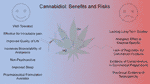
 “Few models exist that can control for placebo and expectancy effects commonly observed in clinical trials measuring ‘
 “The cannabis plant has been widely researched for many therapeutic indications and found to be effective in many chronic conditions such as epilepsy, neuropathic or chronic pain and more. However, biased opinion against compounds of the plant, regulatory as well as compounding challenges have led to very few approved medicinal products. Those formulations which are approved are dosed several times a day, creating an unmet need for controlled release (CR) formulations of
  “Two patient case reports are presented describing the use of cannabidiol (CBD) for the symptomatic relief of a lumbar compression fracture and in the mitigation of thoracic discomfort and dysesthesia secondary to a surgically resected meningioma.
 “Opioid prescriptions and abuse remain a significant national concern.
 “Four states have legalized medical cannabis for the purpose of treating opioid use disorder. It is unclear whether