

“Chronic pain is the most common reason reported for using medical cannabis.
The goal of this research was to determine if the two primary phytocannabinoids, THC and CBD, are effective treatments for persistent inflammatory pain.
These results suggest that THC may be more beneficial than CBD for reducing inflammatory pain, in that THC maintains its efficacy with short-term treatment in both sexes, and does not induce immune activation.
SIGNIFICANCE STATEMENT: CBDs and THCs pain-relieving effects are examined in male and female rats with persistent inflammatory pain to determine if individual phytocannabinoids could be a viable treatment for men and women with chronic inflammatory pain. Additionally, sex differences in the immune response to an adjuvant and to THC and CBD are characterized to provided preliminary insight into immune-related effects of cannabinoid-based therapy for pain.”
https://www.ncbi.nlm.nih.gov/pubmed/32179573
http://jpet.aspetjournals.org/content/early/2020/03/16/jpet.119.263319
 “Cannabis use among inflammatory bowel disease (IBD) patients is common. There are many studies of various laboratory models demonstrating the anti-inflammatory effect of cannabis, but their translation to human disease is still lacking.
 “Given the infancy and evolving complexity of medicinal marijuana, an evolving political landscape, and the growing frequency of its use in cancer care, it is important for oncologists to be actively engaged in developing and successfully implementing clinical trials focusing on medical marijuana.
 “Ratios of delta-9-tetrahydrocannabinol (THC) and
  “Glioblastoma multiforme (GBM) is the most frequent and aggressive malignant brain tumour, with a poor prognosis despite available surgical and radio-chemotherapy, rising the necessity for searching alternative therapies. Several preclinical studies evaluating the efficacy of
  “Phytocannabinoids (pCBs) are a large family of meroterpenoids isolated from the plant Cannabis sativa. Δ9-Tetrahydrocannabinol (THC) and cannabidiol (CBD) are the best investigated phytocannabinoids due to their relative abundance and interesting bioactivity profiles. In addition to various targets, THC and CBD are also well-known agonists of peroxisome proliferator-activated receptor gamma (PPARγ), a nuclear receptor involved in energy homeostasis and lipid metabolism. In the search of new pCBs potentially acting as PPARγ agonists, we identified cannabimovone (CBM), a structurally unique abeo-menthane pCB, as a novel PPARγ modulator via a combined computational and experimental approach. The ability of CBM to act as dual PPARγ/α agonist was also evaluated. Computational studies suggested a different binding mode toward the two isoforms, with the compound able to recapitulate the pattern of H-bonds of a canonical agonist only in the case of PPARγ. Luciferase assays confirmed the computational results, showing a selective activation of PPARγ by CBM in the low micromolar range. CBM promoted the expression of PPARγ target genes regulating the adipocyte differentiation and prevented palmitate-induced insulin signaling impairment. Altogether, these results candidate CBM as a novel bioactive compound potentially useful for the treatment of insulin resistance-related disorders.”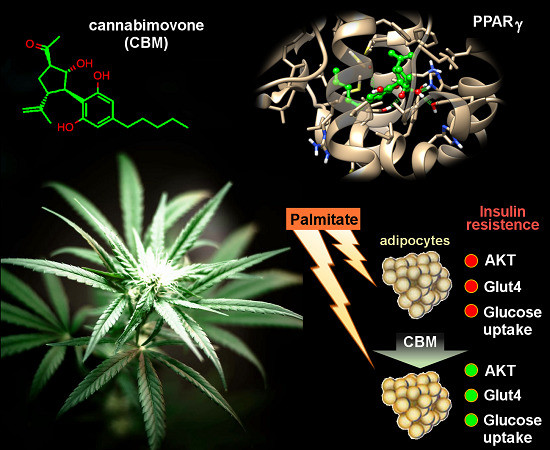
 “Multiple sclerosis (MS) is a highly symptomatic disease, with a wide range of disabilities affecting many bodily functions, even in younger persons with a short disease history.
 “Over the past decade, patients, families, and medical cannabis advocates have campaigned in many countries to allow patients to use cannabis preparations to treat the symptoms of serious illnesses that have not responded to conventional treatment.
 “To assess any clinical improvement attributable to the addition of medical
  “While medical and recreational cannabis use is becoming more frequent among older adults, the neurocognitive consequences of cannabis use in this age group are unclear. The aim of this literature review was to synthesize and evaluate the current knowledge on the association of cannabis use during older-adulthood with cognitive function and brain aging.