Cannabinoid system in the skin – a possible target for future therapies in dermatology.

“Cannabinoids and their derivatives are group of more than 60 biologically active chemical agents, which have been used in natural medicine for centuries.

The major agent of exogenous cannabinoids is Delta(9)-tetrahydrocannabinol (Delta(9)-THC), natural psychoactive ingredient of marijuana.

Recent discoveries of endogenous cannabinoids (e.g. arachidonoylethanolamide, 2-arachidonoylglycerol or palmithyloethanolamide) and their receptors initiated discussion on the role of cannabinoid system in physiological conditions as well as in various diseases.

Based on the current knowledge, it could be stated that cannabinoids are important mediators in the skin, however their role have not been well elucidated yet.

In our review, we summarized the current knowledge about the significant role of the cannabinoid system in the cutaneous physiology and pathology, pointing out possible future therapeutic targets.”

http://www.ncbi.nlm.nih.gov/pubmed/19664006

Preparation and characterization of Δ(9)-tetrahydrocannabinol-loaded biodegradable polymeric microparticles and their antitumoral efficacy on cancer cell lines.

“Cannabinoids present an interesting therapeutic potential as antiemetics, appetite stimulants in debilitating diseases (cancer, AIDS and multiple sclerosis), analgesics, and in the treatment of multiple sclerosis and cancer, among other conditions.

However, despite their high clinical potential, only few dosage forms are available to date.

In this paper, the development of Δ(9)-tetrahydrocannabinol (THC) biodegradable microspheres as an alternative delivery system for cannabinoid parenteral administration is proposed.

As THC has shown therapeutic potential as anticancer drug, the efficacy of the microspheres was tested on different cancer cell lines.

Interestingly, the microspheres were able to inhibit cancer cell proliferation during the nine-day study period.

All the above results suggest that the use of biodegradable microspheres would be a suitable alternative delivery system for THC administration.”

http://www.ncbi.nlm.nih.gov/pubmed/23773072

In vitro and in vivo evaluation of Δ⁹-tetrahidrocannabinol/PLGA nanoparticles for cancer chemotherapy.

“Nanoplatforms can optimize the efficacy and safety of chemotherapy, and thus cancer therapy. However, new approaches are encouraged in developing new nanomedicines against malignant cells.

In this work, a reproducible methodology is described to prepare Δ(9)-tetrahidrocannabinol (Δ(9)-THC)-loaded poly(d,l-lactide-co-glycolide) (PLGA) nanoparticles against lung cancer.

Cell viability studies comparing the activity of the nanoformulations against human A-549 and murine LL2 lung adenocarcinoma cells, and human embryo lung fibroblastic MRC-5 cells revealed a statistically significant selective cytotoxic effect toward the lung cancer cell lines.

In addition, cytotoxicity assays in A-549 cells demonstrated the more intense anticancer activity of Δ(9)-THC-loaded PEGylated PLGA nanoparticles.

These promising results were confirmed by in vivo studies in LL2 lung tumor-bearing immunocompetent C57BL/6 mice.”

http://www.ncbi.nlm.nih.gov/pubmed/25899283

Characterization of delta9-tetrahydrocannabinol and anandamide antinociception in nonarthritic and arthritic rats.

“The hypothesis was tested that THC and anandamide elicit antinociception in the paw pressure test, and that arthritic rats would exhibit a different response.

THC and anandamide appear to release an as yet unknown endogenous opioid, because naloxone significantly blocked their effects.

This study indicates that anandamide and THC may act at different receptor sites to modulate endogenous opioid levels in mechanical nociception.”

http://www.ncbi.nlm.nih.gov/pubmed/9610941

Cannabinoids in bipolar affective disorder: a review and discussion of their therapeutic potential.

“Bipolar affective disorder is often poorly controlled by prescribed drugs.

Cannabis use is common in patients with this disorder and anecdotal reports suggest that some patients take it to alleviate symptoms of both mania and depression.

We undertook a literature review of cannabis use by patients with bipolar disorder and of the neuropharmacological properties of cannabinoids suggesting possible therapeutic effects in this condition.

No systematic studies of cannabinoids in bipolar disorder were found to exist, although some patients claim that cannabis relieves symptoms of mania and/or depression.

The cannabinoids Delta(9)-tetrahydrocannabinol (THC) and cannabidiol (CBD) may exert sedative, hypnotic, anxiolytic, antidepressant, antipsychotic and anticonvulsant effects.

Pure synthetic cannabinoids, such as dronabinol and nabilone and specific plant extracts containing THC, CBD, or a mixture of the two in known concentrations, are available and can be delivered sublingually.

Controlled trials of these cannabinoids as adjunctive medication in bipolar disorder are now indicated.”

http://www.ncbi.nlm.nih.gov/pubmed/15888515

The cannabinoids: therapeutic potentials.


“A review of the therapeutic potentials of the cannabinoids is presented. With respect to the antifertility aspects of cannabinoids, 2 mg delta 9-THC suppressed luteinizing hormone secretion in rats and 2 and 3 mg/kg resulted in a deterioation of male sexual performance. A new chapter in marijuana research was opened in 1964 with the identification of delta 9-tetrahydrocannabinol as the active ingredient. Antiedema, analgesic, antipyretic, antiinflammatory, antifertility, antiepileptic, anticonvulsant, antihypertensive, cardiotonic, pulmonary, and antidepressant effects along with potentiation of barbiturates and analgesics are reviewed leading one to the conclusion that marijuana is “a drug for all reasons”. During the past decade many investigators have pursued the possibility of modification of the delta 9 structure to delineate activities. 1 compound, Abbott 40656, SP106, a water-soluble benzopyran derivative is presently under Phase 1 clinical evaluation as a sedative-hypnotic.”

http://www.ncbi.nlm.nih.gov/pubmed/12307093/

Cannabis compound benefits blood vessels

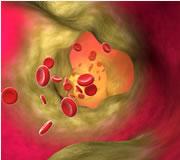
This computer rendition shows how fatty deposits can narrow blood vessels.

“Low dose helps combat formation of arterial blockages.

A compound derived from the cannabis plant protects blood vessels from dangerous clogging, a study of mice has shown.

The compound, called delta-9-tetrahydrocannabinol (THC), combats the blood-vessel disease atherosclerosis in mice.

The discovery could lead to new drugs to ward off heart disease and stroke.”

http://www.nature.com/news/2005/050404/full/news050404-7.html


New Study Finds Marijuana To Be Effective Against Depression, Migraine and Anxiety

“Research has suggested that cannabis may be a promising treatment option for a number of different physical and mental health conditions, from post-traumatic stress disorder to chronic pain. A study released this week suggests that depression , anxiety and migraine can be added to that list.

Neuroscientists from the University of Buffalo’s Research Institute on Addictions found that endocannabinoids — chemical compounds in the brain that activate the same receptors as THC, an active compound in marijuana — may be helpful in treating depression, anxiety and migraine that results from chronic stress.

In studies on rats, the researchers found that chronic stress reduced the production of endocannabinoids, which affect our cognition, emotion and behavior, and have been linked to reduced feelings of pain and anxiety, increases in appetite and overall feelings of well-being. The body naturally produces these compounds, which are similar to the chemicals in cannabis. Reduction of endocannabinoid production may be one reason that chronic stress is a major risk factor in the development of depression.

Then, the research team administered marijuana cannabinoids to the rats, finding it to be an effective way to restore endocannabinoid levels in their brains — possibly, thereby, alleviating some symptoms of depression.

“Using compounds derived from cannabis — marijuana — to restore normal endocannabinoid function could potentially help stabilize moods and ease depression,” lead researcher Dr. Samir Haj-Dahmane said in a university press release.

Recent research around marijuana’s effect on symptoms of post-traumatic stress disorder further bolsters the Buffalo neuroscientists’ findings, since both disorders involve the way the brain responds to stress. A study published last year in the journal Neuropsychopharmacology, for instance, found synthetic cannabinoids triggered changes in brain centers associated with traumatic memories in rats, preventing some of the behavioral and physiological symptoms of PTSD. Another study published last year found that patients who smoked cannabis experienced a 75 percent reduction in PTSD symptoms.

However, it’s important to note that the relationship between marijuana and depression  is complex. Some research has suggested that regular and heavy marijuana smokers are at a higher risk for depression, although a causal link between cannabis use and depression has not been established. More studies are needed in order to determine whether, and how, marijuana might be used in a clinical context for patients with depression.”  http://painphysicianjournal.co/2016/06/30/new-study-finds-marijuana-to-be-effective-against-depression-migraine-and-anxiety/

http://painphysicianjournal.co/2016/06/30/new-study-finds-marijuana-to-be-effective-against-depression-migraine-and-anxiety/

Refractory trigeminal neuralgia responsive to nabiximols in a patient with multiple sclerosis.

“Nabiximols is a cannabinoid compound approved for the treatment of multiple sclerosis (MS)-related spasticity.

However, additional symptoms, such as pain, urinary urgency and sleep disturbance, may benefit from treatment.

CASE REPORT:

The present report describes a patient with secondary progressive MS and severe lower limbs spasticity who was started on treatment with nabiximols. The patient also suffered from trigeminal neuralgia, which he was not treating due to inefficacy or side effects of all previously tried medications. After nabiximols initiation the patient experienced a marked benefit on trigeminal neuralgia, which completely resolved, while spasticity responded only partially to treatment.

CONCLUSION:

Nabiximols mechanism of action is based on the interaction with CB1 and CB2 receptors, which are expressed by central nervous system neurons and are known to modulate pain among other effects. The present case indicates that nabiximols and other cannabinoids need to be further tested for the treatment of trigeminal neuralgia.”

http://www.ncbi.nlm.nih.gov/pubmed/27456876

“Therapeutic potential of cannabinoids in trigeminal neuralgia. Considering the pronounced antinociceptive effects produced by cannabinoids, they may be a promising therapeutic approach for the clinical management of trigeminal neuralgia.”  http://www.ncbi.nlm.nih.gov/pubmed/15578967

Should we care about sativex-induced neurobehavioral effects? A 6-month follow-up study.

“Sativex® is an exclusive cannabinoid-based drug approved for the treatment of spasticity due to Multiple Sclerosis (MS).

The most common side effects include dizziness, nausea, and somnolence. However, it is still under debate whether the drug could cause negative cognitive effects.

The aim of our study was to investigate the effect of Sativex® on functional and psychological status in cannabis-naïve MS patients.

After the treatment, we did not observe any significant neurobehavioral impairment in all the patients, but one.

Our findings suggest that Sativex® treatment does not significantly affect the cognitive and neurobehavioral functions.”

http://www.ncbi.nlm.nih.gov/pubmed/27460745