“Venous Leg Ulcers are highly prevalent lower limb integumentary wounds that remain challenging to heal despite the use of evidence-based compression therapies. A multitude of adjuvant treatments have been studied but none have demonstrated enough efficacy to gain adoption into treatment guidelines.
Global attention on cannabis-based therapies is increasing and has been driven by quantum scientific advancements in the understanding of the endocannabinoid signalling system. Topical Cannabis-Based Medicines represent a novel treatment paradigm for venous leg ulcers in terms of promoting wound closure.
Fourteen complex patients with sixteen recalcitrant leg ulcers were treated with Topical Cannabis-Based Medicines in conjunction with compression bandaging, every second day, to both wound bed and peri-wound tissues. The cohort had a mean age of 75.8 years and was medically complex as reflected by a mean M3 multimorbidity index score of 2.94 and a mean Palliative Performance Scale score of 67.1%.
Complete wound closure, defined being fully epithelialized, was achieved among 11 patients (79%) and 13 wounds (81%) within a median of 34 days. All three remaining patients demonstrated progressive healing trends but were lost to follow-up. The treatments were well tolerated, and no significant adverse reactions were experienced.
The rapid wound closure of previously non-healing venous leg ulcers among elderly and highly complex patients suggests that Topical Cannabis-Based Medicines may become effective adjuvants in conjunction with compression therapy. This may also indicate that they may have an even broader role within integumentary and wound management. Therefore, this treatment paradigm warrants being subjected to controlled trials.”
 “Cannabinoids such as ▵-9-THC and CBD can downregulate the immune response by modulating the endocannabinoid system. This modulation is relevant for the treatment of prevalent autoimmune diseases (ADs), such as multiple sclerosis (MS), systemic lupus erythematosus (SLE), diabetes mellitus type 1 (DMT1), and rheumatoid arthritis (RA). These conditions require new therapeutic options with fewer side effects for the control of the autoimmune response. Objective: to conduct a literature review of preclinical scientific evidence that supports further clinical investigations for the use of cannabinoids (natural or synthetic) as potential immunomodulators of the immune response in ADs.
  “An observational research design was used to evaluate which types of commonly labeled Cannabis flower product characteristics are associated with changes in momentary feelings of distress-related symptoms.
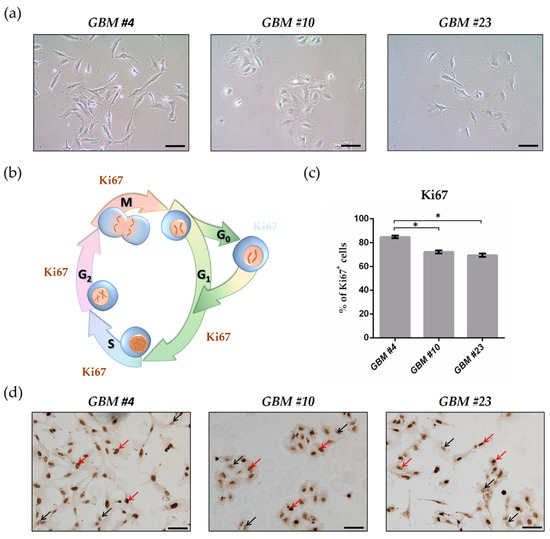
 “Glioblastoma multiforme (GBM) is the most lethal subtype of glioma.
  “A cannabinoid anticancer para-quinone, HU-331, which was synthesized by our group five decades ago, was shown to have very high efficacy against human cancer cell lines in-vitro and against in-vivo grafts of human tumors in nude mice. The main mechanism was topoisomerase IIα catalytic inhibition. Later, several groups synthesized related compounds. In the present presentation, we review the publications on compounds synthesized on the basis of HU-331, summarize their published activities and mechanisms of action and report the synthesis and action of novel quinones, thus expanding the structure-activity relationship in these series.”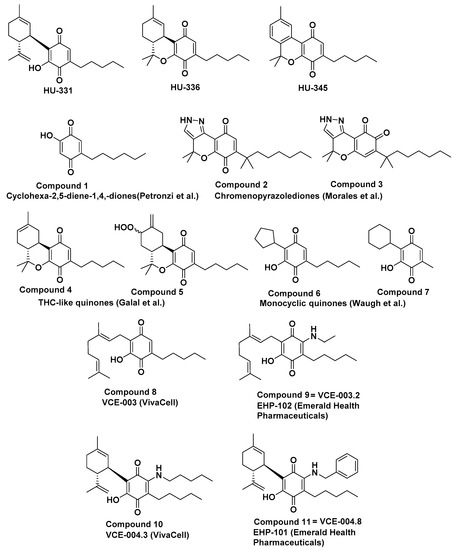

 “Cannabis sativa