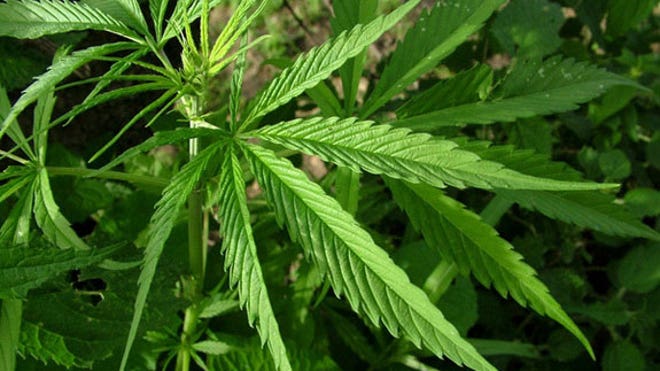
Restrictive drug laws censor science, researchers say – Reuters

“The outlawing of drugs such as cannabis, magic mushrooms and other psychoactive substances amounts to scientific censorship and is hampering research into potentially important medicinal uses, leading scientists argued on Wednesday.”

The British government's former chief drugs adviser, David Nutt, reacts as he speaks during a news conference announcing the formation of the Independent Scientific Committee on Drugs, in London January 15, 2010. REUTERS/Suzanne Plunkett


“Laws and international conventions dating back to the 1960s have set back research in key areas such as consciousness by decades, they argued in the journal Nature Reviews Neuroscience.

“The decision to outlaw these drugs was based on their perceived dangers, but in many cases the harms have been overstated,” said David Nutt, a professor of neuropsychopharmacology at Imperial College London.

In a statement accompanying the Nature Reviews paper, he said the laws amounted “to the worst case of scientific censorship since the Catholic Church banned the works of Copernicus and Galileo”.

“The laws have never been updated despite scientific advances and growing evidence that many of these drugs are relatively safe. And there appears to be no way for the international community to make such changes,” he said.

“This hindering of research and therapy is motivated by politics, not science.””

More: http://www.reuters.com/article/2013/06/12/us-drugs-science-idUKBRE95B03320130612

Outlawing of Psychoactive Drugs ‘Scientific Censorship’ Says Former Drug Advisor

“Criminalization of marijuana, psychedelic mushrooms and other psychoactive drugs in the United Kingdom amounts to an act of scientific censorship that inhibits further research from being done, according to a leading researcher on the effects of drugs on the human brain.”

marijuana  

“Outlawing of psychoactive drugs amounts to “the worst case of scientific censorship since the Catholic Church banned the works of Copernicus and Galileo,” said David Nutt, a professor of neuropsychopharmacology at Imperial College London, in a statement accompanying a paper published in the journal Nature Reviews Neuroscience.”

More: http://www.natureworldnews.com/articles/2407/20130612/outlawing-psychoactive-drugs-scientific-censorship-former-drug-advisor.htm

Outlawing drugs like marijuana censors science, researchers say – FOX

“The outlawing of drugs such as cannabis, magic mushrooms and other psychoactive substances amounts to scientific censorship and is hampering research into potentially important medicinal uses, leading scientists argued on Wednesday.”

New-Pot.jpg
 

“Laws and international conventions dating back to the 1960s have set back research in key areas such as consciousness by decades, they argued in the journal Nature Reviews Neuroscience.

“The decision to outlaw these drugs was based on their perceived dangers, but in many cases the harms have been overstated,” said David Nutt, a professor of neuropsychopharmacology at Imperial College London.

In a statement accompanying the Nature Reviews paper, he said the laws amounted “to the worst case of scientific censorship since the Catholic Church banned the works of Copernicus and Galileo”.

“The laws have never been updated despite scientific advances and growing evidence that many of these drugs are relatively safe. And there appears to be no way for the international community to make such changes,” he said.

“This hindering of research and therapy is motivated by politics, not science.”

Nutt and Leslie King, both former British government drugs advisers, and co-author David Nichols of the University of North Carolina, called for the use of psychoactive drugs in research to be exempted from severe restrictions.

“If we adopted a more rational approach to drug regulation, it would empower researchers to make advances in the study of consciousness and brain mechanisms of psychosis, and could lead to major treatment innovations in areas such as depression and PTSD,” Nutt said.

Nutt was sacked as a government adviser in 2009 after publicly criticizing the government for ignoring scientific advice on cannabis and ecstasy. He has conducted a small human trial using psilocybin, the psychedelic ingredient in magic mushrooms.

His study, using volunteers, suggested the drug had the potential to alleviate severe forms of depression in people who did not respond to other treatments.

But in April, Nutt said his plans to conduct the first full clinical trial to explore psilocybin as a treatment had stalled because of stringent rules on the use of illegal drugs in research.

The scientists said their call for reform had been endorsed by the British Neuroscience Association and the British Association for Psychopharmacology.”

http://www.foxnews.com/health/2013/06/12/outlawing-drugs-like-marijuana-censors-science-researchers-say/

‘The worst case of scientific censorship since the Catholic Church banned the works of Galileo’: Scientists call for drugs to be legalised to allow proper study of their properties

 “The outlawing of drugs such as cannabis, MDMA and LSD amounts to the “the worst case of scientific censorship since the Catholic Church banned the works of Copernicus and Galileo”, the former Government drugs advisor Professor David Nutt has claimed.”

Professor Nutt, who was dismissed from the Home Office’s advisory council on drugs in 2009 after clashing with ministers, said that UN conventions on drugs in the 1960s and 1970s have delayed the development of “innovative treatments” for PTSD and depression by 30 years and also set back research into areas of neuroscience such as consciousness.

In a paper published today with two other scientists in the journal Nature Reviews Neuroscience, he said that drugs policy is being driven by “politics, not science”.

Professor Nutt left the Home Officer in 2009 after suggesting that taking MDMA ecstasy was no more dangerous than horse-riding and that alcohol and tobacco were more dangerous than many illegal drugs.

The possession of psychoactive drugs such cannabis, MDMA (ecstasy) and LSD for scientific purposes is stringently regulated in the UK and most other countries, in accordance with UN conventions that were agreed in response to the emergence of drug culture in the 1960s and 1970s.

Applying for a Government licence can be costly and time-consuming and many scientists are put off by a culture of “repression” surrounding drug science, Professor Nutt said.

“The laws scare off funders and most scientists are scared because they think if they break the law, they might get arrested,” he told The Independent. “I’m sure at some point someone’s going to arrest me. There is a sense of repression to the point that most people won’t do it.”

The paper, which is published to coincide with a conference on scientific research with psychedelics at Imperial College London, points to evidence that cannabis, MDMA and psychedelics such as LSD and psilocybin (the compound found in magic mushrooms) have unexplored medicinal benefits and argues that laws should be updated.

Small clinical studies of MDMA, which was originally used in the USA in the 1970s to improve communication in psychotherapy sessions, suggested that it could play a highly beneficial role in the treatment of PTSD patients. The paper’s authors said the drug could also help with “end of life anxiety” and couples therapy”.

Medical use of marijuana is already legal in 17 US states, and the drug has been shown to have benefits such as anxiety reduction and pain relief. However, Professor Nutt said that UK restrictions had blocked development of therapeutic applications for any of cannabis’ 16 active ingredients.

LSD, meanwhile, was widely researched in the 1950s and 1960s, with more than 1,000 papers investigating outcomes for more than 40,000 patients, with evidence suggesting that the drug might be an effective treatment for alcoholism, before bans on the drug around the world ended further research.”

-Charlie Cooper

http://www.independent.co.uk/news/science/the-worst-case-of-scientific-censorship-since-the-catholic-church-banned-the-works-of-galileo-scientists-call-for-drugs-to-be-legalised-to-allow-proper-study-of-their-properties-8654514.html

Medical breakthroughs missed because of pointless drug bans

Vx3mkwtp-1370889557 

“In 1632 the Catholic Church convened a case against Galileo on the grounds that his work using the telescope to explore the nature of the heavens contradicted the church’s teaching – the culmination of a long fight that had lasted 16 years.

Galileo was put under house arrest and his research stopped. Some of his inquisitors refused even to look down a telescope, believing it to be the work of the devil. With his life under threat, Galileo retracted his claims that the earth moved around the sun and was not the centre of the universe. A ban by the papal Congregation of the Index on all books advocating the Copernican system of planetary motion – which we use today – was not revoked until 1758.

Three centuries later we have an equivalent case of scientific censorship. In the 1960s and the 1970s the UN effectively banned a whole range of drugs from cannabis, opioids and cocaine through to psychedelics – LSD and “magic mushrooms”. They did this in a futile attempt to reduce the use and harms of these drugs, but both consumption and harms have increased ten-fold since then, and many of the negative effects of these laws include the rise of AIDS and the collapse of law and order in Mexico.

However, another major impact of these laws – restriction of research – has hardly been discussed. Yet this is arguably as significant a problem and must change.

A research black hole

Two of the most limiting areas have been in the fields of research into cannabis and psychedelics, both of which were put into the UN’s most restrictive lists, deemed to have no value to medicine.

Currently in the UK to work with these compounds you need a special licence, which along with additional police checks, costs more than £5000 and takes a year to get. In the UK only three hospitals have these, making clinical research almost impossible. Contrast this with the situation for heroin, a much more abused and harmful drug, which can be held by any hospital with a license.

The field of research that has been most censored is that of psychedelics (LSD and psilocybin) and empathogens (MDMA and Ecstasy).

Before the LSD ban there were more than 1000 publications on its therapeutic potential – its hallucinogenic properties undiscovered until five years after its discovery in 1938. Since then there have been none – despite its proven utility in disorders including alcoholism, end of life suffering and cancer pain.

The ban was largely driven by political concerns. Despite being justified by claims of harm such as people dying while trying to fly, its use was also discouraging young people in the US fighting in the Vietnam war.

The psychedelic state is also one of the most intriguing kinds of brain function that can illuminate the fundamental mechanisms of the brain and give us novel insights into consciousness.

Drugs such as MDMA can help conditions such as post traumatic stress disorder.

The banning of cannabis was purely political. It was already being used as a medicine in many countries before it was banned. With the notable exception of The Netherlands, most countries agreed to this dishonest change in status. In the UK, it has criminalised many patients with incurable conditions such as multiple sclerosis who could benefit from the drug.

But it has also led to a severe impairment of medical research into the cannabis plant. There are more than 50 active chemicals in the cannabis plant and many of these were discovered in the UK. However, turning any of these into medicines is very slow due to unnecessarily tough regulations. This has set back UK leadership in the field and wasted huge economic opportunities.

Basic neuroscience research has also been held back. Cannabis works on cannabinoid receptors in the brain – and we have a lot of these – surprisingly more than our dopamine (pleasure and reward) and serotonin receptors (wellbeing and happiness) combined. Cannabinoid receptors do many things and are involved in learning and memory, eating and sleep anxiety.

Their role is therefore of great interest but studying them requires working with compounds such as THC (the element of cannabis that makes people stoned). But again, the regulations make getting these expensive and difficult.

Time to challenge outdated controls

What can be done? It’s very easy once we accept that no meaningful benefits come from controls that have been left unchallenged for 50 years. In the UK we can exempt hospitals from the need to have the licences – they could hold cannabis safely alongside heroin. We can also exempt very small amounts of the drugs (below a clinically meaningful dose for example) from any control at all, so that scientists doing basic research can work without hindrance.

The transfer of small amounts of test compounds between different countries should also be exempt from import and export rules that now apply to every compound on a case-by-case basis – which also significantly impairs detection of new “legal highs” because samples can’t easily be shared across Europe.

Ideally, a fundamental change in the world perspective should also happen. The UN conventions are outmoded and should be fully revised. This can happen at the 2016 UN General Assembly Special Session (UNGASS) meeting into drug control – the first opportunity to do so in some time.

In the meantime, let’s get scientists as well as patient and civil liberty groups working together to achieve this. We need more petitions. We need more leadership. Some countries are already showing this. New Zealand is beginning to change where it stands on legal highs with the Psychoactive Substances Bill. Some South American countries are also now taking a more rational approach. What we need to do now is put science at the forefront of research.”

-David Nutt

http://theconversation.com/medical-breakthroughs-missed-because-of-pointless-drug-bans-15072

Forbidden Medicine – WebMD

“Laws and medicine clash over medicinal marijuana use. If it weren’t for his few daily tokes from marijuana cigarettes, Kiyoshi Kuromiya believes he would no longer be alive.The Philadelphia AIDS patient and activist had lost 40 pounds over a four-month period and spent most days nauseated before he began smoking pot in 1995 to boost an appetite suppressed by his disease.”Marijuana saved my life,” says Kuromiya, 57, who was diagnosed with AIDS in 1988. “It’s a great irony to me that I can buy cigarettes, which will kill me, anywhere. But marijuana, which has kept me breathing, is illegal.”Kuromiya and others with debilitating ailments have long argued that marijuana should be legally available when standard medical treatment can’t relieve a patient’s suffering and pain.”

More: http://www.webmd.com/a-to-z-guides/features/forbidden-medicine

Effects of Schedule I drug laws on neuroscience research and treatment innovation.

“Many psychoactive drugs are used recreationally, particularly by young people. This use and its perceived dangers have led to many different classes of drugs being banned under national laws and international conventions.

 Indeed, the possession of cannabis, 3,4-methylenedioxy-N-methylamphetamine (MDMA; also known as ecstasy) and psychedelics is stringently regulated.

An important and unfortunate outcome of the controls placed on these and other psychoactive drugs is that they make research into their mechanisms of action and potential therapeutic uses – for example, in depression and post-traumatic stress disorder – difficult and in many cases almost impossible.”

http://www.ncbi.nlm.nih.gov/pubmed/23756634

Medical Marijuana Looked Like This In The 19th Century

“Well before the start of Marijuana’s official prohibition (1937!), the bountiful health benefits of Cannabis were apparent to those with any sense. Especially Doctors and Indians and Indian Doctors. Doctors and Indians in the 19th century loved to use weed–and all drugs–as part of their magical cures.”

Weed - Medical Marijuana Looked Like This In The 19th Century

“Based on the images shared by io9, the buds powers has deep roots, it’s one of an assortment of hazardous drugs used as medicine in the pre-Dabistoric days. These ones of “weed” in medical, liquid form stood out as just more, ancient proof that Marijuana is simply Medicine.”

More: http://www.marijuana.com/news/2013/05/medical-marijuana-looked-like-this-in-the-19th-century/

GW Pharmaceuticals: Giving New Meaning To ‘High Potential’

“GW Pharmaceuticals (GWPH) is an UK-based biopharmaceutical company focused on the discovery and development of cannabinoid-based products for a wide range of indications. GW has established a technology platform based on genetically modified cannabis plants and has become a leader in plant-derived cannabinoid therapeutics.

 GW’s lead program is Sativex, a cannabis extract based oromucosal spray whose main actives are the cannabinoids delta-9- tetrahydrocannabinol (THC), and cannabidiol (CBD). It is approved for the treatment of multiple sclerosis (MS) spasticity in 21 countries outside of the U.S and already marketed in seven countries (eight following Italian launch in Q213).

…While MS spasticity has provided proof-of-concept in the worldwide approvability of Sativex, a more meaningful commercial opportunity is in the treatment of opioid-refractory cancer pain. Sativex has been tested in two Phase II trials in cancer pain. The trials have demonstrated that Sativex is safe and effective when used in addition to opioids in patients whose cancer pain is not sufficiently managed by opioids alone. Based on these results, GW has initiated three Phase III trials. The first two are expected to complete during 2014 and support an FDA filing.”

More: http://seekingalpha.com/article/1490392-gw-pharmaceuticals-giving-new-meaning-to-high-potential

Could Marijuana Treat Schizophrenia?

“Researchers find cannabidiol is as effective as standard antipsychotic drugs—with fewer side effects.”

A compound found in marijuana can help treat schizophrenia as effectively as standard antipsychotic drugs—and with fewer side effects—according to the results of a new clinical trial, reports The Fix columnist Maia Szalavitz in Time. Researchers at University of Cologne in Germany studied 39 people with schizophrenia, all hospitalized for a psychotic episode. Twenty of the patients were given cannabidiol (CBD), a substance found in marijuana that is associated with its mellowing, anti-anxiety effects (not THC—the main ingredient in marijuana, which has been found to worsen schizophrenia). The other participants were given amisulpride, an antipsychotic medication. At the end of the four-week trial, both groups showed significant clinical improvement in their schizophrenic symptoms. “The results were amazing,” says Daniele Piomelli, professor of pharmacology at the University of California-Irvine and a co-author of the study. “Not only was [CBD] as effective as standard antipsychotics, but it was also essentially free of the typical side effects seen with antipsychotic drugs.” Antipsychotic medications can cause serious, sometimes permanent movement disorders and other side effects such as weight gain and movement problems. In the study, these side effects were observed in those taking amisulpride, but not in those taking CBD. “These exciting findings should stimulate a great deal of research,” says Dr. John Krystal, chair of psychiatry at Yale University School of Medicine, who was not associated with the study. He noted that CBD, in addition to having fewer side effects, also seemed to work better on schizophrenia’s negative symptoms, which are notoriously difficult to treat, including: social withdrawal, blunting of pleasure, and lack of motivation.”

http://www.thefix.com/content/pot-compound-treats-schizophrenia-few-side-effects91717