
“The SARS-Cov-2 virus caused a high morbidity and mortality rate disease, that is the COVID-19 pandemic. Despite the unprecedented research interest in this field, the lack of specific treatments leads to severe complications in a high number of cases.
Current treatment includes antivirals, corticosteroids, immunoglobulins, antimalarials, interleukin-6 inhibitors, anti-GM-CSF, convalescent plasma, immunotherapy, antibiotics, circulation support, oxygen therapy, and circulation support. Due to the limited results, until specific treatments are available, other therapeutic approaches need to be considered.
The endocannabinoid system is found in multiple systems within the human body, including the immune system. Its activation can lead to beneficial results such as decreased viral entry, decreased viral replication, and a decrease in pro-inflammatory cytokines such as IL-2, IL-4, IL-6, IL-12, TNF-α, or IFN-γ. Moreover, endocannabinoid system activation can lead to an increase in anti-inflammatory cytokines, mainly represented by IL-10.
Overall, the cannabinoid system can potentially reduce pulmonary inflammation, increase the immunomodulatory effect, decrease PMN infiltration, reduce fibrosis, and decrease viral replication, as well as decrease the ‘cytokine storm’. Although the cannabinoid system has many mechanisms to provide certain benefits in the treatment of SARS-CoV-2 infected patients, research in this field is needed for a better understanding of the cannabinoid impact in this situation.”
“Concerning the SARS-CoV-2 infection, the cannabinoid effects on the immune system have the potential to limit the abnormal function of the immune system and therefore decrease the overall mortality.”
https://www.tandfonline.com/doi/full/10.1080/03602532.2021.1895204
 “Objective:
 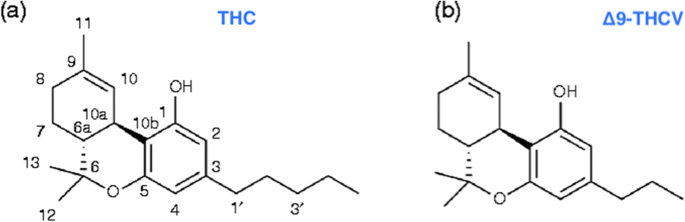 “Δ9-Tetrahydrocannabivarin (THCV) is a cannabis-derived compound with unique properties that set it apart from the more common cannabinoids, such as Δ9-tetrahydrocannabinol (THC). The main advantage of THCV over THC is the lack of psychoactive effects.
  “Introduction:
 “Background and purpose:
  “α-Pinene represents a member of the monoterpene class and is highly distributed in higher plants like conifers, Juniper ssp. and Cannabis ssp.
 “Introduction:
  “Neoechinulins are diketopiperazine type indole alkaloids that demonstrate radical scavenging, anti-inflammatory, antiviral, anti-neurodegenerative, neurotrophic factor-like, anticancer, pro-apoptotic, and anti-apoptotic properties.
  “Oral ulcer is a common oral inflammatory lesion accompanied by severe pain but with few effective treatments. Cannabidiol (CBD) is recently emerging for its therapeutic potential in a range of diseases, including inflammatory conditions and cancers.