Unveiling the mechanism of action behind the anti-cancer properties of cannabinoids in ER + breast cancer cells: impact on aromatase and steroid receptors

The Journal of Steroid Biochemistry and Molecular Biology“Breast cancer is the leading cause of cancer-related death in women worldwide. In the last years, cannabinoids have gained attention in the clinical setting and clinical trials with cannabinoid-based preparations are underway. However, contradictory anti-tumour properties have also been reported. Thus, the elucidation of the molecular mechanisms behind their anti-tumour efficacy is crucial to better understand its therapeutic potential.

Considering this, our work aims to clarify the molecular mechanisms underlying the anti-cancer properties of the endocannabinoid anandamide (AEA) and of the phytocannabinoids, cannabidiol (CBD) and Δ9-tetrahydrocannabinol (THC), in estrogen receptor-positive (ER+) breast cancer cells that overexpress aromatase (MCF-7aro). Their in vitro effects on cell proliferation, cell death and activity/expression of aromatase, ERα, ERβ and AR were investigated.

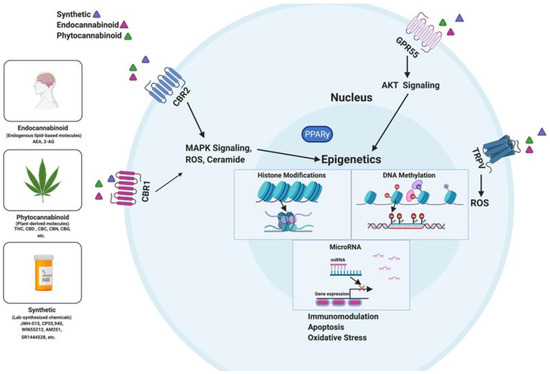
Our results demonstrated that cannabinoids disrupted MCF-7aro cell cycle progression. Unlike AEA and THC that induced apoptosis, CBD triggered autophagy to promote apoptotic cell death. Interestingly, all cannabinoids reduced aromatase and ERα expression levels in cells. On the other hand, AEA and CBD not only exhibited high anti-aromatase activity but also induced up-regulation of ERβ. Therefore, all cannabinoids, albeit by different actions, target aromatase and ERs, impairing, in that way, the growth of ER+ breast cancer cells, which is dependent on estrogen signalling.

As aromatase and ERs are key targets for ER+ breast cancer treatment, cannabinoids can be considered as potential and attractive therapeutic compounds for this type of cancer, being CBD the most promising one. Thus, from an in vitro perspective, this work may contribute to the growing mass of evidence of cannabinoids and cannabinoids-based medicines as potential anti-cancer drugs.”

https://pubmed.ncbi.nlm.nih.gov/33722705/

“AEA and THC induce apoptosis in ER+ breast cancer cells, while CBD trigger autophagy to promote apoptosis. AEATHC and CBD impair growth of ER+ breast cancer cells, by disrupting cycle progression. AEATHC and CBD affect aromatase and ERα expression levels in ER+ breast cancer cells. AEA and CBD strongly inhibited aromatase activity and up-regulated ERβ levels. Cannabinoids are considered potential therapeutic compounds for ER+ breast cancer, being CBD the most promising one.”

https://www.sciencedirect.com/science/article/abs/pii/S0960076021000698?via%3Dihub

Emerging role of cannabinoids and synthetic cannabinoid receptor 1/cannabinoid receptor 2 receptor agonists in cancer treatment and chemotherapy-associated cancer management

 Journal of Cancer Research and Therapeutics“Cannabis was extensively utilized for its medicinal properties till the 19th century. A steep decline in its medicinal usage was observed later due to its emergence as an illegal recreational drug. Advances in technology and scientific findings led to the discovery of delta-9-tetrahydrocannabinol (THC), the primary psychoactive compound of cannabis, that further led to the discovery of endogenous cannabinoids system consisting of G-protein-coupled receptors – cannabinoid receptor 1 and cannabinoid receptor 2 along with their ligands, mainly anandamide and 2-arachidonoylglycerol. Endocannabinoid (EC) is shown to be a modulator not only for physiological functions but also for the immune system, endocrine network, and central nervous system. Medicinal research and meta-data analysis over the last few decades have shown a significant potential for both THC and cannabidiol (CBD) to exert palliative effects. People suffering from many forms of advanced stages of cancers undergo chemotherapy-induced nausea and vomiting followed by severe and chronic neuropathic pain and weight loss. THC and CBD exhibit effective analgesic, anxiolytic, and appetite-stimulating effect on patients suffering from cancer. Drugs currently available in the market to treat such chemotherapy-induced cancer-related ailments are Sativex (GW Pharmaceutical), Dronabinol (Unimed Pharmaceuticals), and Nabilone (Valeant Pharmaceuticals). Apart from exerting palliative effects, THC also shows promising role in the treatment of cancer growth, neurodegenerative diseases (multiple sclerosis and Alzheimer’s disease), and alcohol addiction and hence should be exploited for potential benefits. The current review discusses the nature and role of CB receptors, specific applications of cannabinoids, and major studies that have assessed the role of cannabinoids in cancer management.”

https://pubmed.ncbi.nlm.nih.gov/33723124/

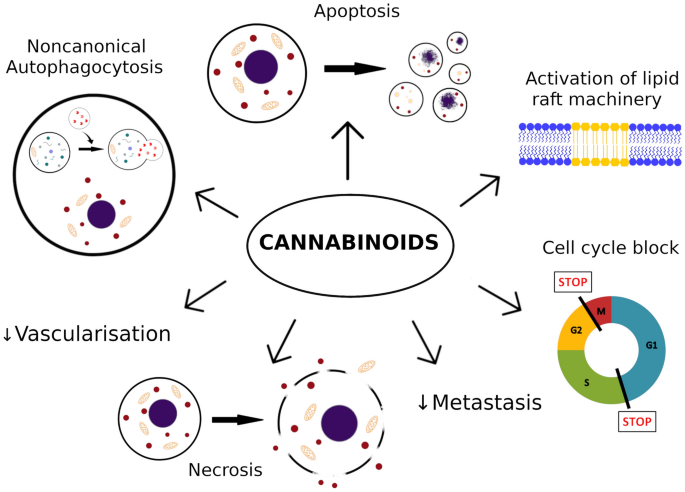
“Specific targeting of cannabinoid receptors can be used to manage severe side effects during chemotherapy, palliative care, and overall cancer management. Furthermore, research evidences on cannabinoids have suggested tumor inhibiting and suppressing properties which warrant reconsidering legality of the substance. Studies on CB1 and CB2 receptors, in case of cancers, have demonstrated the psychoactive constituents of cannabinoids to be potent against tumor growth. Interestingly, studies have also shown that activation of CB1 and CB2 cannabinoid receptors by their respective synthetic agonists tends to limit human cancer cell growth, suggesting the role of the endocannabinoid system as a novel target for treatment of cancers.”

https://www.cancerjournal.net/article.asp?issn=0973-1482;year=2021;volume=17;issue=1;spage=1;epage=9;aulast=Shah

Cannabidiol Inhibits SARS-CoV-2 Replication and Promotes the Host Innate Immune Response

bioRxiv“The rapid spread of COVID-19 underscores the need for new treatments.

Here we report that cannabidiol (CBD), a compound produced by the cannabis plant, inhibits SARS-CoV-2 infection. CBD and its metabolite, 7-OH-CBD, but not congeneric cannabinoids, potently block SARS-CoV-2 replication in lung epithelial cells.

CBD acts after cellular infection, inhibiting viral gene expression and reversing many effects of SARS-CoV-2 on host gene transcription. CBD induces interferon expression and up-regulates its antiviral signaling pathway. A cohort of human patients previously taking CBD had significantly lower SARS-CoV-2 infection incidence of up to an order of magnitude relative to matched pairs or the general population.

This study highlights CBD, and its active metabolite, 7-OH-CBD, as potential preventative agents and therapeutic treatments for SARS-CoV-2 at early stages of infection.”

https://www.biorxiv.org/content/10.1101/2021.03.10.432967v1

“Cannabis compound inhibits SARS-CoV-2 replication in human lung cells”   https://www.news-medical.net/news/20210314/Cannabis-compound-inhibits-SARS-CoV-2-replication-in-human-lung-cells.aspx

Fighting the storm: could novel anti-TNFα and anti-IL-6 C. sativa cultivars tame cytokine storm in COVID-19?

 Aging“The main aspects of severe COVID-19 disease pathogenesis include hyper-induction of proinflammatory cytokines, also known as ‘cytokine storm’, that precedes acute respiratory distress syndrome (ARDS) and often leads to death. COVID-19 patients often suffer from lung fibrosis, a serious and untreatable condition. There remains no effective treatment for these complications.

Out of all cytokines, TNFα and IL-6 play crucial roles in cytokine storm pathogenesis and are likely responsible for the escalation in disease severity. These cytokines also partake in the molecular pathogenesis of fibrosis. Therefore, new approaches are urgently needed, that can efficiently and swiftly downregulate TNFα, IL-6, and the inflammatory cytokine cascade, in order to curb inflammation and prevent fibrosis, and lead to disease remission.

Cannabis sativa has been proposed to modulate gene expression and inflammation and is under investigation for several potential therapeutic applications against autoinflammatory diseases and cancer. Here, we hypothesized that the extracts of novel C. sativa cultivars may be used to downregulate the expression of pro-inflammatory cytokines and pathways involved in inflammation and fibrosis.

Novel anti-TNFα and anti-IL-6 cannabis extracts can be useful additions to the current anti-inflammatory regimens to treat COVID-19, as well as various rheumatological diseases and conditions, and ‘inflammaging’ – the inflammatory underpinning of aging and frailty.”

https://pubmed.ncbi.nlm.nih.gov/33465050/

https://www.aging-us.com/article/202500/text

Cannabinoids as Key Regulators of Inflammasome Signaling: A Current Perspective

Segura Lab - New publication in Frontiers in Immunology“Inflammasomes are cytoplasmic inflammatory signaling protein complexes that detect microbial materials, sterile inflammatory insults, and certain host-derived elements. Inflammasomes, once activated, promote caspase-1-mediated maturation and secretion of pro-inflammatory cytokines, interleukin (IL)-1β and IL-18, leading to pyroptosis. Current advances in inflammasome research support their involvement in the development of chronic inflammatory disorders in contrast to their role in regulating innate immunity.

Cannabis (marijuana) is a natural product obtained from the Cannabis sativa plant, and pharmacologically active ingredients of the plant are referred to as cannabinoids. Cannabinoids and cannabis extracts have recently emerged as promising novel drugs for chronic medical conditions. Growing evidence indicates the potent anti-inflammatory potential of cannabinoids, especially Δ9-tetrahydrocannabinol (Δ9-THC), cannabidiol (CBD), and synthetic cannabinoids; however, the mechanisms remain unclear. Several attempts have been made to decipher the role of cannabinoids in modulating inflammasome signaling in the etiology of chronic inflammatory diseases.

In this review, we discuss recently published evidence on the effect of cannabinoids on inflammasome signaling. We also discuss the contribution of various cannabinoids in human diseases concerning inflammasome regulation. Lastly, in the milieu of coronavirus disease-2019 (COVID-19) pandemic, we confer available evidence linking inflammasome activation to the pathophysiology of COVID-19 suggesting overall, the importance of cannabinoids as possible drugs to target inflammasome activation in or to support the treatment of a variety of human disorders including COVID-19.”

https://pubmed.ncbi.nlm.nih.gov/33584697/

“Cannabis has been shown to possess anti-inflammatory effects owing to its constituents, cannabinoids and terpenoids. Overall, cannabinoids hold a great promise as additional therapeutics to support the current treatment of chronic inflammatory diseases, along with COVID-19”

https://www.frontiersin.org/articles/10.3389/fimmu.2020.613613/full

A cannabidiol-loaded Mg-gallate metal-organic framework-based potential therapeutic for glioblastomas

 “Cannabidiol (CBD) has been shown to slow cancer cell growth and is toxic to human glioblastoma cell lines. Thus, CBD could be an effective therapeutic for glioblastoma.

In the present study, we explored the anticancer effect of cannabidiol loaded magnesium-gallate (CBD/Mg-GA) metal-organic framework (MOF) using the rat glioma brain cancer (C6) cell line.

Bioactive and microporous magnesium gallate MOF was employed for simultaneous delivery of two potential anticancer agents (gallic acid and CBD) to the cancer cells. Gallic acid (GA), a polyphenolic compound, is part of the MOF framework, while CBD is loaded within the framework. Slow degradation of CBD/Mg-GA MOF in physiological fluids leads to sustained release of GA and CBD.

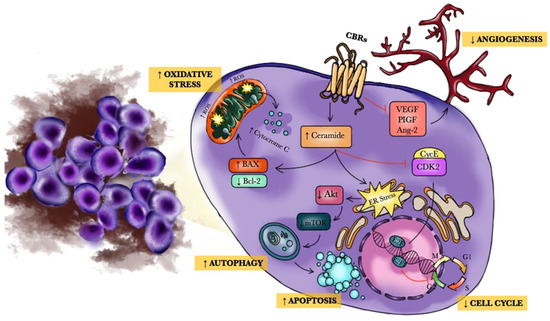
CBD’s anti-cancer actions target mitochondria, inducing their dysfunction and generation of harmful reactive oxygen species (ROS). Anticancer effects of CBD/Mg-GA include a significant increase in ROS production and a reduction in anti-inflammatory responses as reflected by a significant decrease in TNF-α expression levels. Molecular mechanisms that underlie these effects include the modulation of NF-κB expression, triggering the apoptotic cascades of glioma cells. CBD/Mg-GA MOF has potential anti-cancer, anti-inflammatory and anti-oxidant properties.

Thus, the present study demonstrates that CBD/Mg-GA MOF may be a promising therapeutic for glioblastoma.”

https://pubmed.ncbi.nlm.nih.gov/33657198/

https://pubs.rsc.org/en/content/articlelanding/2021/TB/D0TB02780D#!divAbstract

Graphical abstract: A cannabidiol-loaded Mg-gallate metal–organic framework-based potential therapeutic for glioblastomas

CBD activation of TRPV1 induces oxidative signalling and subsequent ER stress in breast cancer cell lines

“Endoplasmic reticulum (ER) stress is an imbalance between the ER’s protein-folding load and capacity. It can be induced by various physiological conditions, activating the unfolded protein response to re-establish homeostasis, promoting cell survival. Under severe or chronic stress, apoptosis is induced. Normal cells generally do not experience continuous ER stress induction. The stressful conditions experienced in the tumour microenvironment facilitates chronic ER stress and UPR activation, which plays a pivotal role in tumour survival.

Exacerbation of pre-existing ER stress can trigger cancer cell death, with a minimal effect on normal cells.

Current literature suggests that cannabinoid treatment may induce cancer cell death via ER stress; however, little is known about the mechanisms of induction.

This study proposed that cannabidiol (CBD) mechanism that occurred through the influx of Ca2+ via the TRPV1 receptor, and increasing ROS production affects protein folding and induces ER stress. ER stress was induced, and detection and quantification were completed using Thioflavin T staining and GRP78 by western blot analysis. The effect of cannabinoid treatment on ROS production and Ca2+ influx was measured. CBD was the most potent ER stress inducer, significantly increasing Ca2+ and ROS accumulation. Concomitant treatment with CBD and an antioxidant significantly increased cell viability and decreased ER stress induction in the MCF7 cell line. Concomitant treatment with a TRPV1 antagonist increased viability in this cell line.

In conclusion, the data suggested that CBD induced ER stress via Ca2+ influx through the TRPV1 receptor, thereby elevating intracellular ROS levels and disrupting protein folding.”

https://pubmed.ncbi.nlm.nih.gov/33604949/

https://iubmb.onlinelibrary.wiley.com/doi/10.1002/bab.2119

Cannabidiol inhibits human glioma by induction of lethal mitophagy through activating TRPV4

Publication Cover“Glioma is the most common primary malignant brain tumor with poor survival and limited therapeutic options. The non-psychoactive phytocannabinoid cannabidiol (CBD) has been shown to be effective against glioma; however, the molecular target and mechanism of action of CBD in glioma are poorly understood.

Here we investigated the molecular mechanisms underlying the antitumor effect of CBD in preclinical models of human glioma.

Our results showed that CBD induced autophagic rather than apoptotic cell death in glioma cells. We also showed that CBD induced mitochondrial dysfunction and lethal mitophagy arrest, leading to autophagic cell death. Mechanistically, calcium flux induced by CBD through TRPV4 (transient receptor potential cation channel subfamily V member 4) activation played a key role in mitophagy initiation. We further confirmed TRPV4 levels correlated with both tumor grade and poor survival in glioma patients. Transcriptome analysis and other results demonstrated that ER stress and the ATF4-DDIT3-TRIB3-AKT-MTOR axis downstream of TRPV4 were involved in CBD-induced mitophagy in glioma cells. Lastly, CBD and temozolomide combination therapy in patient-derived neurosphere cultures and mouse orthotopic models showed significant synergistic effect in both controlling tumor size and improving survival.

Altogether, these findings showed for the first time that the antitumor effect of CBD in glioma is caused by lethal mitophagy and identified TRPV4 as a molecular target and potential biomarker of CBD in glioma. Given the low toxicity and high tolerability of CBD, we therefore propose CBD should be tested clinically for glioma, both alone and in combination with temozolomide.”

https://pubmed.ncbi.nlm.nih.gov/33629929/

https://www.tandfonline.com/doi/abs/10.1080/15548627.2021.1885203?journalCode=kaup20

A phase 1b randomised, placebo-controlled trial of nabiximols cannabinoid oromucosal spray with temozolomide in patients with recurrent glioblastoma

British Journal of Cancer“Preclinical data suggest some cannabinoids may exert antitumour effects against glioblastoma (GBM). Safety and preliminary efficacy of nabiximols oromucosal cannabinoid spray plus dose-intense temozolomide (DIT) was evaluated in patients with first recurrence of GBM.

Results: The most common treatment-emergent adverse events (TEAEs; both parts) were vomiting, dizziness, fatigue, nausea and headache. Most patients experienced TEAEs that were grade 2 or 3 (CTCAE). In Part 2, 33% of both nabiximols- and placebo-treated patients were progression-free at 6 months. Survival at 1 year was 83% for nabiximols- and 44% for placebo-treated patients (p = 0.042), although two patients died within the first 40 days of enrolment in the placebo arm. There were no apparent effects of nabiximols on TMZ PK.

Conclusions: With personalised dosing, nabiximols had acceptable safety and tolerability with no drug-drug interaction identified. The observed survival differences support further exploration in an adequately powered randomised controlled trial.”

https://pubmed.ncbi.nlm.nih.gov/33623076/

https://www.nature.com/articles/s41416-021-01259-3

Synthetic Cannabinoids Induce Autophagy and Mitochondrial Apoptotic Pathways in Human Glioblastoma Cells Independently of Deficiency in TP53 or PTEN Tumor Suppressors

cancers-logo“Glioblastomas (GBMs) are aggressive brain tumors with frequent genetic alterations in TP53 and PTEN tumor suppressor genes rendering resistance to standard chemotherapeutics. Cannabinoid type 1 and 2 (CB1/CB2) receptor expression in GBMs and antitumor activity of cannabinoids in glioma cells and animal models, raised promises for a targeted treatment of these tumors. The susceptibility of human glioma cells to CB2-agonists and their mechanism of action are not fully elucidated. We determined CB1 and CB2 expression in 14 low-grade and 21 high-grade tumor biopsies, GBM-derived primary cultures and established cell lines. The non-selective CB receptor agonist WIN55,212-2 (but not its inactive enantiomer) or the CB2-selective agonist JWH133 induced apoptosis in patient-derived glioma cultures and five established glioma cell lines despite p53 and/or PTEN deficiency. Growth inhibitory efficacy of cannabinoids correlated with CB1/CB2 expression (EC50 WIN55,212-2: 7.36-15.70 µM, JWH133: 12.15-143.20 µM). Treatment with WIN55,212-2 or JWH133 led to activation of the apoptotic mitochondrial pathway and DNA fragmentation. Synthetic cannabinoid action was associated with the induction of autophagy and knockdown of autophagy genes augmented cannabinoid-induced apoptotic cell death. The high susceptibility of human glioblastoma cells to synthetic cannabinoids, despite genetic defects contributing to apoptosis resistance, makes cannabinoids promising anti-glioma therapeutics.”

https://pubmed.ncbi.nlm.nih.gov/33499365/

“Glioblastomas (GBMs) are aggressive brain tumors with frequent genetic defects in TP53 and PTEN tumor suppressor genes, which render tumors refractory to standard chemotherapeutics.

Natural and synthetic cannabinoids showed antitumor activity in glioma cells and animal glioma models.

Due to differences in the expression of cannabinoid type 2 receptors (CB2), which are abundant in GBMs but absent from a healthy brain, we tested synthetic cannabinoids for their ability to kill numerous glioma cells. We performed multiple biochemical analyses to determine which cell death pathways are activated in human glioma cells. We demonstrate high susceptibility of human glioblastoma cells to synthetic cannabinoids, despite genetic defects contributing to apoptosis resistance, which makes cannabinoids promising anti-glioma therapeutics.”

https://www.mdpi.com/2072-6694/13/3/419