
 ‘T-cell acute lymphoblastic leukemia (T-ALL) is a highly heterogeneous malignant hematological disorder arising from T-cell progenitors.
This study was aimed to evaluate the cytotoxic effect of CP55940 on human peripheral blood lymphocytes (PBL) and on T-ALL cells (Jurkat).
In conclusion, CP55940 selectively induces apoptosis in Jurkat cells through a H2O2-mediated signaling pathway.
Our findings support the use of cannabinoids as a potential treatment for T-ALL cells.”
https://pubmed.ncbi.nlm.nih.gov/32540572/
https://www.sciencedirect.com/science/article/abs/pii/S0145212620300941?via%3Dihub
“CP 55,940 is a synthetic cannabinoid which mimics the effects of naturally occurring THC (one of the psychoactive compounds found in cannabis)” https://en.wikipedia.org/wiki/CP_55,940
 “Irritable bowel syndrome (IBS) is a frequent cause of abdominal pain and altered bowel habits, which is associated with significant healthcare utilization.
 “Medical cannabis (MC) treatment for migraine is practically emerging, although sufficient clinical data are not available for this indication. This cross-sectional questionnaire-based study aimed to investigate the associations between phytocannabinoid treatment and migraine frequency.
 “Moderate to severe spasticity is commonly reported in Multiple Sclerosis (MS) and its management is still a challenge. Cannabinoids were recently suggested as add-on therapy for the treatment of spasticity and chronic pain in MS but there is no conclusive scientific evidence on their safety, especially on cognition and over long periods.
 “Growing evidence recognises cannabinoid receptors as potential therapeutic targets for pain. Consequently, there is increasing interest in developing cannabinoid receptor agonists for treating pain.
 “Alcohol use disorders affect millions of people worldwide and there is growing evidence that excessive alcohol intake causes severe damage to the brain of both humans and animals.
 “Cannabidiolic acid (CBDA) is the main phytocannabinoid in fiber and seed-oil hemp (Cannabis sativa L.) plants, but its potential health-related capabilities have been masked for years by a greater scientific interest towards its neutral derivative cannabidiol (CBD). This review aims to collect from the literature and critically discuss all the information about this molecule, starting from its biosynthesis, and focusing on its bioactivity, as an anti-inflammatory, anti-emetic, anti-convulsant, and anti-cancerogenic drug. Furthermore, in the awareness that, despite its multiple bioactive effects, currently poor efforts have been made to achieve its reliable purification, herein, we propose a relatively simple, fast, and inexpensive procedure for its recovery from pollen of industrial hemp cultivars. Spectroscopic and spectrometric techniques allowed us to unequivocally identify pure isolated CBDA and to distinguish it from the constitutional isomer tetrahydrocannabinolic acid (THCA-A).”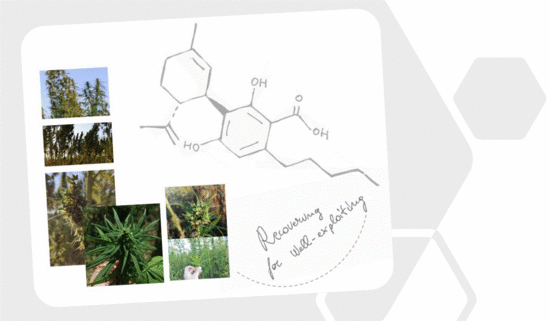
 “Identifying candidate drugs effective in the new coronavirus disease 2019 (Covid-19) is crucial,
  “Obesity rates are increasing worldwide and there is a need for novel therapeutic treatment options.