“Cannabis use among inflammatory bowel disease (IBD) patients is common. There are many studies of various laboratory models demonstrating the anti-inflammatory effect of cannabis, but their translation to human disease is still lacking.
Areas covered: The cannabis plant contains many cannabinoids, that activate the endocannabinoid system. The two most abundant phytocannabinoids are the psychoactive Tetrahydrocannabinol (THC), and the (mostly) anti-inflammatory cannabidiol (CBD). Approximately 15% of IBD patients use cannabis to ameliorate disease symptoms. Unfortunately, so far there are only three small placebo controlled study regarding the use of cannabis in active Crohns disease, combining altogether 93 subjects. Two of the studies showed significant clinical improvement but no improvement in markers of inflammation.
Expert opinion: Cannabis seems to have a therapeutic potential in IBD. This potential must not be neglected; however, cannabis research is still at a very early stage. The complexity of the plant and the diversity of different cannabis chemovars create an inherent difficulty in cannabis research. We need more studies investigating the effect of the various cannabis compounds. These effects can then be investigated in randomized placebo controlled clinical trials to fully explore the potential of cannabis treatment in IBD.”
https://www.ncbi.nlm.nih.gov/pubmed/32149543
https://www.tandfonline.com/doi/abs/10.1080/17474124.2020.1740590?journalCode=ierh20

 “Given the infancy and evolving complexity of medicinal marijuana, an evolving political landscape, and the growing frequency of its use in cancer care, it is important for oncologists to be actively engaged in developing and successfully implementing clinical trials focusing on medical marijuana.
 “Ratios of delta-9-tetrahydrocannabinol (THC) and
  “Glioblastoma multiforme (GBM) is the most frequent and aggressive malignant brain tumour, with a poor prognosis despite available surgical and radio-chemotherapy, rising the necessity for searching alternative therapies. Several preclinical studies evaluating the efficacy of
  “Excessive activation of the sympatho-adrenomedullary system plays a pathogenic role in triggering and sustaining essential hypertension. We previously reported that, in normotensive rats, intracerebroventricularly (i.c.v.) administered neuropeptides, corticotropin-releasing factor and bombesin induced activation of the sympatho-adrenomedullary system, and that brain
  “Cannabis has been considered as a therapeutic strategy to control intractable epilepsy.
 “The consistency, efficacy, and safety of cannabis-based medicines have been demonstrated in humans, leading to the approval of the first cannabis-based therapy to alleviate spasticity and pain associated with multiple sclerosis (MS). Indeed, the evidence supporting the therapeutic potential of
  “The
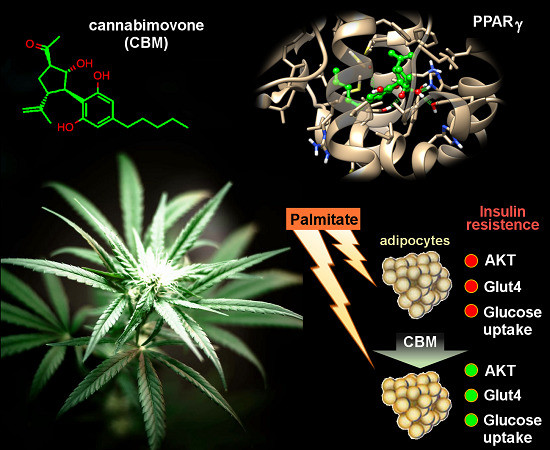
“The  “Phytocannabinoids (pCBs) are a large family of meroterpenoids isolated from the plant Cannabis sativa. Δ9-Tetrahydrocannabinol (THC) and cannabidiol (CBD) are the best investigated phytocannabinoids due to their relative abundance and interesting bioactivity profiles. In addition to various targets, THC and CBD are also well-known agonists of peroxisome proliferator-activated receptor gamma (PPARγ), a nuclear receptor involved in energy homeostasis and lipid metabolism. In the search of new pCBs potentially acting as PPARγ agonists, we identified cannabimovone (CBM), a structurally unique abeo-menthane pCB, as a novel PPARγ modulator via a combined computational and experimental approach. The ability of CBM to act as dual PPARγ/α agonist was also evaluated. Computational studies suggested a different binding mode toward the two isoforms, with the compound able to recapitulate the pattern of H-bonds of a canonical agonist only in the case of PPARγ. Luciferase assays confirmed the computational results, showing a selective activation of PPARγ by CBM in the low micromolar range. CBM promoted the expression of PPARγ target genes regulating the adipocyte differentiation and prevented palmitate-induced insulin signaling impairment. Altogether, these results candidate CBM as a novel bioactive compound potentially useful for the treatment of insulin resistance-related disorders.”