
 “Cognitive impairment is a major source of disability in schizophrenia and current antipsychotic drugs (APDs) have minimal efficacy for this symptom domain.
Cannabidiol (CBD), the major non-intoxicating component of Cannabis sativa L., exhibits antipsychotic and neuroprotective properties.
We recently reported the effects of CBD on cognition in male offspring of a maternal immune activation (polyinosinic-polycytidilic acid (poly I:C)) model relevant to the aetiology of schizophrenia; however, the effects of CBD treatment in females are unknown. Sex differences are observed in the onset of schizophrenia symptoms and response to APD treatment.
Furthermore, the endogenous cannabinoid system, a direct target of CBD, is sexually dimorphic in humans and rodents. Therefore, the present work aimed to assess the therapeutic impact of CBD treatment on behaviour and neurochemical signalling markers in female poly I:C offspring.
Overall, the findings of this study support the therapeutic benefits of CBD on recognition memory and sociability in female poly I:C offspring, and provide insight into the neurochemical changes that may underlie the therapeutic benefits of CBD in the poly I:C model.”
https://www.ncbi.nlm.nih.gov/pubmed/31326506
“These findings suggest that CBD is an efficacious treatment for behavioural and neurochemical changes in a female rodent model relevant to schizophrenia.”
https://www.sciencedirect.com/science/article/pii/S0889159119302806?via%3Dihub


 “Herein, we report the antioxidant activity of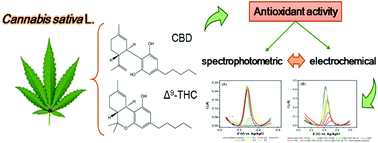
 “Currently, there are no approved pharmacotherapies for addiction to cocaine and other psychostimulant drugs. Several studies have proposed that
  “It is becoming clear that post-traumatic stress disorder (PTSD) is not simply a psychiatric disorder, but one that involves pervasive physiological impairments as well. These physiological disturbances deserve attention in any attempt at integrative treatment of PTSD that requires a focus beyond the PTSD symptoms themselves. The physiological disturbances in PTSD range over many systems, but a common thread thought to underlie them is that the chronic effects of PTSD involve problems with allostatic control mechanisms that result in an excess in what has been termed “allostatic load” (AL).