Cannabinoid receptor 2 signaling in peripheral immune cells modulates disease onset and severity in mouse models of Huntington’s disease.

“Here, we show that the genetic deletion of CB2 receptors in a slowly progressing HD mouse model accelerates the onset of motor deficits and increases their severity.

Treatment of mice with a CB2 receptor agonist extends life span and suppresses motor deficits, synapse loss, and CNS inflammation…

CB2 receptor signaling in peripheral immune cells suppresses neurodegeneration in HD mouse models

The development of peripherally restricted CB2 receptor agonists holds promise for treating HD and other neurodegenerative diseases.

In summary, our results suggest CB2 receptor signaling in peripheral immune cells has an important role in HD and other neurodegeneration disorders. Further elucidation of the molecular mechanisms that underlie these effects may lead to novel therapeutic strategies to treat these disorders.”

http://www.ncbi.nlm.nih.gov/pmc/articles/PMC3753072/

http://www.thctotalhealthcare.com/category/huntingtons/

THC for Huntington’s Disease? CB1 receptors important for more than drug use

Psychology Today: Here to Help

“Smoking marijuana doesn’t have to be a bad thing – Especially if you have HD.

The idea that THC can be used to relieve disease symptoms isn’t a new thing – Glaucoma, HIV, and cancer patients have all benefited from the use of CB1 agonists whether in the form of marijuana leaves or a pharmacologically similar product (like dronabinol).

Nevertheless, the idea of using THC or other CB1 agonists for the treatment of HD is pretty new…

The results of this study suggest that THC and other CB1 compounds may not only be able to improve symptoms in already symptomatic HD patients, but also slow down the progression of such a devestating disease.

Good news all around and a great use of THC as far as I’m concerned (medical use and removal from schedule-1 anyone?!).”

http://www.psychologytoday.com/blog/all-about-addiction/201102/thc-huntingtons-disease-cb1-receptors-important-more-drug-use

http://www.thctotalhealthcare.com/category/huntingtons/

Chronic cannabinoid receptor stimulation selectively prevents motor impairments in a mouse model of Huntington’s disease.

“Huntington’s disease (HD) is a devastating neurodegenerative disease…

The endocannabinoid system (ECS) is a relevant candidate to participate in the etiopathology of HD as it is a key modulator of brain function, especially in areas primarily affected by HD…

… improving ECS function may constitute a useful strategy to eliminate or at least delay the appearance of HD symptoms…

…chronic administration was able to prevent the appearance of motor deficits, to increase the number of striatal huntingtin inclusions and to prevent the loss of striatal medium-sized spiny neurons, without affecting the social or cognitive alterations.

These findings suggest that prolonged administration of cannabinoid receptor agonists could be an appropriate strategy for selectively improving motor symptoms and stimulating neuroprotective processes in HD patients.”

http://www.ncbi.nlm.nih.gov/pubmed/25123645

http://www.thctotalhealthcare.com/category/huntingtons/

Endocannabinoids enhance lipid synthesis and apoptosis of human sebocytes via cannabinoid receptor-2-mediated signaling.

Figure 1.

“To further investigate the role of the cannabinoid system in pilosebaceous unit biology, we have explored in the current study whether and how endocannabinoids have an impact on human sebaceous gland biology…

Here, we provide the first evidence that SZ95 sebocytes express CB2 but not CB1…

…our results collectively suggest that human sebocytes utilize a paracrine-autocrine, endogenously active, CB2-mediated endocannabinoid signaling system for positively regulating lipid production and cell death.

CB2 antagonists or agonists therefore deserve to be explored in the management of skin disorders characterized by sebaceous gland dysfunctions (e.g., acne vulgaris, seborrhea, dry skin).”

http://www.fasebj.org/content/22/10/3685.long

[A role for the endocannabinoid system in hepatic steatosis].

“The endocannabinoid system (SEC) is an important modulator of several metabolic functions.

This system is composed by cannabinoid receptors type 1 and 2 (RCB1 and RCB2), their endogenous ligands, known as endocannabinoids, and the enzymes involved in their synthesis and degradation. A deregulated SEC originates metabolic alterations in several tissues, resulting in the typical manifestations of the metabolic syndrome…

In this review we discuss the proposed mechanisms by which SEC is involved in the etiology of hepatic steatosis, as well as the therapeutic possibilities involving peripheral RCB1/RCB2 antagonism/agonism, for the treatment of this condition.”

http://www.ncbi.nlm.nih.gov/pubmed/25052273

http://www.thctotalhealthcare.com/category/hepatic-steatosis/

CANNABINOIDs INHIBIT angiogenic capacities of Endothelial cells via release of Tissue inhibitor of matrix metalloproteinases-1 from lung cancer cells.

“Cannabinoids inhibit tumor neovascularisation as part of their tumorregressive action.

However, the underlying mechanism is still under debate. In the present study the impact of cannabinoids on potential tumor-to-endothelial cell communication conferring anti-angiogenesis was studied…

Collectively, our data suggest a pivotal role of the anti-angiogenic factor TIMP-1 inintercellular tumor-endothelial cell communication resulting in anti-angiogenic features of endothelial cells.”

http://www.ncbi.nlm.nih.gov/pubmed/24976505

http://www.thctotalhealthcare.com/category/lung-cancer/

Activation of cannabinoid 2 receptors protects against cerebral ischemia by inhibiting neutrophil recruitment

Figure 1.

“THE CONSEQUENCES OF ISCHEMIC INJURY in liver, heart, and brain can be ameliorated by cannabinoids, a group of diverse compounds that include constituents of the plant Cannabis sativa (phytocannabinoids), endogenous lipids (endocannabinoids), and synthetic substances. Most of the effects of cannabinoids are mediated by the G-protein-coupled receptors cannabinoid receptor 1 (CB1) and cannabinoid receptor 2 (CB2)… 

Cannabinoids protect against ischemic stroke…

Activation of the cannabinoid 2 receptor (CB2) reduces ischemic injury in several organs…

In conclusion, our data demonstrate that by activating p38 in neutrophils, CB2 agonists inhibit neutrophil recruitment to the brain and protect against ischemic brain injury.”

http://www.fasebj.org/content/24/3/788.long

Cannabinoids and Neuroprotection in Stroke

“One of the most recently described neural signaling systems is that mediated by endogenous cannabinoids (endocannabinoids). Cannabinoids have recently been shown to attenuate neuronal injury induced by hypoxia and glucose deprivation in cell culture, as well as injury induced in rat brain following both global and focal cerebral ischemia in vivo.

Two endocannabinoids have been characterized in detail: N-arachidonylethanolamide and 2-arachidonylglycerol. Cannabinoid CB1 and CB2receptors have been cloned and an alternatively spliced CB1A isoform has been identified.

The development of metabolically stable, synthetic, enantiomeric cannabinoid receptor agonists and of CB1 and CB2 receptor antagonists has greatly aided the characterization of cannabinoid receptor-mediated processes, although certain aspects of cannabinoid signaling in some systems remain poorly understood.

Indirect evidence suggests that cannabinoids might serve as endogenous regulators of ischemic neuronal injury, but several recent reports provide more direct evidence bearing on such a role.

The author’s own findings provide evidence for CB1 receptor-mediated neuroprotection in vivo, but non-receptor-mediated protection in vitro.”

http://journals.prous.com/journals/servlet/xmlxsl/pk_journals.xml_summary_pr?p_JournalId=3&p_RefId=129&p_IsPs=Y

Long-term cannabinoid type 2 receptor agonist therapy decreases Bacterial Translocation In Rats with cirrhosis and ascites.

“Intestinal hyper-permeability, impaired peritoneal macrophages (PMs) phagocytosis, and, bacterial translocation (BT) resulting in increased systemic and local infection/inflammation such as spontaneous bacterial peritonitis (SBP), together with increased tumor necrosis factor-α (TNFα) levels, are all implicated in the pathogenesis of cirrhosis-related complications.

Manipulation of cannabinoid receptors (CB1R and CB2R), which are expressed on the gut mucosa and PMs, has been reported to modulate intestinal inflammation and systemic inflammatory cytokines release. Our study aims to explore the effects of chronic CB1R/CB2R agonist/antagonist treatments on relevant abnormalities in cirrhotic ascitic rats…

CONCLUSIONS:

Our study suggests that CB2R agonist have the potential to treat BT and various relevant abnormalities through the inhibition of systemic/intestinal oxidative stress, inflammatory cytokines and TNFα releases in cirrhosis. Overall, chronic CB2R agonist treatment affects multiple approach mechanisms, and the direct effect on hyperdynamic circulation is only minor.”

http://www.ncbi.nlm.nih.gov/pubmed/24953022

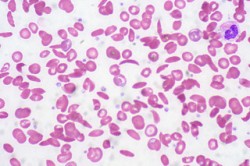
Sickle Cell Pain May be Managed with Cannabis

“Can Medical Cannabis Help to Cure SCD?”

Sickle Cell Disease Pain May Be Managed 2

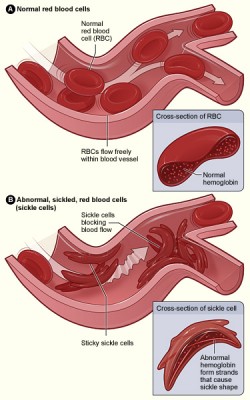
“Sickle cell disease (SCD) is a hereditary condition caused by a mutation in the haemoglobin gene, which leads to symptoms of anaemia, extreme pain, and organ damage if unmanaged.”

Sickle Cell Disease Pain May Be Managed 1

“Individuals suffering from SCD are far more likely to use cannabis than the general population, potentially for its analgesic properties.

In 2010, researchers at the University of Minnesota found that the synthetic THC analogue CP 55,940 was as effective as morphine sulphate in treating SCD-related severe pain in transgenic mice expressing human sickle haemoglobin, and that it was effective at smaller doses than the opioid.

In 2011, a further paper submitted by the same researchers to Blood (the Journal of the American Association of Hematology) indicated that CP 55,940 ameliorated severe pain associated with the hypoxia/reoxygenation cycle. CP 55,940 is a full agonist of both CB receptors, and is thought to act as an antagonist at the GPR55 receptor.

As well as this, cannabis has been repeatedly shown to act as a vasodilator, which could in itself assist in easing the blockages caused by build-up of sickle cells…

SCD is a painful and debilitating disease, and the overall inefficacy of opioid treatments and resultant poor quality of life for many sufferers is an indication that our approach to it is far from perfect.

If cannabis is a good candidate to replace opioids, it should be implemented forthwith to prevent ongoing suffering for existing patients.”

http://sensiseeds.com/en/blog/sickle-cell-pain-may-managed-cannabis/