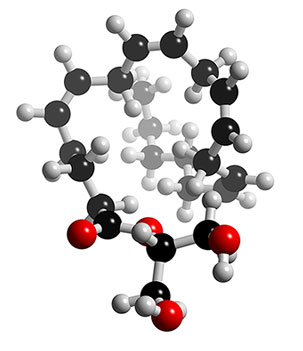
Analgesic and antiinflammatory activity of constituents of Cannabis sativa L.

Abstract

“Two extracts of Cannabis sativa herb, one being cannabinoid-free (ethanol) and the other containing the cannabinoids (petroleum), were shown to inhibit PBQ-induced writhing in mouse when given orally and also to antagonize tetradecanoylphorbol acetate (TPA)-induced erythema of mouse skin when applied topically. With the exception of cannabinol (CBN) and delta 1-tetrahydrocannabinol (delta 1-THC), the cannabinoids and olivetol (their biosynthetic precursor) demonstrated activity in the PBQ test exhibiting their maximal effect at doses of about 100 micrograms/kg. delta 1-THC only became maximally effective in doses of 10 mg/kg. This higher dose corresponded to that which induced catalepsy and is indicative of a central action. CNB demonstrated little activity and even at doses in excess of 10 mg/kg could only produce a 40% inhibition of PBQ-induced writhing. Cannabinoid (CBD) was the most effective of the cannabinoids at doses of 100 micrograms/kg. Doses of cannabinoids that were effective in the analgesic test orally were used topically to antagonize TPA-induced erythema of skin. The fact that delta 1-THC and CBN were the least effective in this test suggests a structural relationship between analgesic activity and antiinflammatory activity among the cannabinoids related to their peripheral actions and separate from the central effects of delta 1-THC.”

http://www.ncbi.nlm.nih.gov/pubmed/3169967

A peripheral cannabinoid mechanism suppresses spinal fos protein expression and pain behavior in a rat model of inflammation.

  “The present studies were conducted to test the hypothesis that systemically inactive doses of cannabinoids suppress inflammation-evoked neuronal activity in vivo via a peripheral mechanism…

…These data provide direct evidence that a peripheral cannabinoid mechanism suppresses the development of inflammation-evoked neuronal activity at the level of the spinal dorsal horn and implicate a role for CB(2) and CB(1) in peripheral cannabinoid modulation of inflammatory nociception.”

http://www.ncbi.nlm.nih.gov/pubmed/12617970

Selective activation of cannabinoid CB(2) receptors suppresses spinal fos protein expression and pain behavior in a rat model of inflammation.

“Activation of cannabinoid CB(2) receptors attenuates thermal nociception in untreated animals while failing to produce centrally mediated effects such as hypothermia and catalepsy. The present study was conducted to test the hypothesis that activation of CB(2) in the periphery suppresses the development of inflammatory pain as well as inflammation-evoked neuronal activity at the level of the CNS…”

“These data provide evidence that actions at cannabinoid CB(2) receptors are sufficient to suppress inflammation-evoked neuronal activity at rostral levels of processing in the spinal dorsal horn…”

http://www.ncbi.nlm.nih.gov/pubmed/12809695

Activation of peripheral cannabinoid CB1 and CB2 receptors suppresses the maintenance of inflammatory nociception: a comparative analysis

“Effects of locally administered agonists and antagonists for cannabinoid CB1 and CB2 receptors on mechanical and thermal hypersensitivity were compared after the establishment of chronic inflammation.”

“Cannabinoids act locally through distinct CB1 and CB2 mechanisms to suppress mechanical hypersensitivity after the establishment of chronic inflammation, at doses that produced modest changes in thermal hyperalgesia. Additive antihyperalgesic effects were observed following prophylactic co-administration of the CB1– and CB2-selective agonists. Our results suggest that peripheral cannabinoid antihyperalgesic actions may be exploited for treatment of inflammatory pain states.”

“In summary, our results demonstrate that selective activation of CB1 or CB2 receptors in the inflamed paw is sufficient to suppress tactile allodynia and mechanical hyperalgesia. This suppression is observed under conditions in which only a partial suppression of thermal hyperalgesia was observed. Collectively, our data suggest that peripheral cannabinoid analgesic mechanisms may be exploited to suppress the tactile hypersensitivity observed in chronic inflammatory pain states.”

http://www.ncbi.nlm.nih.gov/pmc/articles/PMC2042894/

Medical Marijuana Inc. Marijuana Extract Cannabidiol (CBD) Anti-inflammatory Properties

 “SAN DIEGO–(BUSINESS WIRE)–Medical Marijuana Inc (OTC: MJNA) is pleased to announce that studies have shown Cannabidiol (CBD) has anti-inflammatory properties. Medical Marijuana Inc. through CannaBANK has a patent pending on an extraction method from Cannabis (Marijuana) and its industrialized non psychoactive counterpart Hemp, allowing Cannabidiol (CBD) to be isolated in its pure form. Once isolated the Cannabidiol can be added as a direct counter agent or as an additive to other current anti-inflammatory products.

Medical Marijuana Inc. is planning on expanding its Cannabidiol sales through licensing agreements with companies already involved in the heavily marketed nutraceutical and pharmaceutical markets.

Resources and Abstracts on Anti-inflammatory properties of Cannabidiol:
United States National Library of Medicine (PubMed)”

http://www.ncbi.nlm.nih.gov/pubmed/19199042
http://www.ncbi.nlm.nih.gov/pmc/articles/PMC3034694/
http://www.ncbi.nlm.nih.gov/pubmed/19070683
http://www.ncbi.nlm.nih.gov/pubmed/18641283
http://www.ncbi.nlm.nih.gov/pubmed/18469842
http://www.ncbi.nlm.nih.gov/pubmed/14963641

http://www.businesswire.com/news/home/20110923005989/en/Medical-Marijuana-Marijuana-Extract-Cannabidiol-CBD-Anti-inflammatory?fb_action_ids=459561104080536&fb_action_types=og.likes&fb_ref=news_view&fb_source=aggregation&fb_aggregation_id=288381481237582

Hippies Vindicated: Human-produced Cannabinoids Have Anti-inflammatory Powers

“Extracts of the hemp plant cannabis are traditionally used as a popular remedy against inflammation. At the beginning of the last century this natural remedy was even available at every chemist’s. But due to the intoxicating effect of the component THC (tetrahydrocannabinol) the plant was taken off the chemist’s shelves in the 1930s.”

“Scientists from the University of Bonn have discovered in experiments with mice that Endocannabinoids play an important role in regulating inflammation processes. In their animal experiments, a solution with an important component made from cannabis reduced allergic reactions of the skin.”

 “When inflammation occurs the endocannabinoids act like someone stepping on the brakes. They prevent the body from doing too much of a good thing and the immune reaction from getting out of control. This is consistent with the fact that at the beginning of the infection the endocannabinoid concentration increased in the mice. ‘Apart from that there are strains of mice in which the breakdown of these active substances produced by the body is malfunction-ing,’ Evelyn Gaffal says. ‘They have an increased endocannabinoid concen-tration in their skin. In our experiments these animals also showed a less marked allergic reaction.'”

“The results open up new options for the treatment of skin allergies and inflammation. Firstly, drugs which prevent the breakdown of endocannabin-oids look promising. But the old household remedy cannabis could also make a comeback as an ointment. In the experiment on mice this approach has already been successful. ‘If we dabbed THC solution on to the animals’ skin shortly before and after applying the allergen, a lot less swelling occurred than normal,’ Professor Thomas Tüting explains. ‘THC attaches itself to cannabin-oid receptors and activates them. In this way the active substance reduces the allergic reaction.’ Incidentally, ointment like this would probably not have an intoxicating effect, for this the amount of THC contained would be much too small.”

http://www.science20.com//news/marijuana_benefit_also_human_produced_cannabinoids_have_anti_inflammatory_powers?fb_action_ids=459596310743682&fb_action_types=og.likes&fb_source=aggregation&fb_aggregation_id=288381481237582


Cannabidiol, extracted from Cannabis sativa, selectively inhibits inflammatory hypermotility in mice

 “Cannabidiol is a Cannabis-derived non-psychotropic compound that exerts a plethora of pharmacological actions, including anti-inflammatory, neuroprotective and antitumour effects, with potential therapeutic interest. However, the actions of cannabidiol in the digestive tract are largely unexplored. In the present study, we investigated the effect of cannabidiol on intestinal motility in normal (control) mice and in mice with intestinal inflammation.”

“Cannabidiol selectively reduces croton oil-induced hypermotility in mice in vivo and this effect involves cannabinoid CB1 receptors and FAAH. In view of its low toxicity in humans, cannabidiol may represent a good candidate to normalize motility in patients with inflammatory bowel disease.”

“The plant Cannabis sativa contains more than 60 terpenophenolic compounds, named phytocannabinoids. The best-studied phytocannabinoid is Δ9-tetrahydrocannabinol, which binds specific G-protein-coupled receptors, named cannabinoid (CB1 and CB2) receptors. The well-known psychotropic effects of Δ9-tetrahydrocannabinol, which are largely mediated by activation of brain cannabinoid CB1 receptors, have always raised a number of clinical and ethical problems. Therefore, a valid therapeutic alternative may be the use of non-psychotropic phytocannabinoids, including cannabidiol (CBD). CBD, unlike Δ9-tetrahydrocannabinol, has very low affinity for both cannabinoid CB1 and CB2 receptors, although it has been proposed that CBD may modulate endocannabinoid function through its ability to inhibit the hydrolysis of anandamide and to act as a transient receptor potential vanilloid 1 agonist. CBD is a major component of Sativex, a preparation of cannabinoids, which has been approved by Health Canada for the treatment of neuropathic pain in multiple sclerosis.”

“The pharmacological profile of CBD has been recently reviewed. Briefly stated, CBD has been shown to exert (1) antioxidant, neuroprotective and antiproliferative actions in cultured cells and (2) anti-anxiety, hypnotic, anticonvulsant, neuroprotective, antinausea, anti-ischaemic, anticancer and notably anti-inflammatory effects in rodents in vivo. The anti-inflammatory effects of CBD have been demonstrated in both acute and chronic experimental models of inflammation, that is, paw oedema and arthritis.”

“In conclusion, we have shown that the marijuana component CBD normalize intestinal motility in an experimental model of ileitis. In vitro results showed antispasmodic actions of CBD on intestinal ileal segments. The inhibitory effect of CBD involves, at least in vivo, cannabinoid CB1 receptors and FAAH. In view of its safety records in humans (an average daily dose of about 700 mg/day for 6 weeks was found to be non-toxic, relative to placebo, in clinical trials; and because CBD reduced motility during inflammation and not in physiological conditions, CBD might be considered as a good candidate to be clinically evaluated for the treatment of hypermotility associated with inflammatory bowel disease.”

http://www.ncbi.nlm.nih.gov/pmc/articles/PMC2451037/

Cannabidiol reduces lipopolysaccharide-induced vascular changes and inflammation in the mouse brain: an intravital microscopy study

  Journal of Neuroinflammation logo

“The phytocannabinoid cannabidiol (CBD) exhibits antioxidant and antiinflammatory properties. The present study was designed to explore its effects in a mouse model of sepsis-related encephalitis by intravenous administration of lipopolysaccharide (LPS).”.

“CBD prevented LPS-induced arteriolar and venular vasodilation as well as leukocyte margination. In addition, CBD abolished LPS-induced increases in tumor necrosis factor-alpha and cyclooxygenase-2 expression as measured by quantitative real time PCR. The expression of the inducible-nitric oxide synthase was also reduced by CBD. Finally, preservation of Blood Brain Barrier integrity was also associated to the treatment with CBD.”

“These data highlight the antiinflammatory and vascular-stabilizing effects of CBD in endotoxic shock and suggest a possible beneficial effect of this natural cannabinoid.”

“Cannabidiol (CBD] is a phytocannabinoid with well-known antiinflammatory and antioxidant properties. El-Remessy et al recently reported that CBD prevented inflammatory and oxidative damage and preserved endothelial integrity in an experimental model of diabetic retinopathy. Furthermore, CBD preserves cerebral circulation in pathological conditions such as brain ischemia. Recent data support the clinical use of CBD for the treatment of a variety of damaging conditions, including nephropathy and diabetic cardiomyopathy. In particular, the antioxidant properties of CBD seem to play a major role in the protective effects of this phytocannabinoid against the oxidative and nitrosative stress induced by chemoterapy agents and by high glucose conditions.”

http://www.ncbi.nlm.nih.gov/pmc/articles/PMC3034694/

https://jneuroinflammation.biomedcentral.com/articles/10.1186/1742-2094-8-5

Prolonged oral cannabinoid administration prevents neuroinflammation, lowers β-amyloid levels and improves cognitive performance in Tg APP 2576 mice

“Background

Alzheimer’s disease (AD) brain shows an ongoing inflammatory condition and non-steroidal anti-inflammatories diminish the risk of suffering the neurologic disease. Cannabinoids are neuroprotective and anti-inflammatory agents with therapeutic potential.”

“… we have shown that chronically administered cannabinoid showed marked beneficial effects concomitant with inflammation reduction and increased Aβ clearance.”

“Cannabinoids, whether plant derived, synthetic or endocannabinoids, interact with two well characterized cannabinoid receptors, CB1 and CB2 . In addition, some cannabinoids may interact with other receptors, such as the TRPV1 receptor or the orphan receptor GPR55. The CB1 receptor is widely distributed, with a particularly high expression in brain, which contrasts with the limited expression of the CB2 receptor, which is characteristic of immune organs and cells. In fact, while CB1 receptors are expressed by all types of cells in the brain (neurons and glial cells), CB2 are mainly localized in microglial cells, the resident immune cell of the brain.”

“We and others have proposed cannabinoids as preventive treatment for AD, based on their neuroprotective and anti-inflammatory effects. Indeed, cannabinoids are able to decrease the release of cytokines and nitric oxide in cultured microglial cells induced by lipopolysacharide and Aβ addition. In several in vitro studies cannabidiol (CBD), the major non-psychotropic constituent of cannabis, has shown to be neuroprotective against β-amyloid (Aβ) addition to cultured cells.”

“Conclusions

In summary, cannabinoid agonists, in particular CB2 selective agonists, interfere with several interconnected events of importance in the pathophysiology of AD. These compounds by directly interacting with cannabinoid receptors, in particular CB2, decrease microglial activation thereby reducing inflammation and its consequences (eg cognitive deficits). At the same time they may indirectly have beneficial effects on microglial activation (eg decrease cytokine release) by lowering brain Aβ levels.”

http://www.ncbi.nlm.nih.gov/pmc/articles/PMC3292807/

The non-psychoactive cannabis constituent cannabidiol is an orally effective therapeutic agent in rat chronic inflammatory and neuropathic pain.

Abstract

“Cannabidiol, the major psycho-inactive component of cannabis, has substantial anti-inflammatory and immunomodulatory effects. This study investigated its therapeutic potential on neuropathic (sciatic nerve chronic constriction) and inflammatory pain (complete Freund’s adjuvant intraplantar injection) in rats. In both models, daily oral treatment with cannabidiol (2.5-20 mg/kg to neuropathic and 20 mg/kg to adjuvant-injected rats) from day 7 to day 14 after the injury, or intraplantar injection, reduced hyperalgesia to thermal and mechanical stimuli. In the neuropathic animals, the anti-hyperalgesic effect of cannabidiol (20 mg/kg) was prevented by the vanilloid antagonist capsazepine (10 mg/kg, i.p.), but not by cannabinoid receptor antagonists. Cannabidiol’s activity was associated with a reduction in the content of several mediators, such as prostaglandin E(2) (PGE(2)), lipid peroxide and nitric oxide (NO), and in the over-activity of glutathione-related enzymes. Cannabidiol only reduced the over-expression of constitutive endothelial NO synthase (NOS), without significantly affecting the inducible form (iNOS) in inflamed paw tissues. Cannabidiol had no effect on neuronal and iNOS isoforms in injured sciatic nerve. The compound’s efficacy on neuropathic pain was not accompanied by any reduction in nuclear factor-kappaB (NF-kappaB) activation and tumor necrosis factor alpha (TNFalpha) content. The results indicate a potential for therapeutic use of cannabidiol in chronic painful states.”

http://www.ncbi.nlm.nih.gov/pubmed/17157290