Immunoactive cannabinoids: Therapeutic prospects for marijuana constituents

“Marijuana, the common name for Cannabis sativa, is a widely distributed hemp plant whose dried flowering tops and leaves have been used for medicinal purposes for 12,000 years by some estimates.

The article by Malfaitet al. in this issue of PNAS is relevant to the question of whether such traditional uses of marijuana could be clinically justifiable today.

It is conceivable that marijuana contains a series of cannabinoids that, in the aggregate, could alleviate arthritis as implied in the present report, yet remain well tolerated.

Remarkably, the claim that marijuana does so also was made 4,000 years ago by the Chinese emperor Shen-nung whose pharmacobotanical compendium, the Pen-ts’ao Ching, concluded that cannabis “undoes rheumatism””

http://www.ncbi.nlm.nih.gov/pmc/articles/PMC34030/

Cannabis in Eurasia: origin of human use and Bronze Age trans-continental connections

Vegetation History and Archaeobotany

“A systematic review of archaeological and palaeoenvironmental records of cannabis (fibres, pollen, achenes and imprints of achenes) reveals its complex history in Eurasia. A multiregional origin of human use of the plant is proposed, considering the more or less contemporaneous appearance of cannabis records in two distal parts (Europe and East Asia) of the continent. A marked increase in cannabis achene records from East Asia between ca. 5,000 and 4,000 cal bpmight be associated with the establishment of a trans-Eurasian exchange/migration network through the steppe zone, influenced by the more intensive exploitation of cannabis achenes popular in Eastern Europe pastoralist communities. The role of the Hexi Corridor region as a hub for an East Asian spread of domesticated plants, animals and cultural elements originally from Southwest Asia and Europe is highlighted. More systematic, interdisciplinary and well-dated data, especially from South Russia and Central Asia, are necessary to address the unresolved issues in understanding the complex history of human cannabis utilisation.”

http://link.springer.com/article/10.1007%2Fs00334-016-0579-6

“The Tantalizing Clues That Suggest Cannabis Played a Key Role in the Birth of Civilization Itself” http://theinfluence.org/the-tantalizing-clues-that-suggest-cannabis-played-a-key-role-in-the-birth-of-civilization-itself/

“Stoned age: Humans were getting high on cannabis 10,000 years ago and experts say they also used the drug for food and clothes

“Man’s Stoned Age: cannabis use began 10,000 years ago. After the Ice Age came the Stoned Age. Early humans began using cannabis as long as 10,000 years ago, just as Europe’s glaciers had started their final retreat, scientists have found. An archaeological study suggests early humans in Europe and Asia stumbled on the plant at roughly the same time. The discovery was valued, suggest the scientists, not just for its psychoactive properties but also because its nutritious seeds could quench hunger pangs and hemp fibres could be woven into clothing.”                         http://www.thetimes.co.uk/article/mans-stoned-age-cwvtj2js2

“Founders of Western civilisation were prehistoric dope dealers”  https://www.newscientist.com/article/2096440-founders-of-western-civilisation-were-prehistoric-dope-dealers/

Plasma and brain pharmacokinetic profile of cannabidiol (CBD), cannabidivarine (CBDV), Δ⁹-tetrahydrocannabivarin (THCV) and cannabigerol (CBG) in rats and mice following oral and intraperitoneal administration and CBD action on obsessive-compulsive behaviour.


Psychopharmacology

“Phytocannabinoids are useful therapeutics for multiple applications including treatments of constipation, malaria, rheumatism, alleviation of intraocular pressure, emesis, anxiety and some neurological and neurodegenerative disorders.

Consistent with these medicinal properties, extracted cannabinoids have recently gained much interest in research, and some are currently in advanced stages of clinical testing.

Other constituents of Cannabis sativa, the hemp plant, however, remain relatively unexplored in vivo. These include cannabidiol (CBD), cannabidivarine (CBDV), Δ(9)-tetrahydrocannabivarin (Δ(9)-THCV) and cannabigerol (CBG).

RESULTS:

All phytocannabinoids readily penetrated the blood-brain barrier and solutol, despite producing moderate behavioural anomalies, led to higher brain penetration than cremophor after oral, but not intraperitoneal exposure. In mice, cremophor-based intraperitoneal administration always attained higher plasma and brain concentrations, independent of substance given. In rats, oral administration offered higher brain concentrations for CBD (120 mg/kg) and CBDV (60 mg/kg), but not for Δ(9)-THCV (30 mg/kg) and CBG (120 mg/kg), for which the intraperitoneal route was more effective. CBD inhibited obsessive-compulsive behaviour in a time-dependent manner matching its pharmacokinetic profile.

CONCLUSIONS:

These data provide important information on the brain and plasma exposure of new phytocannabinoids and guidance for the most efficacious administration route and time points for determination of drug effects under in vivo conditions.”

http://www.ncbi.nlm.nih.gov/pubmed/21796370

The therapeutic potential of the phytocannabinoid cannabidiol for Alzheimer’s disease.

“Alzheimer’s disease (AD) is the most common neurodegenerative disorder, characterized by progressive loss of cognition. Over 35 million individuals currently have AD worldwide. Unfortunately, current therapies are limited to very modest symptomatic relief.

The brains of AD patients are characterized by the deposition of amyloid-β and hyperphosphorylated forms of tau protein. AD brains also show neurodegeneration and high levels of oxidative stress and inflammation.

The phytocannabinoid cannabidiol (CBD) possesses neuroprotective, antioxidant and anti-inflammatory properties and reduces amyloid-β production and tau hyperphosphorylation in vitro.

CBD has also been shown to be effective in vivo making the phytocannabinoid an interesting candidate for novel therapeutic interventions in AD, especially as it lacks psychoactive or cognition-impairing properties.

CBD treatment would be in line with preventative, multimodal drug strategies targeting a combination of pathological symptoms, which might be ideal for AD therapy.

Thus, this review will present a brief introduction to AD biology and current treatment options before outlining comprehensively CBD biology and pharmacology, followed by in-vitro and in-vivo evidence for the therapeutic potential of CBD. We will also discuss the role of the endocannabinioid system in AD before commenting on the potential future of CBD for AD therapy (including safety aspects).”

http://www.ncbi.nlm.nih.gov/pubmed/27471947

Cannabidiol prevents a post-ischemic injury progressively induced by cerebral ischemia via a high-mobility group box1-inhibiting mechanism.

“We examined the cerebroprotective mechanism of cannabidiol, the non-psychoactive component of marijuana, against infarction in a 4-h mouse middle cerebral artery (MCA) occlusion model.

Cannabidiol was intraperitoneally administrated immediately before and 3h after cerebral ischemia.

Cannabidiol significantly prevented infarction and MPO activity at 20h after reperfusion.

Cannabidiol inhibited the MPO-positive cells expressing HMGB1 and also decreased the expression level of HMGB1 in plasma.

In addition, cannabidiol decreased the number of Iba1- and GFAP-positive cells at 3 days after cerebral ischemia.

Moreover, cannabidiol improved neurological score and motor coordination on the rota-rod test.

Our results suggest that cannabidiol inhibits monocyte/macropharge expressing HMGB1 followed by preventing glial activation and neurological impairment induced by cerebral ischemia.

Cannabidiol will open new therapeutic possibilities for post-ischemic injury via HMGB1-inhibiting mechanism.”

http://www.ncbi.nlm.nih.gov/pubmed/18634812

The future of cannabinoids as analgesic agents: a pharmacologic, pharmacokinetic, and pharmacodynamic overview.


“For thousands of years, physicians and their patients employed cannabis as a therapeutic agent.

Despite this extensive historical usage, in the Western world, cannabis fell into disfavor among medical professionals because the technology available in the 1800s and early 1900s did not permit reliable, standardized preparations to be developed.

However, since the discovery and cloning of cannabinoid receptors (CB1 and CB2) in the 1990s, scientific interest in the area has burgeoned, and the complexities of this fascinating receptor system, and its endogenous ligands, have been actively explored.

Recent studies reveal that cannabinoids have a rich pharmacology and may interact with a number of other receptor systems-as well as with other cannabinoids-to produce potential synergies.

Cannabinoids-endocannabinoids, phytocannabinoids, and synthetic cannabinoids-affect numerous bodily functions and have indicated efficacy of varying degrees in a number of serious medical conditions.

Cannabinoid receptor agonists and/or molecules that affect the modulation of endocannabinoid synthesis, metabolism, and transport may, in the future, offer extremely valuable tools for the treatment of a number of currently intractable disorders.”

 http://www.ncbi.nlm.nih.gov/pubmed/17890938

Cannabinoids in bipolar affective disorder: a review and discussion of their therapeutic potential.

“Bipolar affective disorder is often poorly controlled by prescribed drugs.

Cannabis use is common in patients with this disorder and anecdotal reports suggest that some patients take it to alleviate symptoms of both mania and depression.

We undertook a literature review of cannabis use by patients with bipolar disorder and of the neuropharmacological properties of cannabinoids suggesting possible therapeutic effects in this condition.

No systematic studies of cannabinoids in bipolar disorder were found to exist, although some patients claim that cannabis relieves symptoms of mania and/or depression.

The cannabinoids Delta(9)-tetrahydrocannabinol (THC) and cannabidiol (CBD) may exert sedative, hypnotic, anxiolytic, antidepressant, antipsychotic and anticonvulsant effects.

Pure synthetic cannabinoids, such as dronabinol and nabilone and specific plant extracts containing THC, CBD, or a mixture of the two in known concentrations, are available and can be delivered sublingually.

Controlled trials of these cannabinoids as adjunctive medication in bipolar disorder are now indicated.”

http://www.ncbi.nlm.nih.gov/pubmed/15888515

The cannabinoids: therapeutic potentials.


“A review of the therapeutic potentials of the cannabinoids is presented. With respect to the antifertility aspects of cannabinoids, 2 mg delta 9-THC suppressed luteinizing hormone secretion in rats and 2 and 3 mg/kg resulted in a deterioation of male sexual performance. A new chapter in marijuana research was opened in 1964 with the identification of delta 9-tetrahydrocannabinol as the active ingredient. Antiedema, analgesic, antipyretic, antiinflammatory, antifertility, antiepileptic, anticonvulsant, antihypertensive, cardiotonic, pulmonary, and antidepressant effects along with potentiation of barbiturates and analgesics are reviewed leading one to the conclusion that marijuana is “a drug for all reasons”. During the past decade many investigators have pursued the possibility of modification of the delta 9 structure to delineate activities. 1 compound, Abbott 40656, SP106, a water-soluble benzopyran derivative is presently under Phase 1 clinical evaluation as a sedative-hypnotic.”

http://www.ncbi.nlm.nih.gov/pubmed/12307093/

Cannabis compound benefits blood vessels

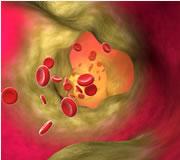
This computer rendition shows how fatty deposits can narrow blood vessels.

“Low dose helps combat formation of arterial blockages.

A compound derived from the cannabis plant protects blood vessels from dangerous clogging, a study of mice has shown.

The compound, called delta-9-tetrahydrocannabinol (THC), combats the blood-vessel disease atherosclerosis in mice.

The discovery could lead to new drugs to ward off heart disease and stroke.”

http://www.nature.com/news/2005/050404/full/news050404-7.html


A frequent polymorphism in the coding exon of the human cannabinoid receptor (CNR1) gene.

“The central cannabinoid receptor (CB1) mediates the pharmacological activities of cannabis, the endogenous agonist anandamide and several synthetic agonists.

The cloning of the human cannabinoid receptor (CNR1) gene facilitates molecular genetic studies in disorders like Gilles de la Tourette syndrome (GTS), obsessive compulsive disorder (OCD), Parkinsons disease, Alzheimers disease or other neuro psychiatric or neurological diseases, which may be predisposed or influenced by mutations or variants in the CNR1 gene.

We detected a frequent silent mutation (1359G–>A) in codon 453 (Thr) of the CNR1 gene that turned out to be a common polymorphism in the German population. Allele frequencies of this polymorphism are 0.76 and 0.24, respectively.

We developed a simple and rapid polymerase chain reaction (PCR)-based assay by artificial creation of a Msp I restriction site in amplified wild-type DNA (G-allele), which is destroyed by the silent mutation (A-allele).

The intragenic CNR1 polymorphism 1359(G/A) should be useful for association studies in neuro psychiatric disorders which may be related to anandamide metabolism disturbances.”

http://www.ncbi.nlm.nih.gov/pubmed/10441206