Protective effect of cannabidiol against cadmium hepatotoxicity in rats.

“The protective effect of cannabidiol, the non-psychoactive component of Cannabis sativa, against liver toxicity induced by a single dose of cadmium chloride was investigated in rats…

 It was concluded that cannabidiol may represent a potential option to protect the liver tissue from the detrimental effects of cadmium toxicity.”

http://www.ncbi.nlm.nih.gov/pubmed/23993482

Cannabis Kills Cancer Cells

“Marijuana also found to prevent pain associated with chemotherapy”
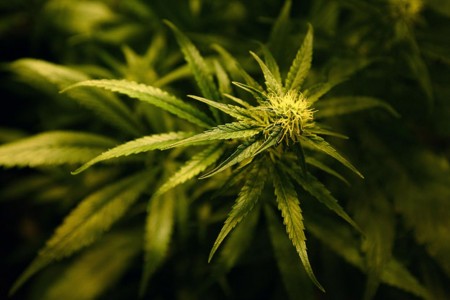
Cannabis Kills Cancer Cells

“Studies in Spain have shown findings that Tetrahydrocannabinol (THC), the active ingredient found in marijuana, can induce the death of brain cancer cells, according to scientist Guillermo Velasco and his research team from the School of Biology at Complutense University in Madrid.

In a laboratory study where mice were “engineered” to carry three varying kinds of human cancer tumor grafts, THC was introduced into the brain, triggering a self-digestion development on a cellular level, known as “autophagy.” Within this process, the research team managed to isolate the particular activation route from which this process evolved.

The research team was also conducting clinical trials in concert, on two consenting brain cancer patients, said to be suffering from a rapidly aggressive form of cancer, known as “recurrent glioblastoma multiforme.”

The team, using electron microscopes to analyze brain tissue extracted before and after the 26 to 30-day regime, found that the THC had eradicated cancer cells, leaving the healthy cells undamaged.

The findings can now lend themselves to future design in newer cancer therapies, using the concept of autophagy activation.”

More: http://guardianlv.com/2013/08/cannabis-kills-cancer-cells/

Cannabis Can Prevent Cancer Caused By Cigarette Use, According To New Study

tobacco cigarettes marijuana cannabis

“A new study published by the journal J-Stage, and funded by the Ministry of Education, Culture, Sports, Science and Technology of Japan, has found that cannabinoids – whether THC, CBD or CBDV – were effective at blocking a certain enzyme which is known to cause cancer, and is produced in large amount when cigarettes are consumed.”

“These results suggest that the pentylresorcinol structure in CBD may have structurally important roles in direct CYP1A1 inhibition, although the whole structure of CBD is required for overall inhibition”, according to researchers.

CYP1A1 is an enzyme which isn’t dangerous at low-levels, but is produced in large quantities when someone smokes cigarettes; at large doses, the enzyme has been linked to cancer.

Researchers state that; “Accordingly, CBD and its related compounds, which are potent inhibitors of CYP1A1 activity, would be useful as a lead compound in anticancer chemotherapy.””

http://www.theweedblog.com/cannabis-can-prevent-cancer-caused-by-cigarette-use-according-to-new-study/

“Marijuana Disrupts Cancer Pathway of Cigarettes: Study” http://www.truthonpot.com/2013/08/19/marijuana-disrupts-cancer-pathway-of-cigarettes-study/

Chemicals in marijuana block the activity of a cancer-causing enzyme present in cigarette smokers.
 
“Chemicals in marijuana can block the activity of a cancer-causing enzyme commonly found in cigarette smokers.”


“Cannabis Can Prevent Cancer Caused by Cigarette Use, According to New Study” http://thejointblog.com/cannabis-can-prevent-cancer-caused-by-cigarrette-use-according-to-new-study/ 

“Marijuana Can Prevent Millions of Tobacco Deaths” http://salem-news.com/articles/august122013/tobacco-marijuanapl.php

Cannabinoid receptors as a target for therapy of ovarian cancer

“Ovarian cancer represents one of the leading cause of cancer-relateddeaths for women and is the most common gynecologic malignancy.In spite of relative low morbidity, ovarian cancer has a highfatality ratio, with overall 5-year survival of less than 30%.At present, there are inadequate treatment options for the managementof advanced ovarian cancer, and therefore development of novelapproaches for treatment of this disease are needed.

Cannabinoids,the active components of Cannabis sativa linnaeous and their derivatives have received considerable attention in recent yearsdue to their diverse pharmacological activities such as cell growth inhibition and tumor regression. To date, two differentcannabinoid receptors have been characterized and cloned frommammalian tissues: the “central” CB1 receptor and the “peripheral”CB2 receptor…

These results support a new therapeutic approach for the treatmentof ovarian cancer. It is also conceivable that with available cannabinoids as lead compounds, non-habit forming agents that have higher biological effects could be developed.”

http://www.aacrmeetingabstracts.org/cgi/content/abstract/2006/1/1084

http://cancerres.aacrjournals.org/content/66/8_Supplement/1084.1

THC is anticarcinogenic: marijuana may be cancer cure!

“Toxicology and Carcinogenesis Studies of 1-Trans-[Delta.sup.9]-Tetrahydrocannabinol

Summation of above:

“Thus, in our studies, rats and mice that received THC for 2 years exhibited body weight reductions, enhanced survival rates, and decreased tumor incidences in several sites, mainly organs under hormonal control. These earlier experimental carcinogenesis results on THC clearly lend further validity to the notion that cannabinoids may indeed be anticarcinogenic.””

 link
http://www.thefreelibrary.com/Antitumor+Effects+of+THC-a06814…

http://www.sodahead.com/united-states/thc-is-anticarcinogenic-marijuana-may-be-cancer-cure/question-1031413/?link=ibaf&q=THC+anti-carcinogenic+news

Curing Cancer with Cannabis

“Repeal Archaic Anti-Marijuana Laws”

cannabis
“Although cannabis has been used in medical treatment for thousands of years in China and India, it became illegal in most of the western world in the first half of the twentieth century. This was thanks to an early corporate conspiracy involving DuPont, William Randolph Hearst, the Mellon Bank and Secretary of the Treasury Andrew Mellon. The major problem with hemp was its immense versatility. Most paper and nearly all plastics were made of hemp fiber, while hemp oil was a major fuel. Dupont was trying to promote their own petroleum-based plastic, Hearst his wood pulp paper factories, and Mellon his friends at Standard Oil. See The Politics of Hemp.

Recent research, mainly out of Spain and Italy (such research is  illegal in the US), reveals that treatment with a cannabis metabolite cannobidiol (CBD) has a marked effect on immune function and is useful in the treatment of breast, bowel and other metastatic cancers, diabetes, epilepsy, glaucoma, high blood pressure, chronic pain and a host of other medical conditions…

Below is a link to a groundbreaking lecture on the medical benefits of cannabis by University of California-San Francisco oncologist/AIDS specialist Donald Abrams, MD. Abrams contends that smoking cannabis actually reduces your chances of lung cancer, owing to its anti-inflammatory and immune effects.

More: http://open.salon.com/blog/stuartbramhall/2013/08/30/curing_cancer_with_cannabis

Neuroprotection and reduction of glial reaction by cannabidiol treatment after sciatic nerve transection in neonatal rats.

“The clinical use of neurotrophic factors is difficult due to side effects and elevated costs, but other molecules might be effective and more easily obtained. Among them, some are derived from Cannabis sativa.

Cannabidiol (CBD) is the major non-psychotropic component found on the surface of such plant leaves.

The present study aimed to investigate the neuroprotective potential of CBD…

The present results show that CBD possesses neuroprotective characteristics that may, in turn, be promising for future clinical use.”

http://www.ncbi.nlm.nih.gov/pubmed/23981015

Cannabis with high cannabidiol content is associated with fewer psychotic experiences.

“An increasing number of authors identify cannabidiol, another component of the cannabis plant, as an antipsychotic agent. The objective of the current study is to investigate the role of cannabidiol content in the association between cannabis use and psychiatric symptoms in a large non-clinical population of cannabis users…

CONCLUSION:

Although the observed effects are subtle, using high cannabidiol content cannabis was associated with significantly lower degrees of psychotic symptoms providing further support for the antipsychotic potential of cannabidiol.”

http://www.ncbi.nlm.nih.gov/pubmed/21592732

Can medical herbs stimulate regeneration or neuroprotection and treat neuropathic pain in chemotherapy-induced peripheral neuropathy?

“Chemotherapy-induced neuropathy (CIPN) has a relevant impact on the quality of life of cancer patients. There are no curative conventional treatments, so further options have to be investigated. We conducted a systematic review in English and Chinese language databases to illuminate the role of medical herbs. 26 relevant studies on 5 single herbs, one extract, one receptor-agonist, and 8 combinations of herbs were identified focusing on the single herbs Acorus calamus rhizoma, Cannabis sativa fructus, Chamomilla matricaria, Ginkgo biloba, Salvia officinalis, Sweet bee venom, Fritillaria cirrhosae bulbus, and the herbal combinations Bu Yang Huan Wu, modified Bu Yang Huan Wu plus Liuwei Di Huang, modified Chai Hu Long Gu Mu Li Wan, Geranii herba plus Aconiti lateralis praeparata radix , Niu Che Sen Qi Wan (Goshajinkigan), Gui Zhi Jia Shu Fu Tang (Keishikajutsubuto), Huang Qi Wu Wu Tang (Ogikeishigomotsuto), and Shao Yao Gan Cao Tang (Shakuyakukanzoto). The knowledge of mechanism of action is still limited, the quality of clinical trials needs further improvement, and studies have not yielded enough evidence to establish a standard practice, but a lot of promising substances have been identified.

While CIPN has multiple mechanisms of neuronal degeneration, a combination of herbs or substances might deal with multiple targets for the aim of neuroprotection or neuroregeneration in CIPN.”

http://www.ncbi.nlm.nih.gov/pubmed/23983777

The secret “spice”: an undetectable toxic cause of seizure.

“”Spice” is an umbrella term for a variety of synthetic cannabinoid products whose inhalation has been associated with an increasing number of toxic side effects resulting in emergency department visits. These side effects (including psychosis, tachyarrhythmia, and seizures) are not typically seen with marijuana (Cannabis sativa) use.”

http://www.ncbi.nlm.nih.gov/pubmed/23983854