
 “Cannabidiol (CBD), a non-euphorigenic compound derived from Cannabis, shows promise for improving recovery following cerebral ischemia and has recently been shown effective for the treatment of childhood seizures caused by Dravet and Lennox-Gastaut syndromes.
Given evidence for activity to mitigate effects of CNS insult and dysfunction, we considered the possibility that CBD may also protect and improve functional recovery of a complex learned behavior. To test this hypothesis, we have applied a songbird, the adult male zebra finch, as a novel pre-clinical animal model.
Results indicate 10 and 100 mg/kg CBD effectively reduced the time required to recover vocal phonology and syntax. In the case of phonology, the magnitude of microlesion-related disruptions were also reduced.
These results suggest CBD holds promise to improve functional recovery of complex learned behaviors following brain injury, and represent establishment of an important new animal model to screen drugs for efficacy to improve vocal recovery.”
https://www.ncbi.nlm.nih.gov/pubmed/31325430
https://www.sciencedirect.com/science/article/pii/S0028390818305343?via%3Dihub
 “Cognitive impairment is a major source of disability in schizophrenia and current antipsychotic drugs (APDs) have minimal efficacy for this symptom domain.
 “Herein, we report the antioxidant activity of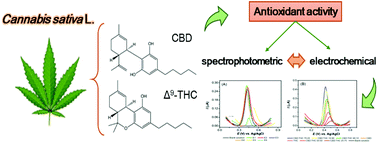
 “Currently, there are no approved pharmacotherapies for addiction to cocaine and other psychostimulant drugs. Several studies have proposed that
  “Current pharmacotherapy of Parkinson’s disease (PD) is palliative and unable to modify the progression of neurodegeneration. Treatments that can improve patients’ quality of life with fewer side effects are needed, but not yet available.
 “Cardiac disease is accounted as the leading cause of worldwide morbidity and mortality, mainly in association with induction of inflammation and oxidative stress. The disease is characterized by the overproduction of reactive oxygen and/or nitrogen species (ROS/RNS), and reduced antioxidant capacity.
