Cannabidiol: Pharmacology and potential therapeutic role in epilepsy and other neuropsychiatric disorders.

“Cannabis has been used to treat disease since ancient times. Δ9 -Tetrahydrocannabinol (Δ9 -THC) is the major psychoactive ingredient and CBD is the major nonpsychoactive ingredient in cannabis.

Cannabis and Δ9 -THC are anticonvulsant in most animal models but can be proconvulsant in some healthy animals. The psychotropic effects of Δ9 -THC limit tolerability.

CBD is anticonvulsant in many acute animal models, but there are limited data in chronic models.

The antiepileptic mechanisms of CBD are not known, but may include effects on the equilibrative nucleoside transporter; the orphan G-protein-coupled receptor GPR55; the transient receptor potential of vanilloid type-1 channel; the 5-HT1a receptor; and the α3 and α1 glycine receptors.

CBD has neuroprotective and antiinflammatory effects, and it appears to be well tolerated in humans, but small and methodologically limited studies of CBD in human epilepsy have been inconclusive.

More recent anecdotal reports of high-ratio CBD:Δ9 -THC medical marijuana have claimed efficacy, but studies were not controlled.

CBD bears investigation in epilepsy and other neuropsychiatric disorders, including anxiety, schizophrenia, addiction, and neonatal hypoxic-ischemic encephalopathy.”
http://www.ncbi.nlm.nih.gov/pubmed/24854329

The case for medical marijuana in epilepsy.

“Charlotte, a little girl with SCN1A-confirmed Dravet syndrome, was recently featured in a special that aired on CNN. Through exhaustive personal research and assistance from a Colorado-based medical marijuana group (Realm of Caring), Charlotte’s mother started adjunctive therapy with a high concentration cannabidiol/Δ9 -tetrahydrocannabinol (CBD:THC) strain of cannabis, now known as Charlotte’s Web. This extract, slowly titrated over weeks and given in conjunction with her existing antiepileptic drug regimen, reduced Charlotte’s seizure frequency from nearly 50 convulsive seizures per day to now 2-3 nocturnal convulsions per month. This effect has persisted for the last 20 months, and Charlotte has been successfully weaned from her other antiepileptic drugs. We briefly review some of the history, preclinical and clinical data, and controversies surrounding the use of medical marijuana for the treatment of epilepsy, and make a case that the desire to isolate and treat with pharmaceutical grade compounds from cannabis (specifically CBD) may be inferior to therapy with whole plant extracts. Much more needs to be learned about the mechanisms of antiepileptic activity of the phytocannabinoids and other constituents of Cannabis sativa.”

http://www.ncbi.nlm.nih.gov/pubmed/24854149

“Marijuana stops child’s severe seizures”  http://www.cnn.com/2013/08/07/health/charlotte-child-medical-marijuana/

http://www.thctotalhealthcare.com/category/dravet-syndome/

Potential Cure for Epilepsy: Cannabis Vastly Reduces Seizures in Boy with Dravet Syndrome

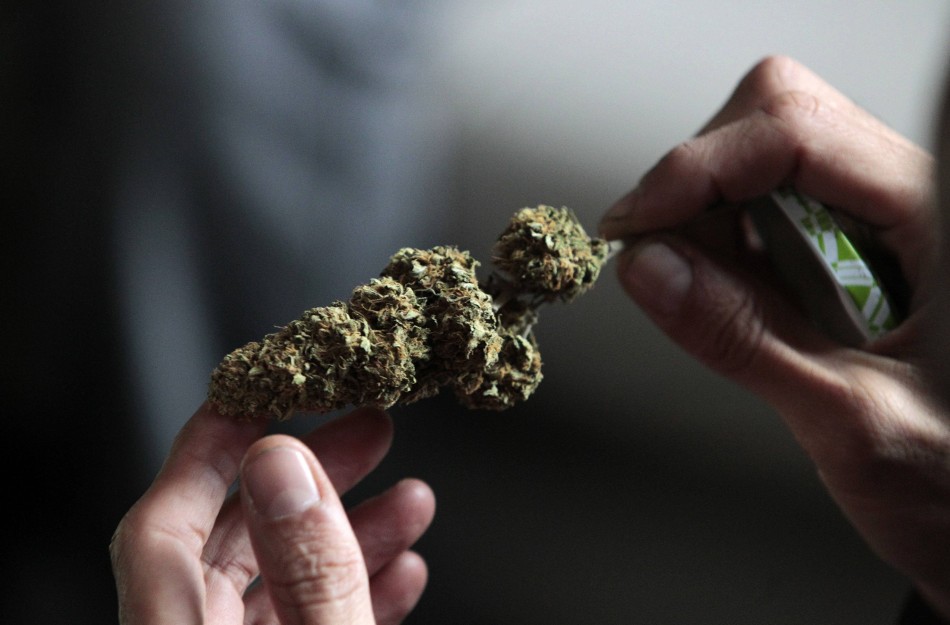
A judge checks on a marijuana sample during a judging session at Uruguay's second

“Scientists are looking at the potential use of cannabis to treat and potentially cure severe forms of epilepsy.

The medical benefits of medical marijuana for neurological conditions like epilepsy are highly debated.

Examining the potential use of the drug, a series of articles in the journal Epilepsia, a journal of the International League Against Epilepsy, looks at its potential use for treating the syndrome.

Edward Maa, from the Comprehensive Epilepsy Program at Denver Health in Denver, Colorado, looks at a case study of a child with Dravet syndrome – a very severe form of epilepsy.

In the case, a mother provided her child with a strain of medical marijuana high in Cannabidiol (CBD) and tetrahydrocannabinol (THC) known as Charlotte’s Web.

When used with the child’s normal drug regime, seizures dropped from 50 convulsions per day to just two or three per month.”

http://www.ibtimes.co.uk/potential-cure-epilepsy-cannabis-vastly-reduces-seizures-boy-dravet-syndrome-1449505

http://www.thctotalhealthcare.com/category/dravet-syndome/


Marijuana Effectively Reduces Seizures in Epilepsy Patients

marijuanas

“Medicinal uses of marijuana have been a matter for heated debate for quite some time now. A review by American Academy of neurology collated all available information on marijuana use for brain disease treatment and concluded that except for treating symptoms of multiple sclerosis, there is no hard evidence in favor of medical usage of marijuana.

But now some articles have been published in the journal Epilepsia that contradicts the earlier review. One of these articles is a case study of a family living in Denver, CO. The child in the family suffers from a severe form of epilepsy known as Dravet Syndrome and used to have frequent seizures, as many as 50 convulsions a day. But the child was given “Charlotte’s Web”- a marijuana strain with high levels of cannabidiol (CBD) and tetrahydrocannabinol (THC). Reportedly, the seizures decreased considerably and now the child suffers from only 2 or 3 seizures each month.

According to the author of the article, Dr. Edward Maa, “As medical professionals it is important that we further the evidence of whether CBD in cannabis is an effective antiepileptic therapy.””

http://www.newsonwellness.com/2014/05/marijuana-effectively-reduces-seizures-epilepsy-patients/

http://www.thctotalhealthcare.com/category/epilepsy-2/

[Tetrahydrocannabinol for treatment of chronic pain].

“Even in the last century cannabis was used in the treatment of chronic pain. The main active component of cannabis Delta-9-Tetrahydrocannabinol (THC) has been increasingly used in the treatment of nausea, vomiting, loss of appetite and depression. It is also recommended in the treatment of chronic pain. We present our first experiences with THC in the treatment of patients with chronic pain.”

http://www.ncbi.nlm.nih.gov/pubmed/11810357

http://www.thctotalhealthcare.com/category/chronic-pain/

http://www.thctotalhealthcare.com/category/pain-2/

Therapeutic Satisfaction and Subjective Effects of Different Strains of Pharmaceutical-Grade Cannabis.

“The aims of this study are to assess the therapeutic satisfaction within a group of patients using prescribed pharmaceutical-grade cannabis and to compare the subjective effects among the available strains with special focus on their delta-9-tetrahydrocannabinol and cannabidiol content…

One hundred two patients were included; their average age was 53 years and 76% used it for more than a year preceding this study. Chronic pain (53%; n = 54) was the most common medical indication for using cannabis followed by multiple sclerosis (23%; n = 23), and 86% (n = 88) of patients (almost) always experienced therapeutic satisfaction when using pharmaceutical cannabis.

These results show that patients report therapeutic satisfaction with pharmaceutical cannabis, mainly pain alleviation. Some subjective effects were found to differ among the available strains of cannabis, which is discussed in relation to their different tetrahydrocannabinol/cannabidiol content. These results may aid in further research and critical appraisal for medicinally prescribed cannabis products.”

http://www.ncbi.nlm.nih.gov/pubmed/24747979

Memory Loss From Marijuana Blocked By Ibuprofen; Drug Duo May Halt Alzheimer’s Progression

marijuanachart

“Marijuana’s primary side-effect as a medicine — memory loss — may soon become all but forgotten.

In a stunningly simple turn, investigators found that a simple over-the-counter painkiller, such as ibuprofen, blocks memory loss from the drug’s active ingredient, delta-9-tetrahydrocannabinol (THC). The drug combination may also prevent neurological damage from Alzheimer’s Disease, opening possibilities too for the treatment of a variety of other diseases and conditions.

Nearly five millennia into the history of medical marijuana, investigators from Louisiana State University Health Sciences Center say they’ve found a way to strip marijuana’s most deleterious side effect. The discovery may prompt U.S. regulators to soon approve marijuana-based treatments for ailments beyond nausea and vomiting in chemotherapy patients.”

http://www.medicaldaily.com/memory-loss-marijuana-blocked-ibuprofen-drug-duo-may-halt-alzheimers-progression-263443

Summary of evidence-based guideline: Complementary and alternative medicine in multiple sclerosis: Report of the Guideline Development Subcommittee of the American Academy of Neurology.

“Clinicians might offer oral cannabis extract for spasticity symptoms and pain (excluding central neuropathic pain) (Level A). Clinicians might offer tetrahydrocannabinol for spasticity symptoms and pain (excluding central neuropathic pain) (Level B). Clinicians should counsel patients that these agents are probably ineffective for objective spasticity (short-term)/tremor (Level B) and possibly effective for spasticity and pain (long-term) (Level C). Clinicians might offer Sativex oromucosal cannabinoid spray (nabiximols) for spasticity symptoms, pain, and urinary frequency (Level B). Clinicians should counsel patients that these agents are probably ineffective for objective spasticity/urinary incontinence (Level B). Clinicians might choose not to offer these agents for tremor (Level C). Clinicians might counsel patients that magnetic therapy is probably effective for fatigue and probably ineffective for depression (Level B); fish oil is probably ineffective for relapses, disability, fatigue, MRI lesions, and quality of life (QOL) (Level B); ginkgo biloba is ineffective for cognition (Level A) and possibly effective for fatigue (Level C); reflexology is possibly effective for paresthesia (Level C); Cari Loder regimen is possibly ineffective for disability, symptoms, depression, and fatigue (Level C); and bee sting therapy is possibly ineffective for relapses, disability, fatigue, lesion burden/volume, and health-related QOL (Level C)…”

http://www.ncbi.nlm.nih.gov/pubmed/24663230

The yin and yang of cannabis-induced psychosis: the actions of Δ(9)-tetrahydrocannabinol and cannabidiol in rodent models of schizophrenia.

“There is substantial epidemiological evidence showing that cannabis increases the risk of psychosis, whereas other research suggests that schizophrenia patients self-medicate with the substance. These conflicting accounts may at least be partially explained by the two phytocannabinoids cannabidiol (CBD) and Δ(9)-tetrahydrocannabinol (THC) and their opposing actions on schizophrenia-related symptoms.

…propsychotic actions of THC… antipsychotic actions of CBD.

…animal studies… showing that CBD antagonises the neurobehavioural effects of THC, while others show the opposite, that CBD potentiates the actions of THC.

Various mechanisms are put forth to explain these divergent effects such as CBD antagonism at central CB1 receptors…”

…the present study suggests a beneficial property of a direct cannabinoid receptor agonist… and of CBD…”

http://www.ncbi.nlm.nih.gov/pubmed/22716133

http://www.thctotalhealthcare.com/category/schizophrenia/

Δ9-tetrahydrocannabinol and its major metabolite Δ9-tetrahydrocannabinol-11-oic acid as 15-lipoxygenase inhibitors.

“Δ(9)-Tetrahydrocannabinol (Δ(9)-THC), a major component of marijuana, has suggested to suppress atherosclerosis…. Δ(9)-THC seems to be attractive for the prevention of atherosclerosis…

In the present study, Δ(9)-THC was found to be a direct inhibitor for 15-LOX…

Furthermore, Δ(9)-THC-11-oic acid, a major and nonpsychoactive metabolite of Δ(9) -THC, but not another Δ(9)-THC metabolite 11-OH-Δ(9)-THC (psychoactive), was revealed to inhibit 15-LOX.

Taken together, it is suggested that Δ(9) -THC can abrogate atherosclerosis via direct inhibition of 15-LOX, and that Δ(9)-THC-11-oic acid is shown to be an “active metabolite” of Δ(9) -THC in this case.”

http://www.ncbi.nlm.nih.gov/pubmed/20891010

“15-lipoxygenase inhibitors as anti-atherosclerosis agents.” http://www.ncbi.nlm.nih.gov/pubmed/18465533