Cannabis may help stroke recovery

“CANNABIS may help to reduce brain damage after a stroke, new research suggests.

Chemical compounds found in the plant could help shrink the area of the brain affected by stroke, the study says.

Cannabinoids in the plant, as well as those that can be made artificially and those found naturally in the body, can also help improve brain function after a stroke attack, the authors said.

The study, which is to be presented to the annual UK Stroke Forum, examined previous studies conducted on the effect of the compound.

The authors, from the University of Nottingham, examined 94 studies evaluating the effects of cannabinoids on 1022 male rats, mice or monkeys.

They say the chemical “shows promise as a neuroprotective treatment for stroke”.

“This meta-analysis of pre-clinical stroke studies provides valuable information on the existing, and importantly, missing data on the use of cannabinoids as a potential treatment for stroke patients,” said lead author Dr Tim England, honorary consultant stroke physician at the University of Nottingham and Royal Derby Hospital.

Dr Dale Webb, director of research and information at the Stroke Association, added: “Stroke is the leading cause of adult disability in the UK, with more than half of all stroke survivors left dependent on others for everyday activities. With more people in the UK surviving a stroke, it’s never been more important to find new treatments to help more stroke patients make better recoveries.

“This new research is an example of the many new developments in the field of stroke which are being presented at this year’s UK Stroke Forum.

“The findings have identified the potential for cannabinoids to reduce brain damage caused by stroke.”

http://www.news.com.au/world/breaking-news/cannabis-may-help-stroke-recovery/story-e6frfkui-1226774100340

Cannabinoids drug for inflammatory bowel

Medindia

“Researchers from the University of Bath, UK has found that Cannabinoids derived from Cannabis has found to be effective in the treatment of inflammatory bowel diseases like Crohn’s disease and ulcerative colitis.

“The system that responds to cannabis in the brain is present and functioning in the lining of the gut,” lead researcher Dr. Karen Wright, of the University of Bath, explained to Reuters Health. “There is an increased presence of one component of this system during inflammatory bowel diseases,” she explained.

The report of the study was published in the Journal of Gastroenterology in which she has explained the location of CB1 and CB2 receptors in human colon tissue which binds to the Cannabinoid. She has used Human colon cell lines to establish the binding of the cannabinoid compounds and in her wound healing experiments.

Increased CB2 receptors are found in colonic tissue characteristic of inflammatory bowel disease. They found that the Cannabinoids helps in wound healing of the surface by CB1 related receptor mechanism.

“Cannabinoids, which we make ourselves, as well as synthetic Cannabinoids, can promote wound healing in the gut, which is extremely interesting given that inflammatory bowel disease involves damaged gut linings,” Wright said.”

http://www.medindia.net/news/view_news_main.asp?x=4578

Long-term cannabinoid type 2 receptor agonist therapy decreases Bacterial Translocation In Rats with cirrhosis and ascites.

“Intestinal hyper-permeability, impaired peritoneal macrophages (PMs) phagocytosis, and, bacterial translocation (BT) resulting in increased systemic and local infection/inflammation such as spontaneous bacterial peritonitis (SBP), together with increased tumor necrosis factor-α (TNFα) levels, are all implicated in the pathogenesis of cirrhosis-related complications.

Manipulation of cannabinoid receptors (CB1R and CB2R), which are expressed on the gut mucosa and PMs, has been reported to modulate intestinal inflammation and systemic inflammatory cytokines release. Our study aims to explore the effects of chronic CB1R/CB2R agonist/antagonist treatments on relevant abnormalities in cirrhotic ascitic rats…

CONCLUSIONS:

Our study suggests that CB2R agonist have the potential to treat BT and various relevant abnormalities through the inhibition of systemic/intestinal oxidative stress, inflammatory cytokines and TNFα releases in cirrhosis. Overall, chronic CB2R agonist treatment affects multiple approach mechanisms, and the direct effect on hyperdynamic circulation is only minor.”

http://www.ncbi.nlm.nih.gov/pubmed/24953022

Effects of the novel cannabinoid CB1 receptor antagonist PF 514273 on the acquisition and expression of ethanol conditioned place preference.

“The centrally expressed cannabinoid receptor (CB1) has been considered a potential therapeutic target in treating alcoholism.

Though CB1 receptors have been shown to modulate primary and conditioned ethanol reward, much of this research employed animal models that require ethanol ingestion or oral routes of administration. This is problematic considering CB1 antagonist drugs have high anorectic liability and have been used clinically in the treatment of obesity. Therefore, the present study examined CB1 antagonism in DBA/2J mice using an unbiased ethanol-induced conditioned place preference (CPP) procedure, a paradigm that does not require ethanol ingestion…

Results from the present study appear inconsistent with other studies that have demonstrated a role for CB1 antagonism in ethanol reward using oral administration paradigms.

Our findings suggest that CB1 antagonism may have greater involvement in consummatory behavior than ethanol reward.”

http://www.ncbi.nlm.nih.gov/pubmed/24954022

http://www.thctotalhealthcare.com/category/addiction/

Current and future drugs for treatment of MS-associated bladder dysfunction.

“A majority of patients diagnosed with multiple sclerosis (MS) will develop lower urinary tract symptoms (LUTS) during the course of the disease…

Cannabis extracts have shown some promise but has still not gained wide acceptance…

http://www.ncbi.nlm.nih.gov/pubmed/24954496

http://www.thctotalhealthcare.com/category/multiple-sclerosis-ms/

Preliminary, Open-Label, Pilot Study of Add-On Oral Δ9-Tetrahydrocannabinol in Chronic Post-Traumatic Stress Disorder.

“Marijuana is often used as compassion add-on therapy for treatment-resistant PTSD.

This open-label study evaluates the tolerance and safety of orally absorbable Δ9-tetrahydrocannabinol (THC) for chronic PTSD.

RESULTS:

There were mild adverse effects in three patients, none of which led to treatment discontinuation. The intervention caused a statistically significant improvement in global symptom severity, sleep quality, frequency of nightmares, and PTSD hyperarousal symptoms.

CONCLUSIONS:

Orally absorbable Δ9-THC was safe and well tolerated by patients with chronic PTSD.”

http://www.ncbi.nlm.nih.gov/pubmed/24935052

http://www.thctotalhealthcare.com/category/post-traumatic-stress-disorder-ptsd/

Cannibinoids offer novel treatment for pain in sickle cell disease, study suggests

ScienceDaily: Your source for the latest research news

“Researchers have discovered that cannibinoids offer a novel approach to ease the chronic and acute pain caused by sickle cell disease.

“This paper provides proof that we can use other classifications of drugs to treat pain in patients with sickle cell disease,” Gupta said.

“Cannibinoids offer great promise in the treatment of chronic and acute pain, and they’re effective in much lower amounts than opioids — the only currently approved treatment for this disease.”

http://www.sciencedaily.com/releases/2010/07/100722121225.htm

Pain-related behaviors and neurochemical alterations in mice expressing sickle hemoglobin: modulation by cannabinoids… Our observations in these mice suggest that both systemically administered and locally applied cannabinoids may be beneficial in treating pain in SCD.” http://www.ncbi.nlm.nih.gov/pmc/articles/PMC2913454/

Vaporized Cannabis for Chronic Pain Associated With Sickle Cell Disease (Cannabis-SCD) -ClinicalTrials.gov Identifier: NCT01771731

“Cannabinoid-Based Therapy and Approaches to Quantify Pain in Sickle Cell Disease.

Our primary objective is to assess whether inhaling vaporized cannabis ameliorates chronic pain in patients with sickle cell disease (SCD). As these patients will all be on chronic opioid analgesics, the investigators will also assess the possible synergistic affect between inhaled cannabis and opioids.

The investigators will also assess the clinical safety of the concomitant use of cannabinoids and these opioids in patients with SCD by monitoring the short-term side effects associated with combined therapy.

Finally, the investigators will evaluate the short-term effects of inhaled cannabis on markers of inflammation and disease progression in patients with SCD.

Hypotheses are as follows:

  1. Inhaled cannabis will significantly reduce chronic pain in patients with SCD.
  2. Inhaled cannabis will significantly alter the short-term side effects experienced by patients who take opioids for SCD.
  3. Inhaled cannabis will significantly alter markers of inflammation and disease progression in patients with SCD compared to placebo.
Subjects will complete a 5-day pain diary prior to admission to the Clinical Research Center (CRC) to establish a baseline of pain. They will then be assigned to inhale either vaporized cannabis of mixed THC/CBD content (4.7% THC/5.1% CBD) or placebo cannabis (0% THC/0% CBD). Participants and personnel will be blinded as to assignment. Pain will be evaluated during the 5-day inpatient exposure. Participants will be asked to participate in two such 5-day sessions separated by at least a 2-week washout so that each will be exposed to the two experimental conditions.
Detailed Description:

This is a proof-of-principle investigation of the safety and potential effectiveness of inhaled vaporized cannabis when added to a stable analgesic regimen in sickle cell disease (SCD) patients with chronic pain. The study will be comprised of two 5-day intervention periods in the inpatient setting (the Clinical Research Center at SFGH), with completion of a 5-day daily pain diary prior to admission to establish an outpatient baseline. Participants will be randomly assigned, in double-blind fashion, to treatment with (A) vaporized cannabis with an approximately 1:1 ration of delta-9-tetrahydrocannabinol:cannabidiol or (B) vaporized placebo. Those who receive treatment A during the first admission will receive treatment B in the second, and those who receive treatment B during the first admission will receive treatment A in the second. The two admissions will be spaced at least 14 days apart.

On Day 1 of each admission, subjects will provide blood samples for baseline markers of inflammation and SCD disease progression. They will undergo assessments of pain, mood, and quality of life. At 12 pm on Day 1, they will inhale vaporized study agent (equivalent to 1 cannabis/placebo cigarette) using the Volcano® vaporizer; on Days 2-4 they will inhale study agent at 8 am, 2 pm, and 8 pm, and they will inhale their final dose on Day 5 at 8 am. Subjects will continue their pre-study analgesic regimen while in the study. If additional analgesia is required, supplemental therapy will be administered and the dose recorded. Pain measurements by visual analogue scale will be obtained every 2 hours while subjects are awake. On Day 5 a second set of blood samples for inflammation markers and disease progression will be obtained, and subjects will again complete pain, mood, and quality of life assessments.”

http://www.clinicaltrials.gov/ct2/show/study/NCT01771731#contacts

THC Can Manage Sickle Cell Disease

“Cannabinoids, the active ingredients in pot offer a new way to treat chronic and acute pain from sickle cell disease, ScienceDaily reports.

Currently the only treatment for the blood disease is opiods.

“Pain in SCD is described to be more intense than labor pain. The pain starts early in a patient’s life, often during infancy, and increases in severity with age.

[Cannibinoids are] effective in much lower amounts than opioids — the only currently approved treatment for this disease.”

http://www.eastbayexpress.com/LegalizationNation/archives/2010/07/23/daily-roundup-thc-can-manage-sickle-cell-disease-oakland-tweaks-medical-cannabis-taxes

Sickle Cell Pain May be Managed with Cannabis

“Can Medical Cannabis Help to Cure SCD?”

Sickle Cell Disease Pain May Be Managed 2

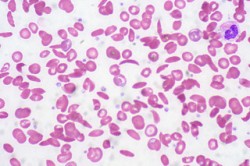
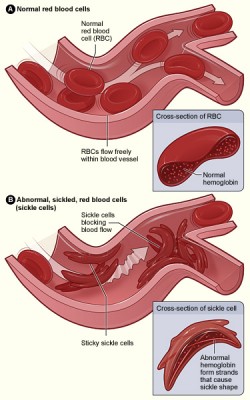
“Sickle cell disease (SCD) is a hereditary condition caused by a mutation in the haemoglobin gene, which leads to symptoms of anaemia, extreme pain, and organ damage if unmanaged.”

Sickle Cell Disease Pain May Be Managed 1

“Individuals suffering from SCD are far more likely to use cannabis than the general population, potentially for its analgesic properties.

In 2010, researchers at the University of Minnesota found that the synthetic THC analogue CP 55,940 was as effective as morphine sulphate in treating SCD-related severe pain in transgenic mice expressing human sickle haemoglobin, and that it was effective at smaller doses than the opioid.

In 2011, a further paper submitted by the same researchers to Blood (the Journal of the American Association of Hematology) indicated that CP 55,940 ameliorated severe pain associated with the hypoxia/reoxygenation cycle. CP 55,940 is a full agonist of both CB receptors, and is thought to act as an antagonist at the GPR55 receptor.

As well as this, cannabis has been repeatedly shown to act as a vasodilator, which could in itself assist in easing the blockages caused by build-up of sickle cells…

SCD is a painful and debilitating disease, and the overall inefficacy of opioid treatments and resultant poor quality of life for many sufferers is an indication that our approach to it is far from perfect.

If cannabis is a good candidate to replace opioids, it should be implemented forthwith to prevent ongoing suffering for existing patients.”

http://sensiseeds.com/en/blog/sickle-cell-pain-may-managed-cannabis/