
 “This article provides a concise overview of how cannabinoids and the endocannabinoid system (ECS) have significant implications for the prevention and treatment of metabolic syndrome (MetS) and for the treatment of cardiovascular disorders, including cardiac fibrosis.
Recent findings: Over the past few years, the ECS has emerged as a pivotal component of the homeostatic mechanisms for the regulation of many bodily functions, including inflammation, digestion, and energy metabolism. Therefore, the pharmacological modulation of the ECS by cannabinoids represents a novel strategy for the management of many diseases. Specifically, increasing evidence from preclinical research studies has opened new avenues for the development of cannabinoid-based therapies for the management and potential treatment of MetS and cardiovascular diseases. Current information indicates that modulation of the ECS can help maintain overall health and well-being due to its homeostatic function. From a therapeutic perspective, cannabinoids and the ECS have also been shown to play a key role in modulating pathophysiological states such as inflammatory, neurodegenerative, gastrointestinal, metabolic, and cardiovascular diseases, as well as cancer and pain. Thus, targeting and modulating the ECS with cannabinoids or cannabinoid derivatives may represent a major disease-modifying medical advancement to achieve successful treatment for MetS and certain cardiovascular diseases.”
https://pubmed.ncbi.nlm.nih.gov/33089434/
https://link.springer.com/article/10.1007%2Fs11906-020-01112-7
 “UV phototherapy used in chronic skin diseases causes redox imbalance and pro-inflammatory reactions, especially in the case of unchanged skin cells.
 “Evidence details how cannabis can influence the use of other psychoactive substances, including prescription medications, alcohol, tobacco and illicit drugs, but very little research has examined the factors associated with these changes in substance use patterns. This paper explores the self-reported use of cannabis as a substitute for alcohol among a Canadian medical cannabis patient population.
 “Cannabis is a historical plant which has been used as a medicine in East Asia.
 “We aimed to comprehensively evaluate the effects of medical marijuana on symptoms that are relevant to movement disorders with a focus on Huntington disease (HD).
 “Although studied in a few randomized controlled trials (RCTs), the efficacy of medical cannabis (MC) for chronic pain remains controversial. Using an alternative approach, this multicenter, questionnaire-based prospective cohort was aimed to assess the long-term effects of MC on chronic pain of various etiologies and to identify predictors for MC treatment success.
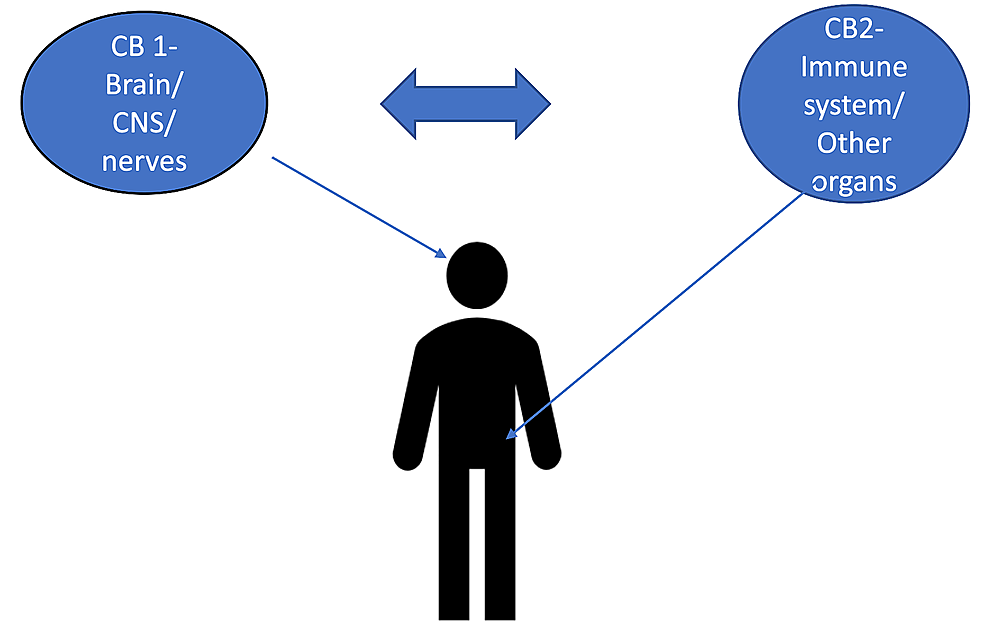 “The burden of chronic pain has affected many individuals leading to distress and discomfort, alongside numerous side effects with conventional therapeutic approaches.
 “The identification of the human cannabinoid receptors and their roles in health and disease, has been one of the most significant biochemical and pharmacological advancements to have occurred in the past few decades. In spite of the major strides made in furthering endocannabinoid research, therapeutic exploitation of the endocannabinoid system has often been a challenging task.
 “This study evaluated the synergistic anti-cancer potential of cannabinoid combinations across the MDA-MB-231 and MCF-7 human breast cancer cell lines. Cannabinoids were combined and their synergistic interactions were evaluated using median effect analysis.
 “Considering lack of target-specific antiviral treatment and vaccination for COVID-19, it is absolutely exigent to have an effective therapeutic modality to reduce hospitalization and mortality rate as well as to improve COVID-19-infected patient outcomes.