
 “Several neuropharmacological actions of cannabidiol (CBD) due to the modulation of the endocannabinoid system as well as direct serotonergic and gamma-aminobutyric acidergic actions have recently been identified.
The current study aimed to reveal the effect of a long-term CBD treatment in the chronic unpredictable mild stress (CUMS) model of depression.
Adult male Wistar rats (n = 24) were exposed to various stressors on a daily basis in order to induce anhedonia and anxiety-like behaviors. CBD (10 mg/kg body weight) was administered by daily intraperitoneal injections for 28 days (n = 12). The effects of the treatment were assessed on body weight, sucrose preference, and exploratory and anxiety-related behavior in the open field (OF) and elevated plus maze (EPM) tests. Hair corticosterone was also assayed by liquid chromatography-mass spectrometry.
At the end of the experiment, CBD-treated rats showed a higher rate of body weight gain (5.94% vs. 0.67%) and sucrose preference compared to controls. A significant increase in vertical exploration and a trend of increase in distance traveled in the OF test were observed in the CBD-treated group compared to the vehicle-treated group. The EPM test did not reveal any differences between the groups. Hair corticosterone levels increased in the CBD-treated group, while they decreased in controls compared to baseline (+36.01% vs. -45.91%). In conclusion, CBD exerted a prohedonic effect in rats subjected to CUMS, demonstrated by the increased sucrose preference after three weeks of treatment.
The reversal of the effect of CUMS on hair corticosterone concentrations might also point toward an anxiolytic or antidepressant-like effect of CBD, but this needs further confirmation.”
 “Historical relevance: Cannabis sativa L. (C. sativa) is a plant whose use as a therapeutic agent shares its origins with the first Far East’s human societies. Cannabis has been used not only for recreational purposes, but as a food to obtain textile fibers, to produce hemp paper, to treat many physical and mental disorders.
 “HIV infection affects an estimated 38 million people. Approximately 50% of HIV patients exhibit neurocognitive dysfunction termed HIV-Associated Neurocognitive Disorder (HAND). HAND is a consequence of chronic low-level neuroinflammation due to HIV entry into the brain. Initially, monocytes become activated in circulation and traffic to the brain. Monocytes, when activated, become susceptible to infection by HIV and can then carry the virus across the blood brain barrier. Once in the brain, activated monocytes secrete chemokines, which recruit virus-specific CD8+ T cells into the brain to further promote neuroinflammation. HAND is closely linked to systemic inflammation driven, in part, by HIV but is also due to persistent translocation of microorganisms across the GI tract. Persistent anti-viral responses in the GI tract compromise microbial barrier integrity. Indeed, HIV patients can exhibit remarkably high levels of activated (CD16+) monocytes in circulation.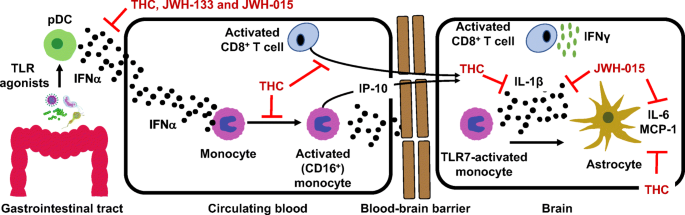
 “Cannabis sativa and its principal components, Δ9-tetrahydrocannabinol (Δ9-THC) and
  “Cannabis sativa is an aromatic annual flowering plant with several botanical varieties, used for different purposes, like the production of fibers, the production of oil from the seeds, and especially for recreational or medical purposes.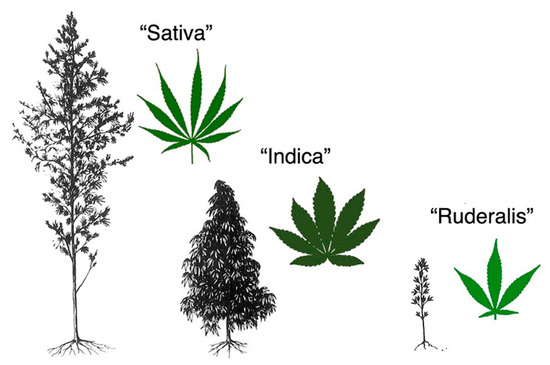
 “Borderline Personality Disorder (BPD) is a chronic debilitating psychiatric disorder characterized mainly by emotional instability, chaotic interpersonal relationships, cognitive disturbance (e.g. dissociation and suicidal thoughts) and maladaptive behaviors. BPD has a high rate of comorbidity with other mental disorders and high burden on society.
 “The pathophysiological relevance of the endocannabinoid system has been widely demonstrated in a variety of diseases including cancer, neurological disorders, and metabolic issues. Therefore, targeting the receptors and the endogenous machinery involved in this system can provide a successful therapeutic outcome.
 “The societal burden of ischemic stroke suggests a need for additional therapeutic categories in stroke prevention.