
“The endocannabinoid system, consisting of the cannabinoid1 receptor (CB1R) and cannabinoid2 receptor (CB2R), endogenous cannabinoid ligands (endocannabinoids), and metabolizing enzymes, is present throughout the pain pathways. Endocannabinoids, phytocannabinoids, and synthetic cannabinoid receptor agonists have antinociceptive effects in animal models of acute, inflammatory, and neuropathic pain. CB1R and CB2R located at peripheral, spinal, or supraspinal sites are important targets mediating these antinociceptive effects. The mechanisms underlying the analgesic effects of cannabinoids likely include inhibition of presynaptic neurotransmitter and neuropeptide release, modulation of postsynaptic neuronal excitability, activation of the descending inhibitory pain pathway, and reductions in neuroinflammatory signaling. Strategies to dissociate the psychoactive effects of cannabinoids from their analgesic effects have focused on peripherally restricted CB1R agonists, CB2R agonists, inhibitors of endocannabinoid catabolism or uptake, and modulation of other non-CB1R/non-CB2R targets of cannabinoids including TRPV1, GPR55, and PPARs. The large body of preclinical evidence in support of cannabinoids as potential analgesic agents is supported by clinical studies demonstrating their efficacy across a variety of pain disorders.” https://www.ncbi.nlm.nih.gov/pubmed/28826543 http://www.sciencedirect.com/science/article/pii/S1054358917300443?via%3Dihub]]>
Category Archives: Pain
Topical Medical Cannabis (TMC): A new treatment for wound pain-Three cases of Pyoderma Gangrenosum.
“Pain associated with integumentary wounds is highly prevalent yet it remains an area of significant unmet need within healthcare. Currently, systemically administered opioids are the mainstay of treatment. However, recent publications are casting opioids in a negative light given their high side effect profile, inhibition of wound healing, and association with accidental overdose, incidents that are frequently fatal. Thus, novel analgesic strategies for wound-related pain need to be investigated. The ideal methods of pain relief for wound patients are modalities that are topical, lack systemic side effects, non-invasive, self-administered, and display rapid onset of analgesia. Extracts derived from the cannabis plant have been applied to wounds for thousands of years. The discovery of the human endocannabinoid system and its dominant presence throughout the integumentary system provides a valid and logical scientific platform to consider the use of topical cannabinoids for wounds. We are reporting a prospective case series of 3 patients with Pyoderma Gangrenosum (PG) that were treated with Topical Medical Cannabis (TMC) compounded in non-genetically modified organic sunflower oil. Clinically significant analgesia that was associated with reduced opioid utilization was noted in all 3 cases. TMC has the potential to improve pain management in patients suffering from wounds of all classes.” https://www.ncbi.nlm.nih.gov/pubmed/28818631 http://www.jpsmjournal.com/article/S0885-3924(17)30351-2/fulltext]]>
Use of medical cannabis to reduce pain and improve quality of life in cancer patients.
 “Early attention to pain and symptoms in those with cancer improves both quality of life and survival. Opioid medications are the mainstay treatment of cancer-related pain.
Cannabinoids are increasingly used as adjunctive treatments for cancer pain, but clinical evidence supporting their use as an “opioid sparing agent” or to improve quality of life is as yet unknown.
Our study sought to determine if the addition of cannabinoids (medical cannabis) resulted in the reduction of the average opioid dose required for pain control, and improve self-reported quality of life indices.
“Early attention to pain and symptoms in those with cancer improves both quality of life and survival. Opioid medications are the mainstay treatment of cancer-related pain.
Cannabinoids are increasingly used as adjunctive treatments for cancer pain, but clinical evidence supporting their use as an “opioid sparing agent” or to improve quality of life is as yet unknown.
Our study sought to determine if the addition of cannabinoids (medical cannabis) resulted in the reduction of the average opioid dose required for pain control, and improve self-reported quality of life indices.
Patients with cancer pain benefited from the addition of cannabinoids.
The average opioid dose decreased following access to medical cannabis.
Self-reported ratings of several quality of life indicators showed statistically significant improvement.
Our study shows a signal that cannabinoids may reduce cancer patients’ reliance on opioids to control pain.
Further prospective controlled studies are needed to further elucidate the role of cannabinoids in the treatment of cancer pain.”
https://www.ncbi.nlm.nih.gov/pubmed/28148191Cannabis Roots: A Traditional Therapy with Future Potential for Treating Inflammation and Pain
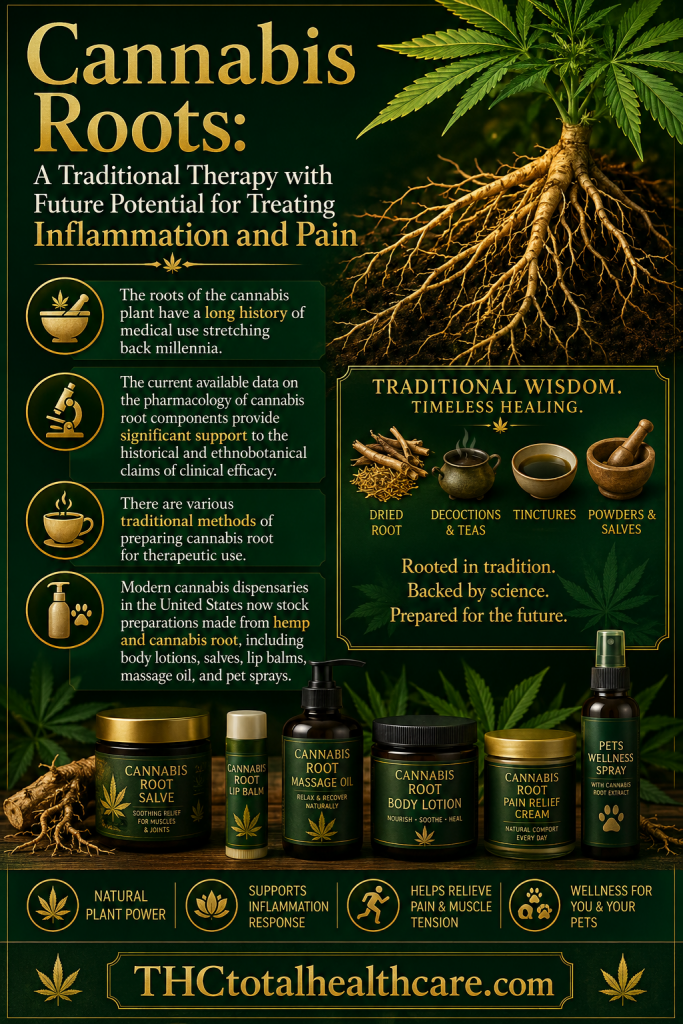
“Introduction: The roots of the cannabis plant have a long history of medical use stretching back millennia. However, the therapeutic potential of cannabis roots has been largely ignored in modern times.
Discussion: In the first century, Pliny the Elder described in Natural Histories that a decoction of the root in water could be used to relieve stiffness in the joints, gout, and related conditions. By the 17th century, various herbalists were recommending cannabis root to treat inflammation, joint pain, gout, and other conditions. There has been a subsequent paucity of research in this area, with only a few studies examining the composition of cannabis root and its medical potential. Active compounds identified and measured in cannabis roots include triterpenoids, friedelin (12.8 mg/kg) and epifriedelanol (21.3 mg/kg); alkaloids, cannabisativine (2.5 mg/kg) and anhydrocannabisativine (0.3 mg/kg); carvone and dihydrocarvone; N-(p-hydroxy-β-phenylethyl)-p-hydroxy-trans-cinnamamide (1.6 mg/kg); various sterols such as sitosterol (1.5%), campesterol (0.78%), and stigmasterol (0.56%); and other minor compounds, including choline. Of note, cannabis roots are not a significant source of Δ9-tetrahydrocannabinol (THC), cannabidiol, or other known phytocannabinoids.
Conclusion: The current available data on the pharmacology of cannabis root components provide significant support to the historical and ethnobotanical claims of clinical efficacy. Certainly, this suggests the need for reexamination of whole root preparations on inflammatory and malignant conditions employing modern scientific techniques.”
https://pubmed.ncbi.nlm.nih.gov/29082318
“There are various traditional methods of preparing cannabis root for therapeutic use.
The raw cannabis roots can be prepared by pounding and crushing the fresh root to extract its juices. There are numerous mentions of cannabis root preparations in water, especially boiling water, which suggest that early formulators were attempting to extract the water-soluble compounds in the roots. Throughout the 17th and 18th centuries, there are also many mentions of using cannabis root decoctions. The fresh ground root, juice, or cannabis root decoction has also been mixed with fat (oil or butter). There is also an account of mixing pulverized cannabis root with wine. Interestingly, topical applications of cannabis root-based preparations are most often described.
Modern cannabis dispensaries in the United States now stock preparations made from hemp and cannabis root, including body lotions, salves, lip balms, massage oil, and pet sprays.”
Perioperative Patient Beliefs Regarding Potential Effectiveness of Marijuana (Cannabinoids) for Treatment of Pain: A Prospective Population Survey.
 “Cannabinoids have an expanding presence in medicine.
Perioperative patients’ perceptions of the effectiveness of these compounds, and acceptance if prescribed for pain, have not been previously described. Our primary objective was to describe patients’ beliefs regarding the potential effectiveness of cannabinoids for the treatment of acute and chronic pain, as well as gauge patient acceptance of these compounds if prescribed by a physician.
More than 80% of this cohort of preoperative patients believed that marijuana could be at least somewhat effective for the treatment of pain after surgery and would be willing to use cannabinoid compounds if prescribed by their physician.
Patients generally believe that marijuana could be at least somewhat effective for the management of pain and are willing to use cannabinoid compounds for this indication, if prescribed by a physician.”
“Cannabinoids have an expanding presence in medicine.
Perioperative patients’ perceptions of the effectiveness of these compounds, and acceptance if prescribed for pain, have not been previously described. Our primary objective was to describe patients’ beliefs regarding the potential effectiveness of cannabinoids for the treatment of acute and chronic pain, as well as gauge patient acceptance of these compounds if prescribed by a physician.
More than 80% of this cohort of preoperative patients believed that marijuana could be at least somewhat effective for the treatment of pain after surgery and would be willing to use cannabinoid compounds if prescribed by their physician.
Patients generally believe that marijuana could be at least somewhat effective for the management of pain and are willing to use cannabinoid compounds for this indication, if prescribed by a physician.”
 “The endocannabinoid system is thought to modulate nociceptive signaling making it a potential therapeutic target for treating pain.
However, there is evidence that endocannabinoids have both pro- and anti-nociceptive effects. In previous studies using Hirudo verbana (the medicinal leech), endocannabinoids were found to depress nociceptive synapses, but enhance non-nociceptive synapses. Here we examined whether endocannabinoids have similar bidirectional effects on behavioral responses to nociceptive vs. non-nociceptive stimuli in vivo.
These results provide evidence that endocannabinoids can have opposing effects on nociceptive vs. non-nociceptive pathways and suggest that
“The endocannabinoid system is thought to modulate nociceptive signaling making it a potential therapeutic target for treating pain.
However, there is evidence that endocannabinoids have both pro- and anti-nociceptive effects. In previous studies using Hirudo verbana (the medicinal leech), endocannabinoids were found to depress nociceptive synapses, but enhance non-nociceptive synapses. Here we examined whether endocannabinoids have similar bidirectional effects on behavioral responses to nociceptive vs. non-nociceptive stimuli in vivo.
These results provide evidence that endocannabinoids can have opposing effects on nociceptive vs. non-nociceptive pathways and suggest that